Lazy Susan Cabinet Accessories: Save Space in 2026
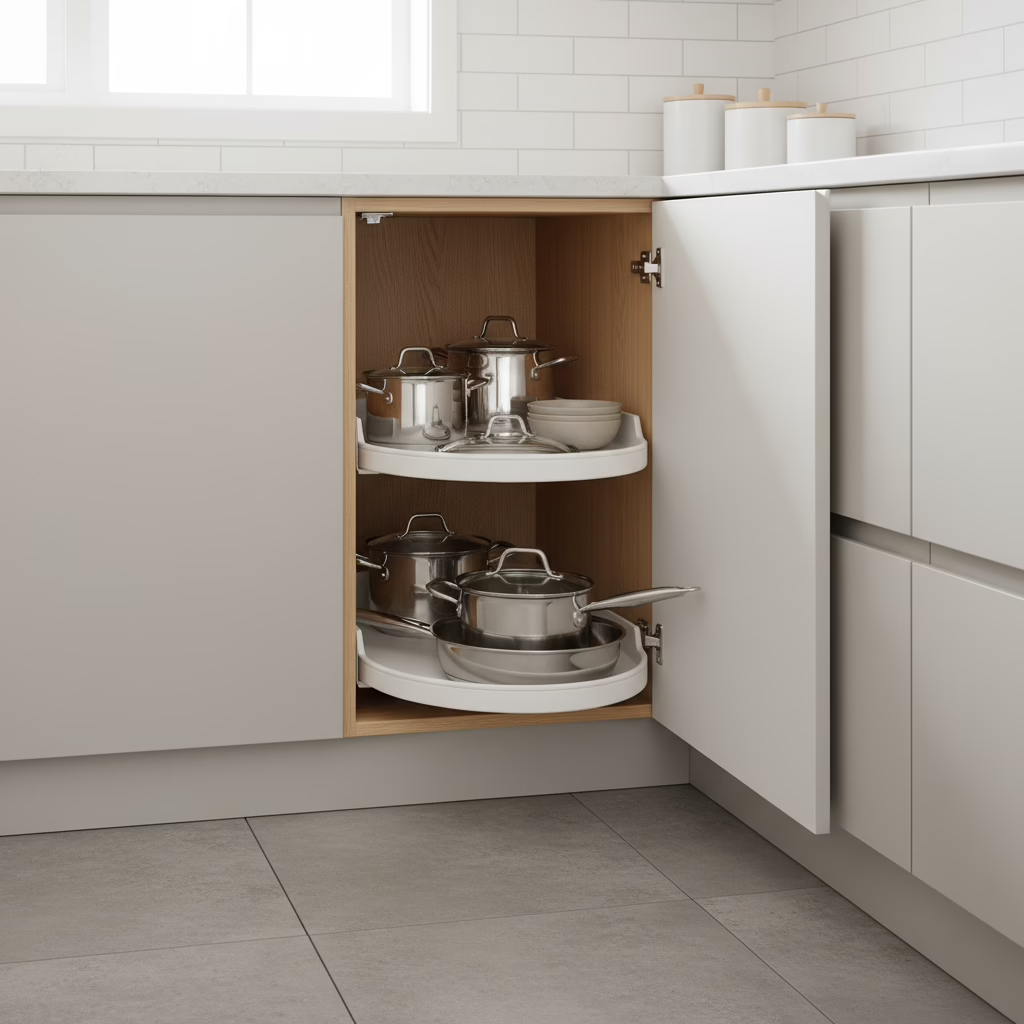
Lazy Susan cabinet accessories are purpose-built inserts, trays, and hardware that turn dead corner space into fast, reachable storage. In 11 Edvac Drive, homeowners use these organizers to gain 25–50% more usable area in corner bases, reduce bending, and keep cookware visible. Altima Kitchens and Closets designs and installs these solutions end-to-end.
By Ashok, Altima Kitchens and Closets • Last updated: April 25, 2026
- Overview
- What is it?
- Why it matters
- How it works
- Types & options
- Planning & installation
- Tools & resources
- Case studies
- Comparisons
- Maintenance & upgrades
- FAQ
- Conclusion
Overview: Lazy Susan Cabinet Accessories at a Glance
Lazy Susan accessories maximize hard-to-reach corners by rotating stored items into view. The right shelf shape, diameter, and hardware convert 30–40 inches of corner footprint into accessible storage. Choose durable trays, smooth bearings, and soft-close pivots for quiet operation and long-term reliability.
Here’s the quick-hit view of how these systems add order and speed to any kitchen workflow.
- Space gain: Corner bases (typically 36 x 36 inches) can reclaim 8–12 sq ft of shelf surface with two-tier trays.
- Faster access: A 360° spin brings spices, pots, or mixers forward in 1–2 seconds—no digging.
- Ergonomics: Reduced bending and reaching lowers strain on your back and shoulders.
- Versatility: Store cookware, pantry items, small appliances, and cleaning supplies.
- Cleanability: Polymer trays wipe down in under a minute; wood offers premium aesthetics.
- Altima advantage: In-house design, factory-direct cabinetry, and pro installation ensure a perfect fit.
What Is a Lazy Susan Cabinet Accessory?
A Lazy Susan cabinet accessory is a rotating shelf system with dedicated hardware that fits inside a corner cabinet. Its circular or kidney-shaped trays spin on a center post or bottom-mount bearing, bringing items forward for quick, safe access.
Think of it as a turntable engineered for cabinet storage. Trays range from 18–32 inches in diameter and typically come in two-tier sets to double capacity. Common shapes include full-circle, kidney, and pie-cut. Most load ratings span 20–75 lb per shelf, depending on hardware and material.
- Primary components: Trays, center post or shelf-mount hub, turntable bearing, and optional soft-close pivot.
- Cabinet fit: Standard corner bases are 33–42 inches wide; most installs target 36 inches for optimal arcs.
- Door styles: Hinged L-shaped pie-cut doors or standard diagonal doors; both influence tray geometry.
- Use cases: Spices (2–4 inch jars), pots up to 12 inches wide, mixers up to 14 inches tall on lower tiers.
We tailor these systems during design so the tray swing clears door hardware, hinges, and face frames without rub.
Why Lazy Susan Accessories Matter for Modern Kitchens
Lazy Susan accessories turn blind corners into productive zones, improving storage density and daily efficiency. In busy homes, a properly sized turntable cuts search time, reduces bending, and protects cookware from stacking damage.
Kitchen corners are notorious for wasted volume. Without organizers, up to one-third of base-corner space goes unused or becomes a “catch-all.” With a two-tier Lazy Susan, homeowners routinely store 30–60 small items in plain sight. That predictability helps with meal prep, grocery planning, and cleanup.
- Time savings: Reaching a spice or lid in 2–3 seconds adds up over 20–30 daily kitchen touches.
- Inventory control: Visible storage reduces duplicate purchases and expired goods.
- Protection: Even load distribution prevents denting nonstick pans and chipping ceramic bowls.
- Family-friendly: Smooth rotation and rail guards keep items stable for kids and seniors.
For remodels, efficient corners can downsize the overall cabinet run by 6–12 inches while keeping the same capacity—useful in condos and galley layouts.
How a Lazy Susan Works (Hardware, Motion, Clearances)
A Lazy Susan rotates on a sealed bearing or hub anchored to a center post or shelf mount. The trays spin within a calculated arc that clears doors and frames. Correct diameters, shelf spacing, and hinge geometry prevent rub and ensure quiet, stable motion.
At its core are two systems: support and motion. Support can be a steel center post (top-and-bottom anchored) or a shelf-mount hub tied to the cabinet deck. Motion is delivered by a ring bearing or pivot-then-slide mechanism. Soft-close pivots cushion swing-back, and anti-skid mats keep jars from drifting.
- Typical diameters: 24, 28, 32 inches; larger trays require wider openings (often 15 inches minimum).
- Vertical spacing: 12–15 inches between tiers for cookware and tall bottles.
- Load ranges: 20–75 lb per shelf; evenly distribute weight near the rim for smoother rotation.
- Clearances: Maintain 1/4–3/8 inch gap to doors/frames; verify hinge throw at 90° and 110°.
During design, our 2D/3D modeling confirms tray arcs, post placement, and handle interference before we drill a single hole.
Types of Lazy Susan Cabinet Accessories
Choose tray shape (kidney, full-circle, or pie-cut), material (polymer, wood, or metal), and hardware (center post or shelf-mount) based on cabinet style and contents. Add soft-close pivots, rail guards, and dividers to control motion and keep items organized.
Tray shapes and where they shine
- Kidney-shaped: Ideal for 36-inch corner bases with diagonal doors; 28–32 inch diameters reclaim large arcs.
- Full-circle: Best for corner cabinets with curved or wide openings; maximizes square inches per tier.
- Pie-cut: Works with L-shaped doors attached to the trays; seamless look with direct, synchronized swing.
Materials and finishes
- Polymer: Light, easy to clean, often with 1–2 inch lips; great for spices and pantry goods.
- Wood: Premium appearance, 3/4 inch birch/maple common; pair with clear coat for moisture resistance.
- Metal: Wire or sheet steel with rails; excellent for heavy pots, 10–12 inch lids, cast-iron.
Hardware and smart add-ons
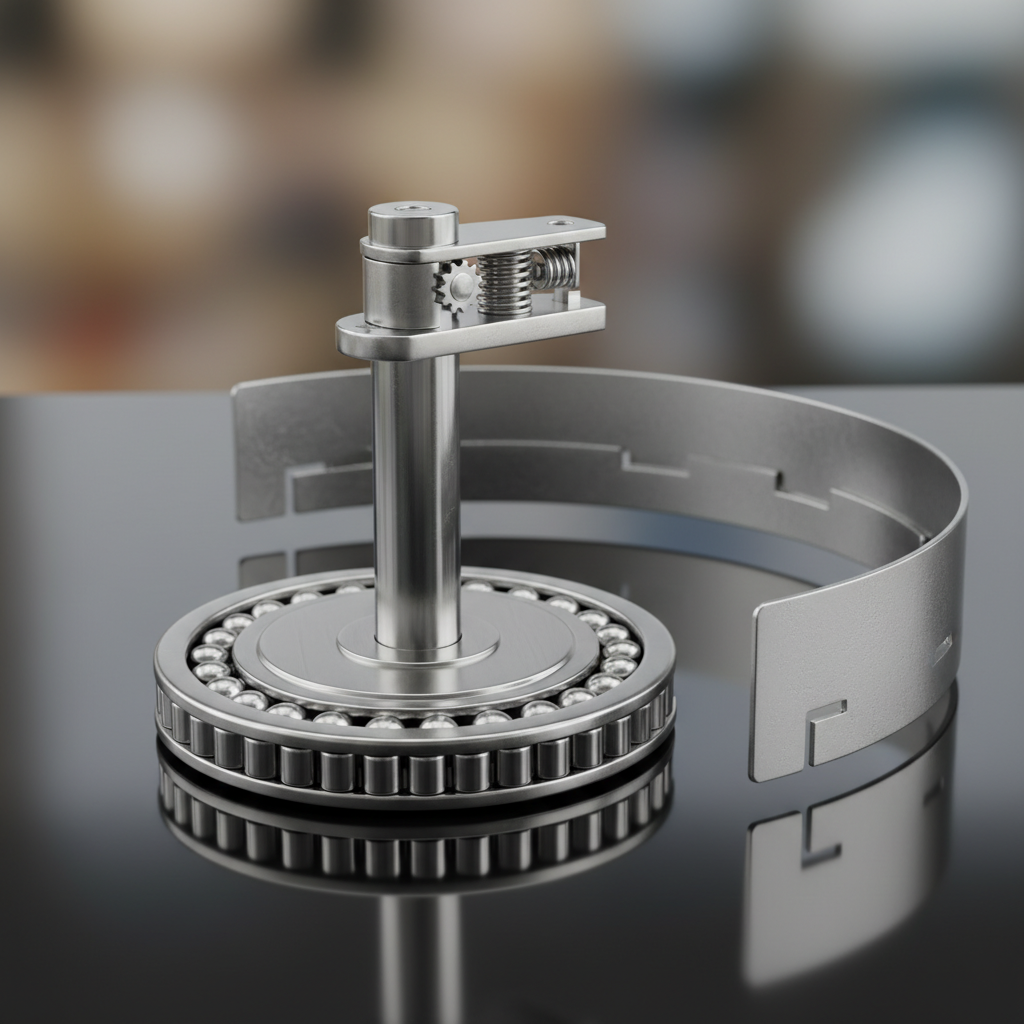
- Center-post systems: Rigid support for 28–32 inch trays; adjustable tier heights with locking collars.
- Shelf-mount hubs: No post; clean interior look; easier tray removal for cleaning.
- Soft-close pivots: Dampen return swing; cut per-use noise by 3–5 dB.
- Turntable bearings: Sealed rings for smooth 360° rotation; look for corrosion resistance in humid kitchens.
- Rail guards: 2–3 inch rims keep bottles upright during rotation.
- Dividers: Segment trays into 4–8 zones to stop container drift.
For visuals, here’s a detail shot of core components we specify and install.
When we design your system, we’ll match accessories to your daily routines—sauces near the cooktop, baking tools near the mixer, and cleaning supplies framed away from dry goods.
Best Practices for Planning and Installation
Measure the opening, pick the largest tray that clears hinges, and anchor hardware to solid cabinet points. Use 2D/3D checks before drilling, and balance the load near the rim. Finish with a soft-close pivot and anti-skid liners for long-term comfort.
Step-by-step planning workflow
- Confirm cabinet type: 33, 36, or 42-inch corner base; identify door style (diagonal vs pie-cut).
- Measure openings: Net width at hinges and face frame; target 1/4–3/8 inch tray clearance.
- Pick tray diameter: 24, 28, or 32 inches; larger if door hardware allows 110° swing.
- Choose hardware: Center-post for heavy cookware; shelf-mount for minimalist interiors.
- Map contents: Assign upper tier for light jars (under 4 lb), lower tier for bulky pots (up to 15 lb).
- Simulate in 3D: Verify arcs, heights, and interference in our design software.
Installation tips from our field team
- Anchor into structure: Use through-screws into deck and rails; avoid only thin panels.
- Set level first: Use a digital level; 0.5° tilt can cause constant drift.
- Pre-drill hardware: Mark, pilot, then fasten; confirm spin at 90° and 110° door positions.
- Balance loads: Keep heavy items within the outer third of the tray for smoother rotation.
- Finish edges: Add bumpers near hinges; apply clear anti-skid liners to cut sliding by ~60%.
Our installers build these daily, and a typical retrofit takes one visit once hardware is on-site. For new kitchens, we mount during cabinet set to lock in ideal heights.
Local considerations for 11 Edvac Drive
- Condos and townhomes near 11 Edvac Drive often have compact galleys—opt for 28-inch trays to clear tight door throws.
- Winter delivery windows can shorten; plan hardware orders 2–3 weeks ahead to keep your renovation timeline tight.
- Many GTA homes prefer smooth, quiet kitchens; specify soft-close pivots and polymer trays to dampen rotation noise.
Curious how accessories fit with cabinet construction choices? See our guidance on melamine vs plywood cabinet boxes for structural context.

Tools and Resources
Use a tape, digital level, drill/driver, square, and template for accurate hardware placement. For design confidence, rely on 2D/3D cabinet modeling and manufacturer spec sheets to confirm tray diameters, hinge throws, and load ratings before installation.
In our design-build process, we front-load clarity: showroom consult, measurements, 2D/3D design, then factory build and install. That sequence reduces on-site surprises by verifying every clearance in advance. It’s how we keep projects predictable.
- Design assets: We provide 2D plans and 3D views so you can “spin” your storage virtually.
- Spec sheets: Tray diameter ranges (18–32 inches) and load ratings (20–75 lb per tier) guide safe use.
- Checklists: Openings, hinge degrees, face-frame vs frameless dimensions, and shelf spacing.
Industry education matters too. According to Shopify, detailed product specs and clear organization benefits improve purchase confidence—mirroring what homeowners want in renovation decisions. For cabinetry businesses, Shopify’s cabinets guide underscores how clarity on materials and functionality reduces returns and rework. You’ll see that same clarity in our cabinet catalogs.
Mid-article consultation invite
Thinking about a corner upgrade? Book a design session and we’ll map your contents, recommend tray sizes, and preview the layout in 3D—factory-direct, installed by our in-house team.
Explore related insights like small kitchen space tips and how to choose cabinet manufacturers wisely as you plan.
Case Studies and Real-World Examples from GTA Homes
Across GTA projects, two-tier Lazy Susans regularly convert wasted corners into dependable storage. We’ve seen condos regain a full drawer’s worth of space and detached homes centralize pots and spices within arm’s reach, speeding prep and cleanup.
Condo galley turnaround
- Challenge: Narrow galley near 11 Edvac Drive with 90° hinge limitation and a 14.5-inch door opening.
- Solution: 28-inch kidney trays on a shelf-mount hub to avoid a center post and clear hinges.
- Result: 40+ labeled spice jars on top, three nested pots and two lids below; access time cut by half.
Family home cookware hub
- Challenge: Stacked pans chipping nonstick surfaces; frequent searches for lids.
- Solution: 32-inch full-circle trays with metal rails; dividers to park lids vertically.
- Result: Pots up to 12 inches wide stabilize; average retrievals drop to under 3 seconds.
Baker’s workstation
- Challenge: Flour and sugar canisters buried in a blind corner; messy scoops.
- Solution: Polymer pie-cut trays tied to pie-cut doors; anti-skid liners and 3-inch rails.
- Result: Four 4–6 lb canisters ride safely; clamshell scoops stay put during rotation.
See how we align finishes with function in our piece on custom kitchen cabinets and this overview on transforming your kitchen.
Comparisons: Lazy Susan vs Corner Drawers vs Blind-Corner Pull-Outs
Lazy Susans excel at fast, 360° access with strong capacity. Corner drawers offer segmented organization but less cubic efficiency. Blind-corner pull-outs retrieve deep contents smoothly but add moving parts. Pick based on access speed, load, and maintenance preference.
| Feature | Lazy Susan | Corner Drawers | Blind-Corner Pull-Out |
|---|---|---|---|
| Access speed | 2–3 seconds per item | 3–5 seconds (open/slide) | 4–6 seconds (multi-stage) |
| Load capacity | 20–75 lb per tier | 15–30 lb per drawer | 15–40 lb per frame |
| Organization | Dividers/rails segment zones | Each drawer pre-segments | Trays pull then swing |
| Complexity | Low (few parts) | Medium (slides/boxes) | High (arms/frames) |
| Cleaning | Wipe-down trays; removable | Standard drawer clean | Multiple joints to wipe |
| Best for | Spices, pots, small appliances | Utensils, wraps, smallware | Deep pantry items |
If you’re leaning toward drawers, our note on handles and ergonomics can help fine-tune user comfort.
Maintenance, Safety, and Upgrades Over Time
Keep trays clean, check fasteners annually, and avoid overloading near the hub. Non-slip liners and 2–3 inch rails prevent tip-overs. When tray scuffs grow, upgrade to polymer or wood with a fresh clear coat and consider a soft-close pivot for quieter returns.
A few light habits protect performance.
- Quarterly wipe-down: Warm water and mild soap; avoid abrasives that dull clear coats.
- Annual hardware check: Tighten set collars and bearing screws; re-level if drift appears.
- Weight discipline: Keep single items under 15 lb; distribute around the rim, not the hub.
- Child safety: Rails reduce tip risks; rotate slowly and supervise young helpers.
- Upgrade paths: Swap to higher-lipped trays (2–3 inches) or add dividers to stop jar migration.
For cabinet longevity, our team’s routine care tips in maintaining kitchen cabinets apply here as well.
Frequently Asked Questions
These concise answers cover sizing, retrofits, and what to store on each tier. Use them as a quick reference during design and shopping.
What size Lazy Susan trays should I choose?
Match the largest diameter that clears your door hardware. In many corner bases, 28–32 inch trays fit well. Leave 1/4–3/8 inch clearance from doors and frames, and maintain 12–15 inches between tiers for bottles and taller cookware.
Can I retrofit a Lazy Susan into an existing cabinet?
Yes. Most 33–42 inch corner bases accept two-tier systems. Measure the opening, verify hinge throw (90° vs 110°), and choose center-post or shelf-mount hardware accordingly. A pro retrofit typically finishes in one visit once the parts are on-site.
What should go on the top vs bottom tier?
Use the top tier for light, frequently used items like spices and baking ingredients (under 4 lb each). Reserve the bottom tier for bulkier cookware and small appliances up to about 12–14 inches tall. Balance weight around the rim for smooth rotation.
Are soft-close Lazy Susans worth it?
They are. Soft-close pivots reduce slam noise, protect hinges, and minimize item shifting. In busy homes, the quieter, controlled return feels noticeably better and keeps rails and liners from wearing out as quickly.
How do Lazy Susans compare to blind-corner pull-outs?
Lazy Susans deliver faster, 360° access with fewer moving parts. Blind-corner pull-outs retrieve deeply buried items but involve multi-stage motion and more hardware joints. Choose based on your access speed preference and the types of items you store.
Conclusion and Next Steps
The right Lazy Susan cabinet accessories reclaim corner volume, speed daily tasks, and keep kitchens safer. Size trays to your opening, match hardware to contents, and model the layout in 2D/3D for confidence before install.
Here’s how to move from idea to installed, factory-direct.
- Decide your goal: Fast spice access? Pot organization? Small appliance parking?
- Measure: Opening width, hinge degree, and desired tray diameter (24–32 inches).
- Design: We’ll build 2D/3D layouts and confirm clearances before we cut.
- Manufacture: Italian CNC machinery ensures precision; finishes spray in our booth.
- Install: In-house crews set level, test motion, and fine-tune rails and dividers.
Ready to plan your corner? Explore our CNC door profiles and browse finishes in our catalogs. Then book a design session—factory-direct, 2D/3D verified, and installed by the team that builds your cabinetry.
For additional industry perspective on home storage and purchase decision-making, see Shopify’s furniture guide. The emphasis on clarity and function mirrors our process from 11 Edvac Drive to every GTA project we complete.
Related Posts
Why Choose Kitchen Renovation Company
Nowadays, Kitchen spaces are not only a place for cooking and serving food, but these areas act as a statement, as they speak a lot about a family, the philosophy and personality of individuals, and spaces. If you admire aesthetics and adorn the beauty of your home, you must pay attention to the interior design […]
How a Kitchen Renovation Contractor is Changing the Game
Lifestyle is all about bringing something coherent to the overall experience of living. The kitchen and closets stand as two of the most influential spaces in a home that add to the overall experience of living. A Kitchen Renovation Contractor in Whitby by the name of Altima Kitchen and Closets Inc. is changing the overall […]
How Media unit contractor in Whitby is Changing the Game
Lifestyle is all about bringing something coherent to the overall experience of living. The kitchen and closets stand as two of the most influential spaces in a home that add to the overall experience of living. A Media Unit Company in Whitby by the name of Altima Kitchen and Closets Inc. is changing the overall […]