Complete Mudroom Cabinet Plan for a Tidier Home in 2026
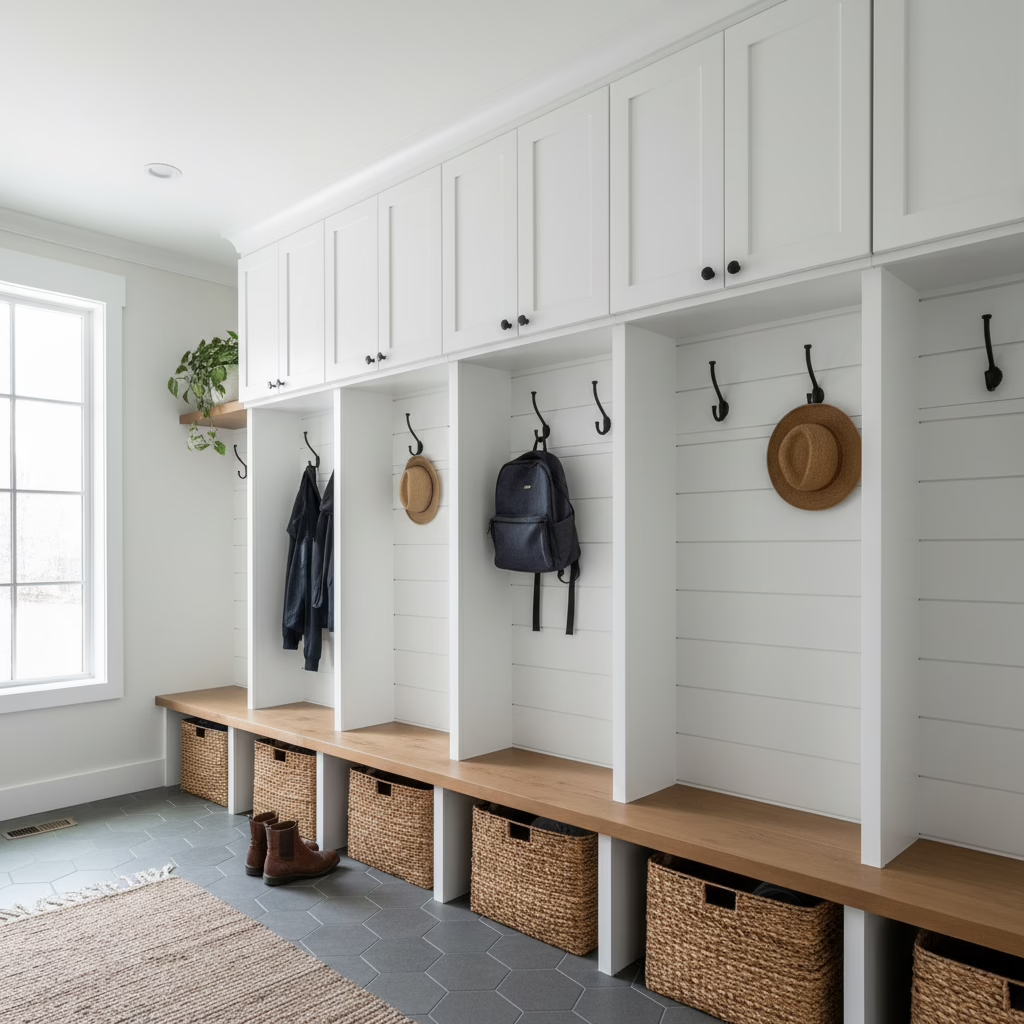
Mudroom cabinet storage ideas are the proven layouts, accessories, and materials that keep your entry tidy and durable. The best plans pair closed cabinets with open cubbies, hooks, and benches to handle wet gear and daily drop zones. For families in 11 Edvac Drive and across the GTA, a custom-built mudroom from Altima streamlines every routine.
By Ashok, Altima Kitchens and Closets • Last updated: April 22, 2026
Above the Fold: Why This Guide Matters + Table of Contents
Use this complete mudroom cabinet plan to design a clutter-free entry that stands up to Canadian seasons. You’ll learn what a high-performing mudroom includes, how to size every cabinet, and which accessories prevent mess—plus GTA-specific tips drawn from Altima’s factory-direct design-build experience.
Here’s the thing: the average household touches the mudroom dozens of times a day. Thoughtful storage cuts minutes from every trip and keeps dirt contained. This guide blends design rules of thumb with practical, real-world examples from our in-house team.
- What you’ll get in minutes:
- Clear sizing rules for benches, hooks, cubbies, and tall cabinets
- Durable, easy-clean material choices (with a comparison table)
- Accessory ideas that actually get used—shoe drawers, boot trays, charging ledges
- Workflow tips for busy mornings, pets, sports gear, and deliveries
- Built on Altima’s strengths:
- In-house design and installation with factory-direct cabinetry
- 2D/3D drawings to preview your layout before build
- Lifetime warranties on select doors and precise CNC manufacturing
Table of Contents
- Quick Summary
- What Is Mudroom Cabinet Storage?
- Why Mudroom Storage Matters
- How a Great Mudroom Works Day to Day
- Types of Mudroom Cabinets and Approaches
- Materials and Durability (Comparison)
- Best Practices and Sizing Rules
- Tools and Resources
- Mini Case Studies from GTA Homes
- FAQ
- Key Takeaways
- Conclusion and Next Steps
- Related Articles
Quick Summary
A high-performing mudroom mixes tall utility cabinets, open cubbies, a ventilated shoe zone, and a wipeable bench with hooks. Prioritize water-resistant floors, scuff-proof doors, and task lighting. Design around daily traffic: kids’ bags, pet leashes, packages, and winter gear all need a labeled, easy-reach home.
Design targets save time. For example, a family of four typically benefits from 8–10 double hooks, 12–16 shoe slots, and a 48–60 inch bench. Bench height around 18 inches fits most adults and kids. Hooks spaced 4–6 inches apart prevent pileups, and a 36-inch clearance in front of the bench avoids bottlenecks.
Want a deeper storage systems walkthrough? Our team’s perspective in this custom wardrobe closets guide shows how vertical organization techniques translate neatly to mudrooms.
What Is Mudroom Cabinet Storage?
Mudroom cabinet storage is a purpose-built system of cabinets, cubbies, hooks, and benches that contains outdoor mess and organizes daily essentials. The goal is quick access in, quick drop-off, and easy cleanup—without tracking dirt or clutter into the rest of the home.
Think of your mudroom as a pressure valve for the house. When everything has a home—wet boots, backpacks, mail, keys, pet gear, sports kits—stress drops and floors stay cleaner. Most effective plans combine:
- Closed cabinets to hide bulkier or seasonal items
- Open cubbies and shelves for grab-and-go gear
- A rigid bench for sitting, lacing, and setting bags
- Hooks and rails for fast, no-fuss hanging
- Waterproof or water-resistant boots and shoes zone
At Altima, we tailor mudroom cabinet storage ideas with 2D/3D drawings so you can see exactly how each element lines up with your family’s routine. A labeled drawing often prevents costly rework and keeps projects on schedule.
For whole-home planning that keeps circulation smooth from entry to kitchen, skim our full home renovation guide—it explains how traffic patterns and storage zones connect across rooms.
Why Mudroom Storage Matters
Great mudroom storage cuts daily friction. You reduce cleaning time, protect finishes from salt and slush, and build reliable drop zones for packages and school gear. The result is a calmer entry, fewer lost items, and better resale appeal for organization-minded buyers.
Small design choices create big wins. A ventilated shoe drawer reduces odors by moving air; a drip-proof boot tray funnels meltwater; and task lighting above the bench prevents forgotten items at night. Labeling or color-coding kids’ cubbies speeds mornings by 1–2 minutes per child—time you’ll feel every weekday.
- Health and cleanliness:
- Keeping outdoor contaminants at the door helps floors last longer.
- Dedicated pet station corral fur, brushes, and leashes (one-hand access).
- Property value:
- Buyers respond to smart storage; built-ins photograph well and feel premium.
- Cabinetry continuity with the kitchen elevates the whole home storyline.
We often align mudroom finishes with kitchen designs to create a clean visual link. If you’re refreshing both, see our kitchen renovation guide for compatible door styles, sheens, and hardware profiles that carry through entry and cooking zones.
How a Great Mudroom Works Day to Day
A smooth mudroom guides movement: enter, hang, shelve, and sit—with no backtracking. Place hooks above a sturdy bench, keep shoe storage beneath, and use tall cabinets at the ends for coats and cleaning tools. Add a charging shelf at eye level to power phones and bike lights.
Map the sequence like a small factory: first-touch items (keys, mail) go closest to the door; medium-frequency items (handheld vac, umbrella, lint roller) land mid-zone; long-term storage (seasonal bins) sits high. Labeling shelves or using distinct baskets lowers mental load and teaches repeatable habits for kids.
- Workflow cues we build in:
- Grab rail: A thin ledge for mail, sunglasses, and dog bags near the latch side.
- Charging nook: A grommeted shelf with outlets and cord management.
- Ventilated shoes: Slatted drawers or open grids under the bench.
- Hidden utility: Tall cabinet with broom clips, a fold-out step stool, and a small caddy.
For clients planning a basement or garage entry, we often extend the same principles. This basement space guide shows how to carve a compact drop zone near stairs without clogging circulation.

Types of Mudroom Cabinets and Approaches
Blend three zones: tall utility cabinets for coats and cleaning tools, open cubbies with hooks over a sit-down bench, and specialty stations for shoes, pets, and deliveries. This trio handles 90% of daily traffic with fast access and easy cleanup.
We customize cabinet modules to your wall lengths and ceiling height, then tune accessories to your lifestyle. Here are core building blocks:
Bench + Hook Wall
- 18-inch bench height; 15–18 inches deep for lacing space.
- 4–6 inch hook spacing to prevent overlaps and snags.
- Under-bench options: pull-out shoe drawers, wire racks, or open shelves.
Open Cubbies
- 10–12 inch wide per slot for kids; 12–15 for adults or backpacks.
- Adjustable shelves allow seasonal swaps (winter hats to summer caps).
- Woven or plastic bins make labeling obvious and cleanup quick.
Tall Utility Cabinets
- 24-inch interior depth fits bulky coats; 66–72 inches of hanging height.
- Door-mounted organizers for gloves, lint rollers, and small tools.
- Broom clips and a handheld vac cradle keep cleaning gear upright.
Specialty Stations
- Shoe care: pull-out trays, vented shelves, and mat-lined drip drawers.
- Pet corner: leash hooks, food bin, and a wipe drawer (microfiber stash).
- Package shelf: a 30–36 inch high ledge where deliveries can rest safely.
When kitchen and mudroom share finishes, maintaining cabinets is simple. Our cabinet care checklist applies to painted, laminated, and wood-grain doors you’ll likely use in both rooms.
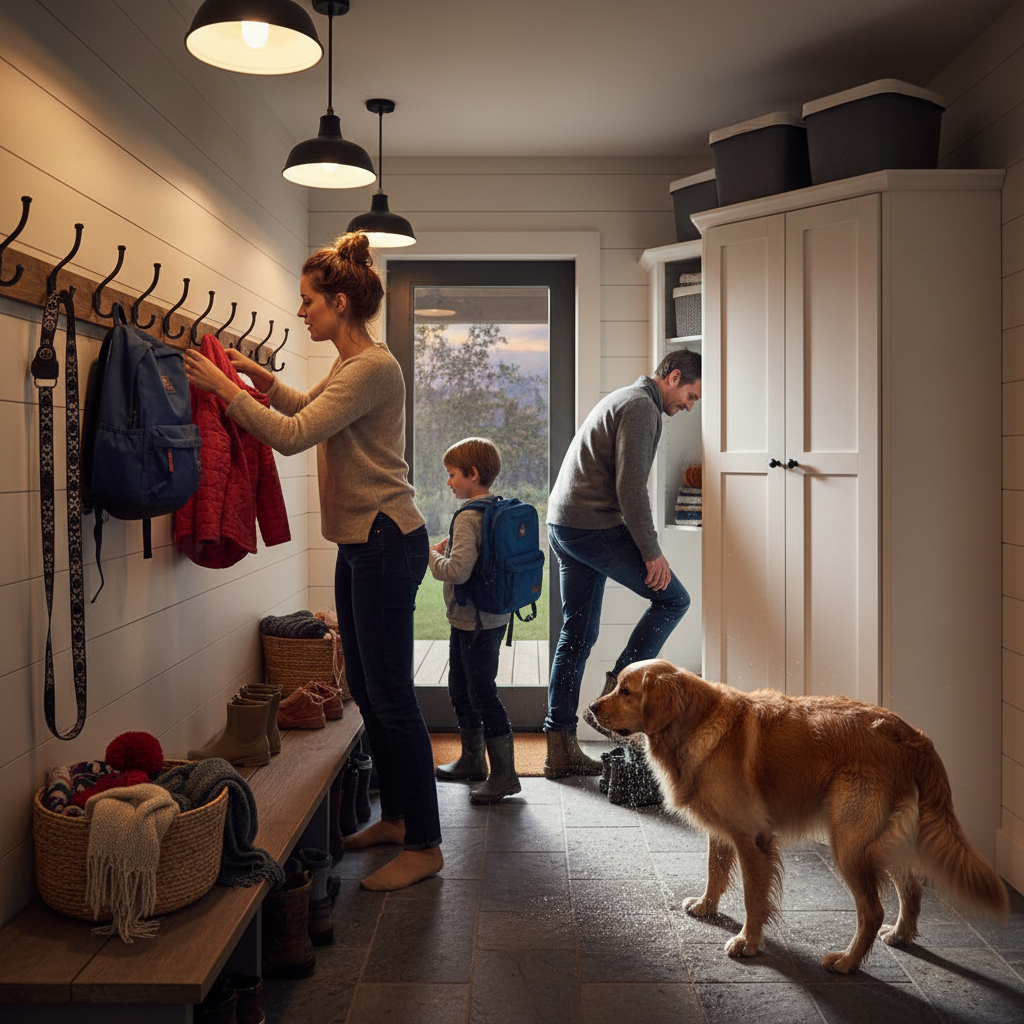
Materials and Durability (Comparison)
Choose moisture-tolerant cabinet boxes and scuff-resistant doors. For most mudrooms, melamine or plywood boxes with durable painted or prelaminated doors perform well. Pair with water-resistant flooring and sealed bench tops to handle snowmelt and slush.
We manufacture with Italian CNC machinery and offer lifetime warranties on MDF Painted and Prelaminated doors. Below is a quick comparison you can reference with our designers during 2D/3D planning.
| Component | Option | Strengths | Considerations | Best Use |
|---|---|---|---|---|
| Cabinet Box | Melamine | Cost-effective, easy-clean interior, stable | Edge sealing matters in wet zones | General mudroom cabinetry |
| Cabinet Box | Plywood | Strength-to-weight, screw holding | Visible edges require proper finishing | Tall utility cabinets |
| Doors/Fronts | MDF Painted | Seamless paint finish, repairable | Avoid standing water on edges | Color-matched built-ins |
| Doors/Fronts | Prelaminated | Scratch resistance, consistent grain | Edge band quality drives longevity | High-traffic families |
| Bench Top | Laminated top | Wipeable, budget-friendly | Use sealed edges near drip zones | Everyday use benches |
| Bench Top | Wood slab (sealed) | Warm look, strong | Needs periodic resealing | Showpiece benches |
| Floor | Porcelain tile | Water and salt resistance | Grout sealing improves cleanup | Main entry floors |
On the floor, plan a 24–30 inch deep drip zone with a removable boot tray. For winter-heavy homes, heated tile at 80–85°F surface temperature accelerates drying. A wall base of 4–6 inches in wipeable material protects from mop strikes and splashes.
Best Practices and Sizing Rules
Design from the routine backward: place first-touch items at the door, put seating in the center, and reserve tall storage for the ends. Use 18-inch bench height, 4–6 inch hook spacing, and at least 36 inches of aisle clearance. Add motion lighting for hands-free entries.
Layout Rules That Work
- Aisle width: 36 inches minimum; 42–48 inches is luxurious.
- Bench: 18 inches high, 15–18 inches deep, 48–60 inches long for two sitters.
- Hooks: mount 60–66 inches from floor; add a kids’ row at 42–48 inches.
- Shelves: 12–14 inches deep for baskets; 18 inches for helmets or taller bins.
- Lighting: 300–500 lumens over the bench; motion sensor at entry.
Moisture and Mess Control
- Plan a textured doormat and a 24–30 inch boot tray directly inside the threshold.
- Use door gaskets and soft-close hardware to reduce slamming and scuffs.
- Specify wipeable paint or prelaminated surfaces near high-contact zones.
Labeling and Kid-Friendly Habits
- Color-coded baskets for each person reduce mix-ups by half.
- Visual cues like a dedicated “library book” bin cut morning repacks.
- Install a weekly “reset” checklist on the fridge—five minutes restores order.
Planning more broad changes? Our perspective on transforming basements shows how to stack laundry or utility space adjacent to a mudroom without noise leakage into living areas.
Tools and Resources
Use drawings and checklists before committing. Altima provides 2D/3D design visuals, in-house manufacturing precision, and an accessory catalog to test-fit every item. A shared checklist keeps households aligned and prevents mid-project changes.
We design-build under one roof—showroom, factory, and installation—so decisions happen faster and details don’t slip between vendors. Typical artifacts we deliver include:
- Dimensioned 2D plans with cabinet modules, electrical points, and clearances
- 3D renderings with color and finish options to preview look and lighting
- Accessory matrix: hooks, trays, baskets, charging grommets, pet stations
- Care guide covering door finishes used in both mudroom and kitchen
If you’re exploring broader cabinetry trends and planning, these industry overviews are useful context for materials and workflow:
- E-commerce cabinet overview for understanding product categories and components.
- Home furniture guide with general considerations for space and function.
- Furniture planning insights that help frame storage decisions.
Prefer to start with a kitchen-to-entry continuity plan? Our kitchen planning guide shows how door styles, colors, and hardware unify adjacent spaces.
Mini Case Studies from GTA Homes
Real homes succeed by matching cabinet modules to routines. Families benefit from double-hook walls and vented shoes; condo owners prefer slim benches and tall shared cabinets. Tailored 2D/3D plans ensure every inch works before a single board is cut.
Family of Four, Detached Home
Challenge: morning gridlock and winter mess. Solution: 60-inch bench with two double-hook rows (adult at 64 inches, kids at 46), two 24-inch tall cabinets with interior pull-out trays, and a 30-inch drip zone with boot tray. Outcome: fewer hallway pileups and faster exits.
Condo Entry, Compact Footprint
Challenge: 54-inch wall with door swing. Solution: 48-inch floating bench at 17.5 inches high, slim 12-inch-deep cubbies above, and a 24-inch-wide tall cabinet with shallow shelves. Outcome: added seating without crowding; clutter lifted off the floor for easy vacuuming.
Pet-Friendly Home
Challenge: leashes and wipes everywhere. Solution: leash hooks near latch side, 12-inch drawer for wipes and towels, sealed laminate bench, and a small handheld-vac cradle inside a utility cabinet. Outcome: 2–3 minute cleanup after walks; odors reduced with vented drawers.
If your overall renovation includes adjacent spaces, these broader resources help with planning and sequencing: see our full home renovation guide for phasing, trades timing, and inspection prep across rooms.
Local considerations for 11 Edvac Drive
- Plan for snowy days and spring slush with a defined boot tray zone and wipeable wall base; winter gear storage earns its keep most of the year.
- Expect after-school peaks: design double rows of hooks and a labeled basket per person to speed weeknight drop-offs.
- For condo entries near elevators, slim-depth benches and narrow cubbies maintain clear paths while adding real seating.
Frequently Asked Questions (FAQ)
Mudroom FAQs focus on size, durability, and daily function. Bench height near 18 inches, hooks at 60–66 inches, and wipeable surfaces form a reliable baseline. Add motion lighting and a vented shoe zone to keep entries fresh and efficient.
What is the ideal bench height for a mudroom?
Aim for about 18 inches high and 15–18 inches deep. That’s comfortable for tying shoes and works for most adults and kids. A 48–60 inch length allows two people to sit at once without bumping elbows.
How many hooks should I plan per person?
Plan for at least two hooks per person—one for a coat and one for a bag. Double hooks multiply capacity in the same width. Space hooks 4–6 inches apart and add a lower kids’ row at 42–48 inches for easy reach.
What materials hold up best to snow and salt?
For cabinets, melamine or plywood boxes with painted or prelaminated doors perform well. On the floor, porcelain tile with a sealed grout line is easy to clean. Add a removable boot tray and a 4–6 inch wipeable wall base to manage splashes.
Do I need a tall cabinet if I have lots of hooks?
Yes, hooks handle daily items, but a tall cabinet hides bulk—winter coats, cleaning tools, backpacks on off-days. Include at least one utility cabinet with a hanging rod, broom clips, and a handheld vac cradle for quick resets.
Key Takeaways
Build three zones—bench with hooks, open cubbies, and at least one tall utility cabinet. Keep 36 inches of aisle space, ventilate shoes, and choose wipeable finishes. Use 2D/3D drawings to confirm fit before manufacturing.
- Design from your morning routine backwards—first-touch items near the door.
- Bench 18 inches high; hooks 60–66 inches; shoe zone 24–30 inches deep.
- Use durable cabinet doors and sealed bench tops; plan a defined drip zone.
- Label cubbies by person; run a weekly five-minute “reset.”
Conclusion and Next Steps
A smart mudroom pays you back daily. With the right cabinets, accessories, and materials, entries stay clean and mornings run faster. Altima’s design-build process turns a sketch into a durable, tailored system that fits your family and your home’s style.
Here’s a simple path to get moving:
- List what enters through your door in a typical week—then rank by frequency.
- Measure wall lengths, ceiling height, and door swing; note outlets and vents.
- Sketch the three core zones: bench + hooks, cubbies, tall utility cabinet.
- Book a design session to convert the sketch to 2D/3D drawings.
- Finalize materials and hardware; schedule manufacturing and installation.
Soft CTA: If you’re in 11 Edvac Drive or nearby GTA communities, our in-house team can help you turn these mudroom cabinet storage ideas into a clean, resilient entry. Ask for a showroom walkthrough and a quick 3D preview.
Related Articles
Strengthen your plan by connecting entry storage with nearby spaces. Pair this mudroom guide with resources on kitchen continuity, basement entries, and whole-home flow to keep daily movement smooth and clutter-free.
Connecting your mudroom to adjacent rooms—kitchen, laundry, or basement stairs—helps reinforce habits. Use consistent door styles and hardware for a cohesive look, and keep cleaning tools accessible where they’re used most.
Related Posts
Why Choose Kitchen Renovation Company
Nowadays, Kitchen spaces are not only a place for cooking and serving food, but these areas act as a statement, as they speak a lot about a family, the philosophy and personality of individuals, and spaces. If you admire aesthetics and adorn the beauty of your home, you must pay attention to the interior design […]
How a Kitchen Renovation Contractor is Changing the Game
Lifestyle is all about bringing something coherent to the overall experience of living. The kitchen and closets stand as two of the most influential spaces in a home that add to the overall experience of living. A Kitchen Renovation Contractor in Whitby by the name of Altima Kitchen and Closets Inc. is changing the overall […]
How Media unit contractor in Whitby is Changing the Game
Lifestyle is all about bringing something coherent to the overall experience of living. The kitchen and closets stand as two of the most influential spaces in a home that add to the overall experience of living. A Media Unit Company in Whitby by the name of Altima Kitchen and Closets Inc. is changing the overall […]