Custom Wardrobe Closets: Save Space & Stay Organized 2026
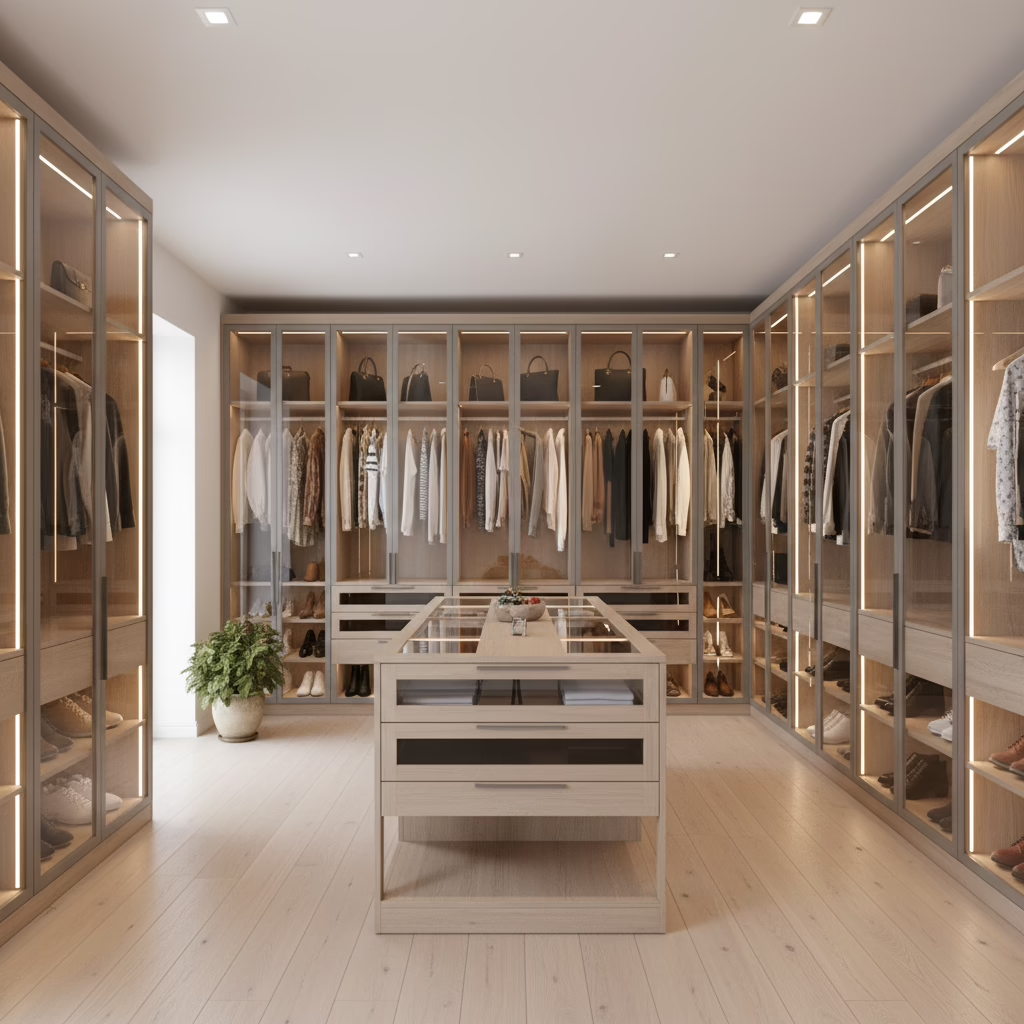
Custom wardrobe closet systems are purpose-built storage solutions designed around your clothing, accessories, and room dimensions. They maximize vertical space, improve daily organization, and create a polished look tailored to your habits. For homeowners near 11 Edvac Drive, our in-house design, factory-direct cabinetry, and professional installation make the process fast, precise, and stress-free.
By Ashok • Altima Kitchens And Closets
Last updated: 2026-04-21
Start here: your space-saving plan + table of contents
Start with clear goals, accurate measurements, and a design that fits your daily routine. Then choose a system type, materials, and accessories that match your space and style. This guide walks you through every step—from planning and layouts to installation and upkeep—so you finish with a closet that stays organized.
Use this section to jump to what you need most. We designed it for quick scanning and easy action.
- What are custom wardrobe closet systems?
- Why custom closets matter
- How the process works (design-to-install)
- Types and approaches
- Planning and measurements
- Materials and finishes
- Accessories and interior features
- Installation and timeline
- Pricing and budgeting factors
- Best practices
- Tools and resources
- Case studies and examples
- Maintenance and upgrades
- Frequently asked questions
- Conclusion + next steps
- Related articles
What are custom wardrobe closet systems?
Custom wardrobe closet systems are tailored storage solutions built to your room’s dimensions, inventory, and style. They include configurable hanging zones, shelves, drawers, and accessories, maximizing vertical space and daily efficiency. Unlike standard units, they’re designed around your routine and delivered with professional design, precise fabrication, and clean installation.
At Altima Kitchens And Closets, we design, manufacture, and install end-to-end systems that fit your home and habits. Our in-house team in the Greater Toronto Area (GTA) uses detailed 2D/3D design, factory-direct cabinetry, and coordinated installation to deliver a closet that looks great and stays organized.
- Tailored layouts: Double-hang, long-hang, and mixed storage mapped to your wardrobe.
- Optimization: Typical hanging depths run 22–24 inches; shelves often 12–15 inches deep to balance access and capacity.
- Finish control: From soft-touch laminates to painted MDF, you choose the palette and hardware profile.
Want inspiration and a walkthrough of our approach? Explore our dedicated closets service page for examples and more details.
Why custom closets matter
A well-designed closet saves time every morning, protects garments, and keeps rooms clutter-free. Smart zones for hanging, folded items, and accessories reduce decision fatigue. Over months and years, better storage improves how each bedroom feels, functions, and maintains value.
For many GTA homeowners, closet capacity is the difference between calm and clutter. We see three recurring wins when families adopt custom wardrobe closet systems:
- Time savings: Clear sightlines and consistent zones speed up daily routines.
- Space reclaimed: Floor-to-ceiling designs convert dead space into usable storage.
- Home coherence: Matching finishes and hardware harmonize with adjacent rooms and even your kitchen and living spaces.
In our experience, the fastest path to a tidy home is limiting decision points: where shoes live, where seasonal items go, and how accessories dock. A systematic design does exactly that.
How the process works (design-to-install)
The best path is simple: assess, design, manufacture, install, and refine. You share goals and measurements, we produce 2D/3D designs, fabricate in-house, and complete a clean installation. Final adjustments and care tips ensure your closet performs on day one and year five.
Our structured, end-to-end workflow keeps you informed and on schedule.
- Discovery: We inventory clothing, shoes, and accessories, then define priorities like long-hang vs. double-hang.
- Measurement: We confirm height, width, depth, and obstructions; 8–9 foot ceilings offer excellent vertical options.
- 2D/3D design: Visualize layouts, finishes, lighting, and accessory placements before sign-off.
- Manufacturing: Factory-direct cabinetry with CNC machining and professional finishing.
- Installation: Clean, coordinated work with dust management and tidy handover.
- Aftercare: Guidance on maintenance, adjustments, and future add-ons.
Prefer a deeper dive on working with a provider? Here are helpful reads: tips to work with the best custom closet company and how custom closets transform your home.
Types and approaches
Custom wardrobe closets span three main builds: modular systems, semi-custom solutions, and fully built-in cabinetry. Choose modular for speed and reconfiguration, semi-custom for better fit and style control, and built-ins for maximum integration, longevity, and architectural presence.
Each path balances permanence, flexibility, and aesthetics. The right choice depends on your home, future plans, and design goals.
Comparison: modular vs. semi-custom vs. built-in
| Attribute | Modular | Semi-Custom | Built-In |
|---|---|---|---|
| Fit to Walls/Ceiling | Standard widths; filler panels as needed | Closer fit with tailored sections | Exact, wall-to-wall integration |
| Lead Time | Typically fastest | Moderate | Longest (fabrication + finishing) |
| Reconfigurable | Highly | Moderate | Low |
| Structural Needs | Wall-mounted panels | Anchored cabinetry | Framed, scribed, fully anchored |
| Use Cases | Condos, kids’ rooms, rentals | Primary bedrooms, dens | Principal suites, custom homes |
| Design Range | Good | Great | Unlimited |
| Onsite Disruption | Low | Moderate | Moderate to High |
| Warranty Alignment | Manufacturer-level | Manufacturer + installer | System-level coverage |
If you’re still deciding, our team can show you 2D/3D options for each approach, including shelves, drawers, and lighting choices tailored to your space.
Planning and measurements
Accurate measurements drive great design. Measure width, depth, height, and note all obstructions, then map zones to your wardrobe. Standard hanging depths are about 22–24 inches; target 36 inches of walkway clearance in walk-ins for comfortable movement and access.
Here’s a quick planning checklist we use during discovery:
- Measure the shell: Width at floor and ceiling, three points each wall; height at left, center, right.
- Note constraints: Doors, windows, vents, outlets, baseboards, sloped ceilings.
- Inventory items: Long dresses, suits, folded knits, shoes, bags, jewelry, hats, luggage.
- Zone targets: Double-hang for shirts/pants, long-hang for dresses/coats, shelves for sweaters and denim.
- Lighting plan: Valance or LED strips for visibility; motion sensors for convenience.
Local considerations for 11 Edvac Drive
- Plan around seasonal shifts; create top-shelf zones for off-season storage and easy swaps during shoulder months in the GTA.
- Book design consultations ahead of holiday periods when many homeowners schedule makeovers and installation calendars fill quickly.
- Condos and townhomes often have tighter shafts and elevators; modular sections and staged delivery keep site logistics smooth.
Need a primer on organizing? Start with our guide on how to organize your life with the best closet company.
Materials and finishes
Choose durable case materials, long-wearing finishes, and hardware that matches your interior style. Melamine and plywood boxes are common; painted MDF or premium laminates deliver refined fronts. Quality slides, hinges, and handles complete a system that feels solid day after day.
Material selection influences longevity, feel, and maintenance.
- Cabinet boxes: Melamine for consistency and cleanability; plywood for robust screw-holding and resilience.
- Fronts: Painted MDF for crisp profiles; prelaminated options for durability and easy care.
- Hardware: Soft-close hinges/runners; matte black, brushed brass, or nickel pulls coordinate with nearby spaces.
- Lighting: Integrated LEDs with diffusion reduce glare and improve color accuracy when choosing outfits.
Because we manufacture with CNC precision and professional finishing, you can maintain consistent lines, reveals, and door gaps throughout the room.
Accessories and interior features
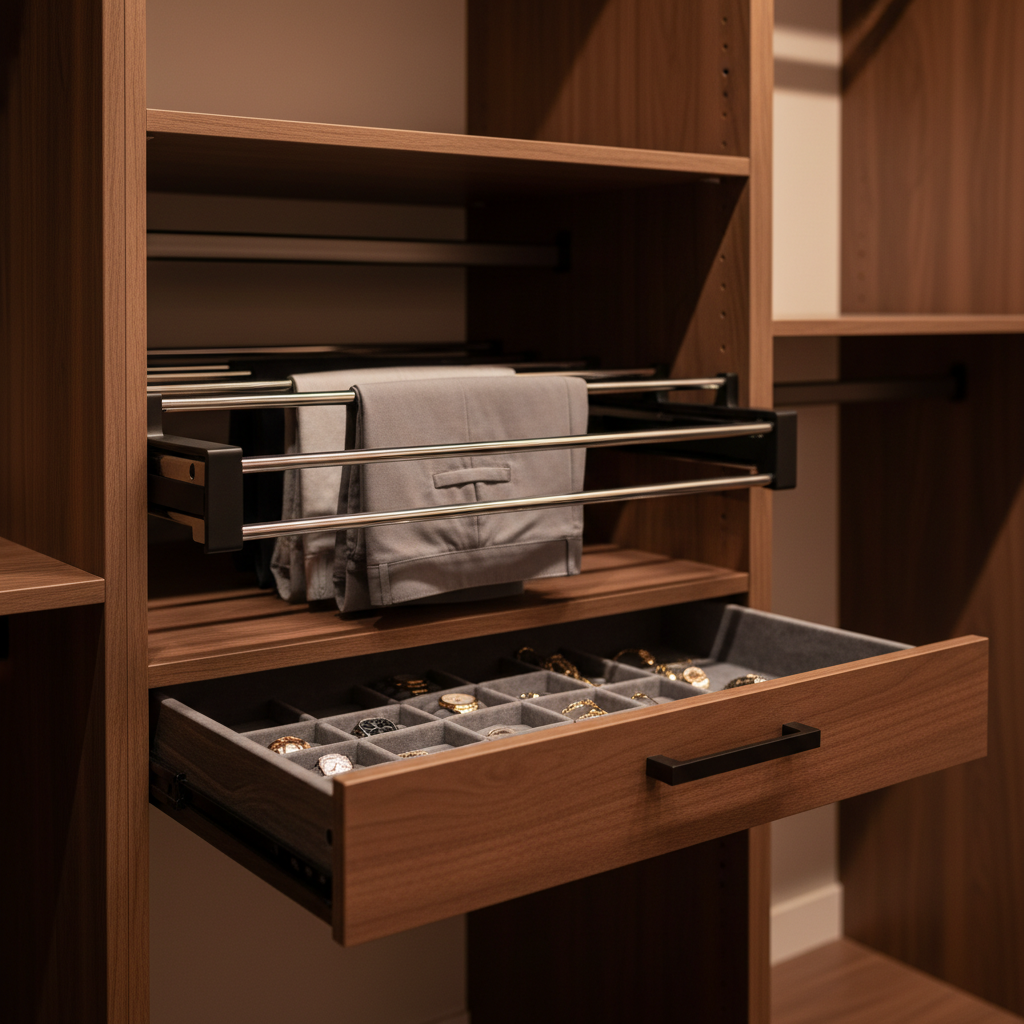
The right accessories double usability without expanding the footprint. Start with pull-out racks, jewelry and drawer inserts, tilt-out hampers, shoe shelves, valet rods, and lighting. Design each zone around your morning routine for a closet that “remembers” where everything goes.
High-impact options we recommend often include:
- Pull-out pantry–style storage, reimagined: Slim pull-outs for ties/belts function like kitchen spice pull-outs—narrow but high-yield.
- Velvet-lined drawers: Gentle on jewelry and watches, with optional dividers to separate daily wear from formal pieces.
- Pant and skirt racks: Glide-out rails keep fabric crease-free and easy to sort.
- Shoe solutions: Flat shelves set 8–9 inches apart work for most pairs; angled shelves display favorites.
- Valet rods: Stage tomorrow’s outfit and save five minutes every morning.
Explore more closet inspirations and layouts in our post on transforming your closet space.
Installation and timeline
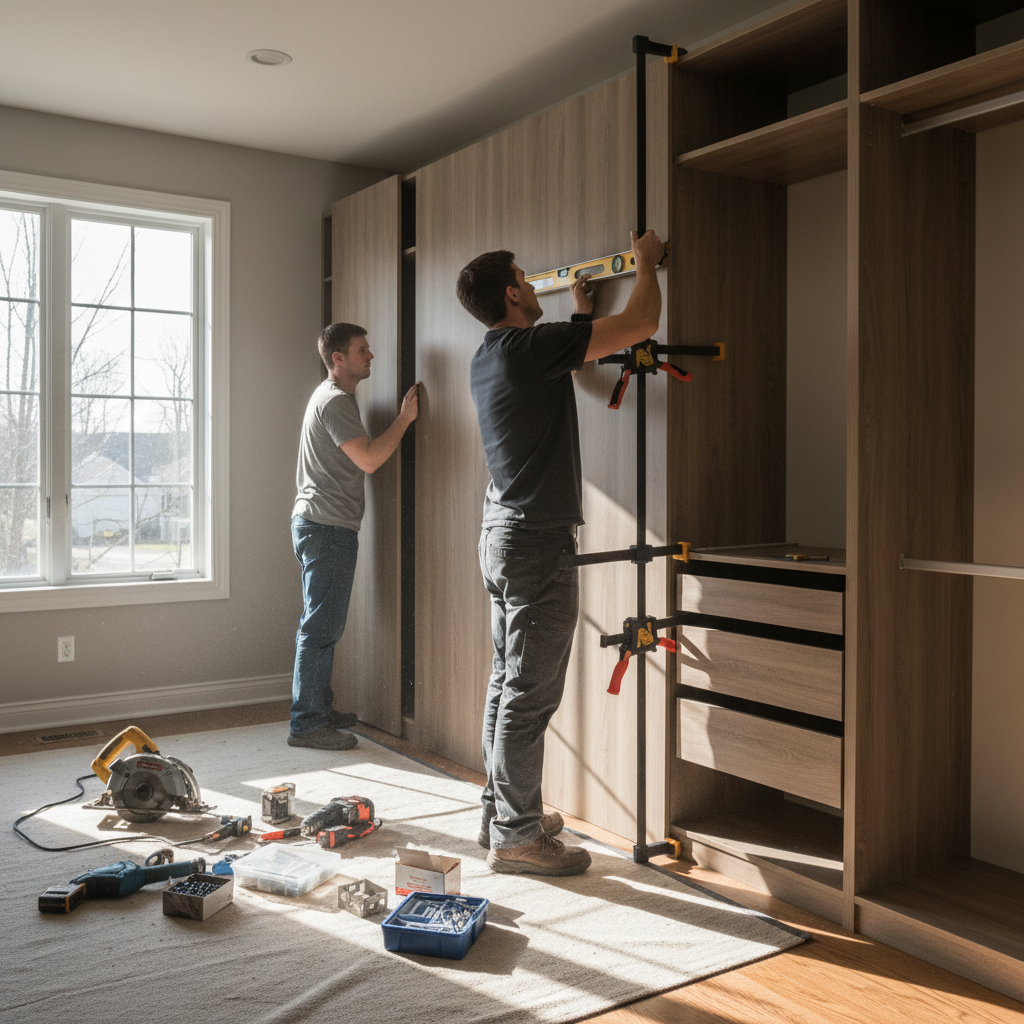
A clean install starts with confirmed dimensions, staged components, and a tidy work zone. Most projects complete in a focused window, with wall prep, anchoring, and final adjustments. Expect dust control, clear communication, and a thorough handover of care tips and warranties.
What installation looks like in practice:
- Pre-install check: Verify walls and floors are ready; confirm electrical for lighting.
- Staging: Sections arrive protected and labeled for efficient assembly.
- Anchoring: Stud-finding, level setting, and proper fasteners ensure long-term stability.
- Fit + scribe: Tight fits at walls and ceilings; trims hide small variances in older homes.
- Final pass: Door/drawer tuning, touch-ups, and a walkthrough of features.
If you’re coordinating larger home projects, keep an eye on regional calendars—citywide happenings can affect trades scheduling. Local event listings such as GTA event schedules help you plan around busy periods.
Pricing and budgeting factors
Budget is driven by scope, materials, accessories, and installation complexity. Larger wall-to-wall builds, premium finishes, lighting, glass, and specialty hardware add to investment, while simpler modular layouts and standard finishes keep budgets lean. Focus on value: durability, daily usability, and timeless design.
While we don’t list prices online, here are the biggest drivers to weigh:
- Size and sections: More linear feet and taller units increase materials and assembly time.
- Materials: Plywood boxes, painted MDF fronts, and premium laminates change the investment profile.
- Accessories: Pull-outs, hampers, glass doors, mirrors, and lighting add utility and complexity.
- Site conditions: Uneven walls/floors and tricky access require extra prep and scribing.
- Timeline: Compressed schedules may require additional coordination.
For clarity, we provide itemized, upgrade-friendly quotes and full 2D/3D visualizations so you can make confident, value-first decisions without surprises.
Best practices
Design for your routine, not an abstract checklist. Right-size hanging vs. folding, add task lighting, and include at least one flexible zone for life changes. Standardize heights where possible and label zones during the first month to build habits that stick.
Design moves that work
- Right-size zones: Double-hang for shirts, long-hang for dresses/coats, shelves for knits. Adjust after your first inventory.
- Depth matters: About 22–24 inches for hanging comfort; 12–15 inches for folded stacks.
- Lighting: Add LEDs where you’ll read labels or match colors; aim lights toward fronts, not eyes.
- Ergonomics: Keep daily-use drawers between knee and shoulder height for easy access.
- Future-proofing: Include adjustable shelves or spare cleats for lifestyle changes.
For more design context and inspiration, explore our article on designing your dream closet.
Tools and resources
You don’t need many tools to plan, but you do need good ones: a reliable tape, level, and a simple wardrobe inventory sheet. For execution, trust professional crews with the right anchors, saws, and dust control. A clear checklist keeps installations smooth and predictable.
Practical resources we share with homeowners include:
- Measurement worksheet: Capture every wall, obstruction, and ceiling height with notes.
- Wardrobe inventory: Count long-hang, short-hang, folded items, and shoes to guide zoning.
- Finish sampler: Evaluate color in both daylight and evening light; check sheen and texture.
- Lighting plan sketch: Identify power locations and motion-sensor opportunities.
Coordinating work in a kitchen or laundry at the same time? Specialized cleaning and optimization resources—like ventilation system optimization and exhaust cleaning overviews—can be helpful references for broader project planning.
Case studies and examples
Real homes show what’s possible. Below are quick snapshots of GTA projects—each with a clear challenge, tailored design, and tidy outcome. Use them to spark ideas and decide which features matter most in your own space.
Primary suite, GTA family home
- Challenge: Overstuffed reach-ins with zero long-hang capacity.
- Design: Wall-to-wall built-in with double-hang sections, dedicated long-hang bay, jewelry drawers, and valet rods.
- Result: Clear morning flow; outfits pre-staged; no overflow into the bedroom.
Condo reach-in, downsizing couple
- Challenge: Narrow reach-in with 8-foot ceiling and sliding doors.
- Design: Modular system with shallower shelves (12–13 inches), slim pull-outs for belts/ties, and shoe stacks below double-hang.
- Result: Everything visible at a glance; no door conflicts; easy to reconfigure.
Shared kids’ room, semi-detached
- Challenge: Fast growth and changing wardrobes.
- Design: Adjustable shelves, labeled drawers, and two double-hang bays at different heights.
- Result: Kids can self-serve daily outfits; parents spend less time sorting.
Browse more ideas in our post on how to choose the best custom closet company or our feature on elevating your storage space.
Maintenance and upgrades
Good systems need little maintenance: wipe surfaces, check fasteners annually, and keep moving parts clean. As your needs change, add shelves, adjust rods, or introduce new pull-outs. A flexible design lets your closet evolve without starting over.
Simple upkeep that preserves the look and feel:
- Seasonal reset: Rotate off-season items to high zones; donate what you don’t wear.
- Hardware check: Tighten handles, adjust hinges/runners if you feel play or rubbing.
- Surface care: Use non-abrasive cleaners; avoid oversaturating edges.
- Lighting: Replace LED drivers or strips if flicker appears; keep lenses dust-free.
Many homeowners revisit their layout at the one-year mark. By then, you’ll know exactly which zones earn an upgrade—often a drawer insert here, a shoe shelf there, or a valet rod where it saves the most time.
Frequently asked questions
These quick answers cover planning, materials, configuration, and installation. Each response is concise and practical so you can move your project forward with confidence.
What’s the difference between modular and built-in systems?
Modular systems use standardized sections you can reconfigure later, making them quick to install. Built-ins are scribed and anchored to fit your walls exactly, delivering a seamless, furniture-like look with greater permanence and design freedom.
How deep should a hanging closet be?
Plan about 22–24 inches in depth for most hanging sections so clothes clear doors and walls. For folded items, 12–15-inch-deep shelves work well. Measure your hangers and longest garments to confirm comfortable clearance.
Can lighting be integrated into closet systems?
Yes. LED strips, puck lights, and valance lighting improve visibility and color accuracy. Motion sensors and door-activated switches add convenience. Plan power locations during design so wires and drivers stay concealed.
What accessories add the most value day to day?
Valet rods, pant racks, jewelry inserts, and tilt-out hampers make the biggest daily difference. They reduce rummaging and keep delicate items protected. Start with one or two based on your routine, then add more after living with the system.
Conclusion + next steps
Your ideal closet blends accurate measurements, thoughtful zoning, durable materials, and the right accessories. A factory-direct, in-house team turns that plan into a smooth, on-time installation. Start with inventory and goals, then design the space around how you actually live.
Key takeaways
- Map zones to your wardrobe; don’t design in the abstract.
- Use measured depths and clearances that match real garments.
- Pick materials and hardware for daily durability and feel.
- Choose modular, semi-custom, or built-in based on permanence and style.
- Keep a flexible zone for life changes; upgrade after year one.
Ready to see your options? Book a showroom or virtual design session with our in-house team. We’ll prepare itemized, upgrade-friendly quotes and full 2D/3D designs so you can move forward confidently.
Soft CTA: Get expert guidance from the Altima team at our Closets page and start planning today.
Final CTA: If you’re near 11 Edvac Drive, schedule a discovery session with our designers and see materials under one roof.
Related articles
Dig deeper into planning, inspiration, and provider selection. These short reads expand on the steps you’ll take from concept to everyday use.
Related Posts
Why Choose Kitchen Renovation Company
Nowadays, Kitchen spaces are not only a place for cooking and serving food, but these areas act as a statement, as they speak a lot about a family, the philosophy and personality of individuals, and spaces. If you admire aesthetics and adorn the beauty of your home, you must pay attention to the interior design […]
How a Kitchen Renovation Contractor is Changing the Game
Lifestyle is all about bringing something coherent to the overall experience of living. The kitchen and closets stand as two of the most influential spaces in a home that add to the overall experience of living. A Kitchen Renovation Contractor in Whitby by the name of Altima Kitchen and Closets Inc. is changing the overall […]
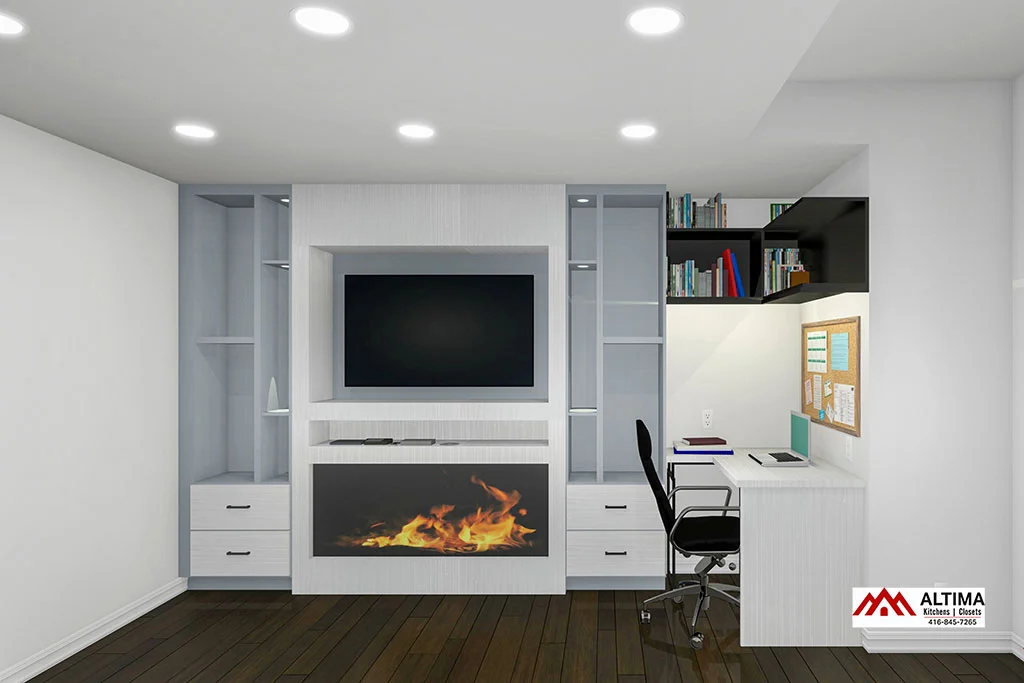
How Media unit contractor in Whitby is Changing the Game
Lifestyle is all about bringing something coherent to the overall experience of living. The kitchen and closets stand as two of the most influential spaces in a home that add to the overall experience of living. A Media Unit Company in Whitby by the name of Altima Kitchen and Closets Inc. is changing the overall […]