The Custom Closet Upgrade Guide: Get a Clean Look in 2026
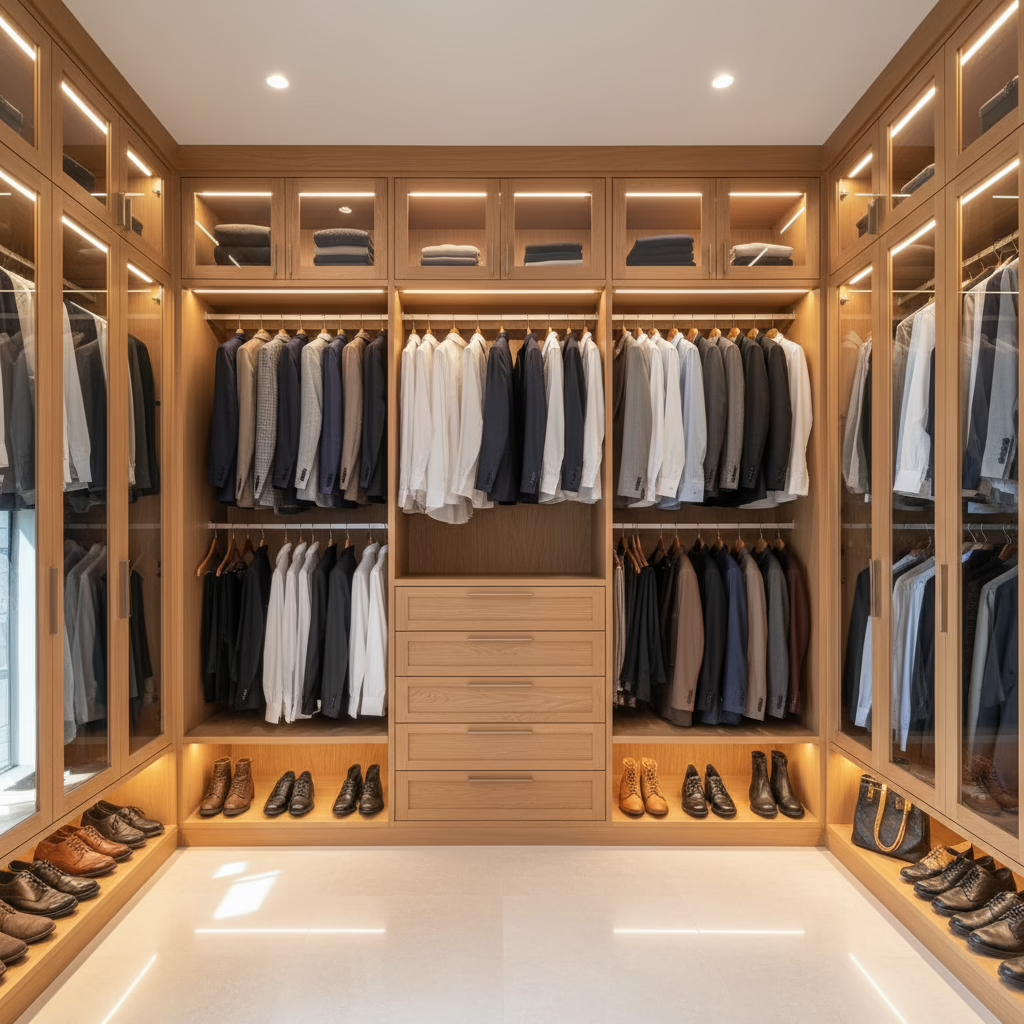
Custom closet systems are built-to-fit storage solutions that organize clothing, shoes, and accessories with tailored shelves, hanging, drawers, and lighting. They maximize every inch, speed up daily routines, and create a clean, fitted look. For homeowners near 11 Edvac Drive in Brampton, an in-house design–build team keeps planning and installation seamless from day one.
By Ashok — Altima Kitchens and Closets
Last updated: May 20, 2026
Quick Summary
A custom closet system uses measured components—panels, shelves, rods, drawers, and accessories—designed around your wardrobe and room. The payoff is more usable space, faster mornings, and a polished, built-in finish. With one team handling design, manufacturing, and installation, details stay aligned and schedules stay on track.
In this complete guide, you’ll learn what custom closet systems are, why they matter, how they’re designed and installed, and which layouts work best for condos and detached homes across the GTA. You’ll also see pro tips, checklists, and local notes from our Brampton-based team.
- Clear definitions and benefits of custom closet systems
- Step-by-step overview from measure to final install
- Build approaches, layouts, and accessory strategies
- Best practices that hold up in year 10 and beyond
- Templates, tools, and mini case studies from GTA homes
What Is a Custom Closet System?
A custom closet system is a built-to-fit storage solution that combines vertical panels, adjustable shelving, hanging zones, drawers, and specialty inserts. It’s planned to your exact dimensions and wardrobe mix, then fabricated and installed as a permanent upgrade for organization, visibility, and long-term durability.
Think of it as cabinetry engineered for clothing. Instead of forcing your habits into a generic box, designers map the actual contents of your closet and your daily routine. We measure width, height, and depth at multiple points to account for wall bow and baseboards, then translate the data into 2D elevations and 3D visuals you can review before anything is built. Those visuals reduce second-guessing and catch layout issues early.
Material choices vary by room and use. Textured melamine and high-pressure laminates are popular for family spaces because they’re scratch-resistant and easy to clean. Painted MDF and wood veneers elevate dressing rooms and walk-ins. Premium hardware—soft-close slides, under-cabinet LEDs, and sturdy hang rails—keeps moving parts smooth under daily loads.
Core components you’ll encounter
- Vertical panels and cleats set the structure and anchor to studs for load transfer.
- Adjustable shelves (often on 32 mm systems) adapt to seasonal changes and growth.
- Single and double hanging right-sizes zones for 26–28 inch shirts or 60–72 inch dresses.
- Drawers with 6–10 inch fronts corral T-shirts, intimates, and accessories.
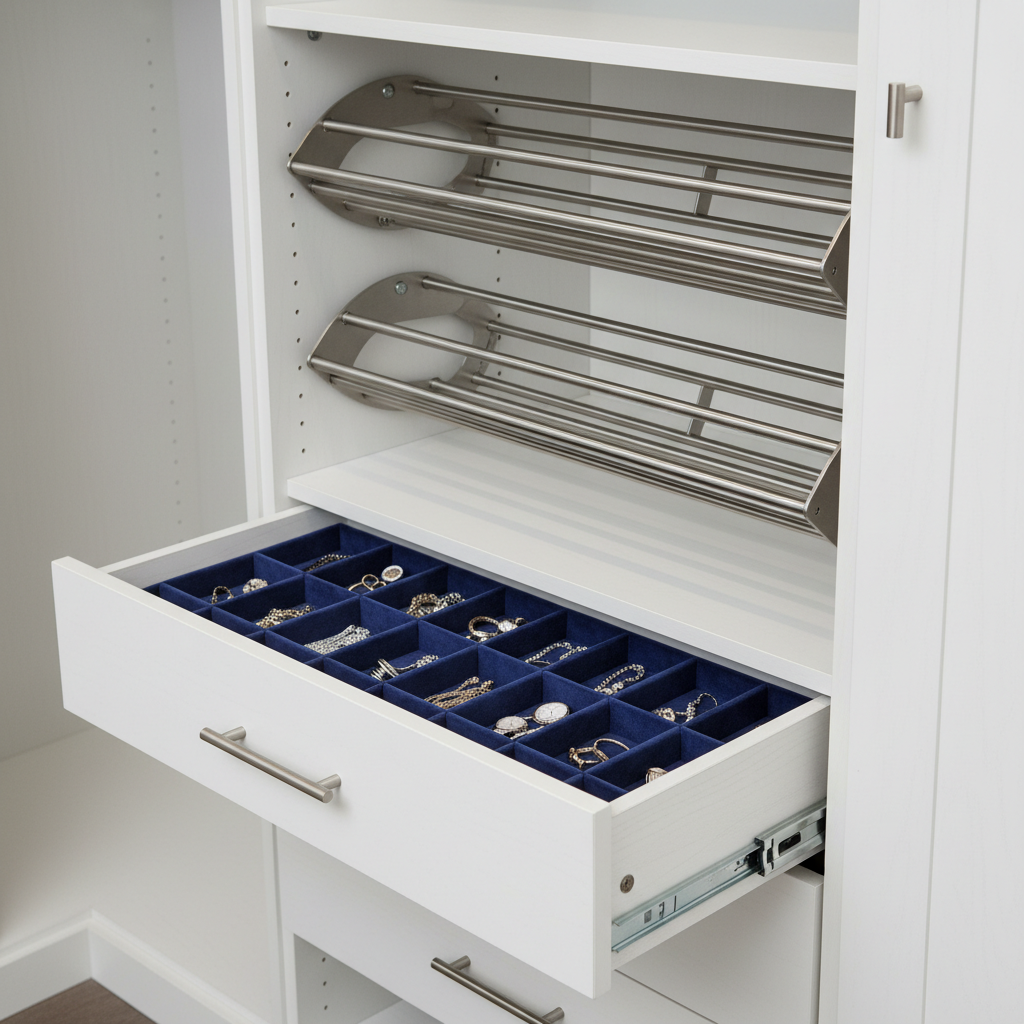
- Specialty accessories—pull-out shoe trays, valet rods, belt/tie racks—save minutes weekly.
- Lighting removes shadows and makes color matching easier in the morning rush.
Across Toronto and Brampton, we often see sloped ceilings, bulkheads, and odd depths. Custom closet systems convert those quirks into storage wins while preserving traffic flow and sightlines. When designed well, the system feels like it has always belonged to the room.
Why Custom Closet Systems Matter
Custom closet systems reduce clutter, speed up routines, and help maintain order over time. They use vertical height efficiently, give every item a permanent home, and improve lighting and ergonomics—leading to easier upkeep and, in many homes, better perceived resale appeal.
Organization isn’t just aesthetic; it’s operational. When shirts hang at the right height, shelves fit sweater stacks, and shoes rest on dedicated trays, you spend less time searching and more time doing. That saved time compounds: even a few minutes regained each morning translates into hours over a month. Meanwhile, consistent “homes” for categories (belts here, sweaters there) make resets after laundry faster and calmer.
In our experience designing across the GTA, three variables drive satisfaction: the heights fit the users, the mix of drawers/shelving/hanging matches the wardrobe, and the lighting eliminates dark corners. Get those right and the closet basically manages itself.
For a deeper primer on layouts and daily routines, see our own closet organization systems guide—it expands on habits-based zoning and quick resets for busy households.
How Custom Closet Systems Work (From First Measure to Final Install)
The process starts with discovery and measurement, moves through 2D/3D design and material selections, then finishes with factory fabrication and professional installation. With an in-house team, decisions, timelines, and quality stay aligned from sketch to final wipe-down.
Here’s the typical workflow we run from our Brampton facility serving the GTA:
- Discovery call and goals. Style preferences, inventory (shoes, suits, dresses), frustrations, and must-haves.
- On-site measure. Confirm widths/heights/depths in three places; note baseboards, outlets, vents, bulkheads, and door swing.
- 2D/3D design. Review elevations, sections, and accessory placement; adjust for ergonomics and traffic flow.
- Selections. Choose finishes, hardware, lighting, and glass options that match your home’s style.
- Fabrication. CNC machining produces precise edge-banded parts; professional spray finishing yields even coats.
- Installation. Leveling, stud anchoring, scribing to baseboards, door/drawer alignment, and lighting tests.
- Quality check. Hinge/slide tension set, surfaces cleaned, and homeowner walkthrough documented.
Because Altima manufactures in-house with Italian CNC machinery and a dedicated spray booth, we control tolerances and finish quality throughout. That reduces handoffs (and errors) compared to multi-vendor setups. It also allows for thoughtful tweaks if site conditions differ slightly from drawings.
Condo installs add logistics—elevator bookings, hallway floor protection, and quiet-hour scheduling. Detached homes focus on dust control and staging for minimal disruption. Either way, a single accountable team keeps the plan moving. For a service overview and options, browse our custom closet design & installation page.
Types, Layouts, and Approaches
Most custom closet systems follow one of three build approaches—wall-mounted, floor-based, or hybrid—then branch into layouts like reach-ins, walk-ins, and dressing rooms. Your choice depends on room size, wall conditions, and how you like to access clothing, shoes, and accessories.
Three build approaches
- Wall-mounted (floating): Panels hang on a steel rail. This keeps baseboards intact, simplifies cleaning, and adds an airy look. Great for condos.
- Floor-based (cabinet look): Sections rest on toe-kicks or feet. It delivers a furniture-like presence, supports deeper drawers, and handles heavier loads.
- Hybrid: Mix floating for open zones with floor towers for drawers or long-hang. Ideal when you want access plus a premium, built-in look.
Common layouts
- Reach-in: Double-hang sections (about 40 inches + 40 inches) paired with 10–12 inch shelf spacing for stacks.
- Walk-in: Opposing walls with a center island, valet rods near the door, and glass fronts for most-used items.
- U-shaped dressing room: Makeup niche, hamper pull-outs, and angled shoe shelves to improve sightlines.
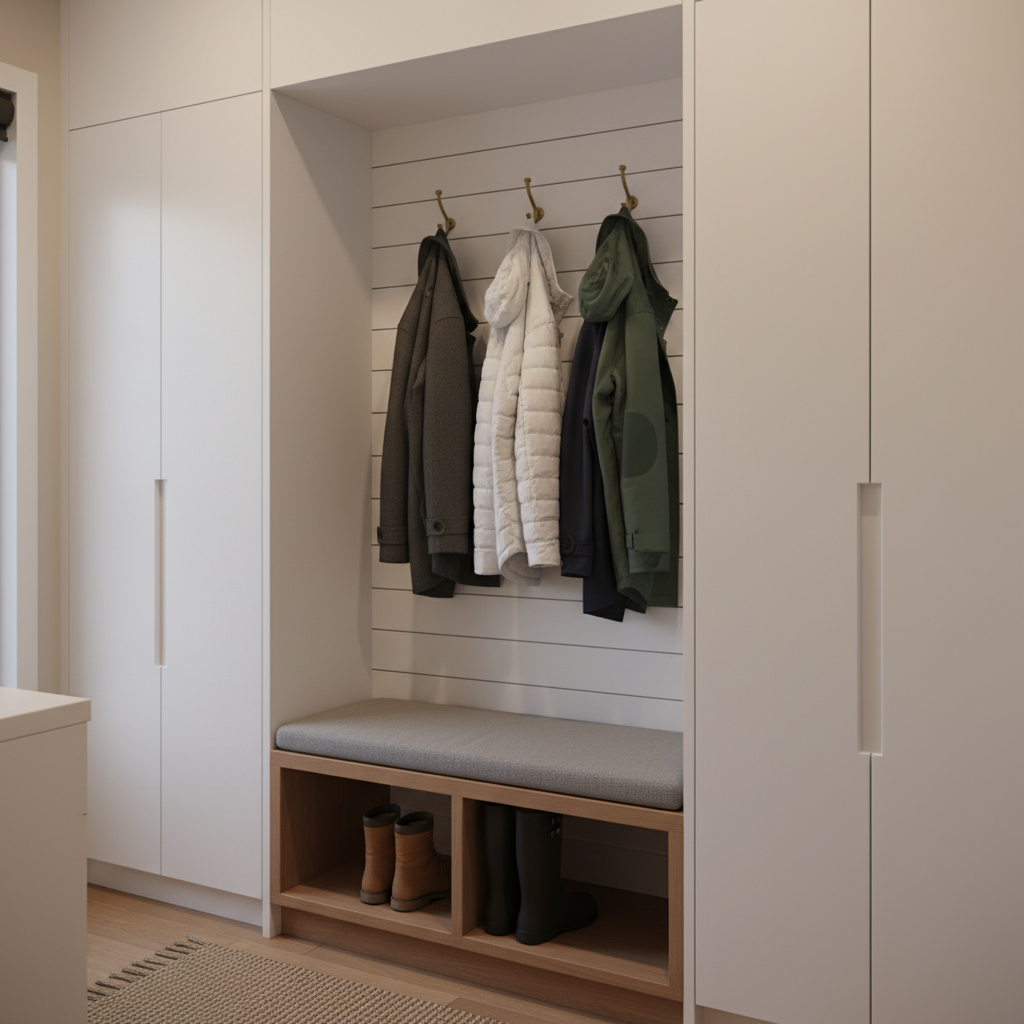
- Mudroom/entry: Bench at ~18 inches seat height, hooks at two levels, closed cabinets overhead for off-season gear.
Quick comparison table
| Approach | Best for | Pros | Watch-outs |
|---|---|---|---|
| Wall-mounted | Condos, smaller rooms | Airy look, easy cleaning | Needs precise anchoring; less furniture-like base |
| Floor-based | Walk-ins, large wardrobes | Premium feel, deeper drawers | Requires level floors; more material |
| Hybrid | Mixed needs | Flexible, balanced aesthetic | Careful transitions at floor/wall |
If you’re debating reach-in vs. wardrobe cabinet, our overview on custom wardrobe closet systems compares cabinet-depth solutions to rail-and-panel systems with real-world photos and pros/cons.
Best Practices for a Closet You’ll Love in Year 10
Design for longevity: zone by category, size shelves and hanging to your real inventory, add lighting, and specify durable finishes. Build adjustability into shelves and use accessories strategically where they save time every week rather than adding clutter.
Design and planning
- Right-height hanging: Typical double-hang splits at ~40 inches; long-hang runs 60–72 inches. Place rods where you can see hanger shoulders without stooping.
- Drawer mix: 6–10 inch fronts for T-shirts and intimates; 12–14 inch for sweaters or linens. Keep top drawers shallow for visibility.
- Shelf spacing: 10–12 inches for stacks; use vertical dividers for handbags and clutches to prevent slumping.
- Lighting: Valance LEDs near the front edge reduce shadows. In reach-ins, motion sensors stop door-fumble lighting dances.
Materials and durability
- Melamine/laminate excels for busy family zones—stain-resistant and easy to clean.
- Painted MDF brings furniture-level finish when properly sprayed and cured.
- Hardware matters: soft-close slides, concealed hinges, and solid closet rods for real-world loads.
Curious how door construction differs by style? This overview of door types and construction details from an industry retailer shows common frame profiles and panel options you’ll encounter in cabinetry, which often translate to closet doors in dressing rooms. See standard vs. custom door construction for terminology and examples.
Installation details
- Stud anchoring and level shimming protect alignment over time, especially with tall towers.
- Scribing to baseboards delivers a dust-free, built-in finish without awkward gaps.
- Condo logistics require elevator bookings, hallway protection, and quiet-hour planning.
Because Altima designs, manufactures, and installs under one roof, we coordinate those details instead of passing them between vendors. That reduces change orders and protects timelines. We also back our craftsmanship with lifetime warranties on MDF Painted and Prelaminated doors.
For more accessory ideas and capacity planning, explore our custom closet organizer installation explainer—it covers valet rods, pull-outs, and divider strategies that save you time every single week.
Plan with a one-stop team
Prefer a single point of accountability? Our in-house design, factory-direct fabrication, and professional installation keep decisions fast and projects on schedule. Book a design consultation to review 2D/3D options tailored to your space and routine.
Tools and Resources (Templates, Checklists, and Tech)
Kick off with a simple inventory worksheet, a tape measure, and photos of your current closet. 2D/3D drawings convert those notes into elevations and sections, while finish samples and hardware boards help finalize style and durability before build.
Starter inventory checklist
- Tall dresses and coats (count long-hang inches you need)
- Shirts, blouses, pants (estimate double-hang inches)
- Shoes by type (heels, sneakers, boots, seasonal)
- Foldables (sweaters, denim, workout gear)
- Accessories (belts, ties, jewelry, hats)
- Seasonal storage (bins, luggage, blankets)
Design and selection aids
- 2D plans and 3D visuals to vet traffic flow and heights before fabrication.
- Finish samples—melamine textures, paint chips, hardware boards for touch-and-feel testing.
- Lighting demos to dial in color temperature and brightness for true-to-life color.
If you’re researching cabinet-grade finishes used in closets and vanities, browse this primer on materials and options commonly seen in residential millwork: custom vanity materials overview. While focused on vanities, many finish choices align with closet cabinetry.
Want to connect closet upgrades with bigger plans? Many Toronto homeowners pair closets with kitchens or mudrooms for cohesive finishes and hardware. Our custom kitchen design ideas article shows how wood tones, task lighting, and hardware selections can echo from kitchen to closet for a unified home.
Real-World Examples from GTA Homes
Tailored design solves local constraints—condo reach-ins gain access without crowding, detached home walk-ins earn island storage, and mudrooms balance open hooks with closed cabinets for calm entries. These mini case studies mirror common GTA scenarios we see weekly.
Condo reach-in, downtown
- Wall-mounted system avoids baseboard cuts and keeps floors open for cleaning.
- Double-hang with adjustable shelves supports frequent laundry cycles and tight schedules.
- Motion-sensor LEDs improve visibility in deep corners and late-night returns.
Result: a reach-in that handles two people by assigning zones and adding a single valet rod for outfit staging near the door.
Detached home walk-in, Brampton area
- Floor-based towers with deep drawers hold sweaters and linens without sagging.
- Center island provides a stable surface for packing, folding, or accessory layout.
- Glass fronts on everyday sections reduce rummaging and keep the space visually calm.
Result: a walk-in that doubles as a dressing room and stays orderly thanks to right-height hanging and visible, shallow top drawers.
Mudroom for an active family
- Bench at ~18 inches seat height, plus cubbies below for boots and sports gear.
- Hooks in two heights (kids/adults) limit pile-ups after school and practice.
- Durable melamine interiors and easy-wipe fronts suit daily traffic and winter slush.
Result: faster exits and calmer returns—everything has a home. For more entry ideas, browse our mudroom cabinet plan with layouts and accessory guidance.
Local considerations for 11 Edvac Drive
- Plan condo logistics early: reserve elevators and pad common areas during installation to keep building operations smooth.
- Winter timing matters: schedule installs to minimize open-door time and use mats to protect new finishes from salt and slush.
- Weekday coordination: align parking access and quiet hours so fabrication delivery windows stay on track.
Frequently Asked Questions
Most homeowners ask about measurements, materials, and the timeline. Measure width, height, and depth in three places; choose durable finishes for family spaces; and expect a clear process from design sign-off to installation with updates at each step.
How do I measure for a custom closet system?
Measure width, height, and depth in three spots each (left/center/right; front/middle/back). Note baseboards, bulkheads, outlets, and vents. Photos help designers spot constraints. Accurate measurements lead to tighter fits and fewer surprises at installation.
Which materials hold up best over time?
For busy family spaces, textured melamine and high-quality laminates resist scratches and are easy to clean. Painted MDF delivers a premium, furniture-like look in dressing rooms when finished properly. Pair either with soft-close hardware and sturdy hang rails.
What’s the typical installation process like?
After design approval, components are fabricated, delivered, and installed. Installers level, anchor to studs, and scribe to baseboards. Doors and drawers are adjusted, lighting tested, and surfaces cleaned. Condo projects add elevator reservations and hallway protection.
Can a small reach-in closet handle two people?
Yes—assign zones. Use double-hang for shirts and pants, add shelf dividers for stacked items, and incorporate over-door storage for accessories. A single valet rod and labeled bins reduce overlap and make resets simple after laundry day.
Do custom closet systems fit odd ceilings and bulkheads?
Yes. Built-to-fit panels and scribed fillers adapt to sloped ceilings, bulkheads, and uneven walls. Designers measure in multiple spots to capture variations, then fabricate precise parts so the finished system looks seamless and uses every usable inch.
Key Takeaways
Design to your real inventory, specify durable finishes, and install with precision. A well-planned custom closet system fits your life today and adapts tomorrow—delivering daily calm, long-term order, and a polished, built-in look.
- Custom fit turns tricky corners and tall ceilings into storage gains.
- Lighting and hardware choices shape both the look and longevity.
- Pick wall-mounted, floor-based, or hybrid approaches based on room size and needs.
- One accountable team for design, fabrication, and install protects timelines and quality.
Conclusion: Your Next Step
Start with simple measurements and a quick inventory, then review 2D/3D options to see the fit before build. Coordinated design, factory fabrication, and pro installation transform cluttered closets into calm, high-function spaces—consistently and on schedule.
Ready to plan a system that fits your life? Bring photos and a short inventory to your consultation. If you’re near 11 Edvac Drive in Brampton, our in-house team can measure, design, manufacture, and install under one roof—so you get a seamless experience from first sketch to final wipe-down. For modular alternatives and pros/cons, see our take on modular wardrobe systems and how they compare to built-ins.
Want to connect your closet with a bigger home update? Our design-build team also tackles kitchens, vanities, media walls, and entries—helpful when you want cohesive finishes across a whole-home renovation. Explore options and inspiration in our GTA-focused resources, starting with custom closets explained.
For background on cabinet door styles and finish options you’ll see in dressing rooms and vanity-adjacent spaces, review these overviews and product examples: door construction basics, vanity material options, and standard cabinet dimensions example.
Related Posts
Why Choose Kitchen Renovation Company
Nowadays, Kitchen spaces are not only a place for cooking and serving food, but these areas act as a statement, as they speak a lot about a family, the philosophy and personality of individuals, and spaces. If you admire aesthetics and adorn the beauty of your home, you must pay attention to the interior design […]
How a Kitchen Renovation Contractor is Changing the Game
Lifestyle is all about bringing something coherent to the overall experience of living. The kitchen and closets stand as two of the most influential spaces in a home that add to the overall experience of living. A Kitchen Renovation Contractor in Whitby by the name of Altima Kitchen and Closets Inc. is changing the overall […]
How Media unit contractor in Whitby is Changing the Game
Lifestyle is all about bringing something coherent to the overall experience of living. The kitchen and closets stand as two of the most influential spaces in a home that add to the overall experience of living. A Media Unit Company in Whitby by the name of Altima Kitchen and Closets Inc. is changing the overall […]