Kitchen Renovation Contractors: Cut Costs Without Losing Style
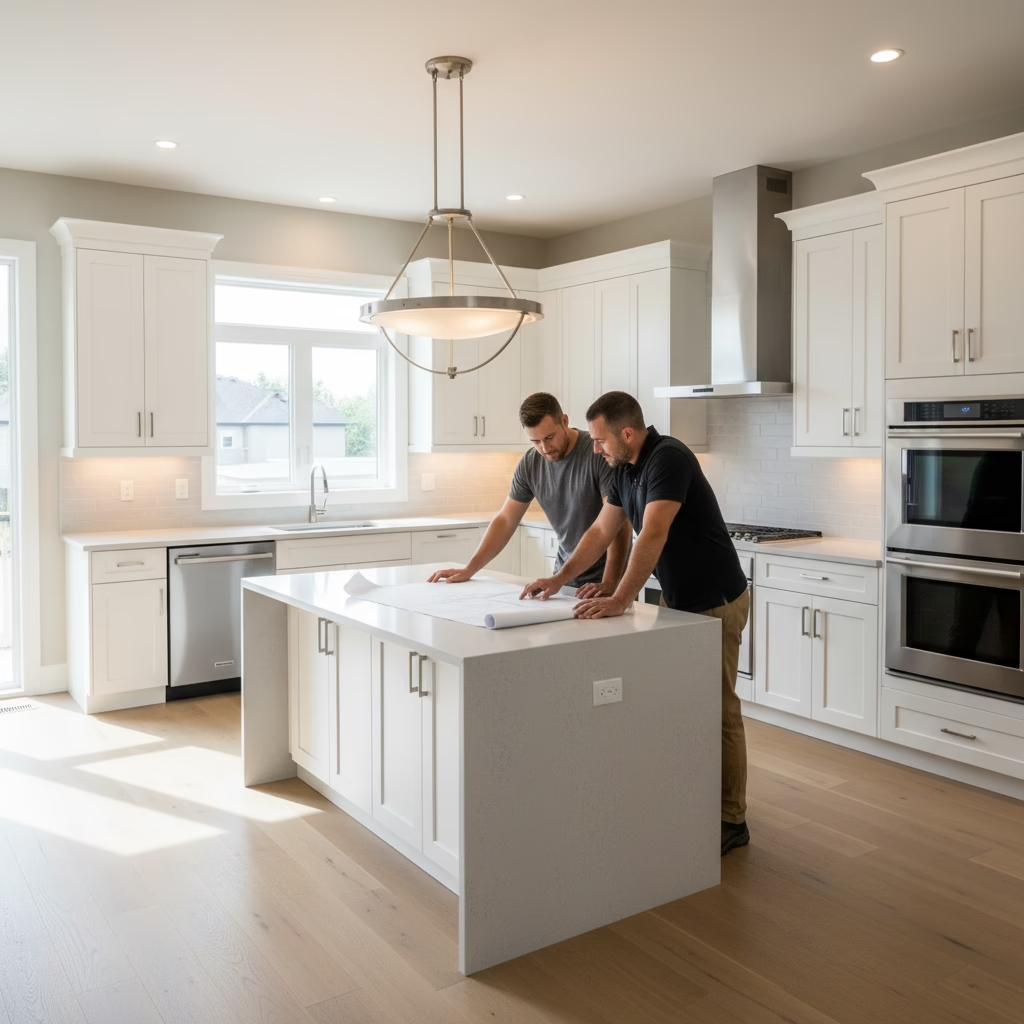
Kitchen renovation contractors are licensed professionals who plan, manage, and build kitchen upgrades from design through installation. In 11 Edvac Drive and across the GTA, design-build teams like Altima Kitchens and Closets coordinate drawings, factory-direct cabinetry, and on-site trade work so you keep the style you want without schedule or quality compromises.
By Ashok • Last updated: 2026-06-06
If you’re weighing a remodel, you want beauty, durability, and zero drama. This complete guide shows how to evaluate kitchen renovation contractors, align scope with priorities, and run a smooth project—without discussing specific prices. You’ll see where design-build shines, what to ask in a kickoff meeting, and how factory-direct cabinetry safeguards finish quality.
Summary and table of contents
Choose kitchen renovation contractors who provide end-to-end design-build, transparent scopes, and in-house cabinetry. Prioritize 2D/3D design, a documented schedule, and quality controls like CNC manufacturing and spray-booth finishing. Use the checklist and comparison table below to validate fit before you sign.
Here’s what you’ll learn and use right away:
- How design-build simplifies selection, timelines, and accountability
- What a strong scope of work includes—and how to spot gaps
- Ways to preserve style and function with smart material choices
- Who does what on your project team and how to keep momentum
- A contractor comparison table you can use in interviews
- Best-practice checklists for pre-construction, install, and closeout
- Local nuances for 11 Edvac Drive and wider GTA homes and condos
- When factory-direct cabinets, CNC cuts, and spray finishing matter
- How 2D/3D kitchen design reduces rework and selection regret
What is a kitchen renovation contractor?
A kitchen renovation contractor coordinates design, trades, materials, and inspections to deliver a finished kitchen. The best firms work design-build, offering 2D/3D plans, factory-direct cabinetry, and in-house installers so decisions, scheduling, and quality control stay under one roof from day one.
Simple definition, big impact: a contractor is your single point of accountability. That matters when dozens of decisions stack up—layout, storage accessories, lighting, cabinetry, appliances, ventilation, and finishes. In our experience, homeowners are most successful when design, manufacturing, and installation are aligned from the first consultation.
- Design-build model: One team handles drawings, cabinets, and install coordination. That reduces change orders and handoff delays.
- General contractor (GC) model: Coordinates separate designer, cabinet supplier, and trades. Works well when you already have drawings and selections finalized.
- Specialty subs: Countertops, tile, or electrical teams execute defined scopes inside a larger plan controlled by a GC or design-build firm.
At Altima Kitchens and Closets, our in-house designers, factory team, and installers collaborate daily. That’s how we ensure shaker doors align perfectly, quartz seams land in the right spots, and pantry lighting meets your day-to-night routines.
Why the right contractor choice matters
The right kitchen renovation contractor prevents delays, design compromises, and rework. Look for 2D/3D design, itemized scopes, and verified manufacturing quality. With unified teams, you get consistent finishes, tighter schedules, and fewer miscommunications between design, factory, and site.
Renovations live or die by coordination. Plans must match manufacturing tolerances, and delivery dates must match install windows. When those puzzle pieces align, your renovation feels calm and predictable.
- Clarity controls chaos: A precise scope, selections list, and schedule baseline reduce last-minute scrambles.
- Visual-first planning: 2D and 3D drawings expose conflicts before they become drywall dust.
- Factory-direct advantages: CNC accuracy and professional spray finishing create consistent doors and drawer fronts across the whole kitchen.
- Warranty confidence: Lifetime coverage on select door programs signals long-term commitment to material and finish integrity.
Our structured workflow—from analysis and planning to installation and punch list—keeps momentum. Many clients tell us the WhatsApp status updates and on-site walk-throughs reduce stress more than anything else.
How the kitchen renovation process works
Successful kitchen projects follow a clear arc: discovery, design (2D/3D), engineering and ordering, manufacturing, site preparation, installation, and final handoff. Each stage has defined approvals and checkpoints so selections, measurements, and timelines stay synchronized.
Here’s the practical sequence we use on GTA projects:
- Discovery and goals: We clarify how you cook, entertain, and store. That shapes the floor plan, work triangle, and appliance choices.
- Measurement and as-built: Precise site dimensions drive cabinet engineering and countertop templating later.
- Concept design (2D): We map major zones—prep, sink, cooking, storage—and evaluate traffic flow.
- 3D visualization: You preview the space with door styles, colors, and lighting—reducing second-guessing.
- Engineering and approvals: Cabinetry is detailed to the millimeter; accessories like spice pull-outs and lazy susans are slotted in.
- Manufacturing: Italian CNC machining and spray-booth finishing deliver consistent profiles and durable coatings.
- Site readiness: We coordinate trades for electrical, plumbing rough-ins, flooring, and wall surfaces.
- Installation: Boxes, doors, drawers, and panels are set and leveled; quartz is templated and installed; backsplash and lighting complete the look.
- Handover and care: We walk you through adjustments, cleaning, and maintenance so hardware and finishes perform long-term.
Want a deeper planning refresher? See our internal guide on how to plan a kitchen renovation for a step-by-step checklist focused on sequencing and approvals.
Design-build vs. general contractor: what to expect
Design-build gives you one accountable team for drawings, cabinets, and installation. A general contractor coordinates multiple vendors you select separately. If you want fewer handoffs and faster decisions, design-build is typically the smoother path for kitchen renovations.
Both models can succeed. The difference is where effort sits—on you or on the team you hire.
| Approach | What you get | Best when | Risks | How Altima fits |
|---|---|---|---|---|
| Design-build | Unified design, factory, and installers; single schedule; single point of contact | You want guidance on layout, storage, and finish choices with fewer handoffs | Team selection is critical—look for robust 3D design and manufacturing depth | Altima provides in-house design, CNC manufacturing, and professional install |
| General contractor | Site coordination and trade scheduling; you procure design and cabinetry | You already have complete drawings and a chosen cabinet supplier | More owner coordination; mismatched tolerances can surface late | We often collaborate by supplying factory-direct cabinets to GC-led projects |
| DIY + subs | You lead design, ordering, and permits, then hire trades task-by-task | Very narrow scopes and ample personal time for coordination | High rework risk; difficult to maintain finish and alignment standards | We recommend professional oversight for kitchens to protect outcomes |
For a primer on integrated delivery, read our explainer on design-build remodeling and why a single workflow speeds decision-making and installation.
Building the right scope and selections
Strong scopes prevent surprises. Document layout, cabinet specs, hardware, storage accessories, lighting, appliances, sink/faucet, countertops, backsplash, flooring, paint, and site protection. Approve a final 2D/3D set with finish callouts before manufacturing or demolition begins.
Here’s how we structure scopes for clarity and momentum:
- Cabinetry: Box material (melamine or plywood), door style (e.g., shaker), finish (painted MDF or prelaminated), crown/valance details, and paneling.
- Hardware and accessories: Soft-close hinges, drawer slides, spice rack pull-outs, lazy susan, and pull-out pantry dimensions.
- Lighting: Valance lighting, pantry illumination, and dimming controls mapped to circuits.
- Counters and backsplash: Quartz selection with edge profile; backsplash tile layout and termination points.
- Appliances and plumbing: Clear rough-in points for electrical and water lines, sink/faucet models, and ventilation path.
- Finishes and paint: Sheen levels, color families, and wall prep expectations noted.
- Protection and housekeeping: Floor coverings, dust management, and access hours to keep homes livable during work.
Many homeowners love to use our 3D kitchen previews to test door styles and lighting. If you’re just starting, our kitchen design consultation guide outlines how to turn inspiration into a documented selections set.
Why factory-direct cabinetry and CNC precision matter
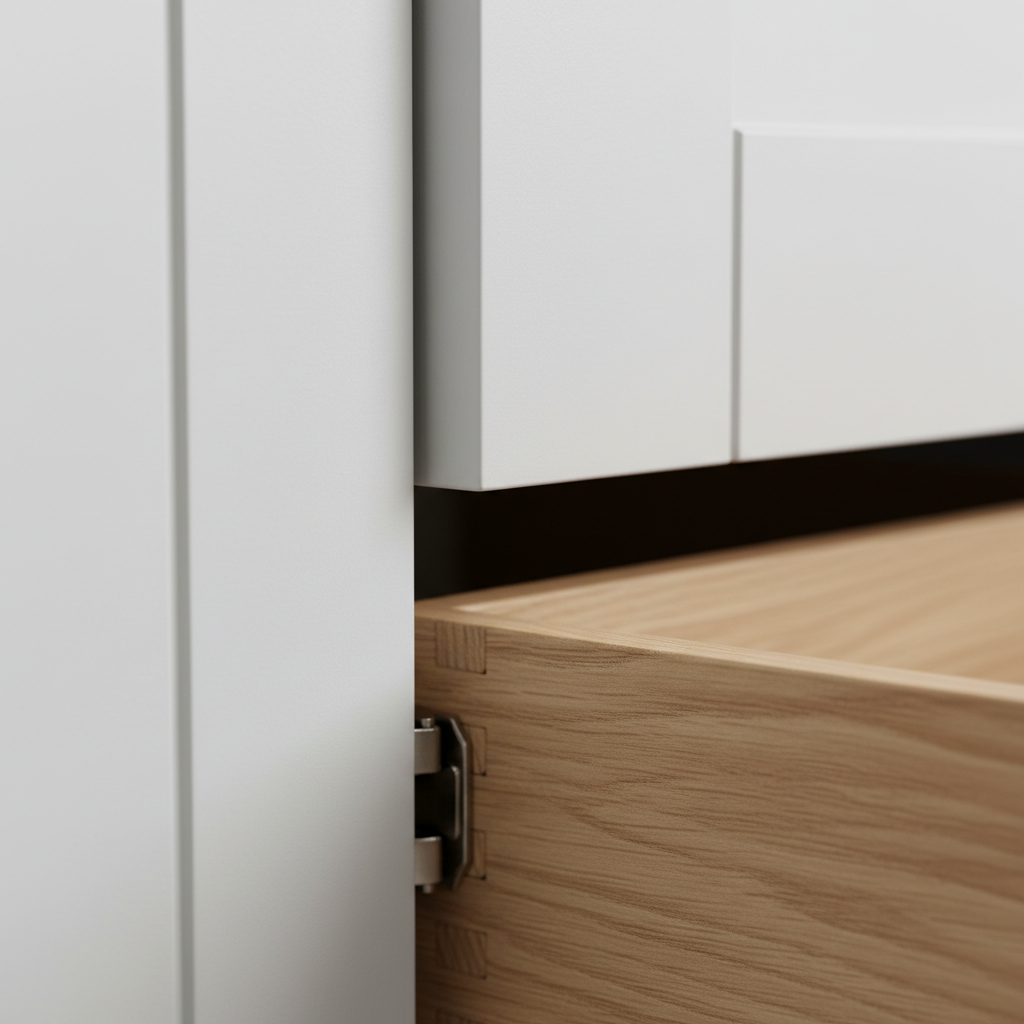
Factory-direct cabinetry with CNC machining and spray-booth finishing delivers consistent door profiles, precise joins, and durable coatings. This upstream quality control protects your investment and shortens installation by reducing on-site adjustments and rework.
In-house manufacturing is about control. Italian CNC equipment cuts repeatable parts; professional booths apply even coatings; and QA checks catch defects before delivery. On site, that translates to faster installs and tighter reveals.
- Profile consistency: Doors and rails match line-for-line across the room.
- Finish durability: Spray-applied finishes resist everyday wear and are easier to touch up.
- Install efficiency: Cabinet boxes arrive square, allowing cleaner quartz seams and straighter tile lines.
We build cabinets in our Brampton facility and back select door programs with a lifetime warranty. Many GTA families also extend this quality to media units and feature walls for a cohesive, whole-home look.
Project management best practices for kitchens
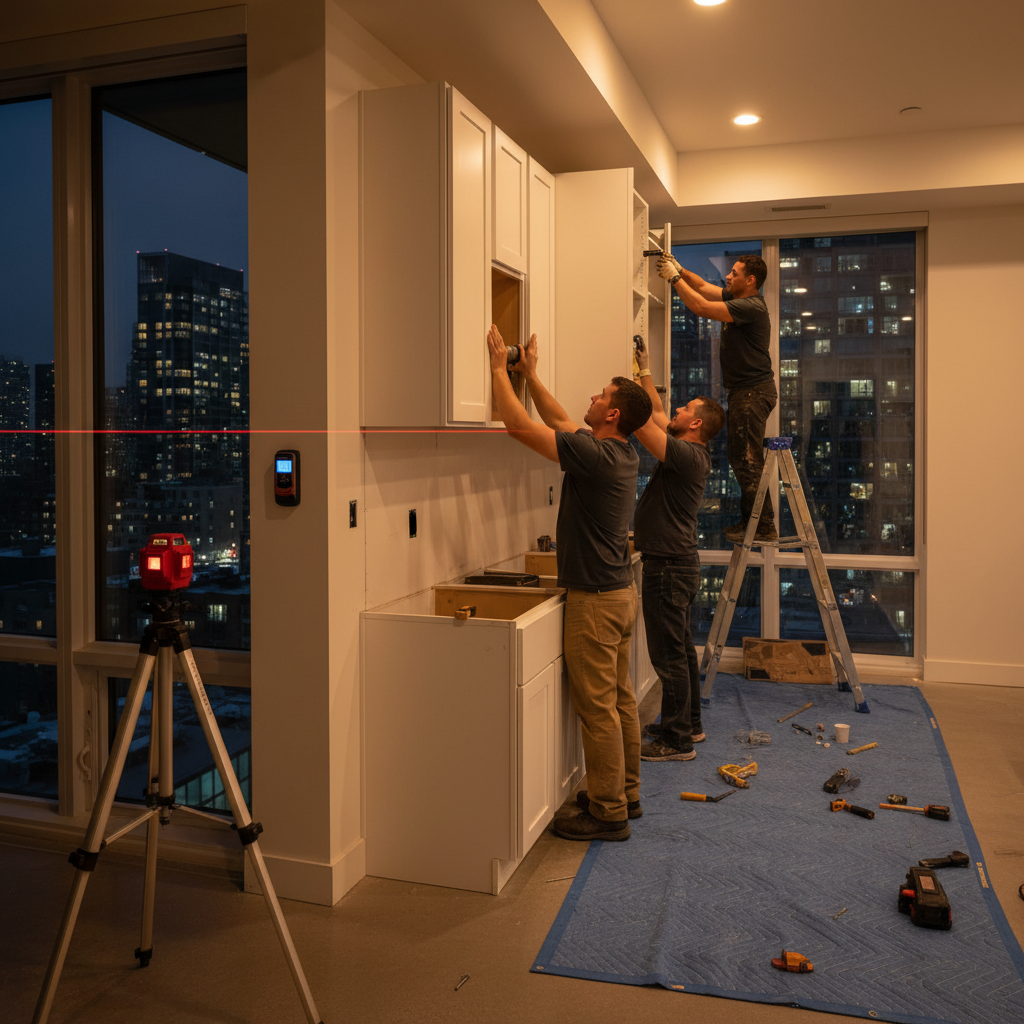
Run kitchens like mini construction projects: lock scope early, baseline a schedule, and track milestones for design approvals, manufacturing, delivery, install, and punch list. Weekly check-ins and site photos keep momentum and surface issues while they’re small.
Here are the habits we coach clients to adopt:
- One source of truth: Keep the latest drawings, selections, and schedule in a shared folder.
- Decisions before demolition: Approve doors, colors, and hardware ahead of ordering to avoid delays.
- Field-verified measurements: Confirm critical dimensions after drywall and floor prep to ensure fit.
- Rhythm of reviews: Weekly updates with photos/videos and a “top three” risk list.
- Installation sequence discipline: Cabinets before counters, counters before backsplash, and final lighting last.
For homeowners who like to go deeper, our renovation contractor guide expands on pre-construction checklists and closeout documentation.
Materials, finishes, and storage that protect your style
Protect design intent with coordinated choices: a resilient cabinet finish, quartz that suits daily use, backsplash layouts that frame focal points, and smart storage like pull-out pantries, lazy susans, and spice racks. Align selections with how you cook and entertain to avoid upgrades you won’t use.
Function drives delight. A few examples we’ve implemented across GTA homes:
- Workhorse finishes: Painted MDF doors with a professional spray finish for a timeless, easy-clean look.
- Everyday quartz edges: Eased or small radius edges balance comfort and durability for high-traffic islands.
- Backsplash framing: Extending tile to the hood height or window height creates clean visual lines.
- Task lighting: Valance lights brighten prep zones without harsh glare; pantry lighting prevents “black-hole” shelves.
- Ergonomic storage: Spice pull-outs beside the range, a turntable in corner bases, and a full-height pull-out pantry.
If you’re planning a coordinated update beyond the kitchen, our teams also design bathroom vanities and storage and high-function whole-home renovations that carry finishes throughout.
Mini case insights from recent GTA projects
Real-world patterns: 3D design shortens revisions, factory-direct cabinets speed installs, and accessory planning boosts daily satisfaction. These insights come from Altima projects across the GTA, where unified teams reduce handoffs and maintain finish consistency from showroom to site.
Here are quick, anonymized snapshots that mirror common scenarios:
- Family kitchen, semi-detached: 3D design resolved an island seating pinch point; a pull-out pantry replaced a shallow closet to gain efficient storage without changing walls.
- Condo galley: CNC-cut panels and slim-profile valance lights added symmetry; a lazy susan improved corner access within condo mechanical constraints.
- Open-plan upgrade: Matching media unit millwork aligned door profiles with the kitchen, tying the main floor together visually.
Want to see how design visuals translate to reality? Browse transformation ideas in our before-and-after overview to spark your own layout choices.
Tools and resources to evaluate contractors
Use structured tools to compare kitchen renovation contractors: a scope checklist, a process timeline, sample 2D/3D drawings, and manufacturing details. Ask each firm to show cabinet construction, hinge and slide specs, finishing method, and site protection standards.
Essential evaluation artifacts:
- Scope checklist: Confirms cabinets, counters, backsplash, lighting, flooring, paint, protection, and cleanup.
- Process roadmap: Shows milestones from discovery through punch list to set expectations.
- 2D/3D samples: Demonstrates how the team communicates options and catches conflicts.
- Manufacturing proof: Cabinet box materials, CNC capabilities, and spray-booth finishing details.
To deepen your research on cabinetry options, you can review general discussions like this overview of standard vs. custom cabinet doors. And if you’re exploring local remodel perspectives, see a broad look at kitchen and bathroom remodel contractors. For style inspiration, regional summaries such as Mississauga kitchen renovations can help you think through finishes before your design meeting.
10 questions to ask any kitchen renovation contractor
Ask about scope clarity, 2D/3D deliverables, manufacturing method, installation standards, site protection, schedule, communication cadence, warranty coverage, change-order policy, and who is on-site daily. Strong answers reveal mature processes and reduce risk.
- What will my finalized 2D/3D set include before manufacturing?
- Do you manufacture cabinets in-house, and how are doors finished?
- Which accessories are included (spice pull-outs, lazy susan, pull-out pantry)?
- How do you protect floors and manage dust and access?
- What are the key milestones and review gates from start to finish?
- Who is my single point of contact, and how often will I get updates?
- How do you handle unforeseen conditions and change approvals?
- What warranties apply to doors, hardware, and finishes?
- Will installers be in-house or subcontracted, and how are they supervised?
- How do you coordinate with appliance deliveries and countertop templating?
If you prefer a guided kickoff, our design consultation checklist covers each question and the decision-points behind them.
Book a design consultation (soft CTA)
Ready to explore layouts, door styles, and storage that fit your life? Schedule a design consultation to review 2D/3D options, factory-direct cabinetry, and installation timelines with our team—so you can move from ideas to an actionable plan.
Meet with our design-build team to discuss functional layouts, storage upgrades, and finish options. You’ll leave with next steps, a planning timeline, and clear deliverables. Start with our kitchen design consultation guide and bring your inspiration photos.
Local kitchen planning tips for 11 Edvac Drive and GTA condos/homes
Plan around building access rules, seasonal timelines, and condo mechanical constraints common across the GTA. Early coordination with management and trade windows keeps projects moving and protects shared spaces during deliveries and installation.
Local considerations for 11 Edvac Drive
- Confirm building access windows and elevator bookings early if you’re in a condo; align cabinet delivery and countertop templating to those slots.
- Plan schedules around peak holiday periods and winter storms that can affect deliveries across the GTA; lock decisions before those windows.
- Expect mechanical chases, sprinkler heads, or duct runs in high-rises; choose storage accessories that work within fixed wall depths and clearances.
Local nuances aside, the core process is the same: clear drawings, well-sequenced trades, and factory-direct cabinets that install cleanly the first time.
Risk reduction: how to avoid common pitfalls
You’ll avoid most renovation headaches by locking decisions early, verifying measurements twice, and aligning delivery dates to installation. Document assumptions in writing, keep all revisions in one place, and schedule weekly reviews until punch list is complete.
- Freeze selections pre-order: Changes after cabinet engineering often cascade into delays.
- Double-check rough-ins: Verify electrical and plumbing positions after drywall to prevent conflicts with drawers and panels.
- Template timing: Schedule countertop templating once cabinets are fully secured and leveled.
- Site readiness: Ensure floors are protected and access paths are clear the day cabinets arrive.
- Document all changes: Keep a running log with dates and revised drawings.
For more implementation tips, our internal contractor workflow guide outlines baselines and checklists our project managers use daily.
Where Altima Kitchens and Closets fits
Altima is a GTA design-build renovation company with in-house design, factory-direct cabinetry, and professional installation. We provide itemized scopes, 2D/3D design, Italian CNC manufacturing, spray-booth finishing, and lifetime warranties on select door programs to protect your long-term satisfaction.
We serve homeowners and condo owners who want a single team from concept through installation. Our showroom-based process centralizes material selections, and our manufacturing facility ensures doors, panels, and trims arrive consistent and ready to install.
- End-to-end service: Design, manufacturing, and installation managed by one accountable team.
- Visualization: 2D/3D drawings to preview layouts, finishes, and lighting.
- Factory precision: CNC machining and professional spray finishing for consistent quality.
- Assurance: Lifetime warranties on MDF Painted and Prelaminated doors, plus structured communication from kickoff to handover.
Curious how this integrates into whole-home planning? Explore our perspective on local renovation considerations to understand sequencing kitchens alongside other rooms.
Key takeaways
Select kitchen renovation contractors who own design, cabinets, and installation. Validate 2D/3D deliverables, factory quality, and schedule control. Use our questions, scope checklist, and comparison table to confirm fit and protect your style and timeline.
- One accountable team reduces handoffs and rework.
- 2D/3D design clarifies choices and prevents on-site surprises.
- Factory-direct cabinets with CNC precision speed installation.
- Weekly updates keep projects on schedule and on vision.
- Accessories and lighting should match real cooking habits.
Frequently Asked Questions
These quick answers address common questions homeowners ask when hiring kitchen renovation contractors. Each response is practical and focused on protecting style, schedule, and quality throughout your remodel.
What’s the difference between a kitchen renovation contractor and a designer?
A designer develops layouts, finishes, and visuals. A kitchen renovation contractor manages the full build—drawings, ordering, manufacturing, trades, installation, and inspections. Design-build firms include both under one roof so plans match manufacturing tolerances and installation timelines.
How do 2D and 3D designs reduce risk?
2D/3D drawings reveal conflicts early and let you preview door styles, colors, lighting, and storage placements. Approving a complete visual set before ordering cabinets prevents changes that could delay manufacturing or create on-site rework.
Do I need factory-direct cabinets?
Factory-direct cabinetry isn’t mandatory, but it improves consistency and installation speed. CNC machining and spray-booth finishes create precise parts and durable coatings, which help your kitchen look uniform and install cleanly.
Who coordinates trades like electricians and plumbers?
In a design-build model, your contractor coordinates all trades within the master schedule. In a GC-led model, the GC manages scheduling while you may source design and cabinets separately. Clarify roles at kickoff so responsibilities are unambiguous.
When should countertop templating happen?
Template after cabinets are permanently installed, leveled, and secured. That ensures accurate measurements for seams, overhangs, and cutouts, speeding fabrication and reducing the chance of on-site adjustments.
Conclusion: Your next best step
Choose a contractor who simplifies decisions, controls manufacturing quality, and keeps installation on schedule. Start with a visual plan, validate process depth, and book a consult to align goals, selections, and timing before work begins.
You’re not just buying cabinets—you’re investing in a coordinated process. The right kitchen renovation contractors own design through installation, so your final space matches the style you imagined. Ready to map your path? Review our contractor selection guide and set up a design consultation to make confident choices from day one.
Related Posts
Why Choose Kitchen Renovation Company
Nowadays, Kitchen spaces are not only a place for cooking and serving food, but these areas act as a statement, as they speak a lot about a family, the philosophy and personality of individuals, and spaces. If you admire aesthetics and adorn the beauty of your home, you must pay attention to the interior design […]
How a Kitchen Renovation Contractor is Changing the Game
Lifestyle is all about bringing something coherent to the overall experience of living. The kitchen and closets stand as two of the most influential spaces in a home that add to the overall experience of living. A Kitchen Renovation Contractor in Whitby by the name of Altima Kitchen and Closets Inc. is changing the overall […]
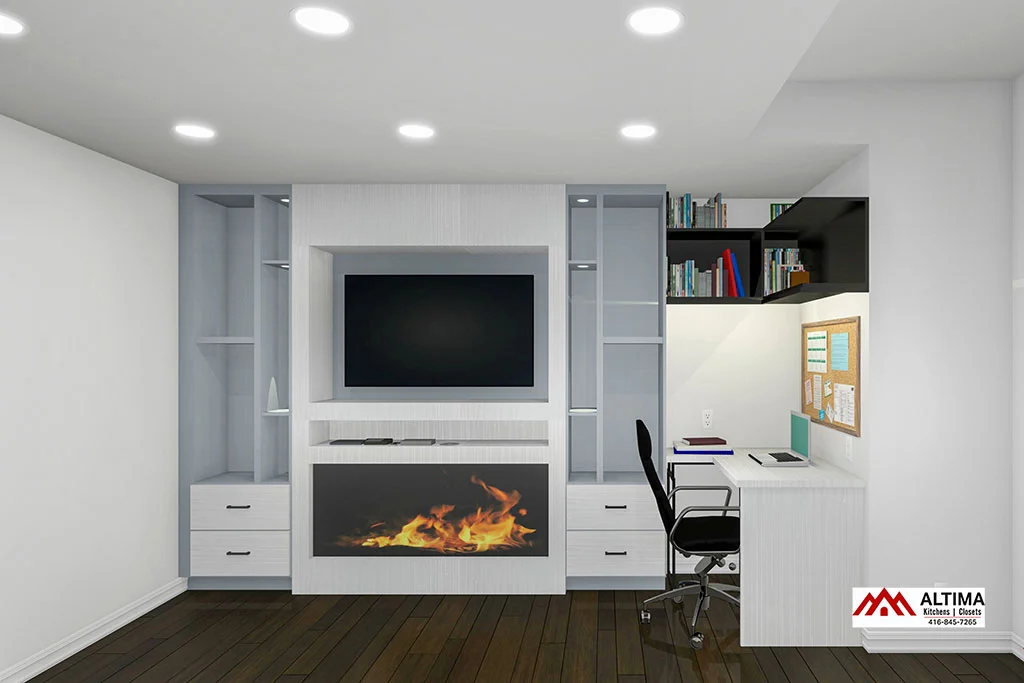
How Media unit contractor in Whitby is Changing the Game
Lifestyle is all about bringing something coherent to the overall experience of living. The kitchen and closets stand as two of the most influential spaces in a home that add to the overall experience of living. A Media Unit Company in Whitby by the name of Altima Kitchen and Closets Inc. is changing the overall […]