Closet Organization Systems Guide: Save Space Fast
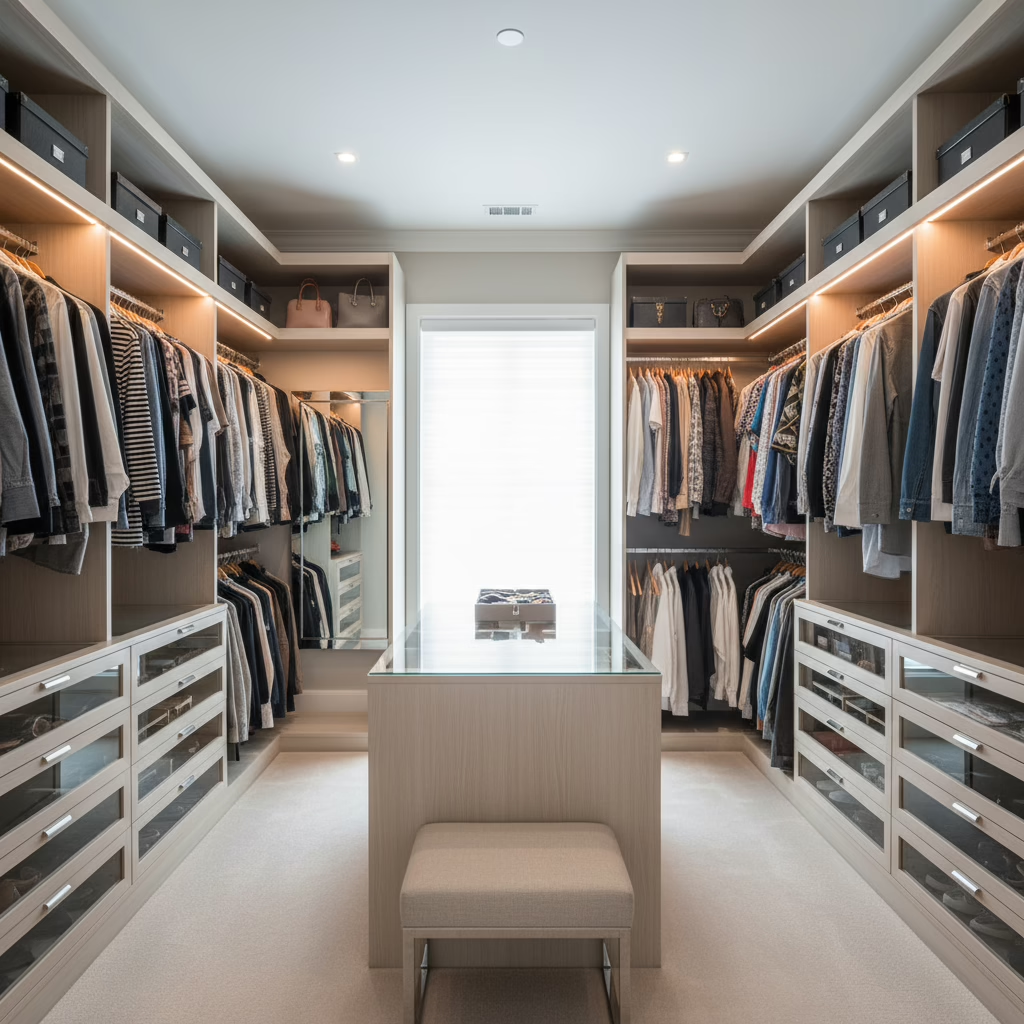
Closet organization systems are customizable frameworks of shelves, rods, drawers, and accessories that maximize storage capacity and access. This closet organization systems guide explains what to measure, which layouts work best, and how to plan, design, and install solutions—whether you choose a DIY kit or a factory-built custom closet by a professional team.
By Altima Kitchens And Closets • Last updated: 2026-04-10
Above the Fold: Why This Guide Matters + Table of Contents
Use this guide to plan a high-efficiency closet in days, not months. You’ll learn the core parts of a closet system, how to measure and map storage, what layouts deliver the most capacity, and where custom cabinetry outperforms kits. A quick table of contents below helps you jump to what you need.
- Quick Summary
- What Is a Closet Organization System?
- Why Closet Systems Matter
- Closet Organization Systems Guide: How It Works
- Types and Layouts
- Best Practices
- Tools and Resources
- Case Studies and Real Examples
- FAQ
- Conclusion + Key Takeaways
- Related Articles
Quick Summary
A strong closet system starts with accurate measurements, double-hang sections, and enough drawers for small items. Plan 60–70% hanging, 20–30% shelves/drawers, and 5–10% specialty accessories. Custom manufacturing increases capacity and durability, while 2D/3D design previews reduce mistakes before anything is cut or installed.
- Goal: Increase usable capacity, visibility, and daily speed.
- Baseline layout: Double-hang + long-hang + drawers + shelves.
- Must-have accessories: Valet rod, shoe shelves, pull-out baskets, and a hamper.
- Design tip: Group by category and frequency of use; light up dark corners.
- Pro move: Use 2D/3D designs to lock layout, finishes, and lighting before manufacturing.
Quick Answer
The best closet organization systems guide turns your measurements and wardrobe habits into a precise plan with double-hang, drawers, shelves, and lighting. At 11 Edvac Drive in Brampton, Altima designs and manufactures custom closets in-house, using 2D/3D previews and factory-direct cabinetry to deliver a perfect fit.
What Is a Closet Organization System?
A closet organization system is a modular structure of panels, shelves, rods, drawers, and accessories engineered to hold more in less space. Systems range from DIY wall-mounted kits to floor-based, factory-built installations with soft-close hardware, integrated lighting, and custom-fit millwork.
- Core components:
- Vertical panels: Form “bays” for hanging, shelves, and drawers.
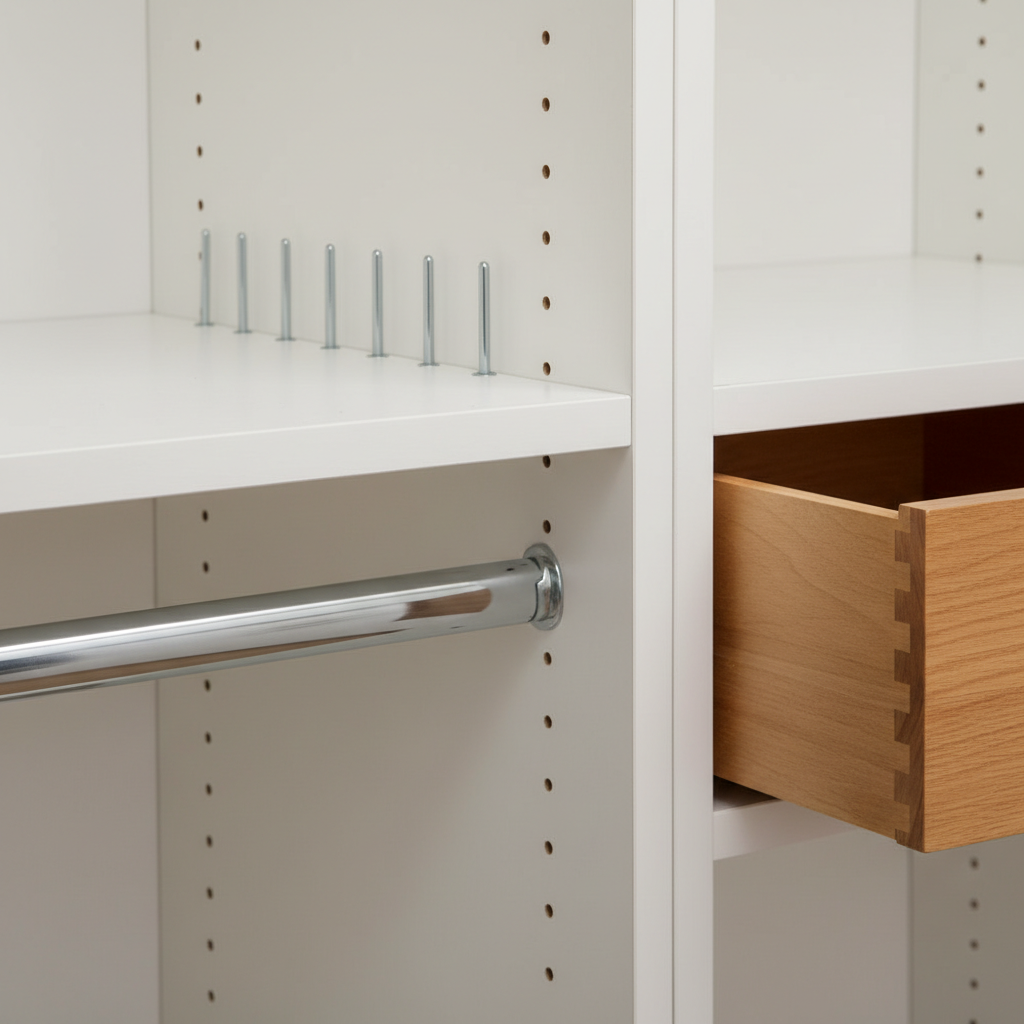
- Shelves: Adjustable for folded items, shoes, and bins.
- Hanging rods: Double-hang (shirts/pants) and long-hang (dresses/coats).
- Drawers: Soft-close for socks, underwear, accessories.
- Accessories: Valet rods, pull-out baskets, tie/belt racks, hampers.
- Lighting: Valance lights, motion sensors, and in-cabinet LEDs.
- Formats:
- Wall-mounted: Track/suspension systems keep the floor clear.
- Floor-based: Built-in look with toe-kicks and finished sides.
- Hybrid: Mix wall-mount with select floor-based bays.
- Finish materials:
- Melamine or prelaminated panels: Durable, wipeable, color options.
- MDF painted fronts: Smooth painted doors/drawers for a premium look.
- Hardware: Soft-close slides/hinges, chrome or matte black rods.
In our experience across thousands of GTA projects, moving from a single rod + shelf to a planned system increases usable capacity by 30–50% while reducing morning decision time. That’s the daily value you feel right away.
Why Closet Systems Matter
Closet systems save time, protect clothing, and unlock hidden capacity. With the right hanging ratios, drawers for small items, and shelf spacing for shoes, you’ll see more at a glance and keep clothes in better condition. The result is faster routines and less clutter stress.
- Time savings: Visibility and fixed zones reduce search time. We routinely see clients cut “getting ready” time by 5–10 minutes daily.
- Clothing care: Proper long-hang and ventilated shelves prevent wrinkling and crushing.
- Space gains: Double-hang alone often adds 25–35% linear hanging capacity in reach-ins.
- Family harmony: Dedicated bays and labels reduce mix-ups in shared closets.
- Home value signal: Well-finished storage reads as move-in ready and well-maintained.
Here’s the thing: clutter compounds. A system turns daily deposits (laundry, new shoes, gym gear) into a smooth flow with obvious landing spots. That’s the quiet power of good design.
Closet Organization Systems Guide: How It Works
Design your system in five steps: audit your wardrobe, measure the closet, choose a layout, preview in 2D/3D, then install with pro-grade hardware. Prioritize double-hang, adequate drawers, and specialty zones. Lock finishes and lighting early so manufacturing or ordering stays on schedule.
- Audit your wardrobe (30–45 minutes):
- Count shirts, pants, dresses, suits, coats, shoes, bags.
- Group by season and frequency of use.
- Decide what to keep, donate, or store elsewhere.
- Measure precisely:
- Record width, height, and depth at three points (top/middle/bottom).
- Note obstructions (vents, outlets, bulkheads) and door swing.
- Capture ceiling height to plan upper shelves or a third hanging level.
- Choose a capacity-first layout:
- Target ~60–70% hanging (mostly double-hang) and 20–30% drawers/shelves.
- Reserve 12–18 inches for a vertical shoe tower if footwear is a priority.
- Place long-hang in a corner or end bay to avoid blocking sightlines.
- Preview in 2D/3D:
- Confirm clearances, rod heights, and shelf counts before ordering.
- Validate finishes, lighting, and door styles visually.
- At Altima, we share 2D/3D drawings to finalize every detail before build.
- Install with pro hardware:
- Use soft-close slides, level the system, and anchor properly.
- Test drawer clearances, door reveals, and lighting sensors.
- Document any adjustments so future add-ons match.
Self-contained answer: A closet organization system works by mapping your inventory to optimized zones—double-hang for short garments, long-hang for dresses/coats, drawers for small items, shelves for knits/shoes—then building adjustable bays with durable panels and hardware. 2D/3D previews remove guesswork, and factory-direct builds ensure precise fit.
Types and Layouts: Find the Right Approach
Select between wall-mounted kits for fast installs, floor-based built-ins for a premium look, and hybrid systems for tricky spaces. Reach-ins need strategic double-hang and a center tower, while walk-ins benefit from U- or L-shapes with an island if width allows 42 inches of aisle clearance.
- Reach-in closets (24–30 in. deep):
- Best layout: Double-hang left/right, center tower with drawers and shelves.
- Use sliding doors? Keep towers shallow and hardware low-friction.
- Aim for 40–48 inches of double-hang per side for balanced capacity.
- Walk-in closets:
- U-shape: Maximum storage, great visibility.
- L-shape: Efficient for smaller footprints.
- Island: Add only if you maintain ~42 in. clear aisle around.
- Wall-mounted systems:
- Faster install; keeps floors clear for easy cleaning.
- Great for condos and uneven floors.
- Floor-based systems:
- Built-in furniture look with toe-kicks and finished sides.
- Ideal when you want glass-front drawers or decorative doors.
- Hybrid systems:
- Combine wall-mount rails with select floor-based towers.
- Useful where plumbing chases, bulkheads, or sloped ceilings exist.
| System Type | Best For | Pros | Considerations |
|---|---|---|---|
| Wall-mounted | Condos, quick upgrades | Fast install, floor clear, adjustable | Less “built-in” look; visible rail if not trimmed |
| Floor-based | Premium walk-ins | Furniture-grade look, hidden fasteners | Requires level floors; deeper towers |
| Hybrid | Tricky architecture | Flexible, targeted upgrades | Plan transitions carefully |
Self-contained answer: For reach-ins, prioritize double-hang with a slim center tower. For walk-ins, use U- or L-shapes with dedicated long-hang and a drawer stack. Choose wall-mounts for speed and hybrids for obstacles; select floor-based when you want a permanent, furniture-grade look.
Best Practices: Design Like a Pro
Design for visibility first, capacity second, and adjustability third. Lock in correct hanging heights, add drawers for small items, and use lighting to eliminate dark zones. Choose durable materials and soft-close hardware for long-term reliability and a quiet, premium feel.
- Winning ratios:
- Double-hang: 40–60% of wall space.
- Long-hang: 10–20% near an end or corner.
- Drawers/shelves: 20–30% depending on accessories volume.
- Pro rod heights (approx.):
- Double-hang: 40–42 in. lower + 80–84 in. upper (adjust to ceiling).
- Long-hang: 64–70 in. clear, depending on garment length.
- Adjustability:
- Use shelf-pin systems for seasonal changes.
- Leave space to add more shelves as needs evolve.
- Materials that last:
- Prelaminated or melamine panels for durability and easy cleaning.
- MDF painted doors/drawers for a refined, furniture-grade finish.
- Soft-close slides/hinges to protect contents and reduce wear.
- Lighting that works:
- Motion sensors for entry lights and deep bays.
- Valance LEDs under shelves to remove shadows.
- Label lightly:
- Use discreet labels inside drawers or on basket fronts.
- Great for kids’ closets and shared primary closets.
We’ve found that clients who finalize lighting and drawer counts during design have near-zero change orders at install. That’s the power of planning.
Tools and Resources (What the Pros Use)
Pros rely on accurate measurements, layout templates, 2D/3D design software, durable materials, and soft-close hardware. A solid resource stack speeds decisions, aligns expectations, and turns ideas into build-ready drawings with finishes, accessories, and lighting locked in.
- Measurement & layout:
- Steel tape, laser measure, and a level for true readings.
- Printable grid or digital template for reach-in and walk-in footprints.
- Inventory worksheet to count garments, shoes, and accessories.
- Design visualization:
- 2D elevation drawings for exact rod heights, shelf counts, and clearances.
- 3D renders to validate finishes and lighting before build.
- At Altima, we include comprehensive 2D/3D design previews on every custom project.
- Manufacturing & materials:
- Italian CNC machining for precise cuts and clean edges.
- State-of-the-art spray booth for durable, smooth painted finishes.
- Factory-direct cabinetry streamlines timelines and quality control.
- Hardware & accessories:
- Soft-close slides/hinges for drawers and doors.
- Valet rods, pull-out baskets, belt/tie racks, and shoe towers.
- Lighting: valance LEDs, motion sensors, and pantry-style strip lights.
- Documentation:
- Annotated drawings for installers: fasteners, reveals, and clearances.
- Care/cleaning guide for melamine, prelaminated, and MDF painted fronts.
According to Google’s Search Central guidance on structured data, clear documentation helps systems surface rich results accurately—an approach we mirror in our internal specs and homeowner handoffs.
Case Studies and Real Examples (GTA Projects)
Real results come from tailoring systems to your wardrobe and space. These GTA examples show how small layout choices—like a center tower in a reach-in or an island in a walk-in—translate into daily convenience and durable performance.
- Mississauga reach-in reset:
- Challenge: Single rod + shelf, constant pile-ups.
- Solution: Double-hang left/right, 18-inch center tower with four drawers and shoe shelves.
- Outcome: In our experience, capacity increased by roughly one-third with zero door conflicts.
- Toronto condo walk-in tune-up:
- Challenge: Builder-grade wire shelves, poor lighting.
- Solution: Hybrid system with wall-mount rails and floor-based drawer tower; motion-sensor LEDs.
- Outcome: Faster morning routine and better garment care thanks to long-hang zoning.
- Oakville primary suite upgrade:
- Challenge: Two users, different heights, limited corners.
- Solution: U-shaped walk-in with staggered rod heights, glass-front drawers, valet rods.
- Outcome: Shared zones eliminated mix-ups; visibility improved dramatically.
- Brampton family mudroom-closet combo:
- Challenge: Boots, backpacks, and seasonal overflow.
- Solution: Floor-based lockers with hooks, bench, and ventilated baskets.
- Outcome: Entry clutter dropped; kids manage their own zones.
We design, manufacture, and install in-house at 11 Edvac Drive, so your drawings translate directly to precise parts and a clean, on-time install.

Accessories That Earn Their Keep
Small upgrades create outsized daily value. A valet rod preps tomorrow’s outfit, pull-out baskets handle gym gear, and shoe towers turn piles into rows. Add a built-in hamper to stop floor messes and use dividers in drawers so tiny items don’t drift.
- High-impact picks:
- Valet rod near entry to stage outfits or steam workwear.
- Pull-out wire baskets for breathable, grab-and-go storage.
- Shoe shelves with adjustable risers for flats to boots.
- Tie/belt racks near mirror; fold-away ironing board when space allows.
- For kitchens and pantries too:
- Spice pull-outs keep labels forward and easy to scan.
- Pull-out pantries and lazy susans boost corner access and capacity.
- Lighting:
- Motion-activated strips in deep sections prevent shadows.
- Under-shelf LEDs highlight color and textures—great for outfit pairing.
When we add just two accessories—a valet rod and a hamper—clients often report tidier floors within a week. Small, smart tools add up.
Materials, Durability, and Cleanability
Choose durable, easy-clean materials and soft-close hardware. Prelaminated panels and melamine resist scuffs, while MDF painted doors deliver a refined look. Soft-close slides protect contents and reduce wear. These choices keep closets looking new for years with simple maintenance.
- Panels and boxes:
- Prelaminated/melamine: Wipeable, color-stable, great for families.
- MDF painted: Smooth, furniture-like finishes for doors and drawer fronts.
- Hardware:
- Soft-close slides prevent slamming and protect clothing.
- Quality hinges maintain alignment over time.
- Warranty confidence:
- Altima backs MDF Painted and Prelaminated doors with lifetime warranties.
- Factory control + CNC machining ensure consistent fit and finish.
We manufacture with Italian CNC machines and finish in a professional spray booth—details that show up in everyday smoothness and durability.
Step-by-Step: From Vision to Installed Closet
The fastest path is structured: consult, measure, design in 2D/3D, manufacture, install, and handoff. This workflow reduces rework and gives you visual certainty before any cuts are made, ensuring your system fits and functions from day one.
- Discovery consult: Clarify goals, inventory, style, and timeline.
- Site measure: Confirm width/height/depth, obstacles, and power.
- 2D/3D design: Approve elevations, finishes, hardware, and lighting.
- Factory build: CNC machining, edge-banding, finishing.
- Professional installation: Leveling, anchoring, hardware checks.
- Handoff: Care guide, accessory adjustments, future add-on plan.
Because we’re a one-stop shop—design, manufacturing, and installation under one roof—your selections, changes, and approvals move faster and stay aligned from drawing to door handles.
Free 3D Closet Plan – Soft CTA
Want a capacity-first layout tailored to your wardrobe? Book a showroom or virtual design session with Altima’s in-house team. We’ll map double-hang, drawers, shelves, and lighting in 2D/3D so you can see it before build.
Home Integration: Tie Closets Into Your Whole-House Plan
Great storage extends beyond one closet. Coordinate finishes with vanities, media units, and kitchen pantries so your home feels cohesive. Shared materials and hardware simplify decisions and help future renovations stay consistent.
- Match finishes across rooms: Keep door profiles and hardware consistent.
- Extend lighting logic: Use similar LED tone and sensor placement.
- Borrow best ideas: Pantry pull-outs inspire shoe towers; spice racks inform accessory drawers.
- Think ahead: Plan for future mudroom cabinets or media walls to share colors and trims.
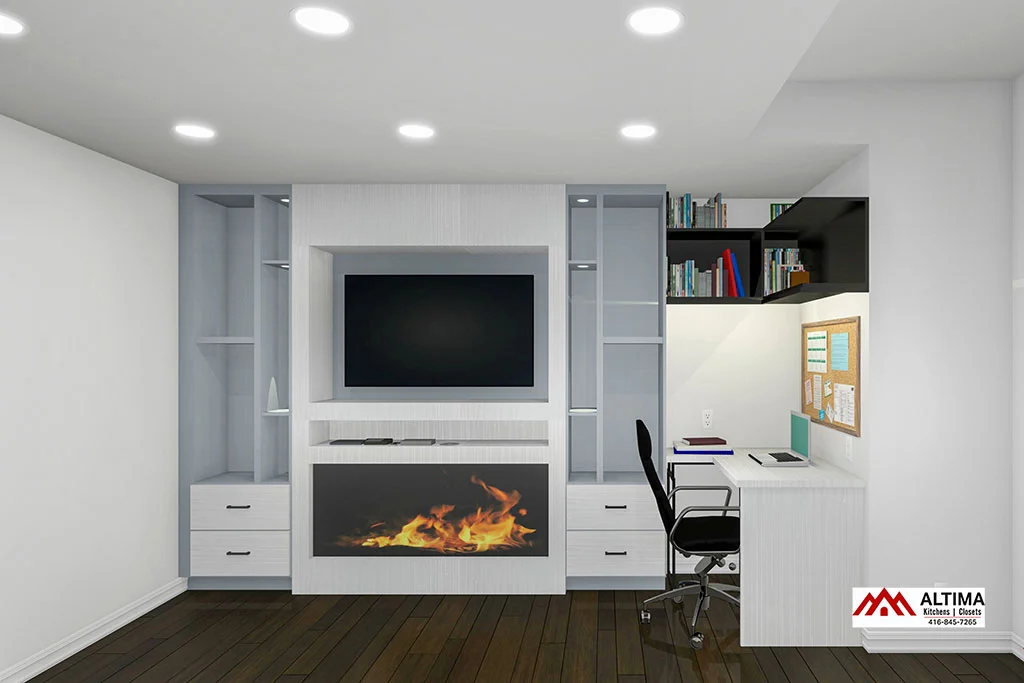
For inspiration beyond closets, explore how storage principles apply to living spaces in our media unit planning insights.
Local Tips
- Tip 1: If you’re visiting our showroom and factory at 11 Edvac Drive, plan for weekday mid-mornings to avoid traffic on nearby industrial routes; bring measurements and a quick inventory to speed up 2D/3D design.
- Tip 2: Seasonal swings can be real—build an upper shelf for off-season bins and leave adjustable shelf-pin holes so winter boots or bulky coats fit without reshuffling.
- Tip 3: In condos around downtown Toronto, wall-mounted systems keep floors clear and simplify moves; our in-house team designs hybrids when bulkheads or vents cut into space.
IMPORTANT: These tips reflect what our design and installation teams see across the GTA daily.
FAQ: Closet Organization Systems
Most questions come down to fit, function, and finish. Measure accurately, plan for your real inventory, and choose durable materials with soft-close hardware. Use 2D/3D previews to lock details before build so installation is smooth and changes are minimal.
- How do I choose between wall-mounted and floor-based?
Pick wall-mounted for speed, easy cleaning, and condos with uneven floors. Choose floor-based for a furniture-grade, permanent look with glass-front drawers and toe-kicks. Hybrids solve obstacles like bulkheads by mixing rails with select floor-based towers.
- What’s the best layout for a small reach-in?
Use double-hang left/right with a narrow center tower for drawers and shoes. Keep shelves adjustable and hang long garments at one end. If doors slide, keep towers shallow and check clearances so drawers and baskets open freely.
- Do I need drawers if I have lots of shelves?
Yes—drawers capture small items that drift on shelves and reduce visual clutter. A 3–4 drawer stack (socks, underwear, tees, accessories) often replaces a dresser and clears bedroom space.
- Can a custom closet move with me later?
Wall-mounted systems are the easiest to relocate. Floor-based systems are more permanent but can be reconfigured by pros. Ask for modular bays and keep your drawings for future changes.
- When should I go custom instead of a kit?
Go custom when you need maximum capacity, premium finishes, tricky shapes, or integrated lighting. In-house manufacturing delivers precise fit and durable hardware—especially valuable for walk-ins, sloped ceilings, or shared primary closets.
Conclusion + Key Takeaways
Build capacity with double-hang, keep small items in drawers, and light every bay. Use 2D/3D previews to finalize details and consider custom manufacturing for durability and fit. A well-planned system saves time daily and keeps rooms clutter-free.
- Key Takeaways
- Measure precisely; design around your real inventory.
- Prioritize double-hang, a drawer stack, and adjustable shelves.
- Light deep sections with motion-activated LEDs.
- Use 2D/3D previews to avoid surprises.
- Custom, factory-built closets deliver lasting fit and finish.
- Next steps
- Book a consult to translate this closet organization systems guide into your exact plan.
- Visit our Brampton showroom at 11 Edvac Drive with room dimensions and photos.
- Review finishes and accessories in person, then greenlight your 2D/3D design.
Ready to organize? Our in-house designers and installers will turn your goals into a build-ready plan—then into a quiet, durable, beautiful closet.
Related Articles and Helpful Reads
Closet design principles appear across your home—media walls, mudrooms, and pantries. Explore related guides to extend smart storage and a cohesive finish throughout your spaces without reinventing decisions in every room.
For more storage strategies and pro collaboration tips, see our advice in working with a custom closet company and our overview on how the right partner streamlines organization. Serving Toronto? Check our Toronto service area for local support.
Related Posts
Why Choose Kitchen Renovation Company
Nowadays, Kitchen spaces are not only a place for cooking and serving food, but these areas act as a statement, as they speak a lot about a family, the philosophy and personality of individuals, and spaces. If you admire aesthetics and adorn the beauty of your home, you must pay attention to the interior design […]
How a Kitchen Renovation Contractor is Changing the Game
Lifestyle is all about bringing something coherent to the overall experience of living. The kitchen and closets stand as two of the most influential spaces in a home that add to the overall experience of living. A Kitchen Renovation Contractor in Whitby by the name of Altima Kitchen and Closets Inc. is changing the overall […]
How Media unit contractor in Whitby is Changing the Game
Lifestyle is all about bringing something coherent to the overall experience of living. The kitchen and closets stand as two of the most influential spaces in a home that add to the overall experience of living. A Media Unit Company in Whitby by the name of Altima Kitchen and Closets Inc. is changing the overall […]