Complete Spice Rack Guide: Keep Jars Handy in 2026
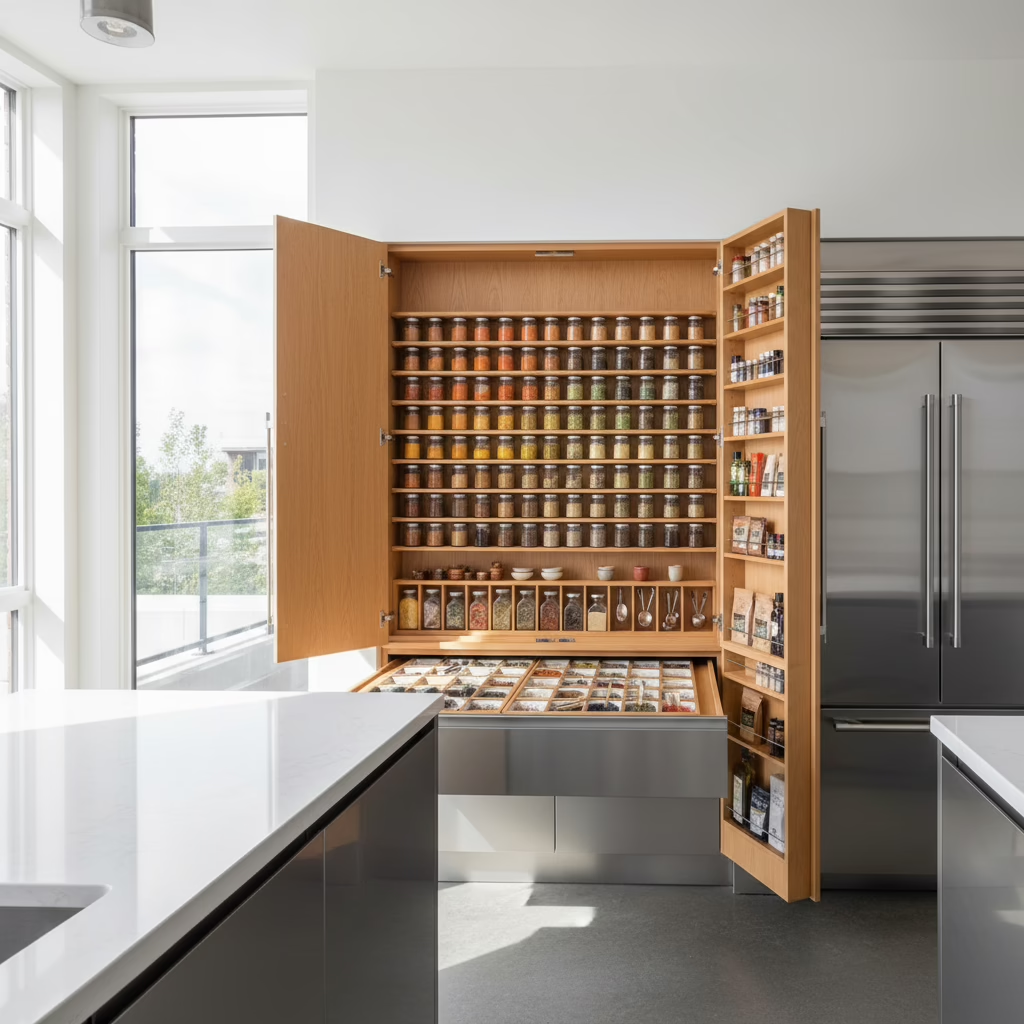
Spice rack organization solutions are systems and habits that keep spices visible, fresh, and one reach away while you cook. At Altima Kitchens and Closets in 11 Edvac Drive, we integrate pull-outs, drawer inserts, and door-mounted racks into custom cabinetry so jars stay shaded, labeled, and fast to grab—day after day.
By Ashok, Altima Kitchens and Closets
Last updated: April 28, 2026
Quick Overview
The best spice rack organization solutions combine a fixed home for every jar, protection from heat and light, and one-motion access near where you cook. Standardize jar size, group by use, and place daily spices between waist and eye level to speed up meals and preserve flavor for months longer.
Here’s the thing: most kitchens have 25–40 spice jars, but only 12–18 see weekly action. When jars live in random spots, you waste 10–30 seconds per recipe hunting—small, constant delays that add up. We build spice storage right into the cabinet plan so your hand lands on the right jar, first try.
- Define what “organized” means: fast, repeatable access in one motion
- Protect flavor: minimize light, heat, humidity, and air exposure
- Place daily jars in the prime reach zone (roughly 36–60 inches from the floor)
- Pick formats that fit your kitchen: pull-outs, in-drawer inserts, door rails, tiers, or magnetic
- Label smart, rotate stock, and refresh ground spices within 12–24 months
What Is Spice Rack Organization?
Spice rack organization is the planned arrangement of seasonings in purpose-built storage that optimizes freshness, visibility, and reach. It pairs the right hardware—pull-outs, tiered risers, or in-drawer inserts—with a clear sorting rule so you can grab the exact jar you need without searching.
In our kitchen projects across the GTA, we design spice placement the same day we map sinks, dishwashers, and trash pull-outs. Why? Because where jars live changes your cooking rhythm. For example, a 12-inch pull-out beside the range can hold 30–36 standard jars across three tiers—enough for most home chefs.
- Hardware + habit design: Storage only works if it matches your motions. Your most-used 10–15 spices should sit where your hand lands naturally during sautéing.
- Protection: Light fades color; heat and steam degrade essential oils. Shaded cabinets with airtight lids hold flavor far longer than open shelves above a stove.
- Standardization: Same-size jars increase density by 10–25% and make labels easier to read at a glance.
- Rotation: A first-in, first-out (FIFO) routine keeps flavors consistent across months of meals.
When we deliver 2D/3D kitchen drawings, your spice zones appear on day one. That clarity removes guesswork and prevents the dreaded “junk spice cabinet” that swallows duplicates and expired blends.
Why Spice Organization Matters
Smart spice organization preserves flavor, speeds cooking, and frees counter space. By putting daily jars within a single reach and shielding them from heat and light, you avoid duplicates, reduce waste, and get repeatable results from week to week.
You might be wondering, does storage really change taste? Yes. Ground spices lose potency steadily once exposed to air; many blends are best within 12–24 months, while whole spices often last 24–48 months if kept cool and dark. A cabinet 12–18 inches from the range edge typically runs cooler than an open shelf above a cooktop.
- Consistency: Fast ID plus fresh contents equals reliable flavor. If it takes more than five seconds to find paprika, your system needs a tune-up.
- Speed: One-motion access can shave minutes off multi-step recipes. Think four pulls per dish saved, multiplied across dinners each week.
- Cleanliness: A fixed home for jars prevents sticky rings and countertop sprawl.
- Inventory control: Visible rows curb duplicates. A quick scan reveals what needs a top-up before grocery runs.
In our experience, relocating spices from a hot backsplash shelf to a shaded pull-out beside the range often cuts search time in half. It’s a small cabinet change with big daily impact.
How Spice Systems Work
Effective systems match cabinet hardware to your layout, then apply a consistent sorting rule. Map high-frequency spices to the prime reach zone, standardize jar size, and orient labels forward or upward so you identify the right jar instantly.
Start with workflow. If you prep on an island but cook at the range, run a two-zone plan: an in-drawer insert near the cutting board for chopping and a narrow pull-out by the stove for live cooking. If space is tight, a 9-inch pull-out still fits 20–28 jars across tiers.
- Cabinet fit: Pull-outs commonly come in 9, 12, and 15 inches; drawer inserts cut to size; door rails vary by hinge depth—verify clearances.
- Jar standard: Same height and diameter unlock neat rows and predictable capacity (e.g., 4-ounce jars hold roughly 1/2 cup).
- Sorting logic: Frequency first, then cuisine groups, then alphabet within each group. This hybrid beats pure A–Z in busy kitchens.
- Environment: Keep jars away from oven heat, direct sun, and dishwasher steam to slow flavor loss.
We manufacture drawer cradles with angled rests so labels face up, notch dividers to stop drift, and spec soft-close slides to avoid rattling. Those small details protect jars and keep rows aligned even after hundreds of open/close cycles.
Types of Spice Rack Organization Solutions
Top formats include pull-out base racks, tiered shelf risers, in-drawer inserts, door-mounted rails, and magnetic panels. Choose by cabinet width, visibility preference, and jar count. In most GTA kitchens, one pull-out plus one in-drawer insert covers daily cooking and prep.

Pull-Out Base Spice Racks
- Best for: 9–15 inch base cabinets beside the range; fast, one-motion access.
- Capacity: 20–40 standard jars across 2–4 tiers, depending on width.
- Pros: Excellent visibility; jars shaded from light; easy to clean.
- Watch-outs: Confirm pan-handle clearance, toe-kick depth, and soft-close slide quality.
When planning pantry flow, also consider a tall-cabinet solution. Our overview of pull-out pantry organizer systems explains how vertical storage complements a range-side spice pull-out for weekly cooking.
Tiered Shelf Risers (Inside Cabinets)
- Best for: Upper cabinets with enough depth to stagger rows.
- Capacity: 15–30 jars visible across steps; accepts brand bottles or uniform jars.
- Pros: Simple retrofit; low maintenance; budget-friendly to adjust later.
- Watch-outs: Shallow steps can hide back rows; verify shelf lighting.
In-Drawer Spice Inserts
- Best for: Prep islands where labels can face up for instant ID.
- Capacity: 24–48 jars in a 24–30 inch drawer with angled cradles.
- Pros: Outstanding visibility; jars remain stable during drawer travel.
- Watch-outs: Check jar height vs. counter overhang; share space with utensils wisely.
Curious how this connects to the rest of your kitchen plan? See our custom kitchen design ideas to integrate storage, lighting, and cooking zones from the start.
Door-Mounted Rails
- Best for: Pantry and tall cabinet doors with strong hinges.
- Capacity: 20–60 jars depending on door height and rail count.
- Pros: Converts unused vertical area; perfect for overflow and backups.
- Watch-outs: Heavy doors need quality hardware; test swing, close, and latch.
Magnetic Panels
- Best for: Inside pantry doors or cabinet side panels—not near heat sources.
- Capacity: Variable layout; easy to reconfigure for seasonal blends.
- Pros: Flexible and modular; jars don’t tip.
- Watch-outs: Confirm magnet strength and keep beyond oven heat zones.
| Solution Type | Best For | Capacity Range | Visibility | Install Complexity | Ideal Width |
|---|---|---|---|---|---|
| Pull-Out Base | Daily-use by range | 20–40 jars | Excellent | Moderate | 9–15 inches |
| Tiered Shelf | Upper cabinets | 15–30 jars | Good | Easy | Any |
| In-Drawer Insert | Prep island | 24–48 jars | Excellent | Easy | 24–30 inches (drawer) |
| Door-Mounted Rails | Panty/tall doors | 20–60 jars | Good | Moderate | Varies |
| Magnetic Panel | Flexible overflow | Variable | Good | Easy | Varies |
Best Practices for Long-Lasting, High-Capacity Storage
Standardize jar size, shield from heat and light, and group by frequency. Add soft-close hardware, anti-slip liners, and tiered visibility. Refresh ground spices every 12–24 months and whole spices every 24–48 months to keep weeknight cooking consistent.
Set Up for Speed
- Prime zone: Keep daily jars between waist and eye height (about 36–60 inches from floor).
- One-motion rule: One pull or one drawer open should reach all everyday spices.
- Dominant side: Right-handers typically prefer racks on the right of the range; test your reach.
Protect Flavor
- Light: Opaque labels or shaded cabinets slow color and flavor fade.
- Heat/steam: Stay 12–18 inches away from oven and dishwasher heat zones when possible.
- Airtight lids: Better seals maintain aromatics; shaker tops are convenient but leak air.
Labeling and Rotation
- FIFO: New refills move behind older jars so nothing lingers stale.
- Open-date dots: A tiny mark on the base tracks freshness without visual clutter.
- Seasonal swap: Give holiday blends a temporary zone, then return the prime row to everyday jars.
For tricky corners, pair a spice pull-out with smart corner hardware. Our Lazy Susan cabinet accessories keep oils, vinegars, and tall bottles easy to spin without blocking spice access.
How to Plan and Install Your System
Audit what you own, choose one storage type per zone, then measure twice. Match hardware to cabinet width and hinge depth, standardize jars, and test reach before drilling. In renovations, lock placement in 2D/3D so it’s built-in from day one.
- Count and categorize: Tally total jars; identify your top 12–18 used weekly.
- Choose zones: Range-side pull-out for cooking; island drawer insert for prep.
- Measure: Confirm interior widths (9/12/15 inches typical for pull-outs), depths, and hinge clearances.
- Select hardware: Pull-out, in-drawer insert, tiered shelf, or door rails to match cabinet style.
- Standardize jars: Uniform diameter and height simplify layout and cleaning.
- Dry-fit: Use painter’s tape to simulate positions; check knuckle clearance and pan-handle swings.
- Install: Pre-drill, level rails, and specify soft-close slides to prevent tipping.
- Load and label: Daily jars front and center; cuisine groups next; overflow to pantry door rails.
If you track pantry stock, don’t rely only on spreadsheets; manual sheets are prone to errors and version drift—see this overview of spreadsheet risks for why simple visual systems outperform in home kitchens. During design, we align spice storage with counters, backsplashes, and lighting so the whole Kitchen plan functions as one.
Material choices also matter. Drawer box stiffness and moisture resistance affect long-term glide. For a quick primer on cabinet box options, review melamine vs plywood cabinet boxes and pick the structure that matches your usage.
Tools and Accessories That Help
Drawer inserts, tiered risers, soft-close pull-outs, anti-slip liners, and airtight jars do the heavy lifting. Add under-cabinet lighting for visibility and dividers so rows stay neat. Together, these boost capacity 10–25% without adding bulk.
- Inserts/risers: Angled cradles and stepped shelves raise labels for instant reads.
- Hardware: Soft-close slides and side lips prevent tip-overs during motion.
- Containers: Wide-mouth, airtight glass jars make refills tidy and reduce spills.
- Liners: Thin grip mats keep jars in place through hundreds of opens.
- Lighting: Valance or in-cabinet strips brighten back rows without glare.
We fabricate inserts to the exact interior width of your drawers and color-match hardware. With factory-direct production and in-house installation, tolerances stay tight and motion feels smooth even years later.
Case Studies and Real-World Layouts
In GTA projects, a 12-inch pull-out beside the range plus a 24-inch in-drawer insert on the island covers roughly 90% of daily cooking needs. Overflow and bulk live on pantry door rails where cool, dark conditions preserve freshness longer.

Family Kitchen, 11 Edvac Drive
- 12-inch pull-out by the range holding 32 uniform jars across three tiers—no label hunting.
- 24-inch island drawer insert cradling 36 jars for prep—labels face up for under-five-second grabs.
- Pantry door rails for baking blends and refills; cool, dark storage slows flavor fade.
Result: less back-and-forth between island and range, fewer duplicates, and faster weeknight meals. The family reported smoother meal prep within the first week.
Condo Galley, Toronto
- 9-inch pull-out replacing a filler panel adds room for 24–28 jars—huge gain for tight galleys.
- Magnetic panel mounted inside a tall cabinet handles overflow without crowding counters.
- Under-cabinet lights improve visibility without stealing storage space.
For additional space savers in compact layouts, see small-kitchen maximization tips—they pair well with slim spice pull-outs and inserts.
Serious Home Cook, Mississauga
- 15-inch pull-out with side lips secures tall grinder bottles and oil misters.
- Alphabetized in-drawer insert for 48 jars, grouped by cuisine families (Italian, Indian, Tex-Mex).
- Dedicated cool, dark pantry shelf for whole spices and seeds; bulk in airtight bins.
Outcome: faster mise en place and more consistent seasoning across large-batch weekend cooks.
Local considerations for 11 Edvac Drive
- GTA winters are dry indoors; gasketed lids help prevent caking and clumping when humidity swings.
- Holiday cooking spikes in late fall; plan overflow capacity so seasonal blends don’t crowd daily jars.
- For condos, mind door swing and hinge depth—tight galleys reward slim pull-outs and in-drawer inserts.
Want this built into your next kitchen? Our in-house team designs spice storage alongside cabinets, counters, and lighting—factory-direct and installed by pros. Book a design consultation to preview options in 2D/3D before we build.
Frequently Asked Questions
Keep spices in airtight containers, away from heat and light, and within one easy reach of your cook zone. Standardize jar size, group by frequency, and refresh ground spices every 12–24 months for dependable flavor.
What’s the best place to store spices in a small kitchen?
Use a 9–12 inch pull-out beside the range or an in-drawer insert near your prep zone. Both give one-motion access and shield jars from light. Avoid shelves above the stove or microwave where heat and steam build up.
How many spice jars fit in a typical pull-out rack?
A 12-inch pull-out usually holds about 30–36 standard jars across three tiers, while a 9-inch version fits roughly 20–28 depending on jar diameter. Standardizing jar size makes planning far more accurate.
Do spices really expire, or just lose flavor?
Most spices don’t become unsafe if they’re dry and sealed, but their essential oils fade. Ground spices are typically best within 1–2 years; whole spices hold longer. Keep them cool, dark, and airtight to slow flavor loss.
Should spices be kept near the stove?
Keep them close, but not hot. A pull-out beside the range or a shaded upper cabinet beats a shelf directly above the oven. Protecting from heat and light helps maintain flavor for months longer.
Is alphabetical better than organizing by cuisine?
Use a hybrid: keep daily-use spices front and center, then group by cuisine or recipe type. Alphabetize within each group. This approach fits how people actually cook and keeps search time under a few seconds.
Conclusion: Make Spices Easy to Grab—and Hard to Spoil
Design around the way you cook. Put daily jars in a prime, shaded zone; standardize containers; and match hardware to cabinet width. Do that, and spices stay potent, counters stay clear, and weeknight meals move faster.
- Plan zones first: prep vs. cook.
- Pick one storage type per zone.
- Standardize jar size and labeling.
- Protect from heat, light, and humidity.
- Refresh ground spices every 12–24 months.
If you’re renovating in the GTA, integrate spice storage in the initial cabinet plan. Our team designs, manufactures, and installs everything under one roof—plus we provide 2D/3D previews so your Kitchen works on day one. Explore whole-home storage flow in our closet organization systems guide and apply the same logic to every room.
For safe cleaning and storage habits around your Kitchen, review these cleaning products storage ideas and keep chemicals separate from your spice zones.
Related Posts
Why Choose Kitchen Renovation Company
Nowadays, Kitchen spaces are not only a place for cooking and serving food, but these areas act as a statement, as they speak a lot about a family, the philosophy and personality of individuals, and spaces. If you admire aesthetics and adorn the beauty of your home, you must pay attention to the interior design […]
How a Kitchen Renovation Contractor is Changing the Game
Lifestyle is all about bringing something coherent to the overall experience of living. The kitchen and closets stand as two of the most influential spaces in a home that add to the overall experience of living. A Kitchen Renovation Contractor in Whitby by the name of Altima Kitchen and Closets Inc. is changing the overall […]
How Media unit contractor in Whitby is Changing the Game
Lifestyle is all about bringing something coherent to the overall experience of living. The kitchen and closets stand as two of the most influential spaces in a home that add to the overall experience of living. A Media Unit Company in Whitby by the name of Altima Kitchen and Closets Inc. is changing the overall […]