Kitchen Renovation: Save Money With Smart Planning in 2026
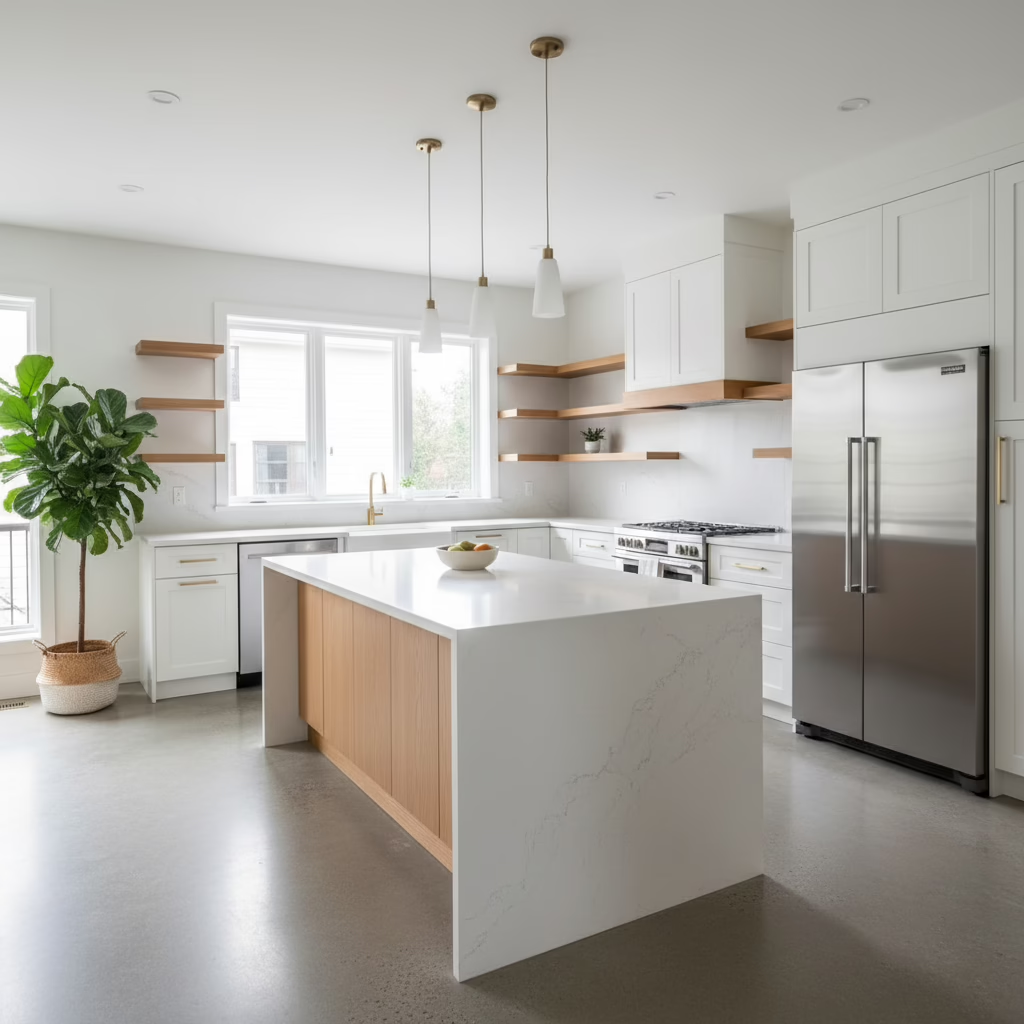
A kitchen renovation contractor is a licensed professional who plans, coordinates, and installs every element of a kitchen remodel—from design and cabinetry to trades and final inspections. For homeowners near 11 Edvac Drive, partnering with a single, accountable expert streamlines timelines, protects workmanship, and ensures your new kitchen performs beautifully for everyday life.
By Ashok, Altima Kitchens And Closets
Last updated: 2026-05-09
Start Here: Hiring the Right Kitchen Renovation Contractor
Hire a kitchen renovation contractor who offers end-to-end design-build service, documented scopes, and in-house installation. Verify references, drawings, permits support, and warranty terms. A single accountable team reduces delays, avoids rework, and delivers a cohesive kitchen tailored to your cooking, storage, and lifestyle needs.
Here’s the thing—most kitchen projects succeed or stumble before demo even begins. The right contractor clarifies vision, sets expectations, and coordinates the dozens of micro-decisions that make a kitchen effortless to use.
- What you’ll learn in this guide:
- How a kitchen renovation contractor structures design, fabrication, and install
- What “design-build” means—and why it prevents scope gaps
- Ways to assess craftsmanship, timelines, and warranties with confidence
- Real GTA examples from Altima Kitchens And Closets’ end-to-end approach
As a GTA-based design-build firm with in-house manufacturing, we’ve delivered thousands of custom kitchens, closets, and full-home renovations. Our perspective centers on practical steps you can use today, regardless of project size.
Quick Overview
A kitchen renovation contractor manages design, material selection, fabrication, and installation under one coordinated plan. The best partners provide 2D/3D drawings, itemized scopes, factory-direct cabinetry, and in-house installers—reducing handoffs, risk, and stress while keeping your vision consistent from day one to final walk-through.
- Core roles: needs analysis, design, documentation, procurement, site management, quality control
- Deliverables you should expect: measured drawings, 3D visuals, schedule, selections log, warranty
- Risk reducers: one accountable team, daily communication, and factory-direct cabinetry
- Local edge: proven workflows for GTA homes and condos
What Is a Kitchen Renovation Contractor?
A kitchen renovation contractor is a single point of accountability who plans, designs, fabricates, and installs your new kitchen. They coordinate trades, sequencing, inspections, and finishes, translating your goals into buildable drawings and a cleanly executed installation that stands up to daily use.
In practice, a contractor connects vision to execution. They turn preferences—like storage needs, appliance choices, and lighting—into detailed drawings and a coordinated build. When your partner handles design and installation in-house, alignment stays tight and surprises drop.
- Responsibilities you can count on:
- Assessing workflow, storage, and appliance placement for safe, efficient cooking
- Creating 2D floor plans, elevations, and 3D visuals for clarity
- Documenting cabinet specs, hardware, countertops, backsplash, and lighting
- Managing site protection, sequencing, inspections, and final finishing
Altima Kitchens And Closets operates as a true design-build contractor—housing design, factory-direct cabinetry, and installation under one roof. That structure helps homeowners avoid vendor overlap and provides one team to own outcomes.
Why the Right Contractor Matters (Especially in the GTA)
The right contractor reduces risk by keeping design, materials, and installation aligned. With in-house capabilities and factory-direct cabinetry, timelines tighten, quality rises, and you avoid the miscommunication that can derail schedules and finishes in busy GTA homes and condos.
Kitchen remodels involve structural, electrical, plumbing, ventilation, and finishes. A small misalignment—like an appliance spec changing late—can ripple across cabinets, countertop cutouts, and electrical runs. Single-team accountability keeps these details synced.
- Benefits of proven design-build workflows:
- One contact point and coordinated updates across trades
- Consistent fit/finish because the same team designs and installs
- Factory-direct cabinetry precision, including CNC-cut components
- Clear warranty ownership and post-install support
From Brampton to Toronto, condo rules, delivery windows, and elevator bookings add complexity. We manage details like protective floor coverings, quiet hours, and material staging so your building stays happy and your schedule moves forward.
How the Process Works With a Design-Build Team
A strong contractor follows a structured path: discovery, measure, 2D/3D design, selections, approvals, fabrication, site prep, installation, and final walk-through. Each phase has defined deliverables so you always know what’s next and what decisions are due.
Step-by-step flow you can expect
- Discovery call and goals. Discuss cooking habits, must-haves, space challenges, and inspiration photos.
- In-home measure. Capture exact dimensions, mechanical locations, and constraints.
- 2D/3D design. Review layout, clearances, and storage solutions in visuals you can understand.
- Selections. Choose cabinet style, finish, hardware, countertop, backsplash, lighting, and accessories.
- Detailed scope. Receive an itemized, documented scope with drawings and a schedule window.
- Fabrication. Factory builds cabinetry with precise CNC machining and controlled finishing.
- Site preparation. Protect floors, isolate dust, and ready services for a clean install.
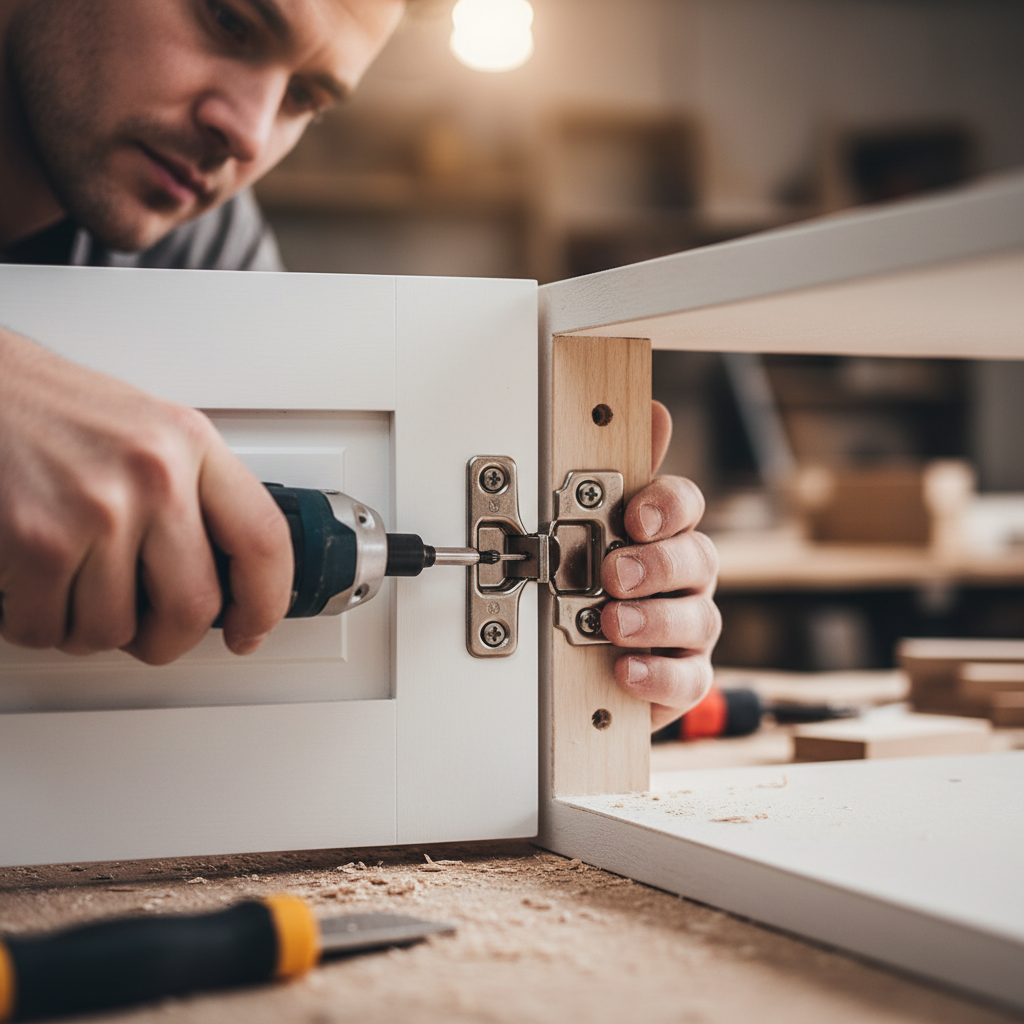
- Installation. In-house installers set boxes, scribe panels, level runs, fit doors, and place tops.
- Finishing. Tile backsplash, sealants, lighting, and adjustments for smooth operation.
- Walk-through and warranty. Confirm fit/finish, operation, and document care instructions.
We share drawings, schedules, and updates proactively—often with quick photo messages so you’re always in the loop. That transparency is central to our project management approach across the GTA.
Types of Kitchen Contractor Models—Compared
Design-build contractors integrate design, cabinetry, and installation under one accountable team. General contractors coordinate multiple vendors. Big-box programs assemble third-party trades. Specialty cabinetmakers focus on boxes and doors but may not manage all site trades. Choose the structure that aligns to your risk tolerance and goals.
| Model | How it works | Strengths | Considerations |
|---|---|---|---|
| Design-build (Altima) | One team handles design, factory cabinetry, and install. | Alignment, fewer handoffs, single warranty, tighter timelines. | Choose based on portfolio quality and process clarity. |
| General contractor | Coordinates separate designer, cabinet shop, and trades. | Flexible vendor choices, broad trade pool. | More handoffs; scope gaps require strong documentation. |
| Big-box program | Retailer sources third-party designers and installers. | Convenience and standardized options. | Limited customization; varying installer quality. |
| Cabinetmaker only | Builds boxes/doors; you manage trades and finishes. | Custom cabinetry focus; material control. | Owner manages coordination, permitting, and sequencing. |
Want a deeper primer on cabinet surface options and terminology? This third-party overview of cabinet refacing gives a useful vocabulary for comparing door updates versus full replacements. Use it as background while you evaluate which path fits your kitchen’s layout and storage goals.
Best Practices for Vetting a Kitchen Renovation Contractor
Ask for recent drawings, photos, and references. Confirm whether design, cabinetry, and installation are in-house. Require itemized scopes, clear timelines, and written warranty terms. Strong contractors proactively communicate and show how they protect your home during demo and installation.
Documentation you should see
- Measured drawings and elevations with appliance specs notated
- 3D visuals for layout clarity and finish confirmation
- Selections log: cabinets, hardware, countertop, backsplash, lighting
- Installation schedule window and site-protection plan
- Warranty document for cabinetry and workmanship
Questions that reveal process quality
- Do you design, manufacture, and install in-house—or coordinate others?
- Who is on-site daily? How will you communicate progress and decisions?
- How do you control dust, protect floors, and secure the work area?
- What’s the process for change approvals to avoid surprises?
- How are punch-list items tracked and closed before handover?
In our experience, seeing a live sample door from the actual spray booth finish and visiting a showroom accelerates decisions and increases confidence. It’s also where many clients discover smart accessories—pull-out pantries, spice pull-outs, and corner solutions—that change daily cooking.
Materials and Design Decisions That Pay Off
Prioritize cabinet construction, door finish durability, storage accessories, lighting layers, and a work triangle that matches how you cook. Durable finishes and ergonomic storage save time daily, while layered lighting and quality hardware lift the entire experience for years.
Cabinetry and finishes
- Box construction: Choose the right core (e.g., melamine or plywood) for performance and budget.
- Door finish: Painted MDF and prelaminated options both shine when properly finished in a controlled spray booth.
- Hardware: Soft-close hinges and slides extend cabinet life and quiet every move.
Surfaces and splash
- Countertops: Quartz remains popular for durability and consistent patterning.
- Backsplash: Tile layout should align with outlets and under-cabinet lighting for a clean look.
Lighting and power
- Layers: Combine task, ambient, and accent lighting for flexible, glare-free illumination.
- Under-cabinet: Valance lighting reduces shadows where you prep.
- Planning: Map circuits and switching early to avoid visible cords or last-minute compromises.
Looking for broader context on end-to-end projects? Here’s a general primer on kitchen renovation steps that pairs well with our 2D/3D review process. Cross-checking terminology often speeds up material selections.
Tools, Templates, and Resources
Use a decision tracker, selections log, and annotated drawings to keep choices aligned. 2D/3D visuals reduce revision risk, while a punch-list template brings discipline to the final week. Clear documents make projects calmer and outcomes more predictable.
- Design checklist: Layout, clearances, appliance specs, ventilation path, lighting circuits
- Selections log: Door style/finish, hardware, countertop, backsplash, grout, fixtures
- Accessory plan: Pull-out pantry, spice pull-out, lazy Susan, tray dividers, waste centers
- Care guide: Cleaning agents safe for your finish and countertop
For an outside perspective on cabinet options, skim this overview of kitchen cabinet choices. Then compare notes with our factory-direct options, lifetime warranty door lines, and the exact hardware we spec for longevity.
If you’re the plan-first type, our team’s kitchen renovation planning guide is a great companion to this article. It walks through measurements, workflows, and the approvals that keep your schedule smooth.

Local considerations for Brampton and the GTA
- Plan condo approvals early: reserve elevator time windows and review building guidelines for demo, deliveries, and quiet hours.
- Seasonal timing helps: book manufacturing and installs to avoid peak holiday rushes when shipping and trades are busiest.
- Neighborhood logistics matter: confirm parking/loading access for delivery trucks and set a materials staging plan to keep hallways clear.
Real-World GTA Examples
Design-build structure shines in everyday scenarios: family homes needing durable storage, condos with strict logistics, and basement kitchens requiring compact, code-conscious layouts. Unified design and install keep measurements accurate, finishes consistent, and schedules realistic.
Family home refresh in Brampton
A family wanted a lighter, easier-to-clean kitchen without losing storage. We proposed painted MDF shaker doors with a durable spray finish, a pull-out pantry beside the fridge, and quartz countertops with eased edges. Under-cabinet lighting reduced shadows on prep zones.
- Delivered 2D/3D visuals to lock in layout and island seating clearances
- Factory-built cabinetry ensured door alignment and smooth soft-close action
- Coordinated backsplash tiling to center outlets and maintain clean sightlines
Condo galley in Toronto
Elevators, loading docks, and tight schedules add complexity. We staged materials, protected corridors, and timed noisy work within building guidelines. A slim pantry pull-out multiplied storage, while light-toned finishes opened the space visually.
- Pre-booked delivery slots and used quick dust controls to respect neighbors
- Optimized appliance sizes to improve clearances in a narrow galley run
- Used valance lighting to eliminate harsh shadows at the sink and range
Basement kitchenette in Mississauga
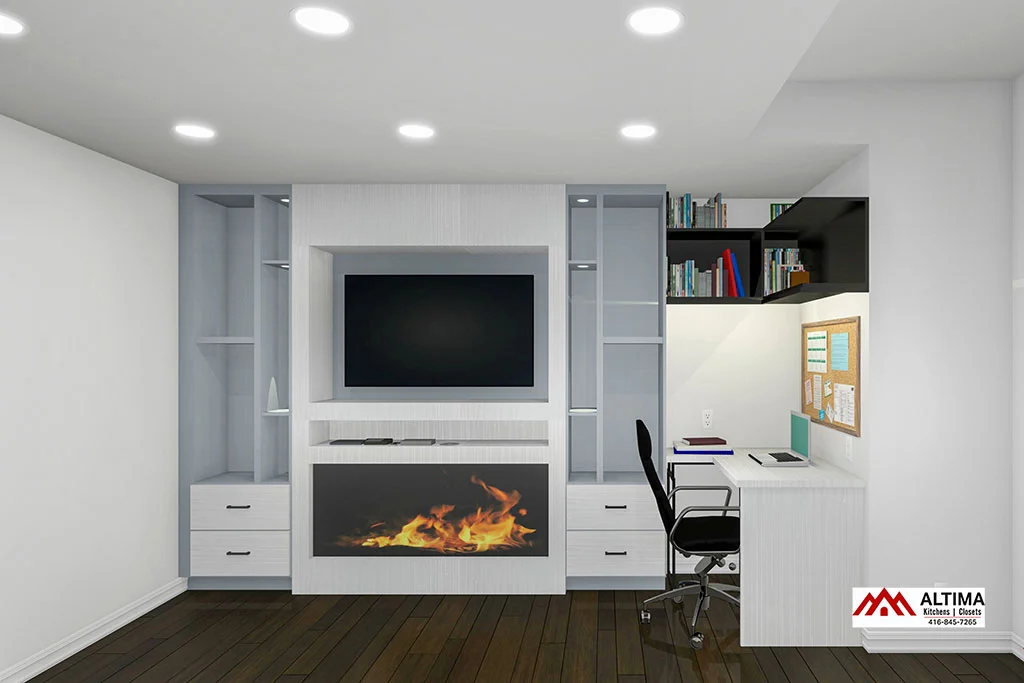
Basement spaces reward smart planning. We focused on moisture-tolerant finishes, great task lighting, and a compact work triangle tailored to light entertaining. A simple media wall near the kitchenette added a cohesive hangout zone.
- Documented electrical runs and ventilation considerations up front
- Selected finishes that clean easily and wear well over time
- Kept walkways clear with right-sized cabinetry and corner solutions
Considering a Project? Let’s Talk
If you want a calm, organized renovation, choose a contractor who owns design, manufacturing, and installation. Our GTA team guides you from first sketch to final handover with factory-direct cabinetry and lifetime-door warranty options.
Ready to see your layout in 3D and explore finishes in one visit? Book a relaxed showroom conversation with our team at Altima Kitchens And Closets. We’ll map your workflow, suggest storage upgrades, and outline a clean, step-by-step path to your new kitchen.
Helpful Deep Dives from Our Team
Pair this guide with resources on planning, cabinetry, and design details. Each article dives into a focused area so you can make faster, more confident decisions—and see how our process keeps everything aligned from drawings to installation.
- Explore layouts and decisions in our kitchen renovation planning guide.
- See construction details in custom kitchen cabinets.
- Get inspired with custom kitchen design ideas for GTA homes.
- Review our Toronto kitchen renovation service overview.
- Planning a broader update? See our full-home renovation roadmap.
Frequently Asked Questions
Homeowners often ask how to choose, what to expect, and how to avoid delays. These quick answers keep you focused on the essentials—documentation, communication, and in-house capabilities that reduce risk and improve quality.
What does a kitchen renovation contractor actually do?
They plan, design, fabricate, and install your new kitchen under one coordinated scope. That includes drawings, selections, site protection, scheduling trades, quality checks, and a final walk-through with documented warranty terms.
How long does a kitchen remodel take?
Timelines vary with scope, building logistics, and decision speed. Projects move fastest when drawings are approved early, selections are locked, and a single in-house team manages fabrication and installation without handoffs.
Do I need 2D/3D drawings?
Yes. 2D plans and 3D visuals reduce rework by clarifying layout, clearances, and finishes before building. They help you confirm appliance placement, lighting, and storage solutions with confidence.
What’s the advantage of a design-build contractor?
Design-build keeps your vision, materials, and installation under one accountable team. It reduces communication gaps, speeds decisions, and gives you a single warranty partner for cabinetry and workmanship.
Key Takeaways and Next Steps
Choose a kitchen renovation contractor who provides drawings, itemized scopes, factory-direct cabinetry, and in-house installers. Align decisions early, use 2D/3D visuals, and keep one accountable team to minimize risk and keep your schedule predictable.
- Expect clear drawings, documented selections, and a coordinated schedule
- Design-build alignment reduces delays and preserves finish quality
- Factory-direct cabinetry and pro hardware extend service life
- Local expertise streamlines condo and neighborhood logistics
Thinking ahead pays off. If you’re ready to start, book a friendly design conversation at Altima Kitchens And Closets. We’ll map your must-haves, show 3D options, and outline a calm, step-by-step path to your dream kitchen.
Related Posts
Why Choose Kitchen Renovation Company
Nowadays, Kitchen spaces are not only a place for cooking and serving food, but these areas act as a statement, as they speak a lot about a family, the philosophy and personality of individuals, and spaces. If you admire aesthetics and adorn the beauty of your home, you must pay attention to the interior design […]
How a Kitchen Renovation Contractor is Changing the Game
Lifestyle is all about bringing something coherent to the overall experience of living. The kitchen and closets stand as two of the most influential spaces in a home that add to the overall experience of living. A Kitchen Renovation Contractor in Whitby by the name of Altima Kitchen and Closets Inc. is changing the overall […]
How Media unit contractor in Whitby is Changing the Game
Lifestyle is all about bringing something coherent to the overall experience of living. The kitchen and closets stand as two of the most influential spaces in a home that add to the overall experience of living. A Media Unit Company in Whitby by the name of Altima Kitchen and Closets Inc. is changing the overall […]