Kitchen Cabinet Hardware Tips: A Selection Guide (2026)
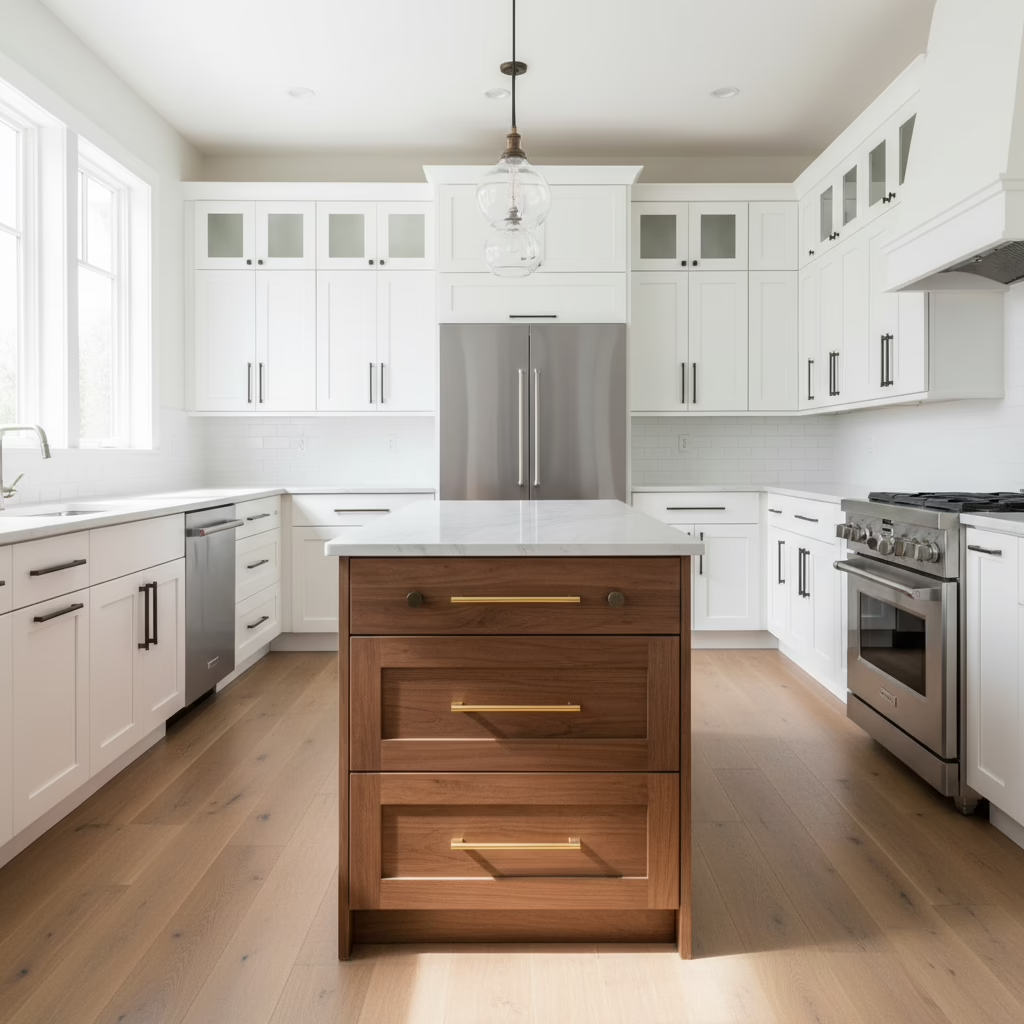
Kitchen cabinet hardware selection is the process of choosing knobs, pulls, and hinges that fit your door style, hand feel, and everyday workflow. Good hardware improves grip, protects finishes, and completes your design. For homeowners near 11 Edvac Drive, Altima Kitchens and Closets uses 2D/3D previews and factory-direct options to make this kitchen cabinet hardware selection guide effortless.
By Ashok — Altima Kitchens and Closets • Last updated: 2026-05-05
Overview
This guide explains how to select kitchen cabinet hardware with confidence. You’ll learn the difference between knobs and pulls, how to size and place them, what finishes last, and which tools ensure straight, repeatable installs. We also include GTA-focused examples and a step-by-step workflow.
- What you’ll learn: hardware types, finish durability, sizing, placement, and maintenance
- Who it’s for: GTA homeowners planning a remodel, refacing, or new custom kitchen
- Why trust this: Altima designs, manufactures, and installs cabinetry in-house with Italian CNC machinery and a professional spray booth
- Tools you’ll likely need: tape measure, hardware jig/template, level, 3/16″ and 1/8″ bits, countersink bit, painter’s tape, screwdriver/driver
- Use this kitchen cabinet hardware selection guide with Altima’s design services for best results
- Plan your renovation smarter with our kitchen renovation planning guide.
- Explore door looks via CNC cabinet door profiles.
- Compare cabinet boxes in melamine vs. plywood.
- Dial in layout ideas with custom kitchen design ideas.
- See placement specifics in where to put knobs and handles.
- Plan storage with pull‑out pantry organizers.
What is a kitchen cabinet hardware selection guide?
A kitchen cabinet hardware selection guide defines hardware types (knobs, pulls, hinges), sizing rules, finishes, and placement standards so you can choose pieces that look right and feel comfortable. It also explains tools and templates that prevent misaligned holes and outlines maintenance for long-term performance.
In plain language, the guide turns hundreds of small choices into a simple, repeatable process. We clarify what each component does, where it belongs, and how it affects daily use. We also map decisions into Altima’s in-house 2D/3D design workflow so you can see the results before drilling a single hole.
- Core components: knobs, bar pulls, cup/bin pulls, tab/edge pulls, backplates, and concealed hinges
- Common sizes: 1-1/4″–1-3/8″ knob diameter; 96/128/160/192/224 mm center‑to‑center for pulls
- Standard door thickness: roughly 3/4″ for most kitchen fronts; typical screw length about 1″
- Hinge standards: 35 mm cup for European concealed hinges; choose overlay (full/half) or inset to match door construction
Because decision fatigue is real, our design team streamlines options inside one showroom—finish samples, hardware boards, and door styles in one place. That single‑roof approach reduces back‑and‑forth and helps you land a cohesive look faster.
Why cabinet hardware matters in your kitchen
Hardware influences comfort, durability, and the finished look. The right size and placement improve leverage on heavy drawers, protect painted doors with backplates, and reinforce a style—modern, transitional, or traditional. Thoughtful choices reduce strain, noise, and fingerprints while elevating the entire space.
Every handle you touch is a micro‑interaction. If a pull is too short for a 30″ pot drawer, you’ll need more force to open it, which stresses slides over time. Oversized bar pulls, by contrast, distribute load along the hand. Soft‑close hinges reduce impact on frames and keep doors aligned longer by preventing hard slams.
- Perception shift: matching finish families across faucet, lighting, and pulls increases visual cohesion throughout the room
- Ergonomics: longer pulls on wide drawers reduce effort; rounded edges feel gentler on fingers than sharp profiles
- Protection: backplates minimize paint wear around high‑touch areas and can cover old holes during refacing
- Noise reduction: soft‑close hardware limits collisions and helps maintain alignment over years of daily cycles
In our experience with GTA families, subtle hardware upgrades often make the kitchen feel “new” even before countertops or backsplashes are installed. The right detail pays off every time you cook, clean, or grab a snack.
How the selection process works (step by step)
The smartest path is decide style, choose finish family, confirm sizes, test placement in 2D/3D, and lock drilling templates before production. This sequence avoids rework, prevents misaligned holes, and delivers a consistent, professional look across all doors and drawers.
- Define cabinet style. Identify slab, shaker, or raised panel. Match silhouettes: edge pulls suit slab; cup pulls flatter farmhouse/transitional; slim bars modernize shaker.
- Pick a finish family. Warm (brass/bronze), cool (chrome/nickel), or neutral (black). Hold samples against doors under daylight and 2700–3000K LED to check color shifts.
- Confirm sizes. Typical pulls: 96–224 mm center‑to‑center. Knobs: 1-1/4″ to 1-3/8″. For 30″ drawers, consider 8–10″ pulls to improve leverage on heavy cookware.
- Set placement. Many doors look best with knobs about 2.5″ from edge; drawers 8–12″ tall often center pulls vertically. For tall drawers, upper‑third placement can feel better.
- Prototype in 2D/3D. Altima’s design team overlays hardware in renderings so you can compare options quickly and preview proportions from multiple angles.
- Lock the template. Use a jig with millimeter accuracy; blue tape marks help reduce tear‑out. Confirm orientation and spacing twice before drilling once.
Local considerations for 11 Edvac Drive
- Seasonal humidity can fluctuate widely across the GTA. Favor stable materials and solid mounting so screws stay tight through dry winters and humid summers.
- Holiday hosting spikes kitchen use. Choose soft‑close hinges and larger pulls to ease traffic and reduce noise when family gathers.
- If you’re planning a showroom visit, bring a door sample or we’ll provide finish swatches to check under similar lighting conditions.
Once templates are set, our in‑house installers pre‑drill with 1/8″ pilots and finish with a 3/16″ bit, then lightly countersink to keep fibers flush. That sequence keeps holes crisp on painted MDF and laminated doors alike.
Types of cabinet hardware and when to use each
Use knobs for small doors and light drawers, bar pulls for wide pot drawers, cup pulls for farmhouse charm, and edge/tab pulls for ultra‑minimal slabs. Add backplates to protect paint or cover existing holes. Pair hinges—soft‑close, overlay, inset—to match your cabinet construction.
Knobs
- Best for: Small to medium doors; light drawers
- Sizes: Common diameters 1-1/4″ to 1-3/8″; 1-1/2″ for a bolder grip
- Why choose: One screw hole, timeless look, easy alignment
- Style fits: Traditional, transitional, and modern (with geometric shapes)
Pulls
- Best for: Wide drawers, heavy cookware storage, integrated appliance panels
- Sizes: 96, 128, 160, 192, 224 mm center‑to‑center; larger for appliances
- Why choose: Two contact points provide leverage; sleek, cohesive runs across banks of drawers
- Profiles: Straight bar, arch, recessed, finger pull, and cup/bin pulls
Edge and tab pulls
- Best for: Minimalist slab doors where you prefer little to no projection
- Install: Mounted at the door’s top or side edge; great for uninterrupted lines
- Note: Smaller gripping surface—test for comfort if hands are larger or often gloved
Backplates
- Purpose: Distribute pressure and protect painted surfaces around high‑touch zones
- Refacing tip: Elongated backplates cover legacy 3″ holes when switching to 96 mm pulls
Hinges
- Types: European concealed (35 mm cup), face frame, inset, full/half overlay
- Features: Soft‑close dampers, clip‑on removal, 3‑way adjustment (height, side, depth)
- Match to: Cabinet box construction—melamine vs. plywood—and door reveal goals
Choosing components in families (e.g., the same collection offers knobs, short pulls, long pulls, and backplates) keeps proportions consistent across different cabinet sizes.
Finishes, materials, and durability
Select solid brass, stainless steel, or aluminum for resilience; then choose a finish that coordinates with faucets and lighting. Brushed, satin, or matte sheens hide fingerprints better than polished. Test samples under your actual lighting to confirm undertones.
Finish tone and sheen influence both appearance and upkeep. Brushed brass warms white shaker; matte black anchors walnut; polished chrome echoes stainless appliances. Matching warm/cool families reduces visual noise across the room.
- Materials: Solid brass (heft, longevity), stainless steel (corrosion resistance), aluminum (lightweight), and zinc alloys (budget‑friendly but softer)
- Sheens: Brushed/satin reduce prints; polished shines but shows smudges faster
- Coatings: PVD and durable lacquers enhance scratch resistance on high‑touch surfaces
- Check undertones: Brass can skew green or red; nickel may lean warm; black can be cool or brownish
If you’re exploring color direction for paint and hardware pairings, this practical overview of kitchen cabinet color trends offers useful context for coordinating finishes during a remodel. When refinishing is part of your plan, a general primer on cabinet refinishing basics helps you understand how topcoats interact with metal finishes around pulls and knobs.

For long-term satisfaction, handle three to five options in person. In our Brampton factory showroom, clients quickly notice differences in weight, edge softness, and grip clearance—small factors that matter when you open doors dozens of times a day.
Sizing, placement, and ergonomics
Size pulls to about one‑third of drawer width, use longer bars on wide pot drawers, and keep knob placement consistent—often 2.5″ from door edges. Confirm comfort by testing grip clearance and reach. Templates ensure identical results across every front.
Proportions drive harmony. A 24″ drawer commonly pairs with a 7–8″ pull; 30″ drawers feel right with 8–10″. Tall pantry doors benefit from vertical pulls placed near the opening edge for natural reach. For 8–12″ drawer fronts, center pulls vertically; on taller drawers, upper‑third placement reduces bending.
- Rules of thumb: one‑third width for pulls; upsizing on heavier drawers for leverage
- Knob placement: 2.5″ from door edge is a reliable starting point; adjust for rail widths on shaker styles
- Comfort check: Verify finger clearance behind bars; rounded edges spare knuckles
- Template tips: Secure with painter’s tape; drill 1/8″ pilots first, then your final bit; lightly countersink to keep paint fibers flush
We also consider household needs. For multi‑generational homes, larger pulls are easier for smaller hands and more comfortable for those with reduced grip strength. In mudrooms, oversized pulls help when you’re wearing gloves.
Knobs vs. pulls vs. edge pulls (quick comparison)
Knobs are simple and timeless; pulls improve leverage on wide drawers; edge/tab pulls create minimal lines. Choose based on door size, drawer weight, and style. When in doubt, mix knobs on doors with pulls on drawers for balanced function and design.
| Option | Best For | Pros | Considerations |
|---|---|---|---|
| Knobs | Small/medium doors; light drawers | One hole, classic, easy alignment | Less leverage on wide drawers |
| Bar Pulls | Wide/heavy drawers; appliance panels | Great leverage; cohesive lines | Two holes; shows prints if polished |
| Cup Pulls | Farmhouse/transitional drawers | Comfortable scoop grip; timeless | More traditional look; two holes |
| Edge/Tab Pulls | Minimal slab doors | Ultra‑clean lines; low projection | Smaller grip; test for comfort |
| Backplates | Protecting paint; refacing changes | Hide old holes; add detail | Extra layer alters look |
Tools and resources that make selection easier
Use a hardware jig with common spreads (96–224 mm), sharp bits, and painter’s tape to prevent tear‑out. A 35 mm hinge boring jig fits concealed hinges. Pair these with Altima’s 2D/3D design previews and one‑roof showroom to shorten decisions and ensure accuracy.
- Templates/jigs: Adjustable for 96–224 mm; lockable for repeatability across a drawer bank
- Bits: 1/8″ pilot, 3/16″ finish, and light countersink to keep fibers flush on painted MDF
- Hinge tooling: 35 mm boring jig for European concealed hinges; depth stops protect through‑drilling
- Lighting samples: Check under daylight and warm LED (2700–3000K) to confirm undertones
- Design support: Our in‑house 2D/3D kitchen design visualizes hardware scale before production
- Learn more: If you’re weighing door updates, this overview of cabinet refinishing offers helpful context for pairing new hardware with refreshed finishes.
Because Altima manufactures locally, your selections flow directly into production—reducing handoffs and preserving details from design through installation.
GTA case studies and real‑world examples
Real projects show how hardware choices change comfort and style. Slim black pulls calm small condos, while longer bars help families open wide pot drawers. Backplates protect painted shaker in busy homes. These examples illustrate what works across GTA homes.
- Urban condo refresh: White slab doors with 160 mm matte black pulls. The uninterrupted lines made a small kitchen feel broader, while the slim profile avoided catching pockets and sleeves.
- Family pot‑drawer upgrade: 30″ drawers paired with 8–10″ bar pulls. The added leverage made it easier for kids and adults to reach everyday cookware without tugging.
- Refacing without new holes: Replaced legacy 3″ pulls with 96 mm hardware using elongated backplates—no visible old holes, and paint around handles stays cleaner.
- Warm basement bar: Walnut doors with brushed brass knobs. Soft‑close hinges stabilized glass‑front uppers; under‑cabinet lighting gave the brass a jewelry‑like sparkle.
- Media wall minimalism: Integrated channel pulls on flat‑panel doors keep sight lines clean around the TV and speakers.
- Mudroom durability: Oversized stainless pulls resist salt and moisture, easy to grab with gloves after winter commutes.
For deeper planning on cabinetry fundamentals that influence hardware layout, see our notes on custom kitchen cabinets and the differences between melamine vs. plywood cabinet boxes.
Common hardware mistakes to avoid
Skip mismatched finishes, undersized pulls on wide drawers, and freehand drilling. Confirm undertones under your actual lighting, use templates, and test grip clearance. When refacing, use backplates to cover old holes and protect fresh paint.
- Mixing unrelated metals: One dominant metal with a subtle accent works; too many tones feel chaotic.
- Undersized pulls on wide drawers: Short bars increase effort and nick paint with fingertips.
- Freehand drilling: A jig prevents off‑by‑1/8″ errors that the eye notices instantly on clean lines.
- Ignoring sheen: Polished shows fingerprints faster; choose brushed/matte where smudges bug you.
- Skipping a mockup: Even a paper template taped to the door helps you confirm comfort and sight lines.
We catch these pitfalls early in design. Our renderings flag proportions that feel off so you can correct them before any drilling or production.
Installation and placement tips from our installers
Keep placements consistent with a locked jig, drill pilots before final holes, and countersink lightly to prevent raised fibers. Verify orientation twice—especially on cup pulls and asymmetrical pulls—before drilling once across the whole set.
- Mark centerlines with painter’s tape; pencil shows clearly and erases cleanly.
- Confirm screw length for 3/4″ doors (about 1″); adjust for thicker fronts or backplates.
- On cup pulls, verify “open” direction and vertical alignment across a drawer bank.
- On paneled drawers, align to the rail geometry; on slabs, rely on measured thirds for balance.
- Tighten hardware gently at first; step back to confirm lines, then snug all screws uniformly.
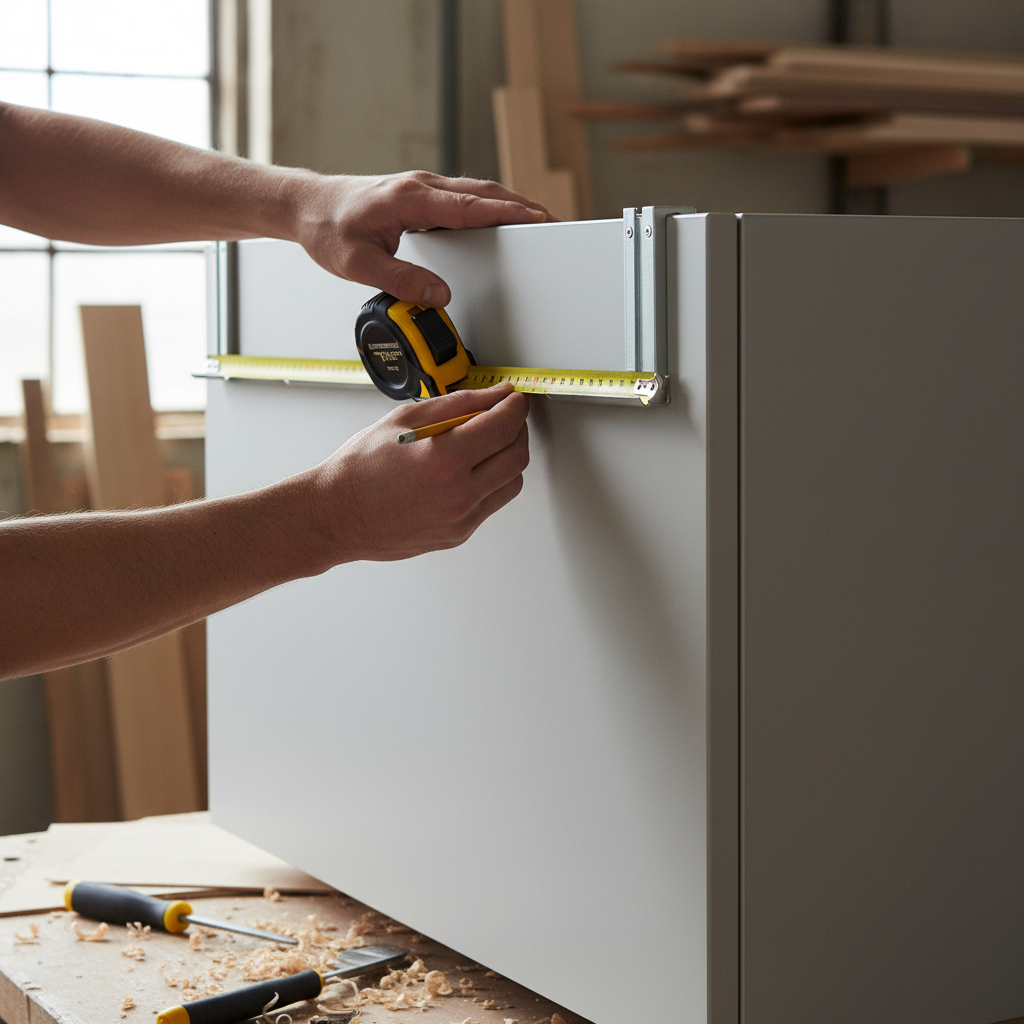
If you’d like our team to handle drilling and install, we coordinate with your build schedule so hardware lands after painting but before final cleaning—reducing rework and touch‑ups.
Maintenance and long‑term care
Clean hardware with mild soap and water, then dry thoroughly. Avoid ammonia or abrasive cleaners that can dull finishes. Re‑snug screws during seasonal changes and inspect soft‑close hinges so doors stay aligned and quiet.
- Weekly wipe‑downs keep oils from building up, especially on polished sheens.
- Quarterly screw checks catch seasonal loosening—common in dry winters and humid summers.
- Use microfiber cloths to avoid micro‑scratches on lacquered and PVD‑coated finishes.
- For refinishing projects, coordinate topcoat sheen with hardware sheen to maintain a cohesive look throughout.
Hardware that’s properly cleaned and periodically checked stays smooth to the touch and keeps your kitchen looking “finished” for years.
Frequently Asked Questions
These quick answers address the most common questions we hear in our showroom, from sizing a pull for a 30″ drawer to mixing metals the right way. Use them to finalize choices with confidence.
What size pull works best for a 30″ drawer?
An 8–10″ pull usually feels right on a 30″ drawer. The added length improves leverage for heavy cookware and spreads wear across the front. If you prefer knobs, two evenly spaced knobs can also work.
Can I mix metal finishes in one kitchen?
Yes—choose one dominant finish and one supporting accent. Keep undertones related (e.g., warm brass with warm bronze). Use the accent sparingly so the space reads cohesive rather than busy.
Where should I place knobs on shaker doors?
A reliable starting point is about 2.5″ from the door edge, centered on the rail width. Adjust slightly to balance the proportions of your specific profiles and to match adjacent doors and drawers.
What hinge type should I pick for new cabinets?
European concealed hinges with a 35 mm cup are the most common. Select full or half overlay—or inset—based on your cabinet design. Soft‑close features reduce noise and help doors stay aligned over time.
Key takeaways
Choose a finish family, size pulls to drawer width, and confirm placement with a jig before drilling. Test grip and undertones under real lighting. When refacing, use backplates to cover old holes and protect paint for a clean, consistent result.
- Follow a sequence: style → finish → size → placement → 2D/3D preview → template
- Pulls around one‑third of drawer width improve comfort; go longer for heavy drawers
- Brushed or matte sheens hide fingerprints better than polished
- Backplates protect painted doors and simplify refacing transitions
- Templates and pilot holes prevent misalignment across a whole kitchen
Conclusion and next steps
A careful kitchen cabinet hardware selection process transforms daily comfort and the room’s finished look. When you combine smart sizing, consistent placement, and durable finishes with Altima’s in‑house design and install, you get a clean, cohesive result that lasts.
Ready to see your options on your exact doors? Book a design session and we’ll layer your preferred hardware into 2D/3D views, confirm sizes, and carry those details straight into manufacturing and installation. That’s the benefit of our one‑roof process.

Related Posts
Why Choose Kitchen Renovation Company
Nowadays, Kitchen spaces are not only a place for cooking and serving food, but these areas act as a statement, as they speak a lot about a family, the philosophy and personality of individuals, and spaces. If you admire aesthetics and adorn the beauty of your home, you must pay attention to the interior design […]
How a Kitchen Renovation Contractor is Changing the Game
Lifestyle is all about bringing something coherent to the overall experience of living. The kitchen and closets stand as two of the most influential spaces in a home that add to the overall experience of living. A Kitchen Renovation Contractor in Whitby by the name of Altima Kitchen and Closets Inc. is changing the overall […]
How Media unit contractor in Whitby is Changing the Game
Lifestyle is all about bringing something coherent to the overall experience of living. The kitchen and closets stand as two of the most influential spaces in a home that add to the overall experience of living. A Media Unit Company in Whitby by the name of Altima Kitchen and Closets Inc. is changing the overall […]