Custom Closets Explained: Get a Cleaner Room in 2026
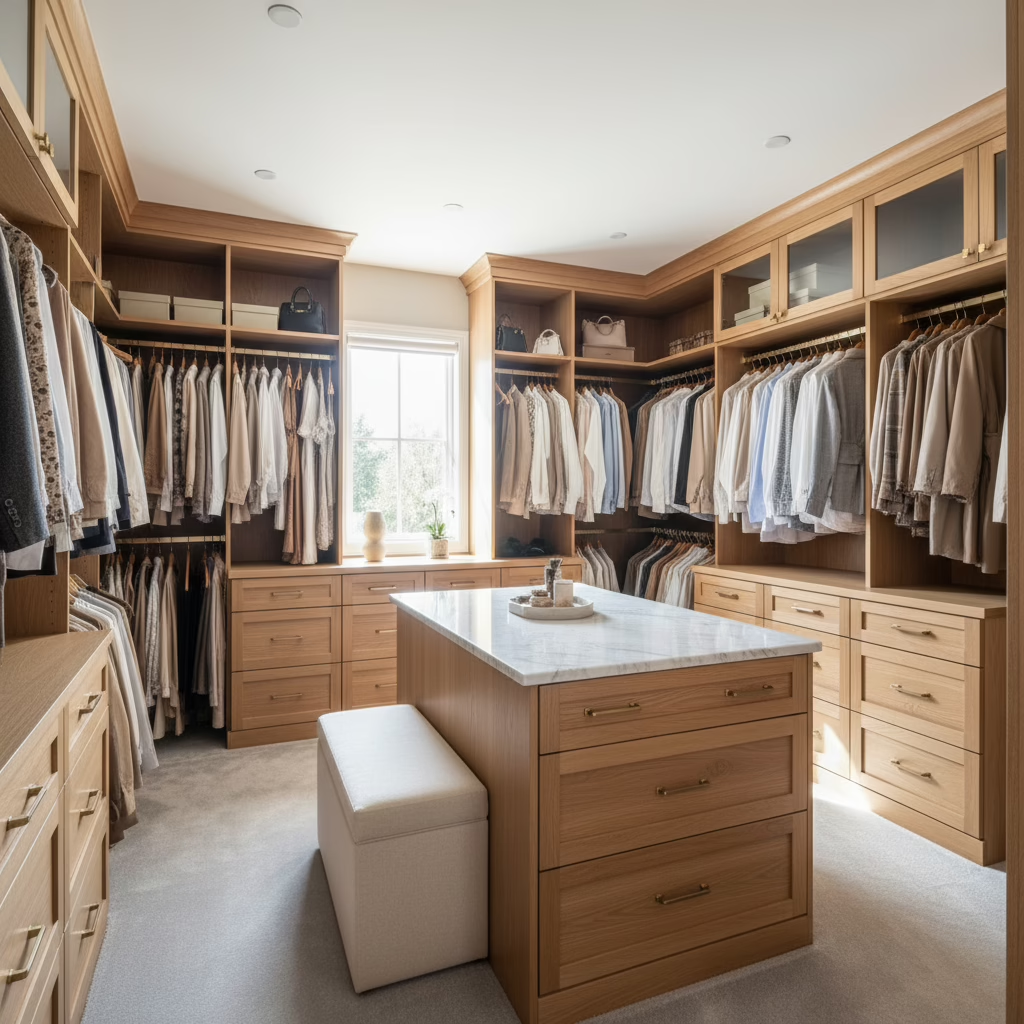
Custom closet design and installation is the coordinated process of assessing your storage, engineering a space-efficient layout, fabricating cabinetry, and installing it so every inch works. For homeowners near 11 Edvac Drive and across the GTA, Altima Kitchens and Closets delivers this end-to-end, in-house service to maximize organization and daily ease.
By Ashok — Altima Kitchens and Closets • Last updated: 2026-05-07
Overview
This guide explains what custom closets are, why they matter, how the design-to-installation workflow runs, core system types, best practices, tools, and real GTA examples. You’ll also find a comparison table, an at-a-glance checklist, and expert tips grounded in Altima’s factory-direct, in-house installation approach.
Altima Kitchens and Closets is a GTA-based, design-build renovator with a Brampton showroom and factory. We design, manufacture, and install custom closets, kitchens, media units, and more—under one roof. Clients get itemized documentation, 2D/3D visuals, proactive updates, and lifetime-warranty options on select doors.
- What you’ll learn: practical layout rules, materials, accessories, lighting, and scheduling
- Who it’s for: GTA homeowners and condo owners who want organized, durable storage
- Why trust this: in-house design, CNC manufacturing, professional spray booth, and installers
Local considerations for 11 Edvac Drive
- Plan condo-friendly wardrobe walls that optimize vertical space and sliding door clearances common around 11 Edvac Drive residences.
- Schedule fabrication to avoid peak holiday periods when deliveries and trade access windows tighten in the Brampton area.
- Select durable finishes that handle winter boots and salt in mud rooms, plus low-glare lighting for darker winter mornings.

What Is Custom Closet Design and Installation?
Custom closet design and installation is a start-to-finish service that measures your space, models a layout around your routines, fabricates tailored cabinetry, and installs it for a built-in look. The goal is to convert unused inches into organized storage that speeds up daily life and keeps rooms tidy.
Think of it as precision carpentry plus workflow design. We calibrate hanging heights, shelf spacing, drawer mixes, lighting, and accessories to your wardrobe and habits. Because Altima manufactures in-house with Italian CNC machinery, your system is cut to the millimeter, finished in our spray booth, and installed by our team for a seamless result.
- Tailored fit: From reach-ins to walk-ins and condo wardrobes, dimensions match your room exactly.
- Optimized layout: Double hanging increases capacity; drawers corral small items; shelves stage shoes and bags.
- Finish coordination: Doors, gables, and trims align with your home’s palette and sheen level.
- Built-in look: Scribed fillers and crown/base details erase gaps and create a furniture-grade finish.
In our experience with GTA homes, the immediate win is clarity—everything has a home, so mornings move faster. That’s the quiet power behind effective closet systems.
Why Custom Closets Matter
Custom closets matter because they turn cluttered, underused corners into high-capacity, organized storage. Strategic zones, proper lighting, and durable finishes protect clothing, cut search time, and reduce visual noise—leading to calmer rooms and faster routines for families and condo owners alike.
The average bedroom closet often wastes vertical space above a single rod and shelf. By introducing double hanging (two rods separated vertically), adjustable shelves in 1.25–1.5 inch increments, and drawers for small items, you transform capacity and access. Add door or motion-sensor lighting to reveal colors and textures accurately during early mornings.
- Less hunting, more doing: Grouping by purpose (workwear, casual, formal) reduces decision fatigue.
- Seasonal rotation ready: Upper shelves or bins hold off-season items at a safe height.
- Garment care: Proper clearances avoid crushing collars and improve airflow around fabrics.
- Home value alignment: Integrated storage is a sought-after feature in GTA resale conversations.
We’ve found that when families see clear zones for each person—and labeled drawers or dividers—they maintain order more consistently. A well-zoned closet becomes a shared habit, not a weekend clean-up project.
How the Design-to-Installation Process Works
A proven process runs from discovery and measurement to 2D/3D design, showroom selections, factory fabrication, scheduled installation, and a final quality walkthrough. With Altima, each step is handled in-house to reduce delays, miscommunication, and rework.
- Discovery + measurement: We document dimensions, obstructions, and how you store items today. Laser tools capture accurate widths, heights, and out-of-square angles.
- 2D/3D design: You review plan and elevation drawings plus 3D views showing hanging zones, shelves, drawers, and lighting. Revisions align the layout to your routines.
- Material + hardware selection: In our Brampton showroom, compare finishes, door styles, and accessories. Soft-close hinges and slides are standard in our systems.
- Factory fabrication: Italian CNC machinery cuts parts precisely; our spray booth finishes painted components for consistent sheen and durability.
- Installation: In-house installers level, anchor to studs, scribe fillers, and set doors/drawers to even reveals. Most installs complete in one to three days depending on scope.
- Quality check + care tips: We align doors, test slides, review cleaning methods, and note any punch-list adjustments.
Throughout, you receive itemized documentation and proactive updates (many clients prefer WhatsApp for quick check-ins). This single-team model simplifies decisions and keeps the schedule predictable.

Types, Methods, and Approaches
The main closet approaches include reach-ins, walk-ins, wardrobe walls for condos, and mud room built-ins. Material choices span melamine and thermally fused laminates to painted MDF. Accessories like valet rods, jewelry trays, and shoe organizers tailor function to your lifestyle.
Core system types
- Reach-in closets: Shallow depths (often 22–24 inches), optimized with double hanging and adjustable shelves for folded items.
- Walk-ins: Perimeter hanging with optional island; mix of long hang (60–65 inches) and double hang (two 36–40 inch sections).
- Wardrobe wall units: Ideal for condos; full-height cabinets with hinged or sliding doors where no closet exists.
- Mud room built-ins: Benches, cubbies, and overheads to handle coats, boots, and bags—winter-ready for GTA weather.
Materials and finishes
- Melamine/TFL panels: Durable, consistent color, easy maintenance.
- Painted MDF fronts: Smooth profiles and color matching; lifetime-warranty door options are available on MDF Painted and Prelaminated doors through Altima.
- Hardware: Soft-close slides (full-extension) and concealed hinges maintain quiet, smooth operation.
When discussing finish sheen, evaluate glare, fingerprints, and cleaning routines. For a perspective on sheen behavior, you can review this overview of glossy versus matte finishes and relate those preferences to closet doors and drawer fronts.
Accessories that make a difference
- Valet rod: Stage outfits at shoulder height.
- Jewelry tray: Velvet-lined dividers prevent scratches and tangles.
- Pull-out hampers: Keep laundry concealed and ventilated.
- Shoe organizers: Flat shelves (13–14 inches deep) or angled shelves with fences for visibility.
- Tie/belt racks: Slim pull-outs that save drawer space.
| System | Best For | Typical Depth | Door Options | Notable Add-ons |
|---|---|---|---|---|
| Reach-in | Kids’ rooms, small bedrooms | 22–24 in | Bypass/sliding or hinged | Double hang, adjustable shelves |
| Walk-in | Primary suites | 24 in (perimeter), 30–40 in (island) | Open or hinged fronts | Island drawers, mirror panels, lighting |
| Wardrobe wall | Condos, rooms without closets | 24 in | Sliding or hinged | Integrated lighting, drawers, upper cabinets |
| Mud room | Entry organization | 14–20 in | Open cubbies or doors | Bench, shoe trays, hooks, overheads |
For deeper dives on organizer types and planning frameworks, see our practical closet systems guide and our page on closet organizer installation.
Best Practices We Use in GTA Homes
Design for your routine first, then fixtures. Use double hanging where possible, allocate long-hang space for dresses and coats, keep drawers below waist height, place lighting at the front, and anchor verticals to studs. Finish with scribed fillers for a true built-in feel.
Layout and ergonomics
- Double hanging: Two rods separated vertically increases shirt/pants capacity in the same footprint.
- Long hang: Reserve a 60–65 inch section for coats and dresses to avoid creasing hems.
- Drawers: Sit below 42 inches for easy reach; use 6–10 inch drawer faces based on contents.
- Shelves: 13–14 inch depths suit folded clothes; keep adjustable with 1.25–1.5 inch pin increments.
Lighting and power
- Front-lit shelves: Place LED strips or pucks toward the front edge to reduce shadows on clothing.
- Motion sensors: Auto-illumination keeps hands free and reduces energy use when the door is closed.
- Color rendering: Balanced LEDs help you match colors accurately during early morning routines.
Installation details
- Stud anchoring: Fasten every vertical gable into studs for lasting rigidity.
- Leveling feet/shims: Correct uneven subfloors before fastening; check reveals on every drawer/door.
- Scribed fillers: Scribe to walls and ceilings to close gaps and block dust paths.
These practices show up on day one. For example, when we install wardrobe walls in condos, we reconcile slab variances, plumb each vertical, and trim to the ceiling, so doors glide without binding—critical in high-rise units.
Tools and Resources That Matter
Accurate laser measurement, 2D/3D design tools, CNC cutting, and a professional spray booth underpin consistent results. Quality hardware, thoughtful lighting, and curated accessories round out a system you’ll enjoy daily for years.
- Laser measurement: Captures exact dimensions and out-of-square angles for precise part sizing.
- Design software: 2D/3D drawings show proportions, clearances, and finishes before fabrication.
- Italian CNC machinery: Clean edges and repeatable accuracy across parts.
- Spray booth finishing: Even color, consistent sheen, and durable painted MDF fronts.
- Soft-close hardware: Quiet operation is standard across drawers and doors.
If you’re weighing door sheen for maintenance and look, browse this perspective on cabinet finishes in Brampton and extrapolate what you like to closet fronts. And if you’re updating existing cabinetry elsewhere at home, concepts from refacing methods can inform refresh strategies for adjacent rooms.
Real-World Examples From Our GTA Projects
Across condos, family homes, and entries, the right mix of hanging, drawers, shelving, and lighting turns tight spaces into calm, high-capacity storage. These quick snapshots show how tailored layouts solve specific daily pain points.
Condo wardrobe wall (downtown GTA)
- Challenge: No built-in closet; limited wall length.
- Solution: Full-height wardrobe with sliding doors, interior lighting, and pull-out shelves for shoes.
- Result: A single wall now holds workwear, casual sets, and seasonal bins—without crowding the room.
Family walk-in (near 11 Edvac Drive)
- Challenge: Morning bottlenecks for two adults.
- Solution: Double hanging on three walls, a compact island with drawers, and a concealed hamper.
- Result: Side-by-side prep is smooth; outfits are staged the night before on a valet rod.
Mud room built-in (Mississauga)
- Challenge: Winter clutter—boots and coats with no landing zone.
- Solution: Bench with cubbies, overhead cabinets, and a boot tray zone with durable finish.
- Result: Entry stays clean; school bags and gloves have permanent homes.
For more space-saving ideas, explore our pages on custom wardrobe systems and modular wardrobes.
Step-by-Step Checklist You Can Use
Start by listing what you own, then map zones, confirm dimensions, and pick finishes and accessories. Review 2D/3D drawings, schedule fabrication, and prepare the room for installation. Finalize with lighting and a quick labeling system so habits stick.
- Inventory items: Count shirts, long garments, shoes, and accessories. Note special items (hats, bags).
- Define zones: Daily wear vs. seasonal; per person where needed.
- Measure reality: Record width/height/depth, soffits, vents, and outlets.
- Select materials: Choose panel finish, door style, and hardware sheen.
- Pick accessories: Valet rod, jewelry tray, tie/belt rack, pull-out hamper.
- Approve drawings: Validate clearances (door swings, sliding paths) and heights.
- Prep room: Empty the space; confirm wall condition and paint touch-ups.
- Installation day: Keep access clear; review reveal lines and door action before sign-off.
Need a quick planning primer? Our practical guide to working with a closet company covers expectations, timelines, and collaboration tips.
Lighting, Finishes, and Maintenance
Aim for shadow-free lighting with front-mounted LED strips or pucks, select finishes that balance durability with your home’s style, and maintain with non-abrasive cleaners. Good lighting and sheen choices help true colors read accurately every morning.
- Lighting layout: Front-edge strips illuminate faces of shelves and hanging sections.
- Switching: Motion sensors or door-activated switches keep usage automatic.
- Finish sheen: Lower sheen hides fingerprints; higher sheen adds reflectivity—pick what fits your lifestyle.
- Care: Use soft cloths and gentle cleaners; avoid abrasives on painted MDF.
To visualize sheen behavior in cabinetry contexts, review this take on glossy vs. matte finishes and apply the same logic to closet fronts and drawers for consistency across rooms.
How Closets Integrate with Home Renovation
Closet projects often run alongside kitchen, bath, or flooring updates. Coordinating materials and schedules through one design-build team reduces disruption and ensures finishes align across rooms for a cohesive look.
Because Altima is a one-stop, design-build partner, we can align your closet’s finish and hardware with adjacent projects like kitchens or media units. If you’re planning a broader project, our kitchen design ideas guide is helpful for palette planning and sequencing work across spaces.
- Shared palettes: Match closet fronts to nearby millwork or doors for a consistent style.
- Sequencing: Install flooring and paint before closets for cleaner edges and fewer touch-ups.
- Access planning: Reserve elevator or driveway access windows early in multi-trade renovations.
Frequently Asked Questions
Here are direct answers to the questions GTA homeowners ask most about custom closets—covering timelines, materials, design previews, installation logistics, and care. Each response is short, clear, and based on our in-house process.
How long does a custom closet installation take?
Most installs finish in one to three days once fabrication is complete. Timeline depends on size, site conditions, and whether we’re adding lighting or scribed ceiling trims. We’ll confirm a schedule after you approve drawings.
Can I see the design before you build it?
Yes. We provide 2D plans and 3D views that show hanging zones, shelves, drawers, doors, and lighting. You can request revisions so the layout matches your routines before fabrication begins.
What materials do you recommend for durability?
We typically use high-quality melamine or thermally fused laminates for cabinet boxes and painted MDF for doors and drawer fronts. Soft-close slides and concealed hinges are standard for long-term, quiet performance.
Do you handle lighting and electrical coordination?
We plan lighting placement during design and coordinate with your electrician if new wiring is needed. Many projects use low-voltage LED strips or pucks with motion sensors to keep operation seamless.
How do I keep my closet organized long term?
Use clear zones, consistent hangers, and labeled dividers for drawers. Rotate seasonal items to upper shelves and keep a valet rod for staging next-day outfits. A quick weekly reset keeps systems tidy.
Key Takeaways and Next Steps
Define your routine, choose the right system type, confirm ergonomic heights, and anchor installation details. With Altima’s in-house design, factory fabrication, and installers, you get one accountable team that delivers organized storage and a built-in finish.
- Custom closet design and installation converts wasted inches into organized capacity.
- Double hanging, front-lit shelves, and soft-close hardware improve daily use.
- Factory-direct fabrication and in-house installers keep timelines predictable.
- 2D/3D visuals de-risk decisions before a single part is cut.
Ready to move forward? Explore how we transform closet spaces, then reach out to schedule a visit. Prefer wardrobe walls? Start with our wardrobe systems overview.
Related Posts
Why Choose Kitchen Renovation Company
Nowadays, Kitchen spaces are not only a place for cooking and serving food, but these areas act as a statement, as they speak a lot about a family, the philosophy and personality of individuals, and spaces. If you admire aesthetics and adorn the beauty of your home, you must pay attention to the interior design […]
How a Kitchen Renovation Contractor is Changing the Game
Lifestyle is all about bringing something coherent to the overall experience of living. The kitchen and closets stand as two of the most influential spaces in a home that add to the overall experience of living. A Kitchen Renovation Contractor in Whitby by the name of Altima Kitchen and Closets Inc. is changing the overall […]
How Media unit contractor in Whitby is Changing the Game
Lifestyle is all about bringing something coherent to the overall experience of living. The kitchen and closets stand as two of the most influential spaces in a home that add to the overall experience of living. A Media Unit Company in Whitby by the name of Altima Kitchen and Closets Inc. is changing the overall […]