Custom Cabinet Pricing: Save Money Without Guesswork
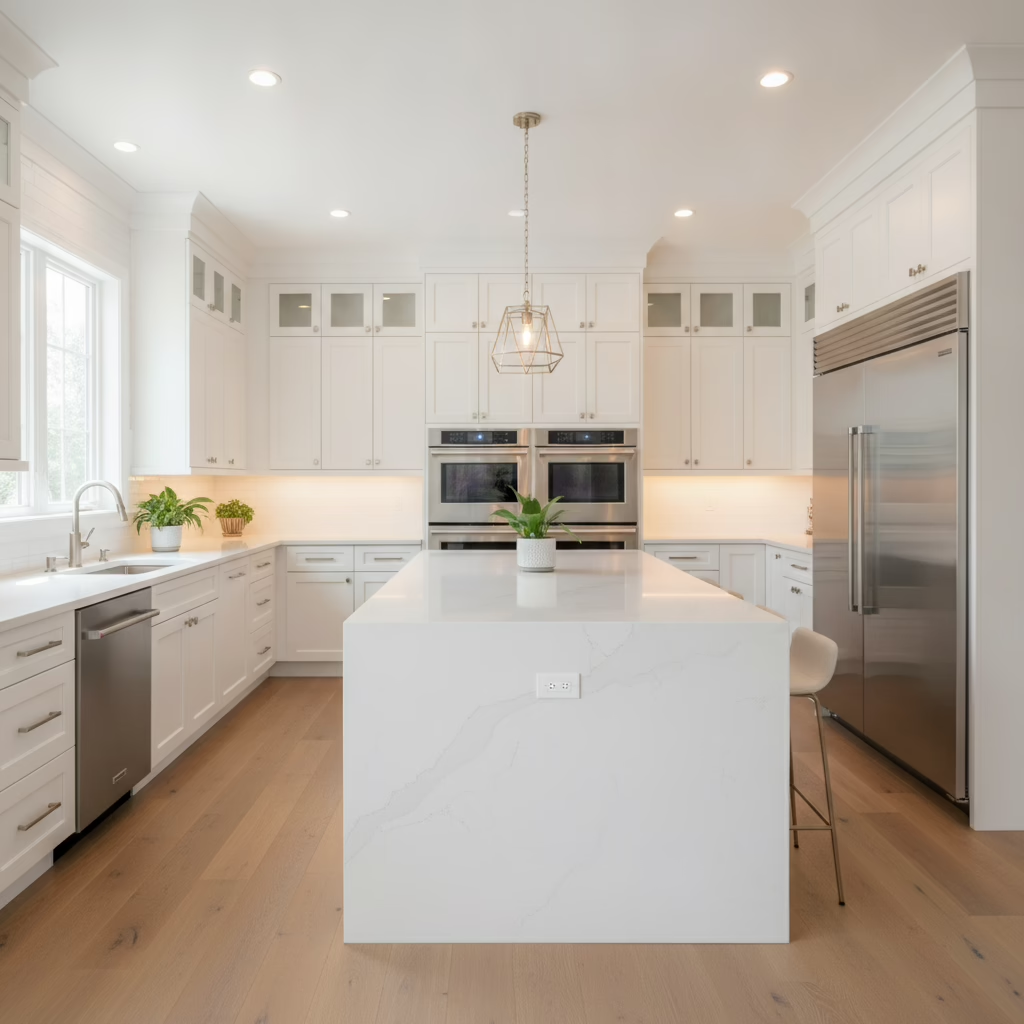
Custom cabinet pricing is the structured, line-by-line method of estimating a bespoke cabinetry project based on materials, construction, finish, accessories, layout, and installation scope. The right process turns a complex decision into a clear plan. For homeowners near 11 Edvac Drive, transparent quotes align design ambition with practical timelines and value.
By Altima Kitchens And Closets • Last updated: 2026-07-01
Above-Fold Summary and Table of Contents
This guide explains custom cabinet pricing without numbers: what drives an itemized quote, how to compare options fairly, and how to protect quality while staying on plan. Use our checklists, tables, and examples to navigate materials, finishes, accessories, design, and installation with confidence.
Here’s the thing: most “how much” articles toss out generic figures that don’t match your kitchen or goals. We take a different route—clarity over guesses. You’ll learn exactly which choices move the needle and how to structure a decision that fits your home and timeline.
- What custom cabinet pricing really means—and why it matters
- How an itemized, factory-direct quote is built step by step
- Materials, construction, finishes, and hardware fundamentals
- Design, layout, and storage upgrades that change scope
- Installation and project management signals that save stress
- Checklists, a comparison table, and real GTA examples
What Is Custom Cabinet Pricing?
Custom cabinet pricing is a transparent, itemized method to scope and plan bespoke cabinetry. It weighs materials, construction, finish, accessories, design complexity, and installation so you can compare apples to apples and choose quality that matches your goals and space.
At Altima Kitchens and Closets, “pricing” is really about clarity and control. We quantify choices so you can prioritize what matters—function, finish, or flexibility—without surprises. The result is a design-forward, factory-direct plan that balances beauty and durability.
Core components in every itemized quote
- Cabinet box material: plywood, melamine, or other engineered options (typical thicknesses: 5/8–3/4 inch).
- Door style and build: 5-piece shaker, slab, raised panel; frame widths commonly 2–3 inches.
- Finish system: professional spray-finished paint or premium laminates; multi-coat processes (often 5–7 passes) for durability.
- Hardware spec: soft-close hinges (110–165°) and undermount slides; adjustability and weight ratings matter.
- Accessories: pull-out pantry, spice pull-outs (typically 3–6 inches), lazy susan, tray dividers, waste centers.
- Design complexity: islands, tall units, appliance panels, light valances, crown profiles.
- Installation scope: site prep, leveling, scribing, service panels, and coordination with countertop and trades.
Why it matters: a clear breakdown lets you decide, for example, to keep a 5-piece shaker door and reallocate budget to deep drawers, or to specify a tougher finish in a busy household. The point isn’t a number—it’s informed tradeoffs.
Why Custom Cabinet Pricing Matters
It matters because cabinets are a long-term investment that you open and close dozens of times daily. An itemized quote shows how each decision affects durability, function, and schedule—so you protect quality and avoid scope creep.
We’ve found homeowners value three outcomes: performance you can feel, finishes that stay beautiful, and storage that fights clutter. Transparent cabinet pricing connects those dots with defendable choices instead of vague allowances.
Benefits you can bank on (without talking dollars)
- Quality alignment: Choose construction that suits humidity, traffic, and cleaning habits.
- Predictable timelines: Defined scope reduces change orders and rework.
- Design confidence: 2D/3D drawings confirm proportions, clearances, and appliance fits.
- Value protection: Durable finishes and hardware outlast trends and heavy use.
- Less stress: One accountable team for design, manufacturing, and installation reduces risk.
In our experience across the GTA, owners who commit to an itemized plan up front spend fewer evenings troubleshooting later. It’s easier to swap a door profile on paper than to change a pantry after the counters are templated.
How a Custom Cabinet Quote Actually Works
A reliable quote follows a clear sequence: discovery and measure, design and revisions, itemized scope confirmation, factory production, and scheduled installation. Each step locks decisions and reduces surprises, keeping your project on time and on plan.
Because Altima designs, manufactures, and installs under one roof, you get fewer handoffs—and fewer gaps. Here’s the flow we use for kitchens, closets, media walls, and more.
- Discovery: Goals, inspiration, storage pain points, and must-haves (e.g., deep drawers, tall pantry).
- Field measure: Wall straightness, floor level, plumbing/electrical notes, appliance specs.
- 2D/3D design: Layout, elevations, door styles, crown/light valance details, clearances.
- Itemized scope: Box material, door/finish system, hardware, accessories, trim, and installation steps.
- Showroom selections: Door samples, color chips, hardware, lighting—decisions made side-by-side.
- Final sign-off: Drawings, selections, and workflow with target dates.
- Manufacturing: CNC machining, assembly, professional spray finishing, QC.
- Installation: Site protection, leveling, scribing, hardware fit, door adjustments, finish touch-ups.
Tip: Keep appliance spec sheets handy during design and install. A panel-ready fridge or slide-in range can change clearances by fractions of an inch—but that’s the difference between perfect gaps and avoidable rub points.
Materials and Construction: What Changes the Quote
Box materials, joinery, and door construction drive longevity and feel. Choosing durable substrates, pro-grade finishes, and engineered hardware increases performance, reduces maintenance, and anchors long-term value—often more than any single aesthetic choice.
Construction choices are where tactile quality lives. The weight of a 3/4-inch shelf, the silence of soft-close slides, and the crisp edge of a pro-sprayed door are the everyday signals of a well-built system.
Cabinet box materials at a glance
| Material | Durability | Moisture Resistance | Finish Compatibility | Best Use |
|---|---|---|---|---|
| Plywood (typically 3/4 in.) | High, strong screw-hold | Good with sealed edges | Excellent with veneers & paint | Kitchens, laundry, bath, basements |
| Melamine on particleboard (5/8–3/4 in.) | Moderate, stable | Good surface, sealed edges needed | Great for clean, wipeable interiors | Pantries, closets, rentals |
| HDF/MDF components | High for paint-quality faces | Moderate; seal edges | Ideal for smooth painted doors | Painted shaker/slab doors, panels |
Joinery and hardware signals
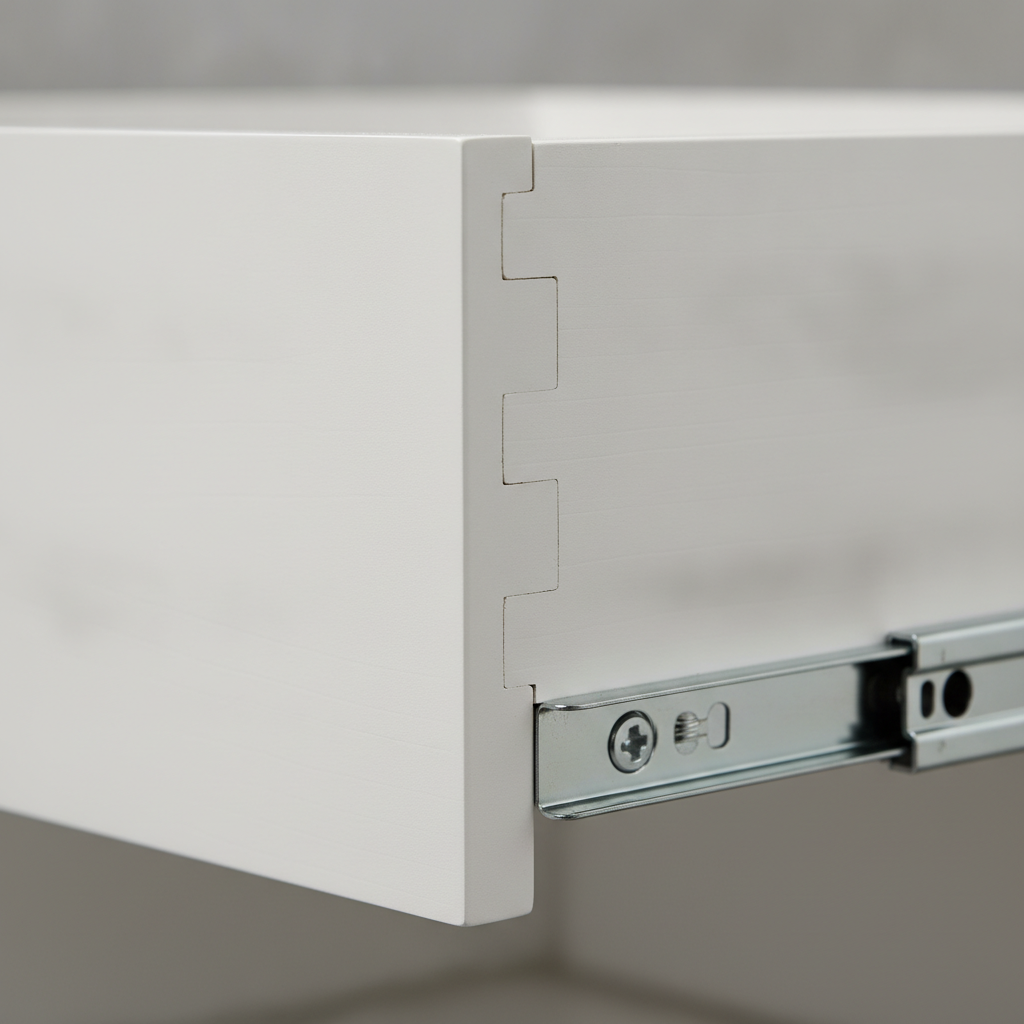
- Dovetail drawer boxes: Interlocking corners increase strength; look for clean pins/tails and uniform glue lines.
- Undermount soft-close slides: 75–100 lb ratings improve stability for cookware drawers.
- Concealed hinges: 6-way adjustability for tight reveals; common opening angles 110–165°.
Altima’s factory-direct process uses Italian CNC machining and a professional spray booth, so tolerances and finishes are consistent from sample to install. That consistency is what keeps reveals even and doors aligned after thousands of cycles.
Design, Layout, and Scope Decisions
Layout complexity—like islands, tall pantry runs, appliance panels, and light valances—changes the cabinet count, trim details, and installation time. Clarifying these elements early anchors timelines and reduces mid-project changes.
Design is where function meets form. Small choices cascade: a 42-inch wall cabinet affects crown height; a paneled dishwasher affects toe-kick continuity. The more precisely we define the layout, the smoother the install.
Common scope expanders
- Islands and peninsulas: Extra drawers, panels, outlets, and seating overhangs.
- Tall cabinetry: 84–96-inch units add storage and trim (crown, fillers, scribe).
- Appliance panels: Panel-ready fridges, dishwashers, and hoods require exacting fits.
- Lighting details: Under-cabinet, in-pantry, and display lighting need wire chases and valances.
- Feature walls: Media units, bars, or built-ins add millwork complexity.
Example: In one Brampton project, we replaced upper cabinets over the range with a taller hood and flanking spice pull-outs. The change added two pull-outs (each 6 inches), shifted the crown profile, and required a deeper valance for lighting—all planned before a single cut.
Finishes and Hardware: Where Feel Meets Longevity
Professional spray finishes and quality hardware determine daily experience—smooth door edges, consistent sheen, and quiet closing. Multi-coat paint systems and premium laminates resist wear, while soft-close hinges and slides protect joints and keep reveals aligned.
A finish is more than color. It’s prep, priming, sealer, and multiple topcoats applied in controlled conditions. Spray environments reduce dust nibs and produce uniform sheen, which means you don’t see roller texture under daylight glare.
Finish and hardware checkpoints
- Coat count and cure: Multi-pass systems with adequate cure times reduce chipping.
- Edge treatment: Sealed edges (especially at sink runs) resist moisture ingress.
- Hardware brand consistency: Matching slides and hinges keep motion uniform across the kitchen.
- Touch points: Knobs and pulls feel different in hand—test samples on a door at shoulder height.
In high-traffic GTA homes, we often specify soft-close undermount slides on all base drawers and 110° soft-close hinges on doors. The combination reduces slamming forces and keeps alignment crisp over time.
Storage Accessories That Change Everyday Use
Accessories don’t just add convenience—they define how a kitchen works. Deep drawers, pull-out pantries, lazy susans, and tray dividers turn hard-to-reach zones into one-motion storage and often deliver the most noticeable daily gains.
- Pull-out pantry: Full-height units with 5–7 adjustable baskets keep labels visible.
- Deep drawers: 10–12-inch fronts with 4–5-inch tall boxes for pots and pans.
- Spice pull-out: 3–6-inch units near the range; rails keep jars upright.
- Corner solutions: Lazy susan or LeMans-style pulls prevent back-cabinet black holes.
- Waste/recycling centers: Double bins with soft-close slides and odor-seal lids.
Consider your top five daily tasks—coffee, prep, cooking, cleanup, storage. If an accessory removes three steps in one of those tasks, it’s usually worth it. The goal isn’t more gadgets; it’s smoother routines.
Installation and Project Management Signals
A tight install protects all the choices you’ve made. Look for site protection, precise leveling and scribing, clear sequencing with countertops and trades, and proactive communication. These signals prevent delays and protect finishes.
Altima’s in-house installers coordinate with our factory and designers. That means door adjustments, crown miters, and panel reveals are handled by the same team that drew and built them—fast feedback, no finger-pointing.
Installation checklist
- Protection: Floor coverings, door jamb guards, and dust control.
- Level, plumb, square: Shims and ledger boards keep seams tight.
- Scribing: Clean scribes to walls, floors, and ceilings minimize caulk lines.
- Sequencing: Cabinets before counters; panels and fillers before crown.
- Final adjust: Door reveals (2–3 mm), soft-close tuning, touch-up paint.
Communication is the other key. Many clients appreciate photo updates (we often use messaging apps) so they can see progress, confirm details, and plan around milestones like countertop templating and appliance deliveries.
Best Practices to Stretch Value Without Compromise
Prioritize structure and motion first, put finishes second, and accessories third. Lock layout before samples, standardize hardware, and keep doors consistent. These moves protect performance while giving you sensible places to personalize.
Smart ways to protect quality
- Invest where it moves: Slides, hinges, and drawer boxes take daily loads.
- Standardize sizes: Repeating widths simplifies production and installation.
- Unify the door family: Keep one profile across rooms to simplify touch-ups and spares.
- Targeted upgrades: Add deep drawers in prep zones; keep lesser-used areas simple.
- Finish pragmatically: Use tough laminates for interiors; reserve painted finishes for show faces.
You might be wondering if refacing could achieve your goals. In select cases—solid boxes, sound layout, compatible doors—refacing paired with targeted storage upgrades can be an effective path. This decision should be evaluated against door condition, hinge bores, and box squareness.
For a quick overview of refacing concepts, see this general cabinet refacing overview and a complementary cabinet painting guide. These resources discuss process and considerations; your kitchen’s structure and goals determine suitability.
Tools and Resources You Can Use Today
Use drawings, a scope checklist, and finish samples to clarify choices fast. A simple framework—layout first, structure second, finish third—keeps conversations focused and decisions consistent from showroom to install.
- 2D/3D drawings: Validate clearances, appliance fits, and crown/valance relationships.
- Scope checklist: Box material, door style, finish system, hardware spec, accessories, trim, lighting.
- Sample boards: Door, hardware, and countertop swatches viewed under daylight.
- Installation calendar: Target dates for cabinets, counters, flooring, and appliances.
- Warranty file: Track door finish care, hinge/slide adjustments, and touch-up procedures.
Altima clients get itemized scopes and drawings to reduce guesswork. If you want a primer on door types while you review samples, this door styles guide offers broad definitions to help frame preferences before the design session.

Mini Case Studies: GTA Scenarios and Solutions
Real projects show how decisions affect scope. These scenarios illustrate how layout, construction, finish, and accessories work together to deliver function and feel—without relying on generic averages.
Brampton family kitchen with daily meal prep
Challenge: Cluttered base cabinets, heavy cookware, and busy weeknights. Solution: Three tiers of deep drawers (30–33 inches wide), a double-bin waste center near the sink, a 24-inch pull-out pantry, and 110° soft-close hinges throughout. Painted shaker doors in a pro-sprayed finish resist fingerprints and touch up easily.
Condo galley near 11 Edvac Drive
Challenge: Narrow walkway, tall ceilings, and strict elevator booking times. Solution: Full-height pantry for vertical storage, slab doors to reflect light, integrated valance lighting, and pre-staged delivery windows to align with building timelines. The factory-direct team coordinated measure, milling, and install to minimize elevator trips.
Media wall with concealed storage
Challenge: Hide AV gear and cables while showcasing a statement TV. Solution: Ventilated doors, removable back panels, wire chases, touch-latch doors for a clean face, and matching base drawers for peripherals. A unified door profile kept touch-up simple if future shelves were added.
Mud room built-ins for a busy household
Challenge: Piles of coats, boots, and backpacks at the entry. Solution: Locker-style uppers, bench drawers on undermount slides, and tall cabinets with hooks and adjustable shelves. A durable laminate interior handled wet gear, while shaker faces tied the look back to the kitchen.
How to Compare Quotes Fairly (Apples to Apples)
Standardize scope before comparing: identical layouts, box materials, door styles, finish systems, hardware brands, and accessory counts. Once scope is fixed, differences highlight craftsmanship, project management, and warranty—not moving targets.
- Fix the layout: Same cabinet quantities, widths, and heights.
- Lock construction: Same box substrate and thicknesses; same drawer box spec.
- Unify finish: Same paint/laminate family and sheen; same edge protections.
- Match hardware: Same hinge opening angles and slide weight ratings.
- Count accessories: Same number of deep drawers, pull-outs, and bins.
- Confirm install scope: Protection, scribing, fillers, panels, crown, and touch-ups included.
If two quotes differ after you standardize scope, you’re likely seeing differences in manufacturing precision, finishing quality, or installation approach. Those are the differences you want to evaluate, because they show up daily when you open a door or slide a drawer.
Local Considerations for 11 Edvac Drive
Plan for building logistics, seasonal humidity, and delivery coordination in the 11 Edvac Drive area. Booking windows, climate shifts, and access routes affect installation timing and cabinet acclimation, especially for tall runs and painted finishes.
Local considerations for 11 Edvac Drive
- Coordinate deliveries with building or condo booking windows near Williams Pkwy at 2500 Williams Pkwy to avoid delays and missed elevator slots.
- Account for seasonal humidity swings; allow installed cabinets 48–72 hours to acclimate before final door adjustments, especially on pro-sprayed painted doors.
- For family homes near Bottomwood Park, durable laminates inside base cabinets and sealed sink edges help handle mudroom carryover and cleanup.
Kitchen, Closet, and Bath: Go Deeper
If you’re exploring beyond the kitchen, learn how door construction, finish durability, and storage planning translate to bathrooms, bars, and closets. The same “layout → structure → finish” framework applies across rooms.
For focused guidance, explore our internal deep dives: insights on custom kitchen cabinets, a practical bathroom cabinet makers guide, and smart home bar cabinet ideas that reuse your door family and finish system.
Thinking about refresh routes? Our notes on cabinet remodel mistakes explain where shortcuts backfire. If you’re researching installation steps, see our install kitchen cabinets guide for sequencing and site prep tips.
Let’s Map Your Scope in One Visit
Bring your appliance specs and inspiration photos. In a single showroom session, we’ll measure your priorities, build a 2D/3D plan, and outline an itemized scope—so decisions feel easy and the path to installation is clear.
Soft CTA: Book a design consultation to walk through materials, door samples, finishes, and storage upgrades. You’ll leave with clarity—not guesswork.
Door Profiles and Style Direction
Door style is a design anchor. Shaker, slab, and raised panel options set mood and maintenance expectations. Keep one family across rooms for easier touch-ups and spare parts, and choose profiles that fit ceiling heights and crown details.
If you want a quick primer before sampling, this overview of standard vs. custom doors explains terminology you’ll hear in the showroom. Then we’ll translate preferences into practical selections that align with your layout and finish system.
Frequently Asked Questions
These concise answers address the most common questions about scope, quality signals, and decision sequencing. They’re designed to help you act confidently without wading through generic advice.
What should be included in an itemized cabinet quote?
At minimum: cabinet box material and thickness, door style and finish system, hardware specs, accessory counts, trim details (fillers, crown, valances), lighting provisions, and installation scope. Clear drawings with elevations and dimensions should accompany the quote for easy verification.
How do I decide between plywood and melamine boxes?
Match material to use and environment. Plywood offers strong screw-hold and broad finish compatibility, great for kitchens and laundry. Melamine interiors are durable and wipeable, ideal for pantries and closets. Sealed edges and proper installation protect both options from moisture.
Do accessories really change day-to-day function?
Yes. Deep drawers, pull-out pantries, and corner solutions reduce bending and hunting for items. If an accessory removes multiple steps in a daily task—like cooking or cleanup—you’ll feel the gain every time. Prioritize upgrades where you work most.
What sequencing keeps installations on time?
Confirm layout and selections, finalize drawings, then schedule. Protect floors, install cabinets level and plumb, scribe fillers, then set crown and panels. Template counters after base cabinets are secure. Complete hardware tuning and finish touch-ups last for a clean handoff.
Key Takeaways
Fix scope first, then evaluate construction, finish, and installation quality. Use drawings and checklists to compare fairly, and invest in the parts that move—slides, hinges, and drawers—for value you feel every day.
- Custom cabinet pricing is about decisions, not guesses.
- Layout drives scope; structure and motion protect long-term value.
- Professional spray finishes and consistent hardware elevate daily feel.
- Accessories should solve real tasks, not add clutter.
- One accountable team reduces risk from drawing to final adjust.
Conclusion: Turn Choices into a Confident Plan
When you standardize scope and evaluate quality signals, custom cabinet pricing becomes simple. You’ll know what to approve, what to personalize, and where to focus upgrades—so your space looks right, works right, and lasts.
Ready to see your options clearly? Book a session at our Brampton-area showroom. We’ll map layout, structure, finish, and installation into an itemized scope that fits your goals. Then our in-house team will manufacture and install to plan.
Next step: Schedule a design consultation near 11 Edvac Drive to walk through samples and finalize an itemized scope with our award-winning design-build team.
Related Posts
Why Choose Kitchen Renovation Company
Nowadays, Kitchen spaces are not only a place for cooking and serving food, but these areas act as a statement, as they speak a lot about a family, the philosophy and personality of individuals, and spaces. If you admire aesthetics and adorn the beauty of your home, you must pay attention to the interior design […]
How a Kitchen Renovation Contractor is Changing the Game
Lifestyle is all about bringing something coherent to the overall experience of living. The kitchen and closets stand as two of the most influential spaces in a home that add to the overall experience of living. A Kitchen Renovation Contractor in Whitby by the name of Altima Kitchen and Closets Inc. is changing the overall […]
How Media unit contractor in Whitby is Changing the Game
Lifestyle is all about bringing something coherent to the overall experience of living. The kitchen and closets stand as two of the most influential spaces in a home that add to the overall experience of living. A Media Unit Company in Whitby by the name of Altima Kitchen and Closets Inc. is changing the overall […]