Custom Built-Ins: Save Space & Lift Your Brand in 2026
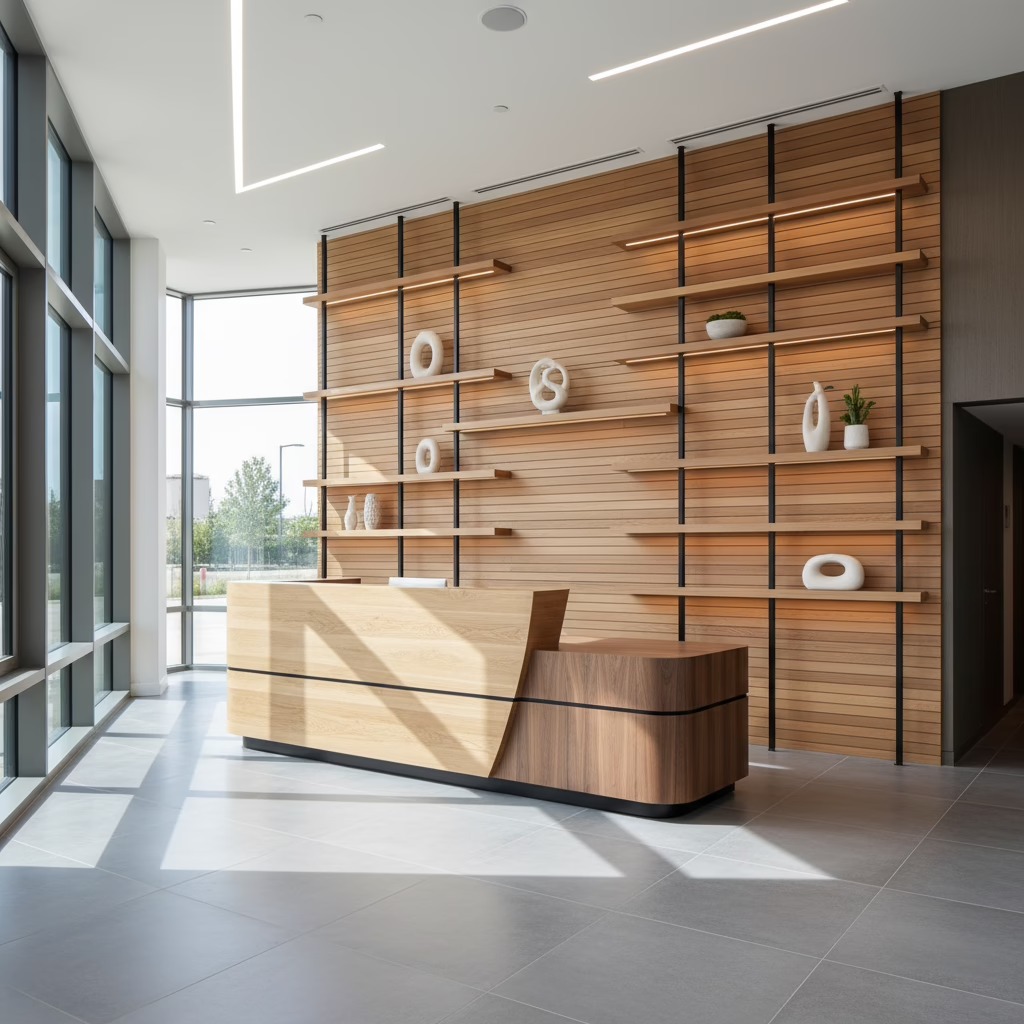
Commercial millwork custom built-ins are purpose-built cabinets, panels, counters, and storage systems fabricated for business interiors. They optimize space, reinforce brand identity, and withstand heavy daily use. In 11 Edvac Drive, our factory-direct team at Altima Kitchens and Closets designs, manufactures, and installs these solutions in-house, aligning layout, finishes, and function so your space works as hard as you do.
By Ashok — Altima Kitchens and Closets
Last updated: 2026-04-29
Above the Fold: Hook, Promise, and Quick Table of Contents
Custom built-ins maximize square footage, speed up workflows, and showcase your brand. This guide explains the entire journey—from 3D concept and materials to installation and maintenance—so you can specify commercial millwork confidently and avoid costly rework.
You want a space that feels intentional, branded, and durable. Here’s how this guide helps you get there fast.
- Define what commercial millwork and custom built-ins include
- Map a proven concept-to-installation workflow
- Pick the right materials, hardware, and finishes
- Apply accessibility and durability best practices
- See real GTA examples from our design-build projects
At a Glance
- Lead times: design 1–2 weeks; fabrication 4–8 weeks; install 1–5 days, depending on scope.
- Typical substrates: 3/4-inch melamine or plywood; veneer or painted MDF for premium faces.
- Brand lift: coordinated materials, lighting, and signage create a consistent first impression in under 3 seconds.
Contents
- What is commercial millwork?
- Why built-ins matter
- How the process works
- Types and approaches
- Best practices
- Tools and resources
- Case studies and GTA insights
- Frequently asked questions
- Key takeaways
- Conclusion and next steps
What Is Commercial Millwork and Custom Built-Ins?
Commercial millwork refers to custom-fabricated cabinetry, panels, counters, and storage that fit a specific business space. Custom built-ins integrate power, lighting, and hardware for daily use, improving efficiency and brand cohesion. Think reception desks, media walls, retail shelving, nurse stations, and café back bars—built to exact dimensions.
In our experience, “millwork” is the umbrella; “built-ins” are the room-specific components. For example, a reception wall might combine wall paneling, a desk with a 36-inch accessible counter section, LED backlighting, and hidden cable raceways—one integrated unit. That cohesion is what separates true millwork from off-the-shelf casework.
- Common spaces: offices, clinics, retail, hospitality, education, and amenity areas.
- Core goals: durability for 10,000+ annual opens, faster workflows, easy cleaning, and consistent brand touchpoints.
- Integration: power/data raceways, grommets, LED valance lighting, ADA-accessible sections, and acoustical treatments.
At Altima Kitchens and Closets, we fabricate with Italian CNC machinery for repeatable precision, then finish in a professional spray booth for consistent color and sheen. That control shortens punch lists by reducing fit issues on site.
Related planning ideas carry over from residential spaces. For example, our custom kitchen design guide shows how storage zoning and lighting strategy translate directly to reception and lounge areas.
Why Commercial Built-Ins Matter
Built-ins save space, reduce clutter, and make brand standards visible at eye level. The result is faster service, better wayfinding, and a more professional ambiance. In high-traffic areas, properly detailed millwork also protects walls and corners from wear, lowering maintenance over time.
Strategy drives value. When you coordinate finishes across your reception, meeting rooms, and café, the experience feels unified within seconds. A consistent palette—wood tone, matte black pulls, satin brass accents—can raise perceived quality without major layout changes.
- Operational speed: Pull-out drawers with full-extension slides cut retrieval time by 30–50% versus open shelves.
- Brand recall: Repeating a signature wood species or fluted profile anchors memory as visitors navigate.
- Safety and accessibility: Clear toe-kicks (3–4 inches deep) and 34-inch accessible counters help more people use your space comfortably.
We often combine storage accessories borrowed from kitchens—like a 15-inch pull-out organizer or a lazy susan in corner bases—to increase capacity in staff rooms and cafes. See how we apply those choices on our custom kitchen cabinets page.
How Commercial Millwork Works: From Vision to Installation
The best projects follow a tight sequence: discovery, site measure, 2D/3D design, material sign-off, shop drawings, CNC fabrication, finishing, delivery, and installation. Clear approvals at each step protect timelines, minimize rework, and keep daily operations moving.
Here’s the workflow we use across the GTA to deliver on time and with fewer surprises.
- Discovery and goals (1–2 meetings): document traffic flow, storage needs, and brand standards.
- Site verification (1 visit): laser measure, locate power/data, check wall plumb within 1/8 inch per 4 feet.
- 2D/3D design (3–7 days): iterate layouts; confirm door clearances (100–110 degrees common), aisle widths (36–60 inches).
- Materials and finishes (1–3 days): choose substrates (melamine, plywood), faces (veneer, painted MDF), and pulls/hinges.
- Shop drawings (2–5 days): dimension to 1/32 inch; detail reveals, grommet sizes (2–3 inches standard), and lighting channels.
- CNC fabrication (2–4 weeks): 32mm system drilling for adjustable shelves; edge-banding for clean, sealed edges.
- Finishing (3–5 days): sprayed coatings for even sheen; low-VOC options available.
- Installation (1–5 days): protect floors, level within 1/16 inch, scribe panels to uneven walls, and test all hardware.
Coordination saves time. For example, media walls go faster when AV, power, and millwork teams align on device sizes, ventilation, and cable paths before shop drawings. For fit-out context, see this overview of metal framing systems used behind many finished walls.

Installation sequencing matters in mixed-scope projects. Wall rough-ins, blocking, and finished floor elevations should be confirmed before casework delivery. Where framing and blocking are still open, reviewing typical loads—like 150–250 lb wall-hung cabinets—prevents last-minute structural changes. For cautionary framing pitfalls, browse interior wall framing mistakes.
Types, Methods, and Approaches You Can Use
Commercial built-ins range from reception desks and feature walls to retail shelving, café back bars, and nurse stations. Methods include modular casework for speed, fully custom millwork for brand precision, and hybrid builds that mix standard boxes with signature panels and lighting.
Common commercial built-ins
- Reception desks: 42-inch transaction ledge plus a 34–36-inch accessible surface; integrated grommets, lockable drawers.
- Media walls: TV niches with ventilation gaps (2–4 inches), cable raceways, and removable access panels.
- Retail bays: adjustable shelving on 32mm pins, slatwall inserts, and lockable glass fronts for high-value items.
- Café and break rooms: 24-inch-deep bases with pull-outs, undermount sinks, and durable quartz tops.
- Clinics: glove/consumable stations, toe-kick lighting for night use, and high-cleanability finishes.
Fabrication approaches
- Modular casework: Fast turnaround; best for uniform spaces and multi-site rollouts.
- Fully custom millwork: Tailored to complex geometry, acoustics, and unique brand features.
- Hybrid builds: Standard cabinet boxes with custom paneling, lighting valances, or fluted wraps.
Material selection essentials
- Substrates: 3/4-inch melamine for budget and cleanability; plywood for moisture resistance.
- Faces: real-wood veneer for warmth; painted MDF for crisp profiles; high-pressure laminate for durability.
- Hardware: soft-close hinges and 100 lb undermount slides extend life in high-use zones.
For deeper cabinetry choices, our comparison of melamine vs. plywood cabinet boxes shows how substrate selection affects durability and weight.
Best Practices: Durable, Safe, and Code-Smart
Design with cleaning, impact resistance, and accessibility in mind. Protect corners with backer blocks, specify durable edges, and include an accessible counter segment in reception. Plan for wiring and ventilation behind panels to prevent heat buildup and maintenance headaches later.
Design and detailing
- Edges and corners: 2mm ABS edge-banding reduces chipping; corner guards minimize wall damage in corridors.
- Service access: removable panels (held with fasteners or magnets) speed device swaps by minutes per call.
- Lighting: LED strips at 3000–4000K create comfortable, neutral task light; conceal drivers in ventilated bays.
Accessibility and ergonomics
- Reach ranges: frequently used items 18–48 inches above finished floor; heavy items near waist height.
- Knee/toe clearances: 27-inch knee height, 30–36-inch accessible work surface segments at reception and service points.
- Pull forces: larger pulls (5–8 inches) aid users with limited dexterity.
Durability and maintenance
- High-pressure laminates for high-touch areas; satin finishes hide fingerprints better than gloss.
- Quartz counters at 1 1/4 inches handle daily cleaning and impacts better than thin tops.
- Ventilation: leave 2–4 inches behind heat-producing components; use grille reveals for airflow.
For examples of how we detail components, this piece on CNC cabinet door profiles illustrates how profiles, reveals, and paint systems influence real-world durability and cleaning.
| Material | Strengths | Best Uses | Finish Options |
|---|---|---|---|
| Melamine (3/4 in.) | Cleanable, consistent, economical | Base and wall cabinets, closets | Textured, matte, wood-look |
| Plywood (3/4 in.) | Moisture resistance, screw-holding | Wet zones, long-span shelves | Clear coat, veneer faces |
| MDF (3/4–1 in.) | Paint-ready, detailed profiles | Feature panels, routed designs | Painted, sprayed finishes |
| High-Pressure Laminate | Impact and scratch resistance | High-touch surfaces, retail | Hundreds of patterns/colors |
| Real-Wood Veneer | Premium warmth and depth | Executive areas, reception | Stain, clear coat, oil |
Tools, Materials, and Resources
Pair 2D/3D design with CNC fabrication for accuracy, then choose hardware and finishes to match daily use. Keep a running submittal pack—samples, drawings, and specs—so stakeholders sign off quickly and installers have a single source of truth.
- Design: 2D plans and 3D renders reduce revisions by clarifying clearances and door swings.
- Hardware: soft-close hinges, 100–150 lb slides, tip-on or push-to-open where hands-free flow matters.
- Lighting: dimmable LED strips in aluminum channels; specify CCT (e.g., 3000K) and CRI (90+) for quality.
- Finishes: low-odor sprayed coatings in controlled booths for even color and sheen.
Our end-to-end approach—design, manufacturing, and installation under one roof—keeps your approvals, samples, and updates in a single thread. If you’re exploring residential parallels, review our closet built-ins guide and our kitchen cabinetry page to see hardware and lighting options in action.

On multi-trade projects, aligning behind-the-wall work with finished millwork prevents rework. For an example of trade coordination on a commercial site, see this commercial project overview that highlights sequencing and access planning during fit-out.
Case Studies and GTA Examples
Well-planned millwork speeds operations and cleans up visual noise. Across our GTA projects, storage zoning, durable edges, and integrated lighting consistently reduce maintenance calls and elevate the customer experience from the front door to staff areas.
Example 1: Reception and lounge refresh
- Scope: feature wall with fluted panels, 36-inch accessible counter, lockable drawers, LED accent lighting.
- Result: check-in time dropped because forms and supplies moved to full-extension drawers; visual clutter reduced.
- Transferable lesson: prioritize service access panels near devices to cut future maintenance minutes per visit.
Example 2: Media wall in a flexible meeting area
- Scope: TV niche with 2–3 inches ventilation, removable panels, and concealed soundbar shelf.
- Result: clean cable paths and quick device swaps; no visible wires during presentations.
- Transferable lesson: pre-verify device sizes and mounting patterns to avoid late redesigns.
Example 3: Staff café with durable storage
- Scope: 24-inch-deep bases with pull-out organizers, quartz counters, backsplash, and under-cabinet lights.
- Result: faster cleanup and better organization; daily wear concentrated on replaceable pulls, not panels.
- Transferable lesson: put heavy items between 24–48 inches above floor to reduce strain.
Local considerations for 11 Edvac Drive
- Plan deliveries during off-peak hours to simplify access for casework crates and minimize disruption for neighboring businesses.
- Account for winter months by staging materials indoors to equilibrate humidity before installation and reduce panel movement.
- When coordinating trades, confirm wall blocking and power/data rough-ins are complete before millwork arrives to keep install days tight.
Curious how we manage finish selections across rooms? Our kitchen renovation planning guide covers finish sampling and sequencing you can also use in commercial spaces. And for condos or mixed-use buildings, our condo renovation playbook explains approvals and scheduling that affect delivery and install windows.
Frequently Asked Questions
Commercial built-ins are tailored to your space and workflow. The FAQs below address timelines, materials, maintenance, and whether custom millwork makes sense versus modular casework for your specific use.
What’s the typical timeline for commercial millwork?
Most projects run in phases: 1–2 weeks for design, 2–5 days for shop drawings, 4–8 weeks for fabrication, and 1–5 days for installation. Timelines depend on scope, finish complexity, and site readiness, especially power/data and wall blocking.
Which materials hold up best in high-traffic areas?
High-pressure laminates and quality edge-banding resist abrasion. Plywood boxes handle moisture better than many alternatives. For premium faces, real-wood veneer or painted MDF works well; pair with soft-close hardware rated for daily commercial use.
Do I need fully custom millwork or will modular casework work?
Use modular casework for speed and repeatability, especially in back-of-house. Choose fully custom for reception, brand features, tight geometries, or when you need integrated lighting and wire management. A hybrid approach often balances speed with brand presence.
How do you plan for wiring, AV, and ventilation?
Confirm device sizes early, add access panels, and maintain 2–4 inches of clearance around heat-producing gear. Route cable raceways behind removable panels and coordinate with electricians and AV teams before shop drawings are finalized.
Key Takeaways
Specify commercial millwork by aligning goals, drawings, materials, and installation sequencing. Favor durable finishes, ample service access, and clear lighting/wiring details. A single design-build partner reduces revisions and keeps your fit-out moving.
- Start with a clear scope and sign-offs at each milestone to prevent rework.
- Choose substrates and finishes that match traffic levels and cleaning methods.
- Plan for accessibility, power/data, and ventilation from day one.
- Use hybrid builds to balance speed and brand presence.
- Leverage in-house design, CNC, and spray finishing to compress timelines.
Conclusion and Next Steps
Commercial millwork custom built-ins transform busy interiors into branded, efficient spaces. With a tight workflow, durable finishes, and coordinated trades, you can deliver a space that looks polished on day one and stays that way.
If you’re mapping a project in the GTA, we can help you evaluate substrates, lighting, and hardware, then produce 2D/3D drawings before build. Explore related topics across our site:
- Finish and layout coordination in kitchen design
- Door profiles and finishing in CNC door profiles
- Box construction strengths in melamine vs. plywood
Ready to align form and function? Book a design walkthrough and we’ll turn a sketch into shop drawings—then into spotless, installed millwork.
Related Posts
Why Choose Kitchen Renovation Company
Nowadays, Kitchen spaces are not only a place for cooking and serving food, but these areas act as a statement, as they speak a lot about a family, the philosophy and personality of individuals, and spaces. If you admire aesthetics and adorn the beauty of your home, you must pay attention to the interior design […]
How a Kitchen Renovation Contractor is Changing the Game
Lifestyle is all about bringing something coherent to the overall experience of living. The kitchen and closets stand as two of the most influential spaces in a home that add to the overall experience of living. A Kitchen Renovation Contractor in Whitby by the name of Altima Kitchen and Closets Inc. is changing the overall […]
How Media unit contractor in Whitby is Changing the Game
Lifestyle is all about bringing something coherent to the overall experience of living. The kitchen and closets stand as two of the most influential spaces in a home that add to the overall experience of living. A Media Unit Company in Whitby by the name of Altima Kitchen and Closets Inc. is changing the overall […]