Adjustable Closet Organizers: Save Space & Stay Neat in 2026
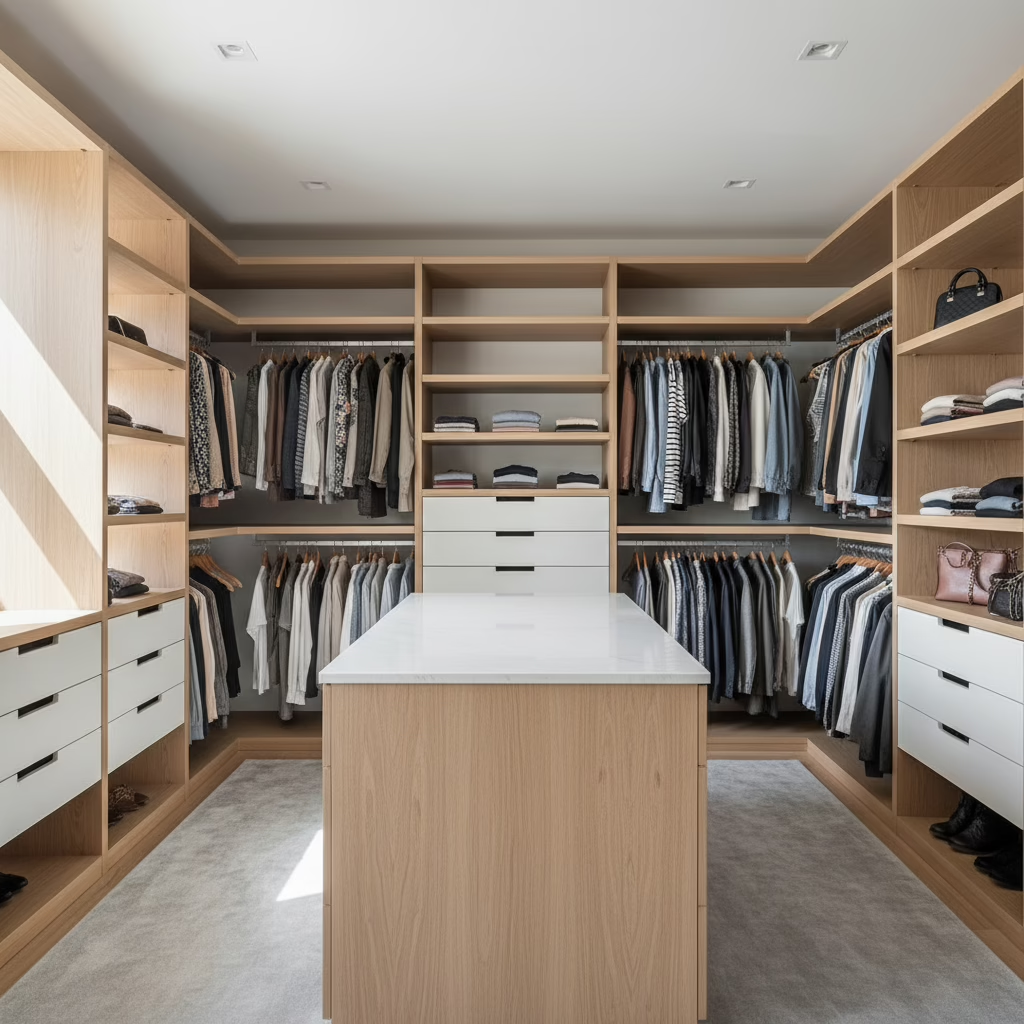
An adjustable closet organizer is a modular storage system with movable shelves, rods, and drawers you can reconfigure in minutes. The layout adapts to seasons and family changes, so you gain capacity without rebuilding. From 11 Edvac Drive, Altima Kitchens and Closets designs and installs custom adjustable systems across the GTA to fit real wardrobes and routines.
By Ashok — Altima Kitchens And Closets
Last updated: 2026-06-03
At a Glance
An adjustable closet organizer uses rail standards or tower cabinets with pin holes so shelves, rods, and drawers move in 1–2 inch increments. The result is a right-sized layout for today that you can tweak tomorrow—maximizing space, improving visibility, and cutting morning search time.
- What an adjustable system is, why it matters, and how it works
- Design steps Altima follows to fit GTA condos, townhomes, and houses
- Component choices: double-hang, long-hang, drawers, shoe walls, pull-outs
- Best practices for heights, hardware, lighting, and safety
- Real GTA examples, a soft consult CTA, and quick next steps
Prefer to scan? Our quick-start framework is summarized below, then expanded with examples and pro tips from our in-house design and installation team.
What Is an Adjustable Closet Organizer?
An adjustable closet organizer is a configurable storage system where shelves, hanging rods, and drawers move along rails, standards, or pin holes. Unlike fixed millwork, it reshapes for seasons, growth, and lifestyle changes—delivering more capacity and faster access without demolition.
Think of it as a closet that learns from your week. Shelf pins allow micro-adjustments (often 1–2 inches) so sweaters, denim, and bins sit perfectly. Double-hang sections can roughly double usable hanging footage in the same footprint versus a single 66-inch rod. Angled shoe shelves with 6–8 inches of vertical spacing keep 10–14 pairs visible in just 30–36 inches of width.
At Altima Kitchens and Closets, adjustable closet organizers are built through our in-house design, factory-direct manufacturing, and professional installation workflow. Clients see 2D/3D drawings first, confirm itemized selections in one showroom, then approve a structured build-and-install schedule managed by one accountable team.
Why Adjustability Matters for Real Homes
Adjustability preserves order through life changes. As wardrobes shift by season, age, or activity, movable shelves and rods reduce clutter, wrinkling, and “dig time.” You protect your investment because the system evolves—no tearing out cabinets when needs change.
Here’s the thing—most builder closets waste 25–40% of vertical space. By converting to double-hang (rods around ~42 and ~84 inches) and using adjustable shelves for knits, many homeowners gain 30–50% more usable capacity instantly. Eye-level placement (roughly 48–60 inches for everyday items) further speeds decision-making each morning.
- Seasonal shifts: Raise a rod for long coats in winter, drop it for double-hang in spring. No drywall repair.
- Growing families: Lower shelves for kids now; bump them up later. The system grows as they do.
- Style changes: If you add long dresses or bulky knits, re-space shelves by 1–2 inches to fit properly.
- Resale appeal: Buyers notice flexible storage that looks built-in and easy to live with.
In our experience delivering closets across the GTA, families report faster get-ready routines after re-zoning daily wear to eye/reach heights and moving off-season up high. That small ergonomic shift compounds every day.
How Adjustable Closet Systems Work
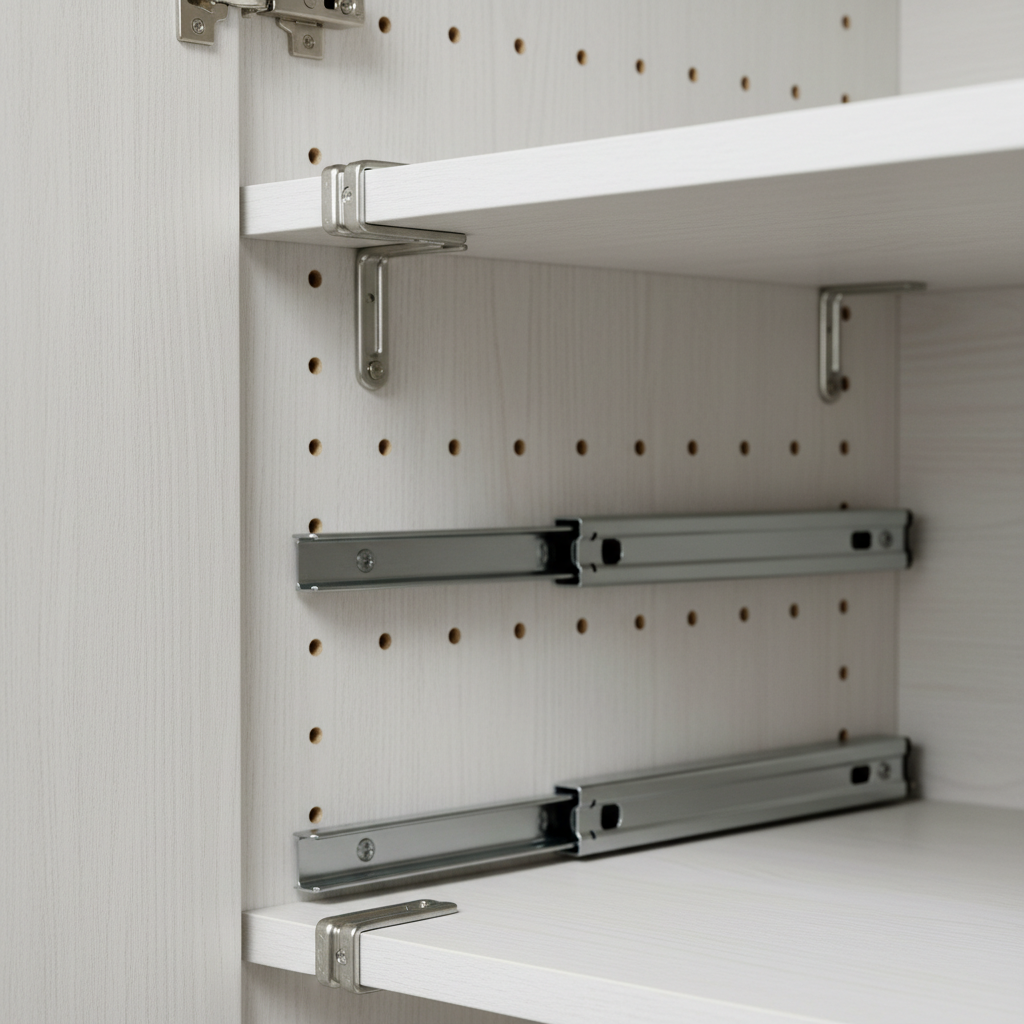
Adjustable systems either hang from a wall rail with vertical standards or stand on floor-based towers with pin holes. Shelves, rods, baskets, and drawers clip or pin in place and can shift in small increments. The frame stays stable while the interior layout evolves.
Rail systems start with a top steel track anchored into studs. Vertical standards hang from that rail, distributing load and simplifying reconfiguration. Floor-based systems use leveled towers with 3/4 inch panels; drawers ride on full-extension, soft-close slides. With both approaches, re-spacing shelves or swapping a long-hang bay for double-hang takes minutes.
- Hardware strength: 18–22 gauge rails and quality brackets provide everyday stability.
- Cabinet integrity: 3/4 inch shelves resist sag on 24–30 inch spans when properly supported.
- Finish durability: Edge-banding reduces chipping; sealed finishes help with humidity changes.
| Step | What Happens | Outcome |
|---|---|---|
| 1. Measure | We capture widths, heights, depth, and obstacles. | Accurate 2D base for design |
| 2. Audit | We count hangers, folded stacks, shoes, accessories. | Capacity targets per zone |
| 3. Design | 2D/3D layouts simulate heights and spacing. | Visual validation before build |
| 4. Manufacture | Factory-direct, Italian CNC machining and spray booth. | Precision parts, clean finishes |
| 5. Install | In-house crew fits, levels, and secures. | Safe, polished, ready to use |
Want a deeper primer on frameworks and workflows? See our closet organization systems guide for a strategic overview before you pick components.
Types, Layouts, and Adjustable Components
Pick rail-mounted standards for maximum flexibility, floor-based towers for a furniture look, or hybrid systems for both. Mix double-hang, long-hang, adjustable shelves, drawers, shoe walls, and pull-outs. Set depths to 12–16 inches for folded stacks and ~24 inches for hanging.
Core system types
- Rail-mounted standards: Highly adjustable, minimal wall work after the top rail is set. Great for condos and reach-ins.
- Floor-based towers: Furniture-like presence and excellent drawer support; ideal for walk-ins and feature walls.
- Hybrid: Combine rail standards with a few towers where drawers or hampers make sense.
Adjustable layout building blocks
- Double-hang: Two rods (around 42 and 84 inches) nearly double hanging capacity for shirts, blouses, and pants.
- Long-hang: 66–72 inches clear height for dresses, coats, and gowns; add a shelf above for bags or bins.
- Adjustable shelves: Pin-based; move by 1–2 inches to perfect-fit denim stacks, sweaters, and hats.
- Drawers: 5–8 inch faces for tees and intimates; 10–12 inch for bulkier items; full-extension, soft-close slides.
- Shoe storage: Flat or angled shelves with 6–8 inches vertical spacing keep pairs visible and scuff-free.
- Pull-outs: Valet rods, tie/belt racks, scarf frames, trays, and laundry hampers reduce surface clutter.
- Lighting: Under-shelf LED strips or pucks increase visibility and color accuracy.
For a side-by-side dive into layouts and accessory choices, explore our custom closet solutions guide and this focused walkthrough of custom closet design & installation.
Best Practices: Design, Ergonomics, and Installation
Design zones around your routine, anchor into structure, and specify durable materials and hardware. Place daily items at eye/reach heights, leave 2–3 inches of breathing room per section, and add lighting for true color reads and safer access.
Design to your routine
- Put everyday wear at eye level (roughly 48–60 inches for most adults).
- Reserve ~24 inches depth for hanging garments; 12–16 inches is ideal for folded stacks.
- Use a valet rod or drop shelf near the door to stage next-day outfits.
- Group by frequency (daily, weekly, seasonal) and by category (workout, workwear, formal).
Build for longevity
- Anchor rails into studs where possible; use rated toggles if studs don’t align with the plan.
- Choose 3/4 inch shelving and full-extension slides to reduce sag and increase access.
- Edge-band shelf fronts to resist chipping; sealed finishes help with humidity shifts.
- Secure tall towers with anti-tip fastening into backing or studs.
Lighting and safety
- LED strips or pucks with warm, even output improve visibility and color accuracy.
- Mind clearances around fixtures; avoid placing hot bulbs near fabrics.
- Motion sensors add convenience while saving energy.
For modular wardrobe ideas that balance function and a refined look, see our overview on modular wardrobe systems.
Tools and Resources (Altima’s One-Stop Process)
Start with a simple closet audit, a tape measure, and a rough sketch. Altima then delivers 2D/3D designs, itemized selections under one roof, factory-direct manufacturing with Italian CNC machinery, and in-house installation backed by lifetime warranties on select doors.
- Closet audit worksheet: Count hangers, folded stacks, shoes, accessories; note preferred shelf heights.
- 2D/3D preview: Validate shelf spacing, rod heights, drawer stacks, and lighting before we cut a single panel.
- All selections in one showroom: Finishes, handles, lighting, pull-outs—organized for decisions without vendor hopping.
- In-house installation: One accountable team manages measure, fabrication, and fit for a smooth delivery.
- Warranty confidence: Lifetime warranty on MDF Painted and Prelaminated doors; clean, durable spray finishes.
Local considerations for 11 Edvac Drive
- Condo-friendly installs: Rail-mounted systems minimize disruption and speed up-fit in multi-unit buildings.
- Seasonal planning: Rotate winter gear to eye level during colder months; move it higher during summer.
- Humidity management: Sealed edges and ventilation strategies help garments stay fresh across GTA weather swings.
Ready for a deeper dive into installation? Our explainer on custom closet organizer installation outlines timelines, site prep tips, and aftercare.
Case Studies and Real-World GTA Examples
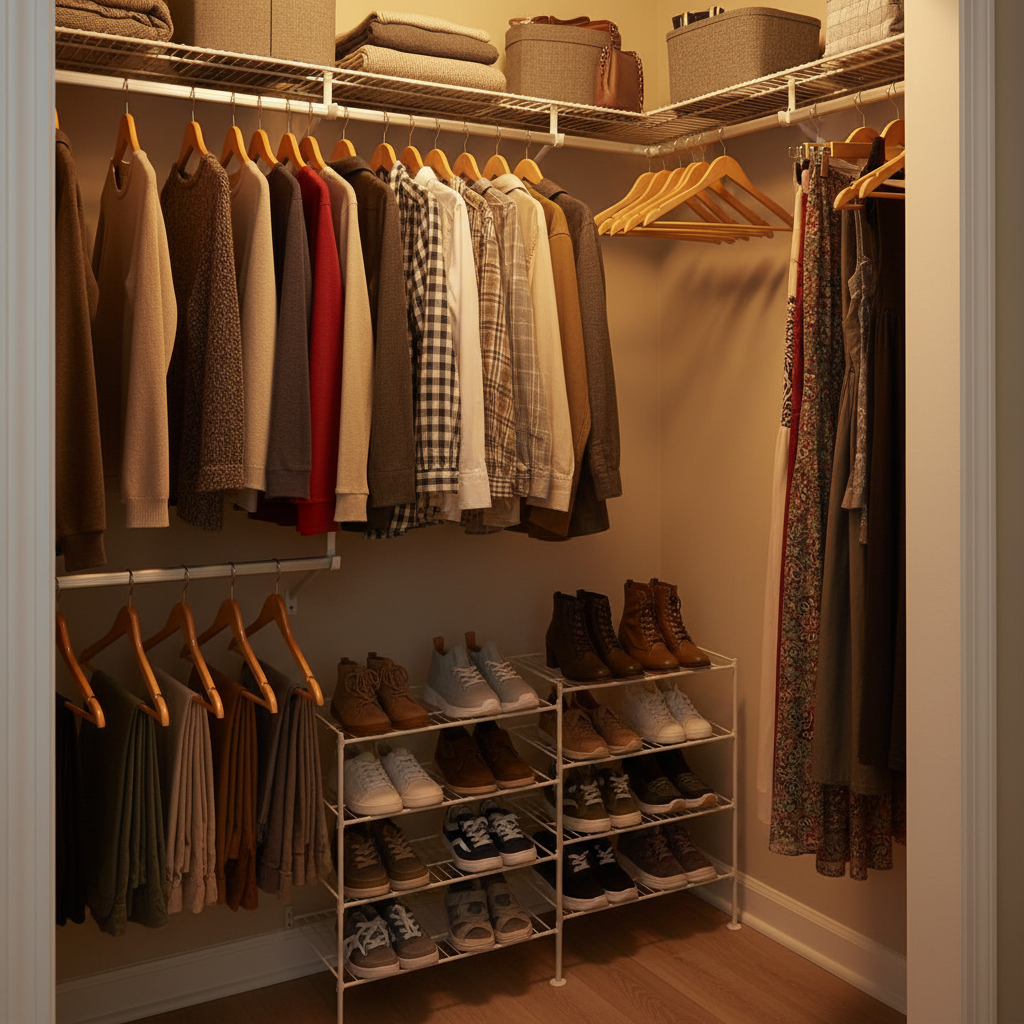
Every closet is different. We’ve optimized condos with 24-inch-deep reach-ins, townhomes with angled ceilings, and large walk-ins needing islands. Hybrid adjustable systems combine double-hang, long-hang, drawers, and shoe walls for boutique looks that flex with the seasons.
- Condo reach-in reset: A single-rod closet turned into double-hang plus five adjustable shelves and a slide-out hamper. Result: roughly 80% more visible storage and quicker mornings.
- Angled-ceiling townhome: A low-slope wall gained a floor-based tower for sweaters while the tall side became long-hang. Result: full-length coats fit; low areas stayed productive.
- Walk-in with island: Towers carry drawers; rail standards host reconfigurable shelves. Result: a boutique vibe and easy seasonal swaps.
For inspiration on full wardrobe systems and door styles that complement organizers, see our custom wardrobe closet systems.
Value Factors (No Prices—Just What Drives Them)
Project value is shaped by materials, hardware, finishes, scope, and site conditions. Factory-direct production, in-house installation, and 2D/3D approvals reduce risk and rework—protecting your investment and delivering predictable results.
- Materials: Shelf thickness, edge-banding, drawer boxes, and slide quality affect longevity.
- Scope: Reach-in versus walk-in; drawers, lighting, and specialty pull-outs add function.
- Finishes: Painted, laminated, or textured doors; glass accents; interior lighting.
- Site realities: Bulkheads, slopes, electrical, and baseboards influence detailing.
- Process reliability: Measurement accuracy and manufacturing precision reduce on-site surprises.
Curious how a pantry analog works? Our review of pull-out pantry organizers shows how adjustable principles translate to kitchens for faster everyday access.
Technical Notes: Capacity, Depths, and Hardware
Depth drives comfort: aim for about 24 inches for hanging and 12–16 inches for folded items. Use 3/4 inch shelving and full-extension slides. Adjustable systems with proper rails, brackets, and pins support daily loads while keeping reconfiguration easy.
- Recommended depths: ~24 inches for hanging garments; 12–16 inches for folded stacks; 12–14 inches for shoes.
- Span support: Add center supports beyond 30-inch shelf spans or for heavy loads.
- Rod placement: Double-hang around 42 and 84 inches; long-hang at 66–72 inches clear.
- Drawer planning: 5–8 inch faces for tees/socks; 10–12 inch for sweaters and bulkier items.
For visual benchmarks on cabinetry proportions and shelf spacing commonly referenced in design, see these example product specs: a 36-inch wall cabinet, a 42-inch wall cabinet, and a 30-inch two-door cabinet.
Plan Your Closet With Us
Get a no-pressure design session to map your zones, heights, and components. We’ll produce 2D/3D drawings, confirm selections in one showroom, manufacture in-house, and install with one accountable team—so your adjustable closet organizer works from day one.
- Book a design consult to review layouts and finishes
- Approve 2D/3D drawings and an itemized scope
- We manufacture factory-direct and install in-house
- Enjoy a flexible organizer that adapts for years
Prefer a guided tour? Our closet upgrade guide walks through planning choices step-by-step.
Adjustable Closet Organizer: Frequently Asked Questions
Most questions center on shelf depths, rail vs. tower choices, lighting, and load capacity. The right answer balances comfort, visibility, safety, and long-term flexibility—so your closet stays organized without constant compromises.
What’s the ideal depth for adjustable shelves?
For folded clothing, 12–16 inches is a sweet spot. Hanging sections need about 24 inches so garments don’t press against doors. Shoe shelves often run 12–14 inches deep with 6–8 inches of vertical spacing between tiers.
Should I choose a rail-mounted system or floor-based towers?
Rails are quick to install and highly adjustable—great for condos and reach-ins. Towers provide a furniture look and carry drawers beautifully. Many homes use a hybrid: rails for flexible shelves and a few towers where drawers or hampers are needed.
How much weight can adjustable shelves hold?
With 3/4 inch boards and proper span support, typical 24–30 inch shelves hold folded knits and denim without sag. For heavy items or wider spans, add center supports or reduce shelf width to maintain rigidity.
Can lighting be added safely inside closets?
Yes—low-heat LED strips or pucks with proper drivers are common. Maintain clearances from fabrics, avoid hot bulbs in confined spaces, and consider motion sensors for convenience.
Key Takeaways
The best adjustable closet organizer fits your routine, not the other way around. Prioritize depths, heights, and lighting; choose rail, tower, or hybrid frameworks; and work with a team that designs, manufactures, and installs under one roof for predictable results.
- Adjustability can unlock 30–50% more usable space in the same footprint.
- Double-hang, pin-adjustable shelves, and pull-outs cut daily search time.
- 2D/3D design + factory-direct manufacturing reduces on-site surprises.
- In-house installation with warranty support keeps quality consistent.
Ready to see options in your home? Book a friendly design consult in 11 Edvac Drive—we’ll bring measuring tools, ideas, and clear next steps.
Related Posts
Why Choose Kitchen Renovation Company
Nowadays, Kitchen spaces are not only a place for cooking and serving food, but these areas act as a statement, as they speak a lot about a family, the philosophy and personality of individuals, and spaces. If you admire aesthetics and adorn the beauty of your home, you must pay attention to the interior design […]
How a Kitchen Renovation Contractor is Changing the Game
Lifestyle is all about bringing something coherent to the overall experience of living. The kitchen and closets stand as two of the most influential spaces in a home that add to the overall experience of living. A Kitchen Renovation Contractor in Whitby by the name of Altima Kitchen and Closets Inc. is changing the overall […]
How Media unit contractor in Whitby is Changing the Game
Lifestyle is all about bringing something coherent to the overall experience of living. The kitchen and closets stand as two of the most influential spaces in a home that add to the overall experience of living. A Media Unit Company in Whitby by the name of Altima Kitchen and Closets Inc. is changing the overall […]