In-House Cabinetry Manufacturing: What Homeowners Should Know Before Choosing a Renovation Company
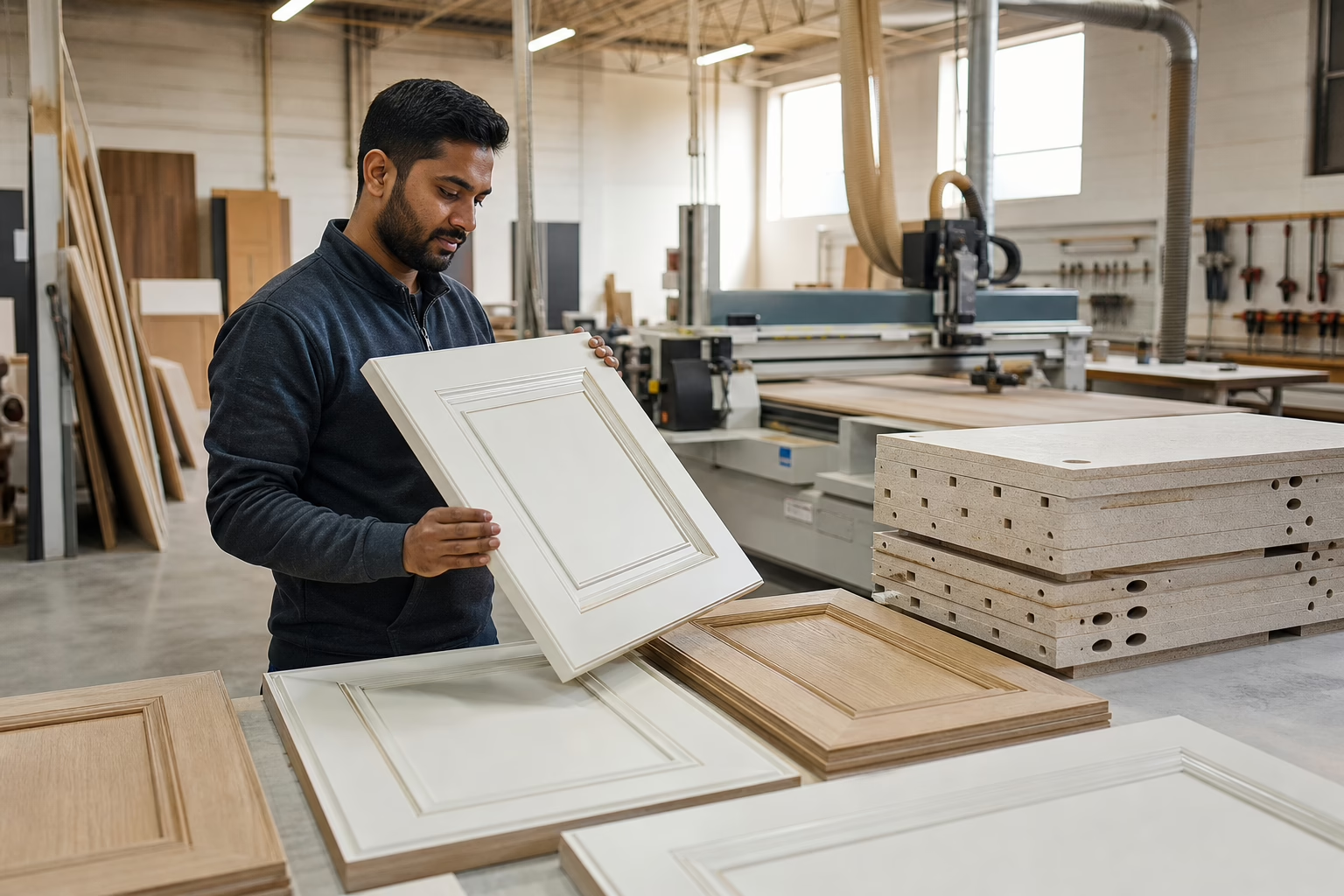
In-house cabinetry manufacturing means a renovation company controls cabinet production through its own workshop or factory instead of simply reselling or outsourcing the entire order. For homeowners, that distinction can affect design revisions, custom dimensions, finish coordination, and accountability when questions arise.
However, “in-house” does not guarantee lower costs, faster completion, or superior quality. The important questions are what the company actually manufactures, who manages design and installation, and what is documented in the quote and warranty.
What In-House Cabinetry Manufacturing Means
In-house cabinetry manufacturing covers the production stage of a broader design-build process. A provider may consult with you, measure the room, prepare drawings, manufacture cabinet parts, apply finishes, and install the completed cabinetry. These activities are related but not identical. A company might design cabinetry in-house while buying cabinet boxes elsewhere, or manufacture doors while sourcing countertops and hardware from specialist suppliers.
Ask which parts of the project are handled at the company’s facility and which are supplied by outside partners. For a clearer view of how design choices move through measurement, design, manufacturing, and installation, review this custom cabinetry process.
Altima Kitchens And Closets describes its model as factory-direct cabinetry with in-house design and installation teams. Its published process includes measurement, 2D and 3D design, material and accessory selection, manufacturing, and professional installation. The company identifies its showroom and factory at 11 Edvac Drive, Units 13-19, Brampton.
In-House, Outsourced, and Stock Cabinetry Compared

There is no universally correct cabinetry model. The right choice depends on room dimensions, design expectations, budget, schedule, and your willingness to coordinate different suppliers.
| Model | What it involves | Potential advantages | What to verify |
|---|---|---|---|
| In-house manufacturing | The renovation company designs and produces some or all cabinetry through its own facility. | Closer connection between drawings, production, revisions, and installation. | Which components are made in-house? Who handles changes, finishing, delivery, and warranty support? |
| Outsourced custom cabinetry | A designer or contractor orders custom cabinets from an independent manufacturer. | Access to a specialist manufacturer and potentially broad product choices. | How are revisions communicated between the designer, factory, and installer? |
| Stock or semi-custom cabinetry | Standard cabinet sizes and configurations are selected from an existing range. | Suitable for straightforward layouts and simpler selections. | What fillers, panels, modifications, and finishing pieces are needed? |
When comparing suppliers, look beyond door samples. A contractor that combines design, manufacturing, and installation may reduce handoffs, but the value depends on drawings, communication, workmanship, and the written scope. This comparison of in-house cabinet manufacturing highlights questions that matter.
How In-House Cabinetry Manufacturing Works From Design to Installation
A well-organized process gives you defined decisions before materials are produced. The exact sequence varies, but these are the main stages.
1. Consultation and project goals
Start with how you use the room, not only how you want it to look. Discuss cooking habits, appliances, storage problems, traffic flow, and lighting in a kitchen. For closets, identify hanging, shelving, shoe, and accessibility needs. For media units, consider equipment, cable management, ventilation, and viewing height.
2. Measurement and site information
Cabinetry should reflect actual walls, openings, utilities, appliances, flooring, and ceiling conditions. Ask what is measured, when dimensions are confirmed, and how site discoveries will be handled. Do not approve production drawings based only on rough room dimensions.
3. 2D and 3D design
Plans show locations, dimensions, elevations, and relationships between components. Three-dimensional views make finishes, door styles, proportions, and visual balance easier to assess. Use this stage to question fillers, corners, appliance panels, lighting, countertop overhangs, and clearances.
4. Materials, accessories, and approvals
Confirm cabinet-box construction, door material, finish, hardware, handles, interior accessories, panels, fillers, toe kicks, and trim. If a feature matters, ensure it appears in the drawings and itemized quote rather than relying on a verbal promise.
5. Manufacturing and finishing
After approval, the manufacturer produces the specified components. Altima states that it uses Italian CNC machinery and a professional spray booth for cabinetry production and finishing. These technologies may support repeatable cutting and controlled finishing, but they do not replace approved samples, inspection, and competent installation.
6. Installation and final review
Installation connects manufactured parts to the real conditions of your home. Confirm responsibility for leveling, panels, trim, hardware adjustment, appliance integration, and surface protection. At handover, inspect alignment, finish quality, accessories, and outstanding items against the approved scope.
Potential Benefits for Homeowners
Manufacturing under the same organization as design and installation can offer practical advantages, especially when a project includes unusual dimensions or connected rooms:
- Direct design feedback: The production team may assess whether a requested change is practical before installation.
- Fewer handoffs: Fewer organizations can mean fewer opportunities for drawings, finishes, or measurements to be misunderstood.
- Coordinated revisions: Changes to cabinets, panels, or accessories can be reviewed alongside the rest of the design.
- Consistent finishes: One finishing process may simplify coordination between doors, panels, and built-ins.
- Clearer accountability: One renovation company gives you a defined organization to contact when questions arise.
- More transparent scope discussions: An itemized quote can show cabinetry, upgrades, accessories, and related work before production.
These are possible advantages, not automatic outcomes. Ask for the provider’s process, documentation, revision policy, and warranty terms before assuming in-house production solves every coordination problem.
Where In-House Cabinetry Can Make the Most Difference
Kitchens: Custom production can help when appliances, corners, ceiling heights, or storage needs do not suit standard sizes. Confirm coordination for appliance panels, pantry interiors, lighting, countertops, and backsplash work.
Closets and wardrobes: A measured system can accommodate hanging space, shelves, drawers, shoes, accessories, and awkward corners. Ask whether wardrobe components are manufactured or assembled from sourced organizers and hardware.
Media units: Built-ins may need to accommodate televisions, devices, cables, ventilation, shelving, and finished side panels. Confirm what is included and whether electrical work or equipment installation falls outside the cabinetry scope.
Bathrooms and mud rooms: Vanities, linen storage, and entry cabinets benefit from coordinated dimensions and finishes. Clarify how moisture-exposed areas, sinks, countertops, hooks, and accessories are specified.
Full-home renovations: An integrated provider may coordinate kitchens, closets, media walls, bars, bathroom vanities, and other built-ins under one design direction. The larger the project, the more important room-by-room inclusions, exclusions, selections, and milestones become.
Tradeoffs and Limitations to Consider
In-house manufacturing does not remove the need for homeowner involvement. Custom decisions must be made accurately and approved on time. Late changes can affect drawings, material orders, production, installation, and price.
There may also be limits to what the company makes itself. Countertops, sinks, faucets, appliances, lighting, tiles, flooring, and electrical or plumbing work may come from specialist suppliers or outside trades. Sourced components are not necessarily a problem, but they should be identified clearly.
Manufacturing control also does not guarantee schedule reliability or perfect communication. Review payment milestones, change-order procedures, start-date expectations, installation responsibility, and warranty terms in writing. Altima states that it provides itemized quotes and offers financing with 0% down, but terms, fees, eligibility, and inclusions should be confirmed directly before signing.
How to Verify a Company Truly Manufactures Cabinetry In-House
Use this checklist during consultations:
- Where are cabinet boxes, doors, and finished panels made?
- Which parts are sourced from another manufacturer or supplier?
- Can I visit the workshop or factory, and what equipment is used?
- Who prepares measured drawings and approves them for production?
- How are design changes priced and documented after approval?
- Can I review physical samples of doors, finishes, hardware, and interiors?
- Who installs the cabinetry if a component does not fit?
- Does the quote list construction, accessories, panels, fillers, trim, delivery, installation, and exclusions?
- What warranty applies to doors, boxes, finishes, hardware, and installation?
- Which work is included by the cabinetry provider and which work belongs to other trades?
A credible answer should be specific enough for you to compare providers on responsibility, not just marketing language.
Which Cabinetry Model Fits Your Renovation?
Stock or semi-custom cabinets may suit a standard layout where selection simplicity and standard sizing matter most. Outsourced custom cabinetry may be appropriate when you already trust a designer, manufacturer, or contractor and responsibilities are clearly documented.
An integrated in-house model may be worth considering when you want custom dimensions, coordinated revisions, several built-in applications, and one organization managing design, production, and installation. The deciding factor should be the complete workflow, not the phrase “in-house” by itself.
For another set of questions when comparing factory-direct options, review factory-direct cabinets for a kitchen or bath.
Frequently Asked Questions
How can I tell whether a renovation company actually manufactures cabinets in-house?
Ask which components are produced at its facility, where doors and boxes are finished, what equipment is used, and whether you can see the workshop. Request a written explanation of outside suppliers.
Does in-house cabinetry manufacturing always cost less?
No. Price depends on design, materials, hardware, accessories, labor, scope, and coordination. Compare itemized quotes with matching inclusions.
What components might still be sourced externally?
Possible examples include countertops, sinks, faucets, appliances, lighting, hinges, drawer hardware, organizers, tiles, flooring, and specialty finishes. Ask for a list of supplied and sourced items.
What should an in-house cabinetry quote include?
Look for construction, door and finish specifications, hardware, accessories, panels, fillers, trim, delivery, installation, taxes, exclusions, upgrade pricing, payment milestones, change-order terms, and warranty details.
Is in-house manufacturing useful for closets and media units?
Yes. It can apply to closets, wardrobes, media units, vanities, mud rooms, bars, and kitchens. Confirm that the provider can address the room’s storage, equipment, and finish requirements.
What warranty details should I confirm?
Confirm coverage, duration, and whether it applies separately to doors, finishes, boxes, hardware, and installation. Altima states that lifetime warranties are available for MDF Painted and Prelaminated doors under the applicable program, so request the terms in writing.
Choose the Manufacturing Model That Matches Your Priorities
In-house cabinetry manufacturing can provide a connected path from design to installation when a project requires custom dimensions, coordinated finishes, or several built-ins. Its value depends on production responsibilities, design controls, documentation, installation standards, communication, and warranty support.
Before committing, compare drawings, materials, the itemized scope, sourced components, installation plan, change-order process, and warranty. GTA homeowners who want to discuss a design-build cabinetry project can visit or contact Altima Kitchens And Closets through its Brampton showroom and factory.
Related Posts
Why Choose Kitchen Renovation Company
Nowadays, Kitchen spaces are not only a place for cooking and serving food, but these areas act as a statement, as they speak a lot about a family, the philosophy and personality of individuals, and spaces. If you admire aesthetics and adorn the beauty of your home, you must pay attention to the interior design […]
How a Kitchen Renovation Contractor is Changing the Game
Lifestyle is all about bringing something coherent to the overall experience of living. The kitchen and closets stand as two of the most influential spaces in a home that add to the overall experience of living. A Kitchen Renovation Contractor in Whitby by the name of Altima Kitchen and Closets Inc. is changing the overall […]
How Media unit contractor in Whitby is Changing the Game
Lifestyle is all about bringing something coherent to the overall experience of living. The kitchen and closets stand as two of the most influential spaces in a home that add to the overall experience of living. A Media Unit Company in Whitby by the name of Altima Kitchen and Closets Inc. is changing the overall […]