Melamine vs Plywood Cabinets: Which Cabinet Box Fits Your Kitchen?
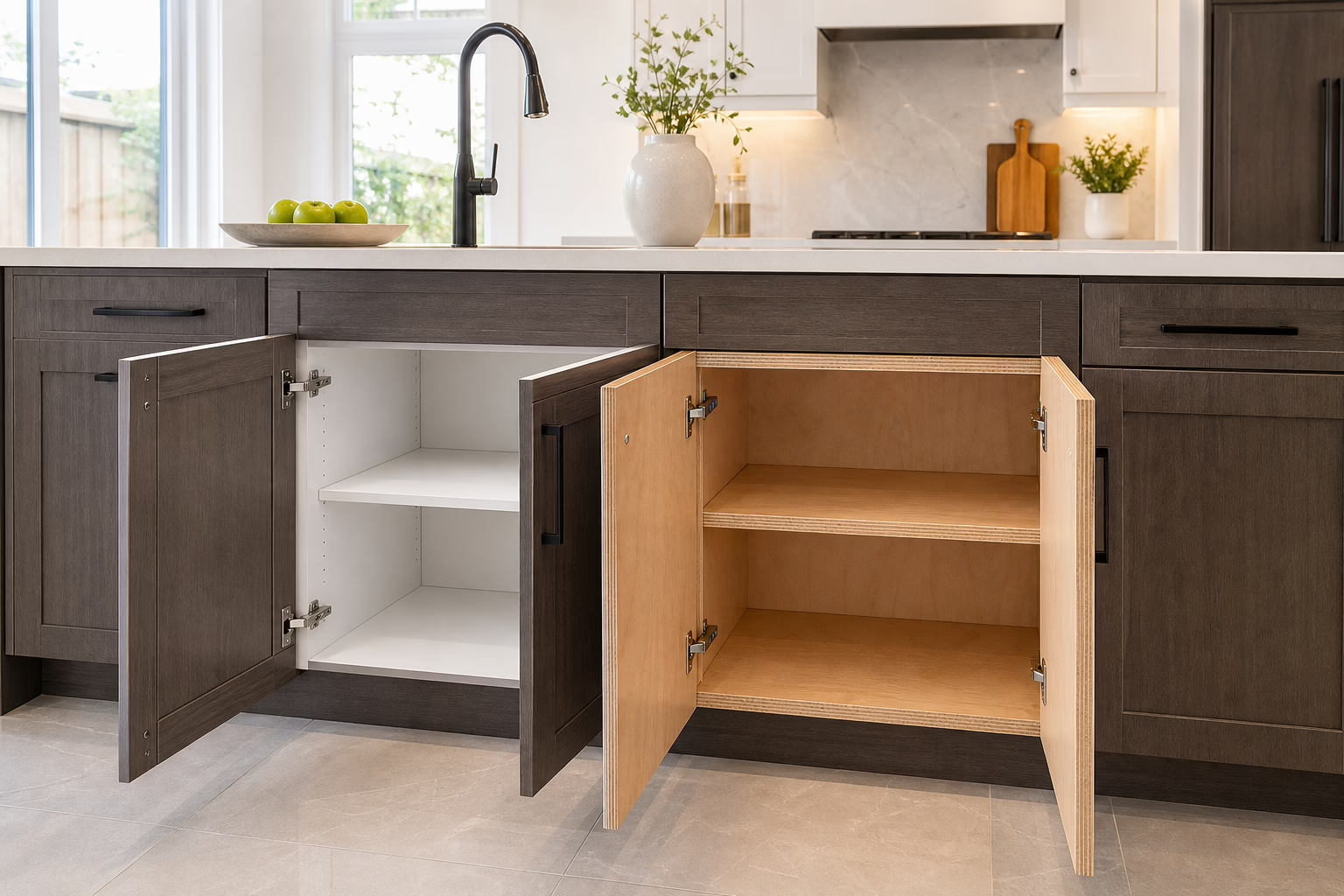
Neither melamine nor plywood is automatically the best choice for every kitchen. The right cabinet box depends on where it will be installed, how much moisture it may encounter, your design priorities, the construction details, and the total project budget.
For homeowners comparing cabinetry in Brampton or across the GTA, look beyond a label such as “melamine” or “plywood.” Ask what the panel is made from, how thick it is, how the edges are finished, what hardware is included, and how the cabinets will be installed.
What You Are Actually Comparing: Cabinet Box Versus Door Front
A cabinet has several separate components. The cabinet box, also called the carcass, forms the sides, bottom, top rails, back, and interior structure. Doors and drawer fronts are separate visible pieces, while hinges, drawer hardware, shelves, countertops, and installation add further performance and appearance considerations.
This means a plywood cabinet box can be paired with MDF-painted doors, wood-look doors, or melamine-faced doors. A melamine cabinet box can also be combined with different door styles and countertop materials. When a quote lists a door finish but does not identify the box construction, ask for clarification before comparing it with another proposal.
Altima Kitchens And Closets lists both melamine and plywood cabinet-box options among its renovation services. Its broader process also includes custom cabinetry, material guidance, design visualization, and itemized quotations, which are useful when the material decision must fit the entire kitchen rather than one isolated component.
Melamine vs Plywood Cabinets: The Practical Differences

The following comparison describes common characteristics, not a guarantee for every product. Melamine panels and plywood panels vary by manufacturer, thickness, grade, edge treatment, fasteners, and installation method.
| Consideration | Melamine-based panels | Plywood |
|---|---|---|
| Basic construction | Often a finished melamine surface bonded to a particleboard or MDF-based core. Confirm the exact core. | Layers of wood veneer bonded together. Grade, thickness, and surface finish vary. |
| Appearance | Consistent factory-finished colours, patterns, and interior surfaces are common. | May be finished with veneer, laminate, paint, or another surface treatment. |
| Maintenance | Finished surfaces are generally straightforward to wipe clean when edges and seams remain intact. | Maintenance depends heavily on the applied finish and how exposed edges are protected. |
| Moisture considerations | Water exposure can be especially important at unprotected edges, joints, and damaged surfaces. | Layered construction may be attractive for some moisture-prone applications, but it is not waterproof and still needs proper protection. |
| Weight | Weight depends on the core and thickness. | Often selected where a lighter layered panel is useful, although specifications vary. |
| Budget position | May provide a practical way to manage cost while maintaining a finished interior. | May carry a higher material cost, depending on grade and specification. |
| Best comparison method | Compare core, thickness, edge-banding, joinery, and hardware. | Compare grade, thickness, veneer quality, joinery, edge treatment, and hardware. |
When comparing custom kitchen cabinets, consider the complete specification rather than assuming that one material always provides better value. A well-designed cabinet with suitable protection and careful installation may be a better fit than a more expensive option chosen without regard to the kitchen’s conditions.
When Melamine Cabinet Boxes May Be the Better Fit
Melamine may be worth considering when you want a consistent finished surface, easy-care interiors, and a controlled material budget. It can be practical for pantry units, upper cabinets, storage areas, and other zones where the cabinet is not expected to face unusual moisture or impact.
It may also suit homeowners who prefer a coordinated interior finish without adding a separate finishing step. The important qualification is that “melamine” is not a complete specification. Two quotes may use the same word while offering different cores, thicknesses, edge-banding, fasteners, and construction quality.
Pay particular attention to areas near sinks, dishwashers, plumbing connections, and appliances that generate heat or condensation. Good planning should address how water is prevented from reaching vulnerable edges and how exposed side panels are finished.
When Plywood Cabinet Boxes May Justify the Extra Cost
Plywood may appeal to homeowners who prioritize layered panel construction, lower weight in certain applications, or a particular installation requirement. It can also be considered when the cabinet design, site conditions, or hardware plan makes the panel specification especially important.
However, plywood is not a single uniform product. Its grade, thickness, veneer quality, adhesive, surface finish, edge treatment, and joinery all influence the finished cabinet. A thin or poorly detailed plywood box should not be judged against a properly specified alternative using material names alone.
Ask what benefit the upgrade is intended to provide in your kitchen. If the answer is only “plywood is better,” request a more specific explanation tied to the cabinet location, hardware, load, installation method, or moisture exposure.
Choose by Kitchen Zone and Exposure
Material selection becomes clearer when you review each cabinet zone separately. A dry upper cabinet does not face the same conditions as a sink base, and a pantry cabinet may have different storage demands from a heavily used island.
- Sink base: Confirm how the bottom, edges, plumbing openings, and nearby seams will be protected from leaks.
- Dishwasher-adjacent cabinet: Ask how heat, steam, vibration, and water exposure are addressed at neighbouring panels and edges.
- Pantry: Prioritize usable dimensions, shelf support, pull-outs, and a finish that is easy to clean.
- Upper cabinets: Review box weight, wall structure, mounting method, and hardware.
- Island cabinetry: Discuss exposed ends, seating overhangs, appliance openings, and visible side finishes.
- Low-moisture storage: This may offer more flexibility, allowing you to weigh appearance, maintenance, and budget more heavily.
For condo owners, building rules, elevator access, delivery routes, and site constraints may also affect the practical choice. Comparing material choices with the rest of the renovation plan can help clarify which cabinet construction fits the space and budget.
Cabinet Quality Depends on More Than the Panel
A cabinet box is important, but it is not the entire cabinet. Accurate measurements and a workable layout determine whether doors clear appliances, drawers open properly, and storage is genuinely useful. Design accuracy also affects fillers, panels, crown details, and how cabinets meet walls and ceilings.
Ask about edge-banding, corner construction, back panels, shelf supports, drawer boxes, hinges, slides, and adjustment options. You should also know whether the quote includes finished exposed sides, fillers, decorative panels, toe kicks, handles, and installation.
Installation quality is equally important. Cabinets need to be positioned, levelled, secured, and adjusted for the actual room. A strong material specification cannot compensate for inaccurate measurements, poor levelling, unprotected edges, or unclear responsibility for site corrections.
How to Read a Melamine or Plywood Cabinet Quote
Use this checklist when comparing proposals. It is designed to expose differences often hidden behind a short material description.
- Define “melamine.” Ask whether it means a melamine-faced particleboard, MDF-based panel, or another product.
- Confirm thickness. The quote should identify the thickness of box sides, bottoms, shelves, backs, and doors where relevant.
- Review edge treatment. Ask how exposed and moisture-prone edges are sealed or finished.
- Ask about joinery. Confirm how panels are connected and whether construction is consistent throughout.
- List the hardware. Identify included hinges, drawer slides, pull-outs, lift mechanisms, and soft-close features.
- Separate boxes from fronts. Confirm which material applies to boxes, doors, drawer fronts, end panels, and decorative pieces.
- Identify exposed panels. Ask whether finished sides, fillers, panels, toe kicks, and trim are included.
- Clarify sink-base protection. Confirm what is included around plumbing penetrations and likely water-exposure areas.
- Request upgrade pricing. If plywood is an upgrade, ask for the exact price difference and specification changes.
- Check installation scope. Confirm who measures, installs, levels, adjusts, and handles site-related changes.
An itemized quote makes it easier to compare like with like. Altima’s renovation information describes itemized quotations and upgrade pricing, which is the type of detail homeowners should request regardless of which contractor they evaluate.
A Simple Decision Framework for Homeowners
Start by ranking your priorities. If keeping the project within a defined budget is central, compare a complete melamine specification with a complete plywood specification rather than comparing only the headline price. If moisture exposure, weight, visible finishes, or specialized hardware is more important, ask how each option addresses that requirement.
Next, divide the kitchen into zones and identify where an upgrade would provide a meaningful benefit. You may decide that the same material is appropriate throughout the project, or that the most exposed or highly used areas deserve closer attention.
Finally, review the design before approving the materials. Altima offers 2D and 3D design visualizations, which can help homeowners examine layout, storage, exposed sides, and finish coordination before manufacturing. Use those visuals alongside the written quote so appearance and construction are evaluated together.
Questions to Ask at a Brampton Cabinet Consultation
- What exactly does “melamine” or “plywood” mean in this proposal?
- What are the panel thicknesses for the sides, bottoms, shelves, and backs?
- Which material is used for the doors, drawer fronts, end panels, and cabinet boxes?
- How will sink, dishwasher, plumbing, and other moisture-prone areas be protected?
- What edge-banding, joinery, hinges, drawer slides, and shelf hardware are included?
- Are finished ends, fillers, toe kicks, trim, and appliance panels included?
- What changes if I choose plywood instead of melamine, and what is the written upgrade price?
- Who is responsible for final measurements, installation, levelling, and adjustments?
- What design decisions must be finalized before the cabinets go into production?
- How will changes, exclusions, and additional work be documented?
Frequently Asked Questions
Is melamine the same as particleboard?
No. Melamine usually describes a finished surface, while particleboard describes a possible core material beneath that surface. Some products may use an MDF-based core or another substrate, so the quote should identify the exact panel construction.
Do all kitchen cabinets need plywood boxes?
No. The suitable choice depends on cabinet location, exposure, design, hardware, installation, finish, and budget. A well-specified melamine-based cabinet may be practical in one area, while plywood may be preferred for a particular installation or priority.
Can I choose plywood cabinet boxes with melamine or painted doors?
Yes. These are separate decisions in many cabinet designs. Confirm which material is used for the box, doors, drawer fronts, and exposed panels.
Which cabinet material is better for a sink base?
There is no universal answer based on the material name alone. Ask how the bottom, edges, plumbing openings, and adjacent panels will be protected from water, and confirm the details in writing.
What should a cabinet quote specify besides melamine or plywood?
It should identify the core material, thickness, edge treatment, joinery, backs, shelves, hardware, doors, finished sides, moisture-prone details, installation scope, exclusions, and upgrade pricing.
Conclusion: Choose the Specification, Not Just the Label
When comparing melamine vs plywood cabinets, choose according to the kitchen zone, moisture exposure, appearance, storage needs, budget, and complete construction specification. Melamine may be a sensible fit for a controlled-budget design with finished, easy-care surfaces, while plywood may deserve consideration where its particular construction or installation advantages match your priorities.
The strongest decision is not simply “melamine” or “plywood.” It is a documented choice supported by accurate measurements, appropriate edge and moisture protection, suitable hardware, clear design drawings, careful installation, and an itemized quote that separates included features from upgrades.
If you are planning custom cabinetry in Brampton or elsewhere in the GTA, Altima Kitchens And Closets can discuss material options, custom design, 2D and 3D visualizations, and itemized renovation quotations as you evaluate your project.
Related Posts
Why Choose Kitchen Renovation Company
Nowadays, Kitchen spaces are not only a place for cooking and serving food, but these areas act as a statement, as they speak a lot about a family, the philosophy and personality of individuals, and spaces. If you admire aesthetics and adorn the beauty of your home, you must pay attention to the interior design […]
How a Kitchen Renovation Contractor is Changing the Game
Lifestyle is all about bringing something coherent to the overall experience of living. The kitchen and closets stand as two of the most influential spaces in a home that add to the overall experience of living. A Kitchen Renovation Contractor in Whitby by the name of Altima Kitchen and Closets Inc. is changing the overall […]
How Media unit contractor in Whitby is Changing the Game
Lifestyle is all about bringing something coherent to the overall experience of living. The kitchen and closets stand as two of the most influential spaces in a home that add to the overall experience of living. A Media Unit Company in Whitby by the name of Altima Kitchen and Closets Inc. is changing the overall […]