Are semi custom kitchen cabinets right for your renovation?
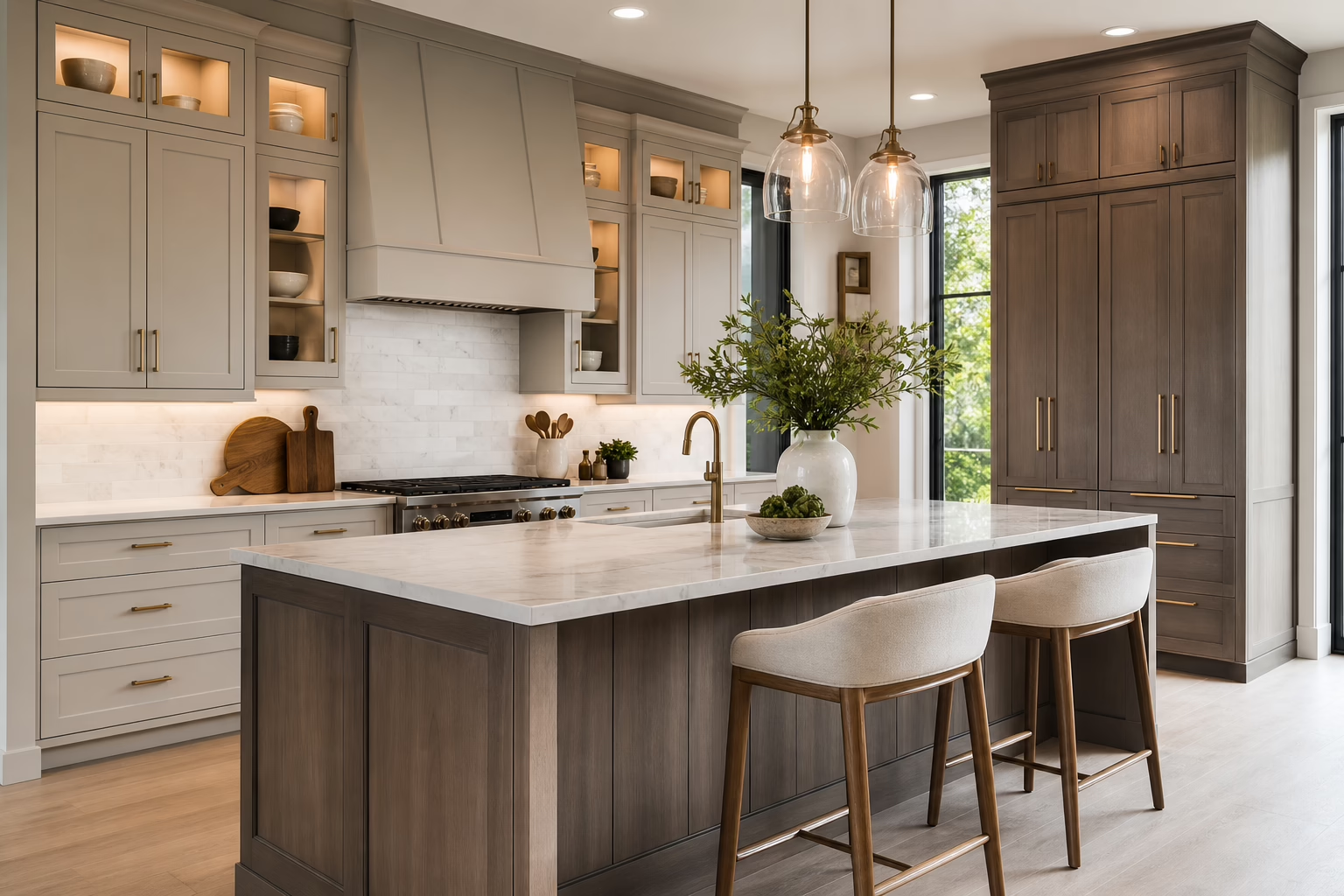
This checklist helps you decide whether semi-custom kitchen cabinets are the right balance of fit, finish, cost, and lead time for your GTA renovation. Read the seven questions, inspect samples at a showroom, and follow the local next steps so you can book a confident consultation by the end. One quick rule of thumb: choose semi-custom when you need more than stock offers but do not require fully bespoke sizes or finishes.
What semi-custom cabinets are and how they differ from stock and custom
Semi-custom kitchen cabinets are built from standard sizes and modular boxes, but manufacturers permit sizing adjustments, extra features, and a wider selection of doors and finishes than stock options. Stock cabinets arrive in fixed sizes and finishes for fast delivery. Fully custom cabinets are made to unique dimensions and design details for every opening and typically require the longest lead time and highest cost. When deciding, start by matching your timeline, budget, and the level of specialization your layout requires, as recommended by kitchen buying guides and industry sources such as Home Depot Canada.
Stock vs semi-custom vs custom: a quick comparison
- Stock — Lowest cost, fastest delivery, limited sizes and finishes.
- Semi-custom — Midrange cost, flexible sizing within limits, more door and finish choices.
- Custom — Highest cost, full bespoke sizing and details, longest lead time.
When the difference matters: if your kitchen uses only standard cabinet runs and you want a low-cost fast option choose stock. If you need improved fit, upgraded doors, or better hardware without full bespoke work choose semi-custom. If you require unique curves, integrated furniture, or millwork to match historic details choose custom. For more on how to choose between stock, semi-custom and custom options consult specialty resources and regional experts that explain these distinctions.
Decision checklist: seven questions to decide if semi-custom is right for you
1) What is your realistic budget and priorities
Cabinets are often one of the largest line items in a kitchen remodel and can account for a significant share of your budget, so list priorities before you shop. If your top priority is the lowest initial cost and speed, choose stock. If you want a balance of better materials, finishes, and moderate customization without a custom price tag, choose semi-custom. If premium materials and fully unique joinery are essential and budget allows, choose custom.
Decision: choose stock for tight budgets, semi-custom for balanced budgets and value, custom if budget is flexible and design is bespoke.
2) Does your layout need non-standard sizing or unusual fit work
If your kitchen has odd angles, deep bulkheads, tall ceilings, or long runs that standard boxes will not fill neatly, semi-custom options often allow incremental width and height adjustments that keep costs lower than fully custom work. Fully custom cabinets are the choice when every opening needs unique joinery or built-in furniture that cannot be achieved by modifying standard units.
Decision: choose stock if layout is standard, semi-custom if you require moderate resizing, custom when bespoke dimensions are necessary.
3) How important are material and construction details
Compare construction details such as box material, drawer slide rating, face frame versus frameless construction, and joinery. Cabinet quality depends on materials and build details as much as fit. If you want plywood boxes, dovetailed drawers, and premium hardware, confirm that the semi-custom line you are considering offers those options or consider custom if they do not.
Decision: choose stock for basic construction, semi-custom when upgrade options are available, custom when you need highest-end construction choices.
4) What finish and door options do you want
Semi-custom ranges typically provide more door styles, painted finishes, and specialty doors than stock lines. If you want specific painted colours, inset doors, or unique edge profiles, check whether those finishes are offered with durable production methods. Inspect finish samples and ask whether painted doors use a spray booth process for consistent coverage, as this affects long-term appearance.
Decision: choose stock for standard finishes, semi-custom for expanded door and finish choices, custom for fully unique finishes or artisan details.
5) How flexible is your schedule and what lead times will you accept
Semi-custom products usually have longer lead times than stock but shorter than fully custom builds. If you need a rapid turnaround choose stock. If you can accept a moderate lead time to gain design and finish upgrades, semi-custom is practical. If project timing allows for full customization and the build schedule is not urgent, custom may fit. For realistic planning remember that cabinet production and site scheduling both affect completion.
Decision: choose stock for shortest lead times, semi-custom for moderate wait with better options, custom for longest lead time when bespoke details matter most.
6) What warranty and aftercare do you need
Warranty coverage varies by supplier and product line. Ask whether doors, drawer hardware, and cabinet boxes have coverage, and for what duration. Some manufacturers and design-build firms in the GTA provide extended warranties on painted and prelaminated doors. If long-term warranty and local aftercare are important, prefer suppliers who manufacture locally and offer direct service.
Decision: choose the product line and supplier that matches your warranty and service expectations; if warranty is a top priority prefer locally manufactured options with explicit coverage.
7) Do you want one supplier to handle design, manufacture, and install
Using a single design-build firm that provides 2D/3D design, factory-direct manufacturing, and in-house installation reduces coordination risk and gives a single point of accountability. If you prefer one-stop service, semi-custom or custom options made in-house at a design-build firm can be advantageous because they combine design control and on-site support. If you are comfortable managing separate vendors, stock cabinets may be installed by third parties at lower cost.
Decision: choose stock if you want low vendor complexity, semi-custom if you want factory-direct customization with a design-build partner, custom if you require bespoke millwork and integrated management.
Inspecting build quality and samples at the showroom
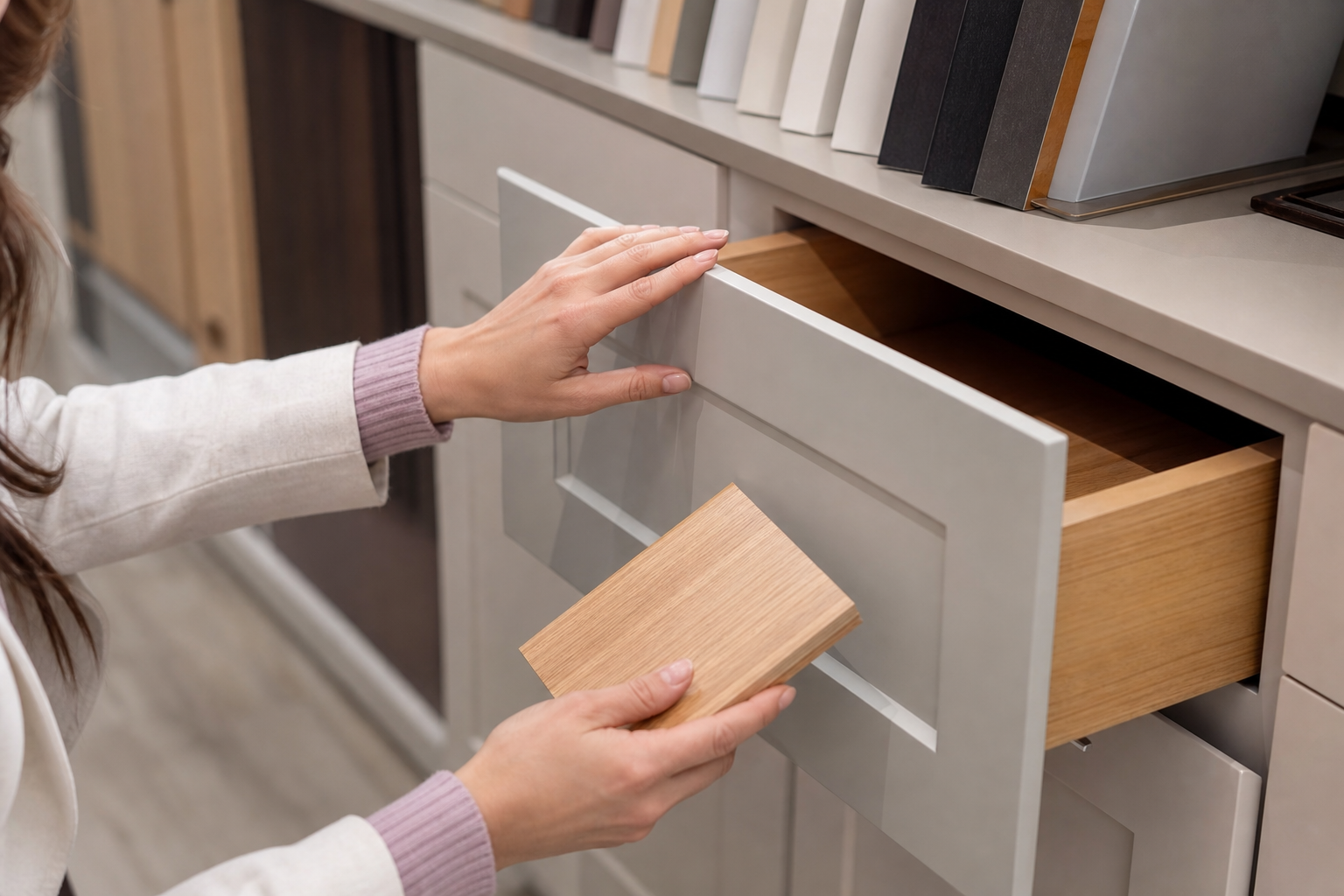
Your showroom visit is where abstract choices become tangible. Use this inspection checklist to compare samples and avoid surprises.
Cabinet box materials and joinery
- Ask whether boxes are plywood, melamine, or particleboard and feel the panel thickness.
- Open drawers and inspect joinery. Dovetail or reinforced joints indicate higher quality than stapled or glued corners.
- Check the back panel thickness and how it is fixed. Thin, taped backs are a sign of lower-cost construction.
Door construction and edge details
- Inspect door edges for consistent finishing and firm adhesion on thermofoil or prelaminated doors.
- For painted doors ask about spray finishing and ask to see finished sample pieces, not only photos.
Hardware and soft-close tests
- Open and close drawers and doors to test soft-close, alignment, and hardware feel.
- Ask for load ratings on drawer slides if you plan heavy pots or appliances in deep drawers.
Finish inspection and colour matching
View finishes under natural and showroom light. Ask for a sample door to take home near your countertops and flooring to confirm colour matching on site.
Ask for sample pieces and field-fit checks
Request a small sample unit or door and a mock-up measurement to verify that the supplier can execute the minor size changes you need. If a sample reveals exposed weak joinery or visibly thin materials, walk away from that line for a full renovation.
Cost and timeline trade-offs: when semi-custom saves money or adds value
Semi-custom cabinets often hit the sweet spot when you need improved cabinetry features without paying the full premium for bespoke millwork. Because cabinets can represent a significant share of renovation spend, matching the type to your priorities helps control long-term value and function. For more context on budget planning and cabinet selection consult buying guides and local pricing when comparing suppliers.
When semi-custom is the cost-efficient choice
- Your layout requires some resizing but not full bespoke joinery.
- You want upgraded doors, paints, and hardware without artisan millwork costs.
- You prefer mid-range lead times and factory-quality finishing.
When custom is worth the premium
- You need integrated furniture, unique profiles, or historical matching that stock or semi-custom cannot replicate.
- You prioritize one-of-a-kind materials or handmade details.
Lead-time expectations and scheduling stop points
Expect stock delivery to be fastest, semi-custom to require a moderate production window, and custom to take the longest because of templating and bespoke production. If your supplier cannot provide realistic lead-time windows or an itemized production schedule, request another quote or a second opinion before signing.
Bring this short checklist to your first quote appointment: measured space, photos, preferred door styles, three must-have features, and a clear maximum budget.
GTA and Brampton specifics: factory-direct benefits, showroom tips, and financing
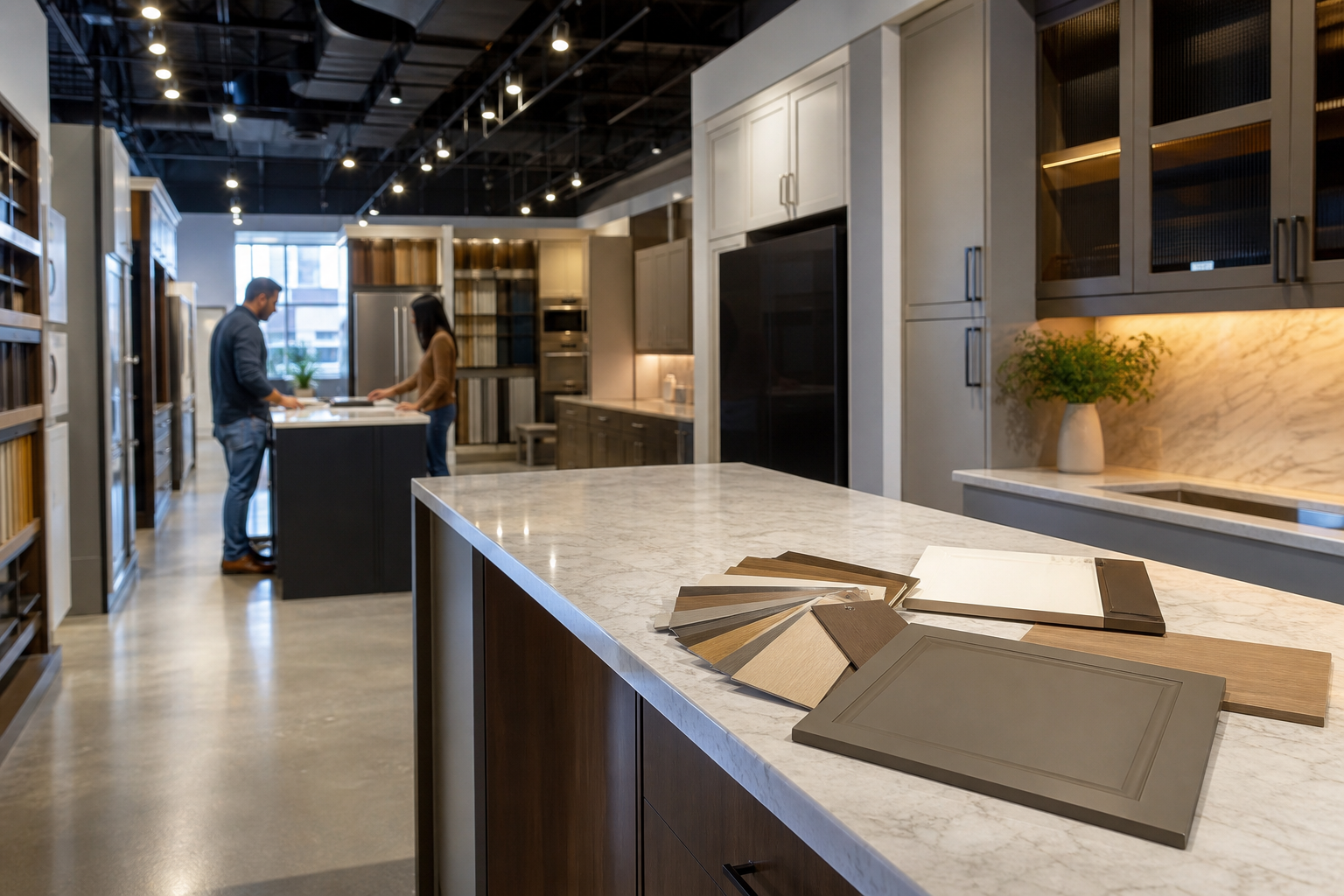
For homeowners in Brampton and the wider GTA a factory-direct design-build partner can reduce markup and speed communications. Altima Kitchens And Closets operates a Brampton showroom and in-house factory and uses Italian CNC machinery and a professional spray booth, with lifetime warranties on certain door types. These local capabilities mean you can review samples, request 2D and 3D design previews, and get itemized quotes from the same team for clearer accountability. For a broader explanation of factory-direct benefits see Custom Cabinetry: Save Space and Boost Home Value, which explains how in-house manufacturing affects pricing and timelines.
What to ask on a Brampton showroom visit
- Can you see full door and finish samples and a finished cabinet box?
- Do you provide 2D and 3D drawings before production?
- Will you produce samples in my chosen finish for colour matching?
- Can I get an itemized quote that separates materials, labour, and finishes?
Why factory-direct matters for pricing and lead time
Factory-direct manufacturing reduces vendor markup and simplifies revisions because the maker controls production. If the supplier does not manufacture locally or cannot share production details, expect longer communications and potential cost escalations.
How to use 2D and 3D to avoid surprises
Insist on 2D dimensioned drawings and a 3D render so you can confirm clearance around appliances and sightlines before manufacturing begins. This step prevents common fit problems and hidden change orders during installation.
Financing and payment options to ask about
If financing is needed, ask whether the supplier offers flexible terms such as low monthly payments or 0 percent down options, and confirm any admin fees or renewal terms in writing before you sign.
Common homeowner objections and how to handle them
The project will be too expensive
Response: prioritize your must-haves, consider semi-custom for the highest-value upgrades, and ask for itemized options so you can phase purchases or substitute finishes without losing functional improvements.
Lead times are too long
Response: ask for available stock lines that match your style, or select semi-custom items with known production windows and request a written schedule with milestones.
I live in a condo with restrictions
Response: bring condo guidelines to the consultation, confirm vibration and noise limits for installation, and request a written plan that addresses common condo constraints.
I want the cheapest option now and will upgrade later
Response: cheap short-term choices can raise costs later. Consider semi-custom front-facing upgrades now and plan more invasive upgrades later to limit rework and long-term expense.
Next steps and a concise CTA
- Gather room measurements and take clear photos of existing layouts, appliances, and access points.
- Book two showroom consultations, request 2D/3D mockups and itemized quotes, and compare construction samples side by side.
- Get financing pre-approval if you need payment options, and verify warranty terms and local aftercare before you sign.
Ready to compare semi-custom options in person? Book a consultation at Altima Kitchens And Closets to review samples, 2D/3D designs, and factory-direct cabinetry options.
Frequently asked questions
How do semi-custom cabinets compare in cost to stock and fully custom options?
Semi-custom cabinets sit between stock and fully custom in price. Stock is the lowest cost and fastest, semi-custom adds options and modest upcharges, and custom commands the highest price due to bespoke work. For budgeting context and how cabinets factor into your remodel consult respected buying guides.
How long do semi-custom cabinets typically take to be delivered and installed?
Lead times vary by supplier and finish. Stock lines can arrive quickly, semi-custom requires a moderate production window, and custom takes the longest. Ask your supplier for a written schedule and production milestones to set realistic expectations.
Can semi-custom cabinets be resized to fit irregular kitchen layouts?
Yes. Semi-custom options allow size adjustments to standard boxes and can often accommodate irregular layouts without the premium of a fully custom build. For highly irregular or built-in millwork needs, custom fabrication may still be necessary.
Do semi-custom cabinets usually come with warranties and what should I check?
Warranty coverage depends on the manufacturer and supplier. Check the duration and coverage for doors, drawer hardware, boxes, and finishes. Prefer suppliers who offer clear written warranties and local aftercare for repairs.
Are semi-custom cabinets a good option for condo renovations in the GTA?
Yes. Semi-custom is often a strong choice for condos because it offers better fit and upgraded finishes while avoiding the additional cost and lead time of full custom work. Confirm condo installation constraints with your building management during the planning stage.
Related Posts
Why Choose Kitchen Renovation Company
Nowadays, Kitchen spaces are not only a place for cooking and serving food, but these areas act as a statement, as they speak a lot about a family, the philosophy and personality of individuals, and spaces. If you admire aesthetics and adorn the beauty of your home, you must pay attention to the interior design […]
How a Kitchen Renovation Contractor is Changing the Game
Lifestyle is all about bringing something coherent to the overall experience of living. The kitchen and closets stand as two of the most influential spaces in a home that add to the overall experience of living. A Kitchen Renovation Contractor in Whitby by the name of Altima Kitchen and Closets Inc. is changing the overall […]
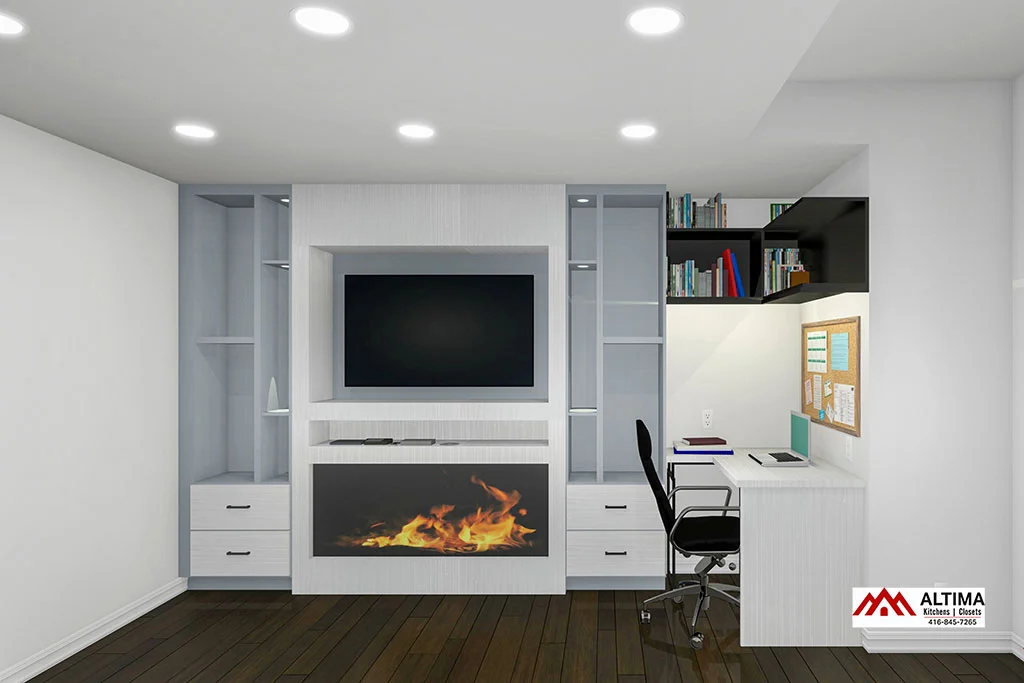
How Media unit contractor in Whitby is Changing the Game
Lifestyle is all about bringing something coherent to the overall experience of living. The kitchen and closets stand as two of the most influential spaces in a home that add to the overall experience of living. A Media Unit Company in Whitby by the name of Altima Kitchen and Closets Inc. is changing the overall […]