Kitchen Renovation: Plan Smart & Save Money Fast
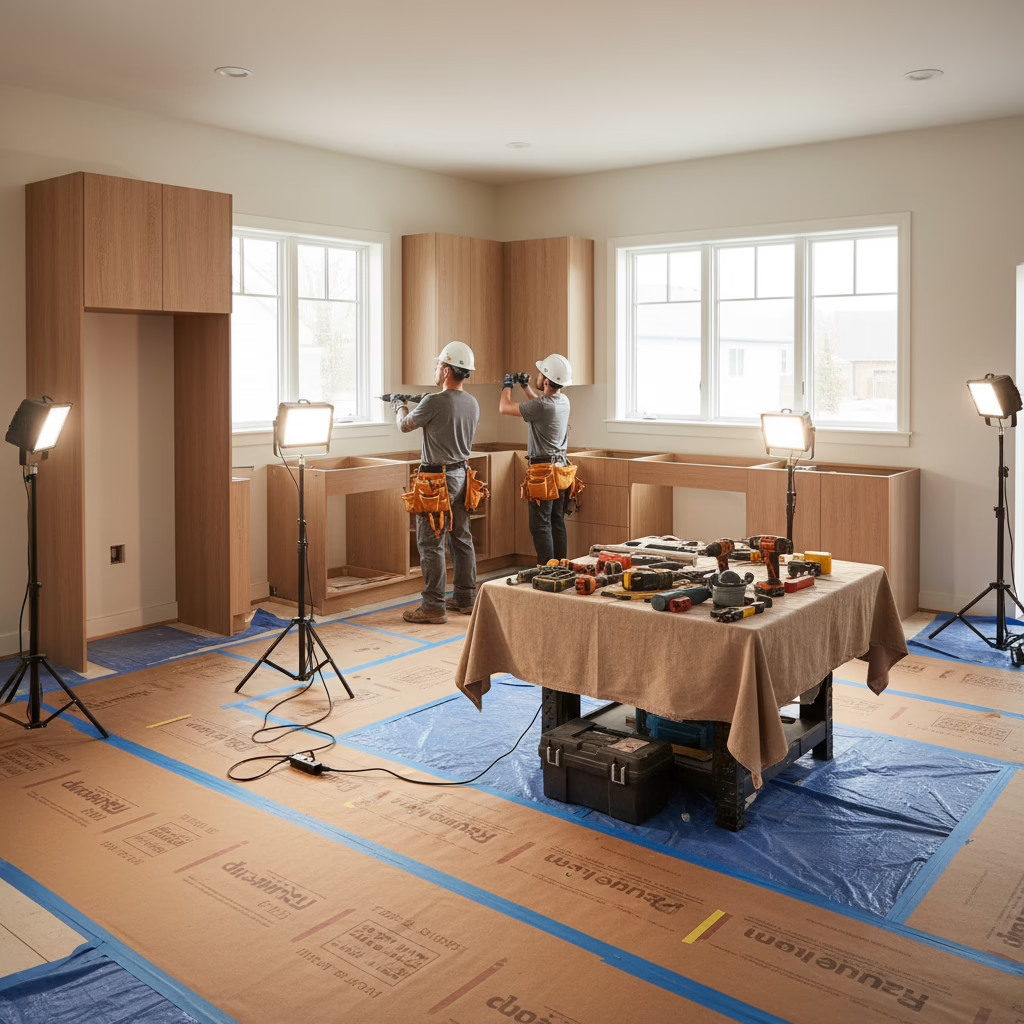
Planning a kitchen renovation is the process of defining your goals, scope, layout, materials, and timeline, then executing through a clear, step-by-step workflow. To learn how to plan a kitchen renovation well, you’ll set priorities, document measurements, finalize 2D/3D designs, schedule trades, order materials early, and track progress against milestones.
By Altima Kitchens and Closets — design-build renovation team serving the GTA • Visit our Brampton showroom • Last updated: 2026-04-08
Introduction
A successful kitchen renovation starts with a clear vision, accurate measurements, and a realistic sequence of decisions. Define how you cook and live, document the space, review code requirements, then move from 2D plans to 3D visualization before you order anything. This keeps choices aligned, prevents rework, and protects your timeline.
You’re here to learn how to plan a kitchen renovation without surprises. We’ve managed thousands of remodels across Toronto, Brampton, Mississauga, Oakville, Vaughan, and the GTA, and the pattern is consistent: strong planning saves weeks.
- What you’ll get in this guide:
- • A prerequisite checklist to avoid false starts
- • A step-by-step plan from measure to handover
- • Troubleshooting for delays, deliveries, and site issues
- • Advanced tips from our factory-direct, design-build workflow
- • Local insights relevant to permits and scheduling in the GTA
Quick Summary
- Start with use-cases: cooking style, storage needs, traffic flow.
- Measure twice: room shell, windows/doors, mechanical locations.
- Design in 2D, validate in 3D, then lock your specs.
- Sequence work: demo → rough-ins → cabinets → counters → backsplash → finishes.
- Order long-lead items early; track milestones weekly.
Quick Answer
The fastest way to plan a kitchen renovation is to confirm goals, measure accurately, and finalize 2D/3D designs before ordering materials. At our Brampton showroom at 11 Edvac Drive (Units # 13–19), Altima streamlines decisions, factory-builds cabinetry, and coordinates install—so your GTA project moves on schedule.
Local Tips
- Tip 1: When visiting 11 Edvac Drive, bring rough kitchen measurements and photos. You’ll speed up design conversations and get precise accessory suggestions (pull-out pantries, lazy susans, spice pull-outs) on the spot.
- Tip 2: Plan demolition and deliveries around GTA weather swings. Winter curbside drop-offs need clear paths; summer humidity affects finish curing. Buffer 2–3 extra days for countertop templating.
- Tip 3: In Brampton/Toronto, confirm permit needs early for wall removals and electrical upgrades. Align inspections with your rough-in window to avoid idle days between trades.
IMPORTANT: These tips reflect our design-build workflow and local coordination with inspectors, suppliers, and installers across the GTA.
Before You Start (Prerequisites)
Confirm your goals, space facts, and constraints before design. Document measurements, utilities, and building rules. Define must-haves and nice-to-haves, set a decision calendar, and shortlist finishes. Lock these basics, and your design iterations become faster and cheaper—and construction goes smoother.
Define How You Use the Kitchen
- List daily tasks: meal prep, baking, batch cooking, entertaining, kids’ homework.
- Identify storage pain points: pans, small appliances, spices, bulk items.
- Decide appliance types now: range vs. cooktop + wall oven, 30–36 inch fridge.
- Note traffic: NKBA recommends 42 inch work aisles for one cook and 48 inches for two cooks.
Why this matters: usage drives layout. For example, adding a 36 inch range demands larger landing areas and stronger ventilation choices.
Capture Accurate Measurements
- Room shell: wall-to-wall widths, ceiling height, window sizes, sill heights.
- Openings: door swings, hallway widths, stair turns for appliance access.
- Mechanical: plumbing centers, gas lines, vent stacks, 240V, panel capacity.
- Square footage: helps estimate lighting needs (target 35–50 lumens per sq ft for task zones per IES guidance).
We double-measure on site before we release cabinet production drawings. A 1/8 inch error can misalign a panel next to a fridge.
Set Decision Boundaries
- Must-haves: e.g., quartz countertops, full-height backsplash, pull-out pantry.
- Nice-to-haves: glass doors, pantry lighting, valance lights, integrated trash.
- Lead times: quartz templating typically 2–5 business days after cabinets, with install 7–10 days later depending on queue.
- Rules: condo boards, heritage rules, or structural limits constrain layout options.
In our GTA projects, long-lead items are locked at the 3D design sign-off. That preserves your installation window even if suppliers are busy.
Step-by-Step Process
Plan your kitchen renovation in 10 stages: discovery, site measure, 2D layout, 3D design, selections, engineering/permits, ordering, demolition/rough-ins, installation, and handover. Each stage has checklists and sign-offs to prevent rework and keep the schedule tight.
1) Discovery & Goals
- Interview stakeholders: cooks, kids, guests. Define “success” in one sentence.
- Collect inspiration: 8–12 photos focusing on layout, not just finishes.
- Set a target go-live date (e.g., “before Thanksgiving”). Work backward by stage.
- Resource plan: who can make weekday decisions? Appoint one final decision-maker.
We often start with a short showroom consult, then schedule an in-home measure. That sequence speeds up 2D drafts by several days.
2) Site Measure & Verification
- Laser-measure every wall. Confirm corners are square; note out-of-plumb walls.
- Mark utilities: shutoffs, drains, vents, breakers, HVAC returns/supplies.
- Photograph each wall head-on; capture ceiling conditions and bulkheads.
- Record constraints: beam locations, duct chases, structural posts.
According to NKBA planning standards, base cabinet depth is 24 inches and standard counter height is ~36 inches. We validate these against your ergonomics and appliance specs.
3) 2D Layout Options
- Draft alternatives: L-shape, U-shape, galley, or island/peninsula.
- Check clearances: 42–48 inch aisles; 36 inches minimum for walkways without work; 24 inches min landing on handle side of fridge.
- Vent path review: the shorter, straighter, and exterior-vented, the better.
- Electrical plan: two 20-amp small appliance circuits (code-dependent), GFCI near sinks; space outlets ~4 feet apart along counters.
Layouts are measured against your top five goals. Anything that doesn’t support them gets trimmed.
4) 3D Design & Visualization
- Convert chosen 2D plan to 3D. Validate sightlines and appliance door swings.
- Evaluate cabinet heights (30/36/42 inches) against ceilings; plan for crown or risers.
- Simulate lighting: 3000–3500K for ambient; under-cabinet task lighting at 400–800 lumens/ft.
- Finalize accessory placements: spice rack pull-outs near cooktop, lazy susan in corner, tray dividers over oven.
Our clients love seeing 3D renders because errors surface early. A 2025 Houzz trends report noted quartz remains the top countertop choice by share, which we see echoed in our GTA projects.
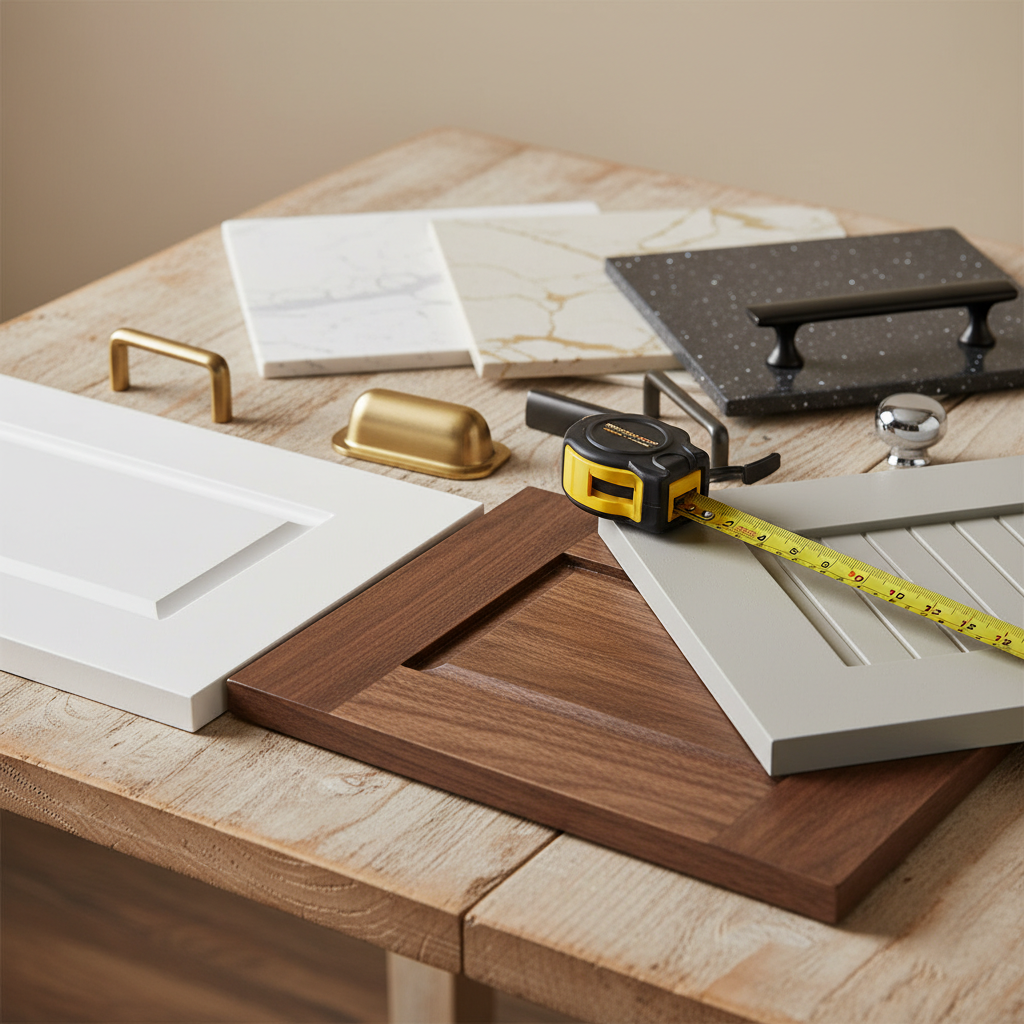
5) Selections & Specifications
- Cabinet boxes: melamine vs. plywood (we manufacture both); choose based on durability and budget priorities.
- Door style & finish: MDF painted or prelaminated; Altima backs both with lifetime warranties on doors.
- Countertops: engineered quartz thickness (2 cm vs. 3 cm); overhangs typically 1–1.5 inches; verify support at spans.
- Backsplash: full-height slab vs. tile; grout lines, edge trims, and outlets alignment.
- Appliances: confirm cutouts, ventilation CFM, and electrical/gas requirements from spec sheets.
Factory-direct cabinetry means tighter tolerances. We convert selections into production drawings before the first sheet is cut on our Italian CNC line.
6) Engineering & Permits
- Structural: if removing a wall or adding an opening, engage an engineer.
- Permits: check with Brampton/Toronto authorities for structural and electrical work.
- Condo approvals: booking elevator, protection mats, working hours, debris rules.
- Vent/exhaust: route to exterior where possible; verify makeup air rules if required.
Booking inspections to coincide with rough-ins avoids idle days. We align our schedule with the inspector’s earliest window.
7) Ordering & Logistics
- Sequence orders: cabinets first, then hardware, sinks/faucets, tile, and lighting.
- Verify quantities with 5–10% overage for tile and flooring to cover cuts.
- Delivery path: measure stairwells and doors for appliance and countertop access.
- Staging: designate a dry, level area for cabinets; acclimate flooring per manufacturer specs.
We provide itemized quotes with upgrade paths, so you can prioritize what matters most without scope creep mid-project.
8) Demolition & Rough-Ins
- Protection: floor coverings, zipper walls, return grille filters.
- Demolition: remove cabinets, counters, backsplash, soffits, flooring as specified.
- Framing: adjust openings; straighten walls where needed; add blocking for floating shelves.
- Rough-ins: plumbing, electrical, ventilation aligned to cabinet plan within 1/4 inch.
Electrical AFCI/GFCI requirements evolve. We coordinate with licensed electricians to meet current code while preserving your layout intent.
9) Installation: Cabinets, Counters, Backsplash
- Cabinets: start level line, hang boxes, shim to plumb, secure with proper fasteners to studs.
- Counters: template after base install; quartz installs typically occur within 1–2 weeks after templating depending on queue.
- Backsplash: align with counter seams and outlets; plan edge terminations neatly at window returns.
- Lighting: install under-cabinet LEDs; aim for CRI 90+ and 3000–3500K for true color rendering.
Our state-of-the-art spray booth achieves consistent sheen across doors and panels, which matters under bright task lighting.
10) Finishing, Commissioning & Handover
- Finishes: paint touchups, trim, toe-kicks, fillers, and caulking.
- Commissioning: verify appliance function, door alignment, and soft-close action.
- Documentation: care guides for quartz, hinges, and lighting; warranty packet.
- Walkthrough: create a single punch list and close it within the agreed window.
We schedule your final walkthrough once all accessories are installed and adjusted, so you see the true finished result.

Troubleshooting
When renovations wobble, isolate the root cause fast: clarify the decision owner, verify the drawing, and check lead times. Create a 48-hour action plan with responsible parties and re-sequence tasks to keep trades productive while you await parts or approvals.
Common Issues We See (and Fix)
- Appliance spec changes mid-stream
- Impact: cabinet cutouts and electrical may no longer fit.
- Fix: lock SKUs at 3D sign-off; if a change is unavoidable, issue a revision drawing before site work resumes.
- Out-of-plumb or out-of-square walls
- Impact: door reveals look uneven; fillers don’t align.
- Fix: add shims, scribe panels, or adjust fillers; we plan 1–2 inch fillers at critical ends to allow perfect scribing.
- Countertop schedule bottlenecks
- Impact: backsplash and plumbing get delayed.
- Fix: book templating the day cabinets pass level/plumb check; confirm sink model is on site for the template.
- Permit or inspection timing
- Impact: rough-ins can’t close, pushing cabinet install.
- Fix: pre-schedule inspections in the same week as rough-ins; keep photos and as-builts ready for the inspector.
- Condo logistics
- Impact: elevator bookings and working-hour limits compress productive time.
- Fix: stage materials off-site; deliver in waves; plan noisy work within permitted windows.
Rapid Response Playbook
- 48-hour plan: define the issue, owner, deliverables, and exact deadline.
- Trade matrix: who’s blocked? Can painting or floor prep proceed meanwhile?
- Supplier ETA check: verify tracking, escalate if needed, confirm alternates.
- Daily huddle: 10-minute updates until the schedule is back on baseline.
In our experience, transparent updates (we often use WhatsApp) reduce stress and help everyone focus on solutions.
Advanced Tips
To upgrade results, design for zones, integrate lighting layers, and use factory-direct precision. Lock accessory placements in drawings, and verify ergonomics with blue tape mockups before ordering. These expert moves eliminate guesswork and elevate daily usability.
Design for Zones, Not Just Triangle
- Prep zone: sink, knives, cutting boards, trash within 48 inches.
- Cooking zone: cookware drawers near range; spices in a 3–6 inch pull-out beside cooktop.
- Beverage zone: fridge drawers or a bar area keeps traffic out of cooking flow.
- Baking zone: tray dividers and mixer lift in a base cabinet; outlets inside.
Work triangles are useful, but zones reflect how families actually move. We map zones in 3D and label interior accessories on drawings.
Lighting Layers That Work
- Ambient: recessed or flush-mount at 3000–3500K across the room.
- Task: under-cabinet LEDs at 400–800 lumens/ft; CRI 90+ improves color accuracy.
- Accent: inside glass cabinets or toe-kick lighting for depth and safety.
- Controls: dimmers and 3-way switches; plan circuits early in rough-in drawings.
We frequently specify 2–3 circuits so you can adjust scenes for cooking, dining, or late-night cleanup.
Mock It Up Before You Buy
- Blue tape: outline island footprint and appliance door swings on your floor.
- Cardboard: simulate tall pantries to test visual bulk at entries.
- Ergonomics: check reach to upper shelves; 84–90 inch tops suit many 8–9 foot ceilings with crown.
Clients are amazed how a 2 inch island shift improves aisle comfort. Small tweaks now prevent daily annoyances later.
Mid-Project Checklist (Print-Friendly)
- 3D design signed and dated
- Appliance SKUs locked and on order
- Cabinet production drawings approved
- Rough-in plan issued to trades
- Countertop template date scheduled
- Backsplash layout approved (with outlet plan)
- Lighting spec confirmed (Kelvin, CRI, dimming)
- Final paint colors listed and labeled
Troubleshooting Scenarios (Real GTA Examples)
Real projects face real constraints. Resolve them by validating drawings, communicating with suppliers, and re-sequencing tasks. These brief GTA scenarios show how a methodical response protects timelines without compromising finish quality.
- Wall not straight behind a new range hood
- Action: float the wall and scribe panels; re-check hood centerline with a laser before drilling anchors.
- Result: consistent reveals and plumb hood install on the first attempt.
- Countertop delivery delayed by a week
- Action: install toe-kicks, fillers, and paint while waiting; book backsplash crew for day after counters arrive.
- Result: zero idle crew days; overall handover stays on the same week.
- Condo board restricts noisy work to 10 a.m.–3 p.m.
- Action: pre-cut trim off-site; batch hammer-drilling; schedule quieter tasks for afternoons.
- Result: full-day productivity while complying with building rules.
Process Map: Who Does What
Clarity speeds projects. Homeowners approve designs and selections; our team measures, engineers, manufactures, and installs. Trades follow issued drawings and report variances immediately. This table shows typical responsibilities in a GTA kitchen renovation.
| Phase | Altima | Homeowner |
|---|---|---|
| Measure & 2D | On-site measure, draft layouts | Provide access, goals, inspo |
| 3D & Specs | 3D renders, finalize SKUs | Approve finishes, appliances |
| Permits | Provide drawings; coordinate ENG | Sign forms; condo bookings |
| Manufacture | CNC cut, finish, QC | Clear staging space |
| Install | Cabinets, counters, backsplash | Approve milestones; punch list |
Soft Consultation Invite
Want eyes on your plan? Book a design consult with our in-house team. We’ll review goals, produce 2D/3D options, and suggest factory-direct cabinetry choices that fit your priorities—without slowing your timeline.
Explore our perspective in this GTA-focused primer on achieving a stunning and efficient kitchen.
FAQ
Homeowners ask about timelines, permits, layouts, and materials. The short answers: plan thoroughly, measure carefully, visualize in 3D, lock decisions, and stage logistics. A disciplined process keeps kitchen projects predictable across the GTA.
How do I start planning my kitchen renovation?
Begin with goals and measurements. List must-haves, photograph your space, and capture utilities. Meet a design-build team to translate needs into 2D options, then validate everything in 3D. Lock appliance SKUs early and sequence work from demolition to finishes. This framework prevents rework and keeps trades aligned.
What layout rules should I follow?
Maintain 42–48 inch work aisles, keep walkways at least 36 inches, and ensure landing areas beside major appliances. Use zones—prep, cooking, storage, cleanup—so daily tasks flow logically. Verify door swings and clearances in 3D. These NKBA-based guidelines reduce collisions and make kitchens easier to live in.
Do I need permits for my project?
If you’re removing walls, altering structure, or changing electrical/plumbing, you’ll likely need permits. In Brampton/Toronto, combine engineering drawings with your permit application. Book inspections to align with rough-ins so cabinets aren’t delayed. Condos add approvals, elevator bookings, and working-hour limits—plan those early.
Which materials hold up best in busy kitchens?
Engineered quartz countertops are popular for durability and easy maintenance. For cabinet boxes, melamine and plywood are both reliable—choose based on priorities. We offer MDF painted or prelaminated doors with lifetime warranties, plus accessories like pull-out pantries and lazy susans for organization and daily convenience.
How long does a typical kitchen renovation take?
Timelines vary by scope and approvals. A disciplined plan can move from measure to installation in weeks, but structural changes and condo approvals extend schedules. The biggest accelerators are fast decisions, early ordering of long-lead items, and 3D sign-offs that eliminate field changes. We’ll map your milestones at kickoff.
Conclusion
Great kitchens are designed on paper first. Define goals, measure precisely, validate decisions in 3D, and stage logistics before demo. This plan-first rhythm shortens timelines, preserves quality, and makes daily life easier the moment you start cooking again.
Key Takeaways
- Plan on paper: 2D→3D→production drawings prevents expensive field changes.
- Protect clearances: 42–48 inch work aisles; verify door swings in 3D.
- Order early: book templating and inspections to avoid idle days.
- Design for zones: prep, cook, clean, store—then add accessories to match.
- Leverage a one-stop team: design, factory, and install under one roof keeps accountability clear.
Ready to move from ideas to drawings? Our end-to-end team in Brampton builds to your exact specs—backed by Italian CNC manufacturing and lifetime door warranties. See how we structure full-home timelines in our complete renovation guide, and get organized with our notes on detailed project planning.
Additional Resources
Use showrooms, samples, and 3D previews to make confident choices. Bring photos and rough measurements to accelerate concept designs, then refine accessories and lighting with tactile samples. Local, in-person reviews reduce risk.
- Visit our GTA showroom to review door styles, quartz slabs, hardware, and lighting options together.
- Ask for 2D/3D iterations until sightlines, clearances, and door swings feel right.
- Request care guides for quartz, hinges, and LED lighting to protect finishes from day one.
Book a Design Session in Brampton
Meet us at 11 Edvac Drive to walk through your plan, review 3D options, and align your renovation milestones. We’ll coordinate design, factory production, and installation so your kitchen turns out exactly as imagined.
Related Posts
Why Choose Kitchen Renovation Company
Nowadays, Kitchen spaces are not only a place for cooking and serving food, but these areas act as a statement, as they speak a lot about a family, the philosophy and personality of individuals, and spaces. If you admire aesthetics and adorn the beauty of your home, you must pay attention to the interior design […]
How a Kitchen Renovation Contractor is Changing the Game
Lifestyle is all about bringing something coherent to the overall experience of living. The kitchen and closets stand as two of the most influential spaces in a home that add to the overall experience of living. A Kitchen Renovation Contractor in Whitby by the name of Altima Kitchen and Closets Inc. is changing the overall […]
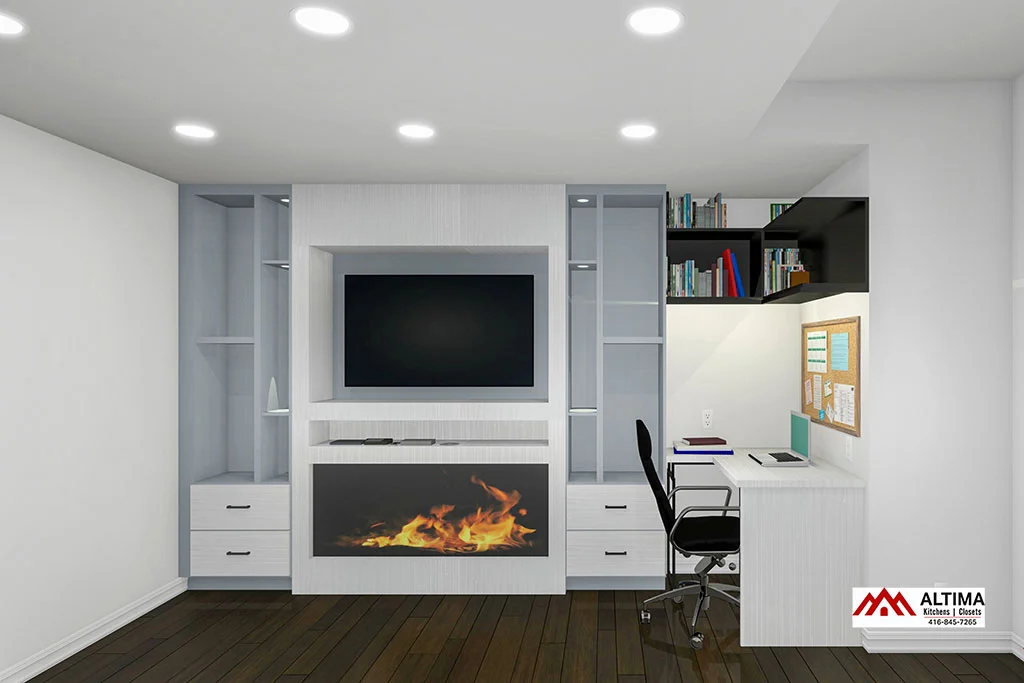
How Media unit contractor in Whitby is Changing the Game
Lifestyle is all about bringing something coherent to the overall experience of living. The kitchen and closets stand as two of the most influential spaces in a home that add to the overall experience of living. A Media Unit Company in Whitby by the name of Altima Kitchen and Closets Inc. is changing the overall […]