Custom Media Units: How to Choose the Right TV Wall and Storage Design
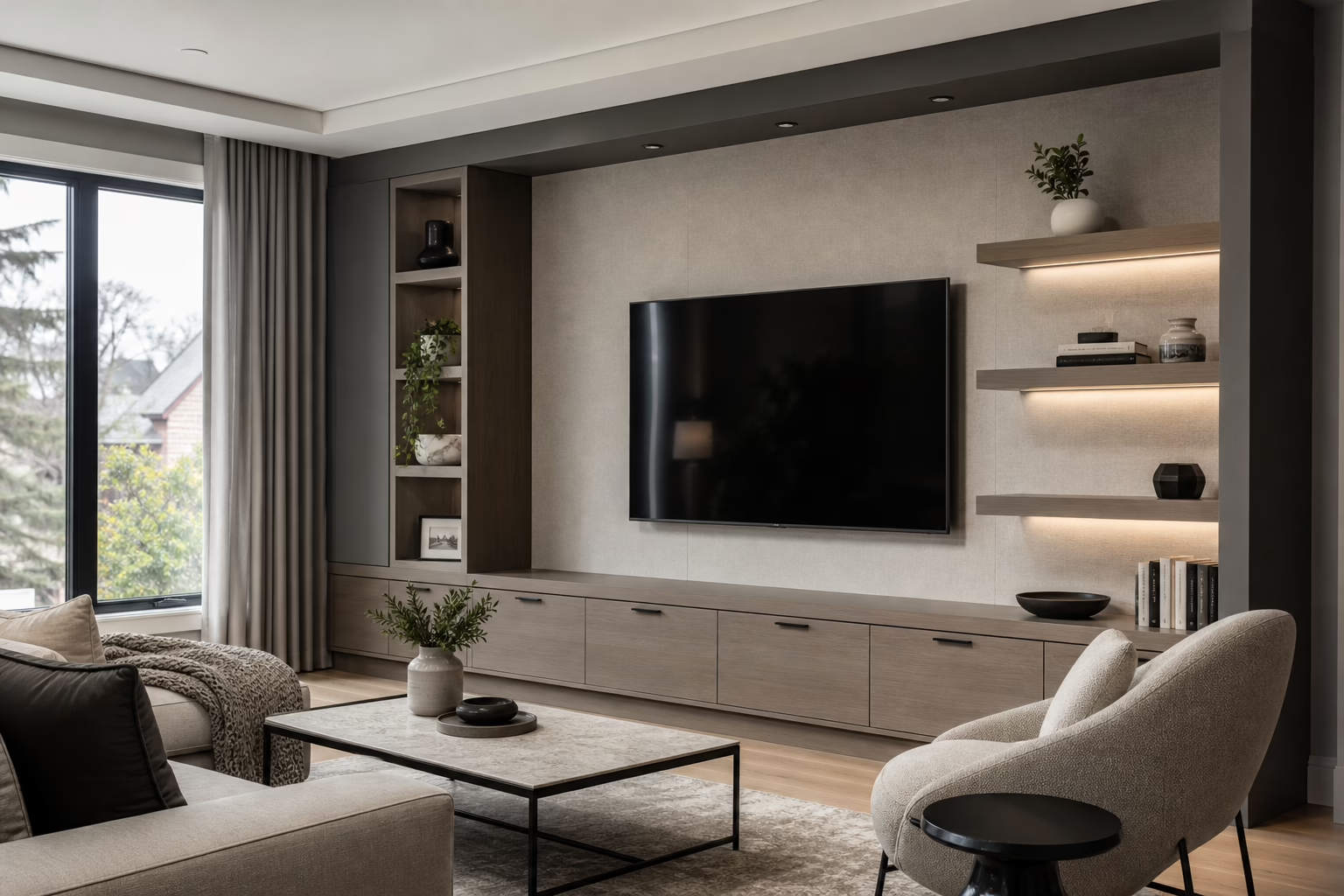
Custom media units are usually the better choice when a standard entertainment centre cannot use your wall efficiently, accommodate your storage needs, or match the rest of your room. A tailored design can bring together a TV unit, display areas, concealed storage, and built-in cabinetry in proportions suited to your space.
The right decision is not simply about making the television look attractive. You also need to consider how the room is used, what must be stored, which items should remain visible, the finishes that suit your home, and how delivery and installation will be handled.
Custom Media Units or Ready-Made Furniture: Which Fits Your Room?
Ready-made furniture can be practical when your wall has standard dimensions, your storage needs are simple, and you want a solution that can be moved or replaced easily. It may also suit a temporary space or a project where you want to keep the planning process straightforward.
Custom media units make more sense when the available wall is unusually wide, narrow, tall, or shaped around other features. They are also useful when you want the TV, storage, display areas, and surrounding cabinetry to feel like one coordinated design rather than separate pieces.
| Decision | Ready-made entertainment centre | Custom media unit |
|---|---|---|
| Fit | Limited to available product sizes | Planned around the room and wall dimensions |
| Storage | Uses a fixed combination of shelves and compartments | Can be discussed around the items you actually need to store |
| Appearance | Based on the manufacturer’s design | Can be coordinated with the room’s colours, materials, and cabinetry |
| Flexibility | Usually easier to move or replace | More closely tied to the room and installation plan |
| Process | Usually selected and assembled with limited design work | Requires consultation, design decisions, fabrication, delivery, and installation |
There is no universal winner. The better option depends on whether your priority is portability and simplicity or a tailored result that makes better use of the room.
Choose the Right Media Unit Layout

Before choosing colours or door styles, decide how much of the wall you want the media unit to occupy. A full built-in media wall creates a stronger architectural presence and can visually connect the television with surrounding storage. A lower TV unit with selected shelving generally creates a lighter composition, while a more open arrangement gives display items greater prominence.
Full built-in media wall
This approach can suit homeowners who want the television area to become a central feature of the room. It may include a combination of lower cabinets, vertical sections, and open or closed areas. The important question is whether you want the wall to read as one substantial feature or as a collection of individual storage pieces.
Lower TV unit with shelving
A lower unit can provide a defined base for the television while leaving more wall area visually open. Additional shelves or cabinets can be positioned around it according to the room’s proportions. This direction may suit spaces where you want storage without making the entire wall feel enclosed.
Open and closed storage combination
Open sections are useful for items you want to display, such as books, artwork, or décor. Closed cabinets create a calmer appearance by keeping selected items out of sight. Combining both types can prevent the unit from becoming either too visually busy or too plain.
Altima Kitchens And Closets describes its service as fully customized, with a range of styles, colours, and materials available for media units. Readers comparing options can explore fully customized media units to see how those choices can be discussed around a particular space.
Plan Storage Around How the Room Is Used
The television is only one part of the design. Make a list of everything the unit may need to hold, including media components, books, games, remotes, décor, files, children’s items, or everyday living-room belongings. Separate items that need frequent access from those that can be stored behind doors.
Consider how the room looks when it is being used and when it is tidy. If every shelf is filled with small items, an entirely open design may feel cluttered. If you want to display collections or decorative objects, a design with no open sections may not provide the flexibility you need.
Also think about future changes. Equipment may be replaced, storage habits may evolve, and furniture may move. Discuss which areas need adaptable storage and which can be designed around fixed objects.
Select Materials, Colours, and Finishes
Media units often sit beside flooring, sofas, wall colour, windows, and other cabinetry, so the finish should be considered as part of the room rather than in isolation. A contrasting finish can make the TV wall a focal point, while a coordinated finish can help it blend into the wider interior.
Ask how each selected material and colour will be used across doors, open shelves, panels, and surrounding sections. A finish that looks appealing on a small sample may create a different impression across a large wall. Compare samples in the room’s natural and artificial light where possible.
It is also worth discussing maintenance and everyday use. High-contact doors, open shelves, and lower cabinets may experience different levels of wear. Ask which surfaces are intended for each application and what care the manufacturer or installer recommends.
Prepare Measurements and Equipment Details Before Design
Useful preparation makes the consultation more productive, but homeowner measurements should not replace professional site verification. Bring or record the following information:
- The wall’s approximate width and height, including baseboards, doors, windows, and nearby corners.
- The television’s overall dimensions, not just the screen size.
- The dimensions of components, consoles, speakers, game systems, or other equipment that must be accommodated.
- The items you want displayed, concealed, or kept within easy reach.
- Your preferred viewing position and the furniture arrangement in front of the unit.
- Photographs of the wall and access route, including stairs, elevators, narrow hallways, or condo entry restrictions.
- Any existing finishes or nearby cabinetry that the new unit should complement.
Ask the designer to verify site conditions and explain what is included in the proposed design. This is especially important when the unit must work around existing construction or when access could affect delivery and installation.
What to Confirm About Delivery, Installation, and the Quote
A design can look clear while the project scope remains incomplete. Before approving a quote, confirm the selected materials, dimensions, finish schedule, storage components, design revisions, delivery arrangements, and professional installation. Ask whether preparation, removal of existing furniture, or disposal is included or excluded.
Request an itemized quote that distinguishes the base scope from upgrades or optional selections. Confirm payment milestones, the process for approving changes, and how additional work will be documented before it begins. If the project has a target installation window, ask how dates and arrival arrangements will be communicated.
Altima Kitchens And Closets states that its media-unit service includes delivery and professional installation. Its broader business information also describes in-house design and installation and custom cabinetry, but you should still ask for the exact scope, responsibilities, and applicable terms for your own project.
Do not assume that a general cabinet warranty automatically applies to every part of a media unit. Ask which products or door types are covered, for how long, and whether installation or hardware has separate terms.
When to Coordinate a Media Unit With a Larger Renovation
A media unit should be planned alongside a broader renovation when it affects connected finishes or when several parts of the room will change at once. Flooring, wall treatments, nearby cabinetry, furniture placement, and room proportions can all influence the final design.
Coordinating the work early can reduce the need to make isolated decisions with separate vendors. It also gives you an opportunity to discuss how the media unit should relate to adjacent spaces instead of treating it as an afterthought.
When a media unit is part of a larger remodel, full home renovations can provide a broader planning and project-management framework for connected spaces. The appropriate scope will depend on the rooms involved and the work your home requires.
Custom Media Unit Consultation Checklist
Use this checklist before contacting a provider or visiting a showroom:
- Decide whether you prefer a full media wall, a lower TV unit, open shelving, closed storage, or a combination.
- List the equipment, books, décor, games, and everyday items the unit must hold.
- Record the television’s complete dimensions and the dimensions of larger components.
- Take approximate wall measurements and photographs, while expecting the provider to verify the site.
- Collect examples of preferred styles, colours, materials, and related cabinetry.
- Note access restrictions, condo requirements, stairs, elevators, and parking or delivery considerations.
- Ask for design revisions, an itemized quote, upgrade pricing, delivery details, and professional installation scope.
- Confirm exclusions, payment stages, change-order procedures, and applicable warranty terms.
Frequently Asked Questions
Are custom media units better than ready-made entertainment centres?
They are better when precise fit, coordinated appearance, or purpose-specific storage matters more than portability and simplicity. Ready-made furniture may be sufficient for a standard wall and straightforward storage needs.
Can a custom media unit be designed for a condo or small living room?
Yes, a custom approach can be considered for smaller or irregular spaces because the design is developed around the available wall and the room’s use. Discuss measurements, access restrictions, building requirements, and the amount of storage you actually need before selecting a layout.
What information should I bring when requesting a media-unit quote?
Bring television and equipment dimensions, approximate wall measurements, photographs, a storage list, preferred finishes, and details about access to the installation area. Also explain which parts of the design are essential and which are optional.
Does Altima provide delivery and professional installation for custom media units?
Yes. Altima’s media-unit service information states that delivery and professional installation are included among its end-to-end services. Confirm the precise installation scope and site requirements in your project quote.
Can media units be used in commercial spaces as well as homes?
They can be considered for both residential and commercial settings. The design discussion should account for the space’s purpose, traffic, storage needs, finishes, access, and installation requirements.
Can a media unit be coordinated with a larger home renovation?
Yes. When flooring, wall finishes, cabinetry, or several rooms are changing, discuss the media unit during the broader renovation planning stage. This helps the design account for connected spaces and the overall scope.
Conclusion: Choose the Design That Fits the Room and Your Routine
The best custom media unit begins with how you use the room, not with a picture of a finished TV wall. Decide what needs to be displayed or concealed, compare built-in and more open layouts, then select materials and colours that work with the surrounding interior.
Before requesting a quote, prepare your equipment details, storage list, approximate measurements, access information, and preferred design direction. Confirm the itemized scope, delivery, professional installation, payment stages, changes, exclusions, and applicable warranty terms before work begins.
For homeowners in Brampton and across the GTA, Altima Kitchens And Closets provides customized media units with design, delivery, and professional installation services. A consultation can help determine whether a tailored TV unit or media wall suits your room and renovation plans.
Related Posts
Why Choose Kitchen Renovation Company
Nowadays, Kitchen spaces are not only a place for cooking and serving food, but these areas act as a statement, as they speak a lot about a family, the philosophy and personality of individuals, and spaces. If you admire aesthetics and adorn the beauty of your home, you must pay attention to the interior design […]
How a Kitchen Renovation Contractor is Changing the Game
Lifestyle is all about bringing something coherent to the overall experience of living. The kitchen and closets stand as two of the most influential spaces in a home that add to the overall experience of living. A Kitchen Renovation Contractor in Whitby by the name of Altima Kitchen and Closets Inc. is changing the overall […]
How Media unit contractor in Whitby is Changing the Game
Lifestyle is all about bringing something coherent to the overall experience of living. The kitchen and closets stand as two of the most influential spaces in a home that add to the overall experience of living. A Media Unit Company in Whitby by the name of Altima Kitchen and Closets Inc. is changing the overall […]