High-Quality Cabinets Compared, Stock vs Semi-Custom vs Custom
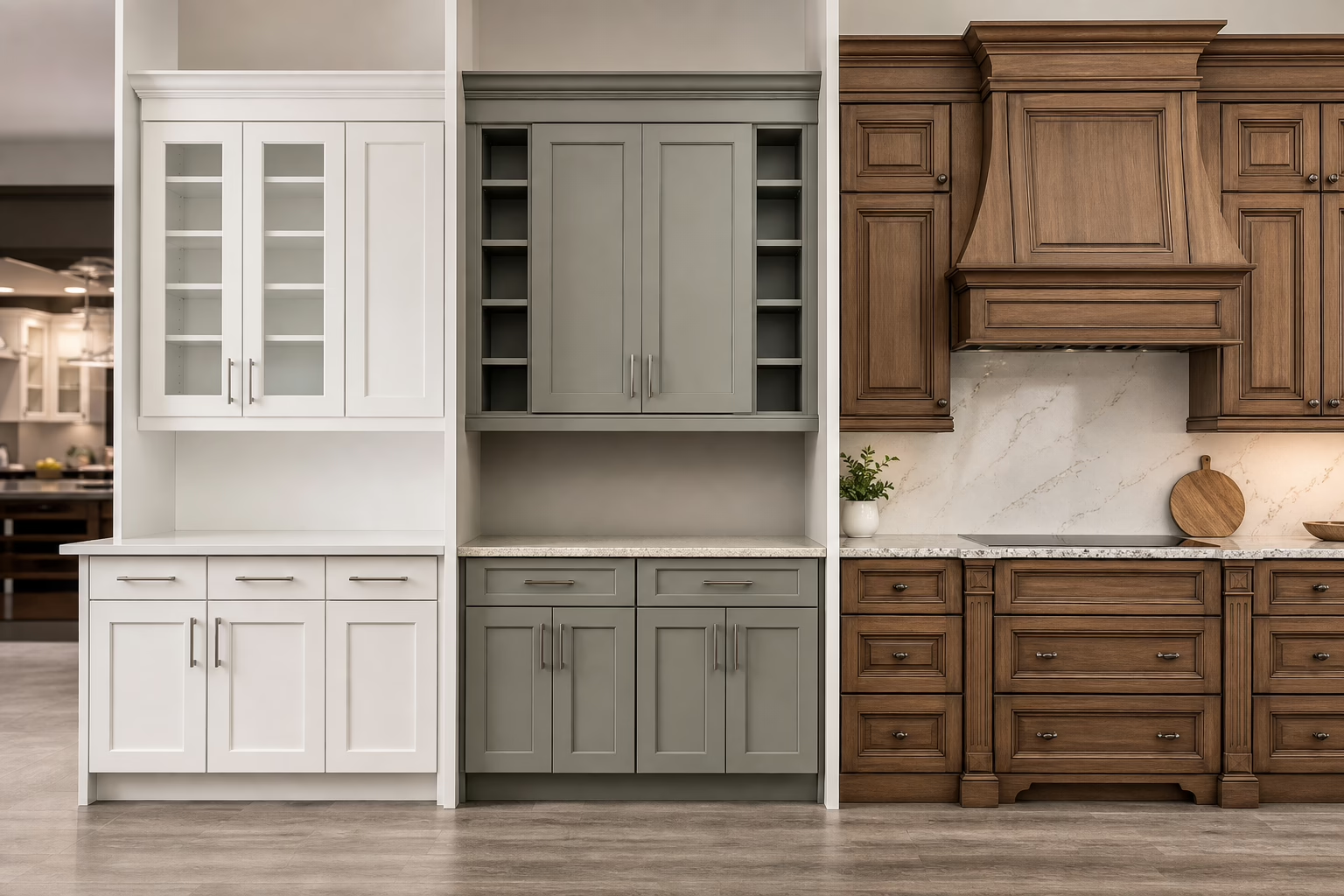
Choosing high-quality cabinets means looking past the door. The visible finish is important, but longevity and function come from the cabinet box, drawer joinery, hardware, shelving, and factory finishing. This article compares stock, semi-custom, and custom options, explains the hidden build details that matter most, offers an inspection checklist you can take to a showroom, and lists exact questions to ask manufacturers and installers. Use these steps to compare quotes, verify warranties, and choose cabinets built to perform in daily life.
Quick comparison, when to pick stock, semi-custom, or custom
Cabinetry is delivered in three common tiers. Each tier offers a different balance of cost, lead time, and control over materials and fit. Match the choice to your budget and layout complexity.
Stock, who it suits
- What it is: Prebuilt modules in limited sizes, short lead times.
- Pros: Lowest initial cost, quick availability.
- Cons: Fewer size and finish options, limited joinery and hardware upgrades.
- When to pick: Simple layouts, tight budgets, or rental property updates.
Semi-custom, best compromise
- What it is: Modifiable modules with more door styles and select upgrades.
- Pros: Better fit for unusual layouts, mid-range price, accessible quality upgrades.
- Cons: Some constraints on widths, heights, and finishes remain.
- When to pick: When you want a balance between cost and a tailored fit for your footprint.
Custom, when to invest
- What it is: Built-to-measure cabinets with the broadest material, joinery, and finish choices.
- Pros: Exact fit, highest workmanship options, best for complicated layouts or integrated solutions.
- Cons: Highest cost and usually longer lead times.
- When to pick: Irregular walls, full remodels with structural changes, or when long-term durability is the priority.
Hidden construction features that determine long-term quality
High-quality cabinets are built to perform, not just to look good. The real differences are usually hidden inside the box. Focus on five structural elements when comparing suppliers: box construction, back fitting, shelf strength, drawer joinery, and countertop supports.
Box construction – plywood vs MDF vs particleboard
Quality boxes are commonly built from 3/4-inch furniture-grade plywood on the sides and bottom, with a 1/2-inch plywood back that is dadoed into the sides. Plywood resists sag, holds fasteners better than particleboard, and provides superior moisture resistance compared with lower-grade engineered panels. That makes plywood-based boxes a solid choice in kitchens where humidity and load matter.
Drawer joinery – dovetail vs stapled
High-quality drawers often use solid wood or plywood sides with dovetail joinery and bottoms set in grooves on all four sides. These joints resist separation under load and frequent use. Lower-cost drawers may use staples or screws into particleboard, which can fail sooner with heavy use.
Shelf and back assembly
Look for fixed shelves made from plywood or thick engineered panels, with adjustable shelving supported by steel pins in reinforced holes. A back panel dadoed into the sides increases rigidity and prevents racking. These details influence how a cabinet holds up under everyday loads and shifting over years of use.
Hardware, fittings, and functional tests to run in a showroom
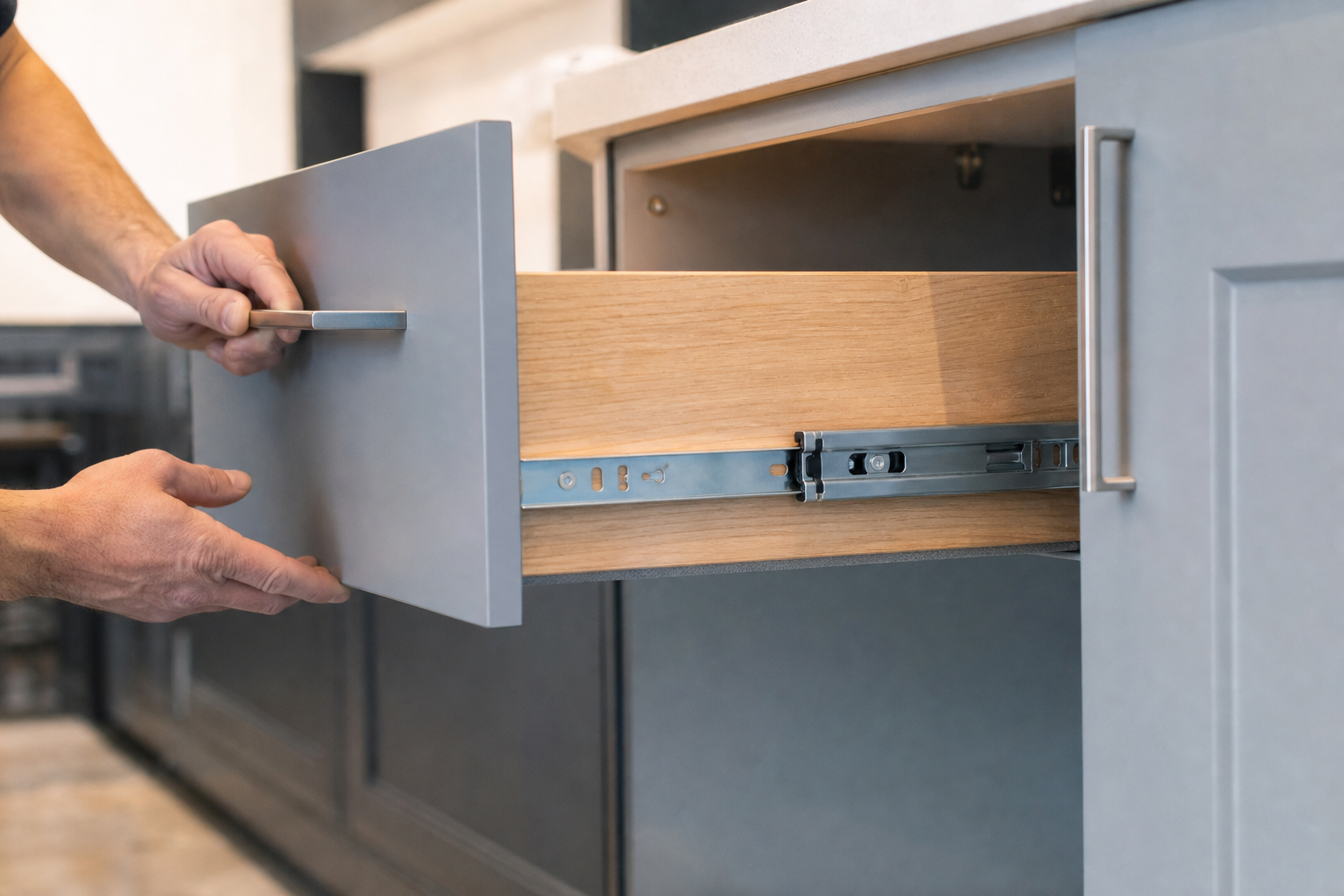
Hardware makes daily use smooth and marks the difference between cabinets that feel premium and those that do not. Run these quick tests, which take two minutes but reveal build quality.
What to open, pull, and press
- Open and close every drawer, checking for full-extension action and even, quiet movement. Full-extension metal slides are preferable for access.
- Press the drawer bottom in the center and at the corners, watching for visible flex. Bottoms set in grooves on all four sides are stronger.
- Open cabinet doors, feel for smooth soft-close action on hinges, and check alignment so gaps are even across the run.
- Apply a firm pull to a closed drawer to see if slides disengage or feel loose. Wiggle the cabinet sides to detect play in the box, which signals weaker construction.
Brands and specs to look for
- Full-extension side-mount or under-mount drawer slides with manufacturer weight ratings.
- Soft-close hinges rated to thousands of cycles by the supplier.
- Steel shelf supports rather than plastic pins for repeated adjustments.
Finishes, paint, edge banding, and factory finishing quality
Finishes are both functional and aesthetic. A smooth, even factory finish resists discoloration and chipping. Factory spray finishing tends to be more consistent than on-site paint, and professional spray booths improve cure and coating durability. If a supplier references a dedicated spray booth and controlled finishing process, that is a sign of production standards you can trust.
Painted vs pre-laminated doors
Painted MDF doors can offer a seamless, smooth look when sprayed in a professional booth. Prelaminated or thermofoil doors provide consistent surfaces and low maintenance, but edges can chip if not properly applied. Manufacturers that offer warranty coverage on specific door types make clear the expected performance of their finishes and manufacturing process.
Why CNC and spray booths matter
Factory CNC machining ensures repeatable edge profiles and precise door fits, reducing on-site trimming and alignment issues. A professional spray booth improves finish consistency and cure time, which reduces visible flaws and improves scratch resistance compared with informal finishing. When a supplier lists CNC machinery and a spray booth as part of production, expect tighter tolerances and cleaner finishes.
Real objections homeowners raise, how to handle them, and decision criteria
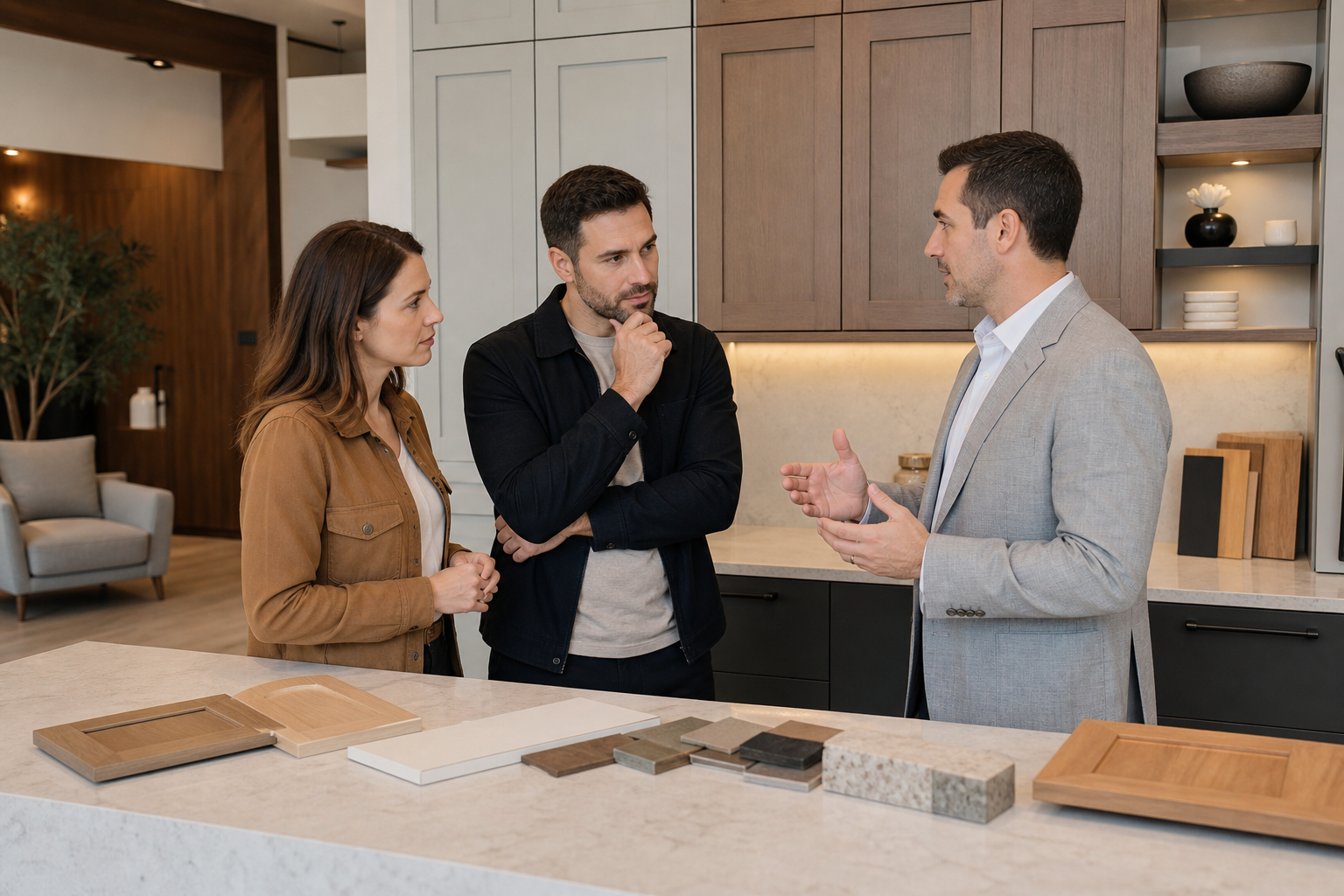
Below are common concerns and practical ways to evaluate trade-offs without compromising core build quality.
- It is too expensive. Focus spending on the box construction, drawer joinery, and hardware. Save on decorative upgrades rather than cutting structural components that affect longevity.
- Lead time is too long. Ask for a written schedule with milestones, confirmation for any long-lead hardware, and a clear plan for delays. A factory-direct builder can often manage lead times more tightly because they control production.
- Warranties vary. Insist on written warranty terms that specify coverage for defects in materials and workmanship, and request examples of warranty claims and resolution procedures.
Decision criteria to apply when comparing quotes include minimum box materials, drawer joinery type, slide and hinge brand, finish method, and warranty duration. Use these structural criteria to avoid being seduced solely by surface appearance.
Why consider a Brampton factory-direct builder, and what to check locally
Working with a local, factory-direct builder in the GTA gives you in-house control over manufacturing, faster access to samples, and clearer accountability. If a company operates a showroom and factory, request a tour or photos of the production line and finished samples. Local factory-direct firms that list manufacturing capabilities and warranties can reduce coordination problems you would otherwise face with separate designers and cabinetmakers.
What to request from a local supplier
- Ask to see the factory or a virtual tour to confirm production capacity and finish processes.
- Request 2D and 3D design previews to confirm fit, reveal tolerances, and visualize finish choices before production.
- Get written warranty terms and ask for a sample warranty claim process to understand post-install support.
For local homeowners, suppliers that mention in-house CNC machinery, professional spray booths, lifetime warranties on specified door types, and flexible financing provide practical advantages you can verify during a showroom visit. To review a local pricing and estimate process, see the supplier pricing guide linked below.
Custom Cabinet Pricing: Save Money Without Guesswork
Inspection checklist and exact questions to ask during a showroom visit or estimate
Bring this checklist and the exact questions below to every showroom or site visit. Ask for written confirmation of the supplier’s answers.
Two-minute showroom tests
- Open and fully extend drawers, check for smooth, full-extension action and minimal sag.
- Inspect a drawer cutaway or sample to confirm dovetail joinery and bottom set in grooves.
- Check cabinet backs to see whether they are fitted into dados or simply stapled on.
- Press cabinet surfaces and edges to detect hollow spots or peeling edge banding.
- Observe finish quality under bright light for runs or orange peel texture.
Exact questions to ask
- What is the cabinet box material and thickness, and can I see a sample?
- Do your drawers use dovetail joinery or another method? Can I see a cutaway or photo?
- What brand and model are the drawer slides and hinges, and what are their load ratings?
- How is the back panel attached, and is it dadoed into the sides?
- Are finishes done in a factory spray booth, and what finish warranty do you provide?
- Do you offer 2D and 3D drawings, and how do you manage design changes and additional costs?
- Can I get the full warranty in writing and examples of how you handle warranty claims?
Documentation and sample inspection are the most reliable ways to confirm quality before you commit. Bring this checklist to two different suppliers so you can compare itemized quotes and construction details side by side.
Next steps
Use the inspection checklist at two showroom visits, request itemized quotes that list box materials, joinery, hardware brands, finish methods, and warranty wording, and schedule a factory tour or virtual walkthrough when possible. Compare written quotes and ask to see sample doors, drawer cutaways, and finish samples before you sign. For pricing transparency and to review financing options, consult the supplier pricing guide and request a clear schedule of milestones for production and installation.
Frequently Asked Questions
What cabinet box material will last longest in a kitchen, plywood or MDF?
Plywood is generally preferred for cabinet boxes because it resists sag, holds fasteners better, and handles moisture more reliably than particleboard or lower grade engineered panels. MDF and plywood are commonly used for visible door faces and painted finishes, but plywood boxes are an industry-recommended choice for long-term durability.
How can I quickly test drawer and hinge quality during a showroom visit?
Open and fully extend drawers to check for full-extension slides and smooth motion. Press the drawer bottom and watch for flex. Close doors slowly to test soft-close hinges for quiet, controlled action. Ask the salesperson for the hardware brand and model to verify ratings if needed.
Is custom cabinetry always worth the extra cost compared with semi-custom?
Custom cabinetry is worth the cost when you need an exact fit, complex built-ins, or specific material and joinery choices that extend longevity. Semi-custom can be an excellent compromise that offers better materials and some tailored sizes at lower cost. The right choice depends on layout complexity, how long you expect to keep the kitchen, and where you are willing to accept trade-offs.
What warranty items should be non-negotiable on a new kitchen cabinet contract?
Insist on written coverage for material defects, workmanship, and finish flaws with clear duration and claim procedures. Confirm what is covered for painted and prelaminated doors and whether on-site labor for warranty repairs is included.
Does factory-direct cabinetry in Brampton typically reduce cost or lead time?
Factory-direct cabinetry can reduce coordination costs, improve lead-time control, and make it easier to verify finish and construction quality because production and showrooms are under the same roof. Request a factory tour or photos and a written production schedule to confirm how the local supplier manages lead times and quality checks.
Ready to compare samples, review itemized pricing, and tour the factory? Book a free estimate or showroom visit with Altima Kitchens And Closets.
Related Posts
Why Choose Kitchen Renovation Company
Nowadays, Kitchen spaces are not only a place for cooking and serving food, but these areas act as a statement, as they speak a lot about a family, the philosophy and personality of individuals, and spaces. If you admire aesthetics and adorn the beauty of your home, you must pay attention to the interior design […]
How a Kitchen Renovation Contractor is Changing the Game
Lifestyle is all about bringing something coherent to the overall experience of living. The kitchen and closets stand as two of the most influential spaces in a home that add to the overall experience of living. A Kitchen Renovation Contractor in Whitby by the name of Altima Kitchen and Closets Inc. is changing the overall […]
How Media unit contractor in Whitby is Changing the Game
Lifestyle is all about bringing something coherent to the overall experience of living. The kitchen and closets stand as two of the most influential spaces in a home that add to the overall experience of living. A Media Unit Company in Whitby by the name of Altima Kitchen and Closets Inc. is changing the overall […]