Bathroom Vanity Design Trends 2026: Save Space and Style
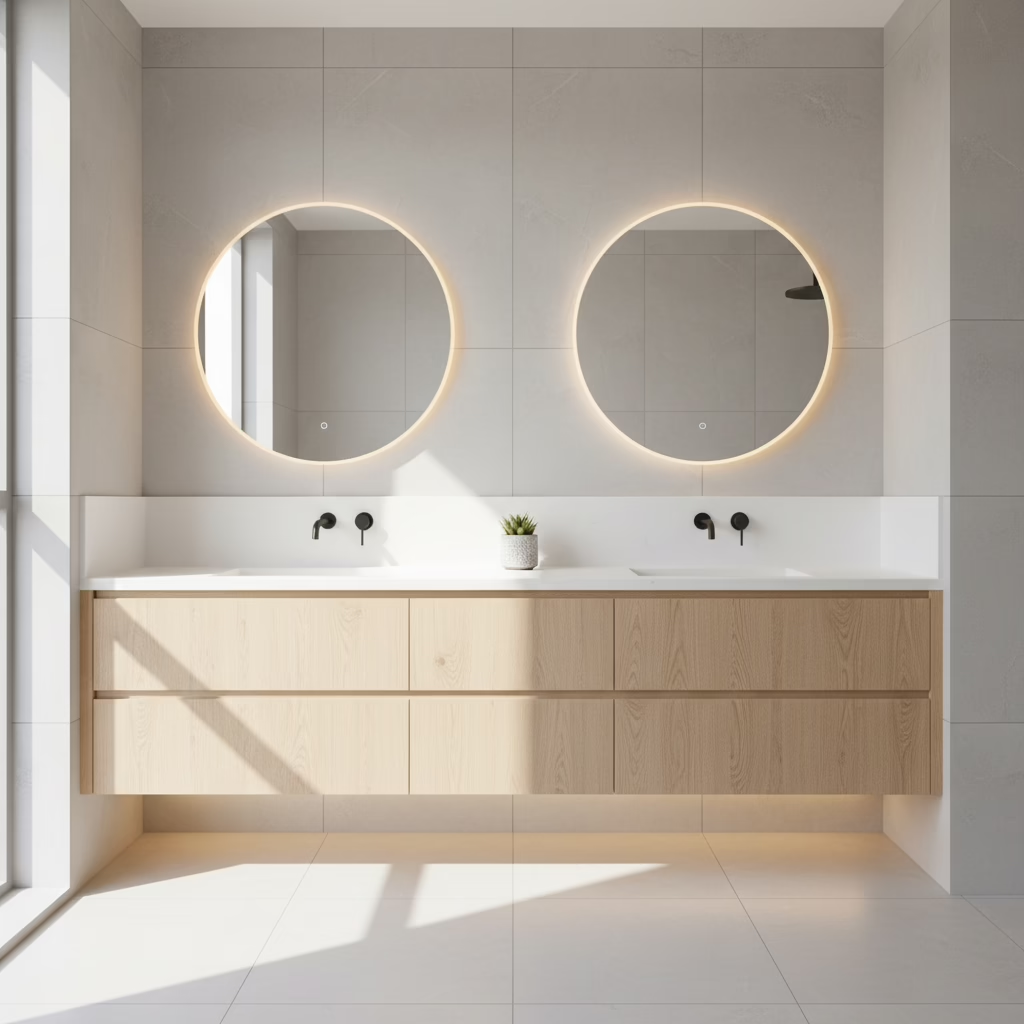
Bathroom vanity design trends in 2026 center on floating profiles, fluted wood textures, integrated LED lighting, durable quartz or porcelain counters, and smart storage that doubles usable space. Homeowners pair wall-mounted faucets with under-sink organizers, choose sustainable finishes, and rely on 3D design to visualize the result before build—especially in compact condos.
By Altima Kitchens and Closets • Last updated: April 11, 2026
Quick Answer
Bathroom vanity design trends this year favor floating vanities, fluted wood, quartz or porcelain tops, and integrated lighting for a clean, high-function look. At our Brampton factory and showroom at 11 Edvac Drive (Units #13–19), Altima designs and manufactures custom vanities that fit GTA homes precisely—backed by in-house installation and 3D previews.
Local Tips
- Tip 1: If you’re visiting our showroom at 11 Edvac Drive (Units #13–19), plan for weekday afternoons to avoid peak traffic on nearby industrial routes and get more design time with our team.
- Tip 2: Winter installs across the GTA can benefit from pre-scheduled materials pickup from our Brampton factory to keep timelines tight when weather slows freight.
- Tip 3: Condo projects in downtown Toronto move faster when we pre-book elevator times and fabricate vanity parts in-house—our factory-direct model limits on-site cutting and noise.
IMPORTANT: These tips reflect how our design-build, factory-direct process helps GTA homeowners streamline bathroom renovations.
Above the Fold: Hook + Table of Contents
The fastest way to modernize a bathroom is to upgrade the vanity with a floating cabinet, durable quartz counter, and integrated mirror lighting. Use a wall-mounted faucet to free counter space and add divider-rich drawers. This combination delivers maximum storage, easy cleaning, and timeless style.
- What Are Bathroom Vanity Design Trends?
- Why Vanity Trends Matter in Real Homes
- How Modern Vanity Design Works (Step-by-Step)
- Types, Layouts, and Approaches
- Best Practices from Our GTA Projects
- Tools, Materials, and Resources
- Case Studies and Real GTA Examples
- FAQ
- Conclusion and Next Steps
- Related Guides in Our Kitchen Cluster
What Is “Bathroom Vanity Design Trends”?
Bathroom vanity design trends are the recurring features, materials, and layouts homeowners choose for fresh, functional bathrooms. In 2026, the leading choices include floating cabinets, fluted wood, quartz or porcelain counters, wall-mounted faucets, drawer organizers, and integrated lighting—solutions that boost storage, hygiene, and style.
Quick definition: A “trend” in vanities reflects measurable uptake across designs we deliver, vendor innovations, and homeowner demand observed in our GTA showroom consultations.
- Core elements in 2026:
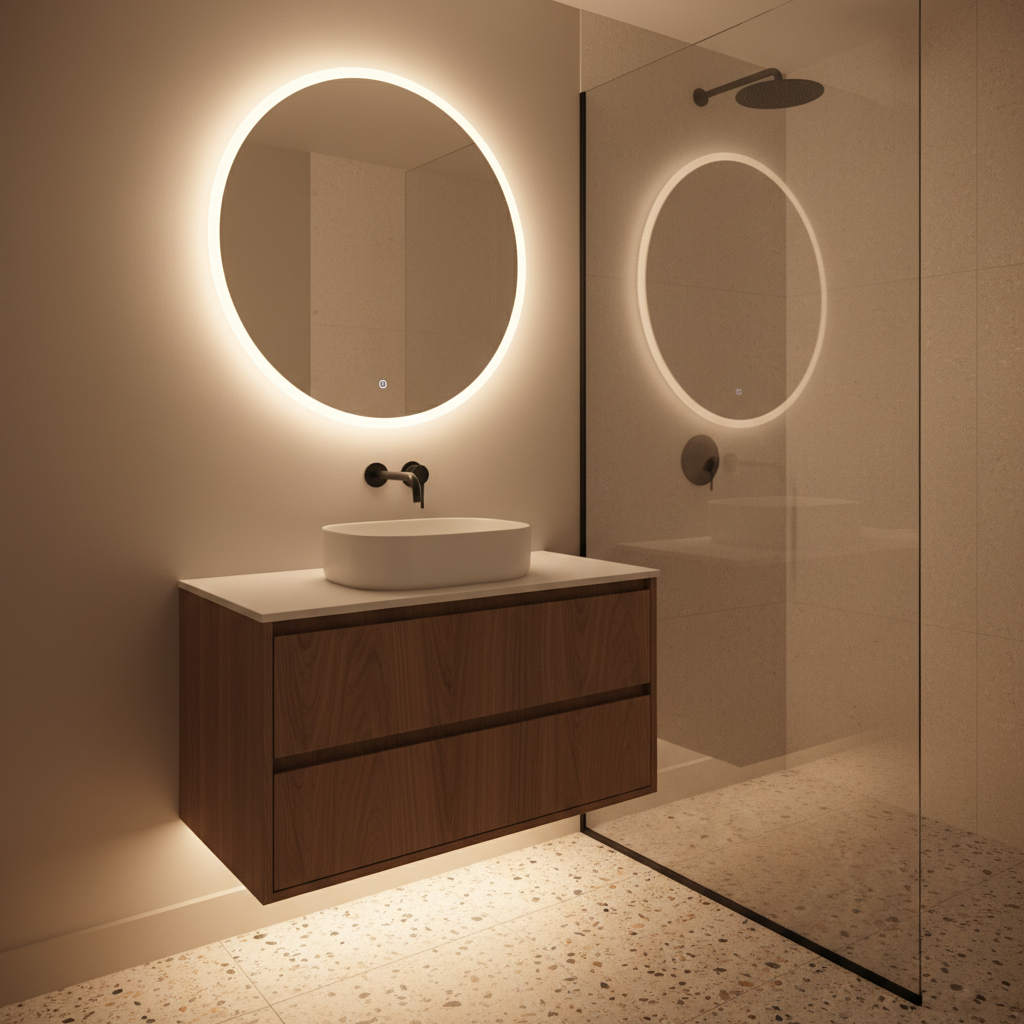
- Floating vanities with hidden toe-kick lights for visual “lift.”
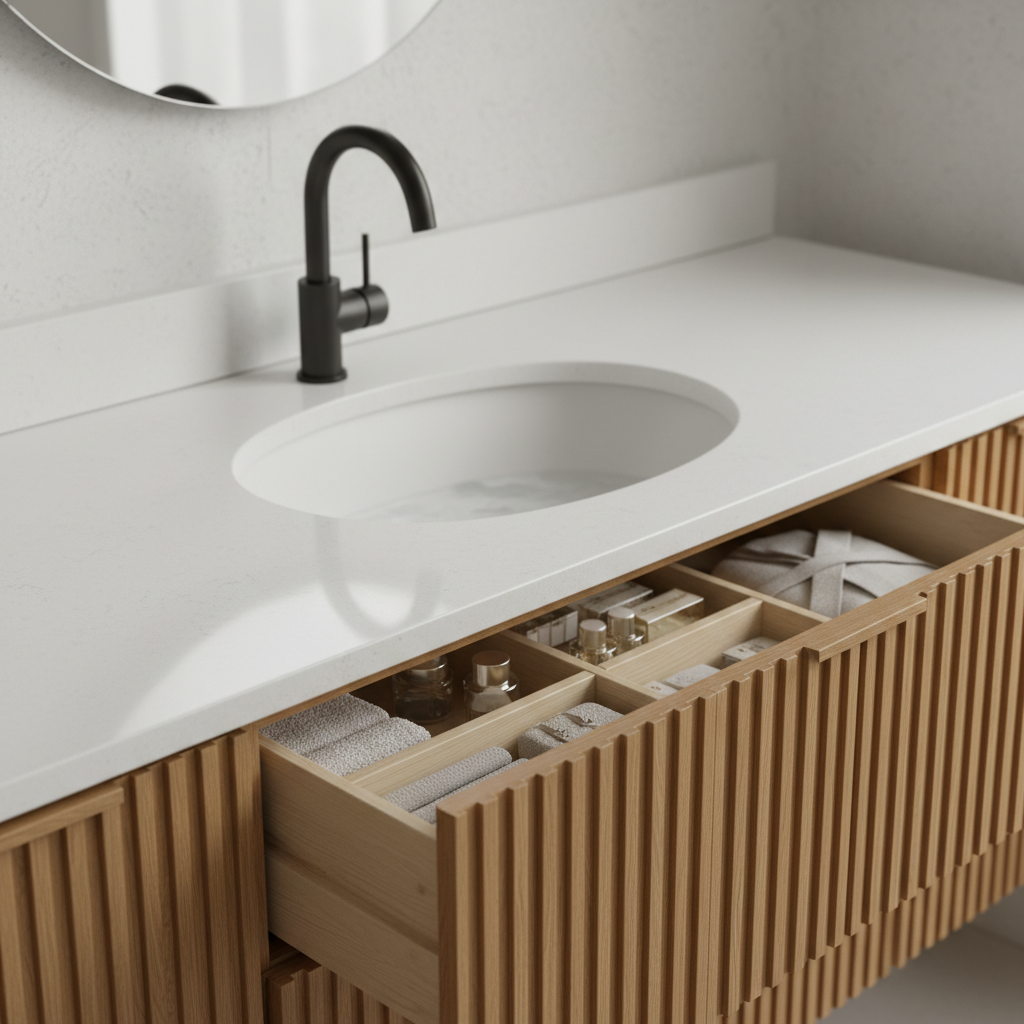
- Fluted or reeded wood faces in white oak, walnut, or painted MDF.
- Quartz and large-format porcelain slabs with integrated backsplashes.
- Wall-mounted faucets to reclaim counter area and simplify cleanup.
- LED-lit mirrors and under-cabinet strips for layered, glare-free light.
- Drawer dividers, U-shaped plumbing cutouts, and hair-tool cubbies.
- Soft neutrals (warm whites, light oak) with matte black or brushed brass.
- Why these features win:
- They maximize storage in the same footprint.
- They reduce cleaning time via wall-hung profiles and slab counters.
- They photograph beautifully and feel modern without going “trendy-only.”
- Where we see them most:
- Small condo ensuites where every inch must work double-duty.
- Family bathrooms seeking durable surfaces that hide water spots.
- Primary suites looking for spa-lighting and double-sink function.
Self-contained insight: A vanity is the bathroom’s storage, surface, and style anchor. When the cabinet, counter, faucet, lighting, and organization system align, the entire room feels bigger and easier to use. That’s why we prototype in 3D before fabrication at our Brampton factory.
Why Vanity Trends Matter for GTA Homes
The right vanity makes a small bathroom feel larger, speeds daily routines, and protects against moisture wear. In the GTA, space is tight and timelines matter, so factory-built, organizer-rich vanities deliver durable value while keeping projects efficient and on schedule.
- Space amplification:
- Floating cabinets expose more floor, making rooms feel wider.
- Shallower depths (18–20 inches) in powder rooms protect clearances.
- Open shelves for hand towels reduce door swings and visual clutter.
- Daily-use efficiency:
- Divider-rich drawers keep grooming tools reachable and tangle-free.
- Wall-mounted faucets leave counters open for soap and essentials.
- Backlit mirrors reduce shadows for shaving and makeup accuracy.
- Durability in humid rooms:
- Quartz and porcelain resist stains and warping from humidity.
- Painted MDF with pro-grade finishes holds up when sprayed correctly.
- Quality hardware (soft-close, moisture-rated) protects alignment.
- Project predictability:
- Factory-direct cabinets reduce on-site surprises and delays.
- 2D/3D drawings align expectations before the first cut.
- In-house install teams own the full punch list and the finish quality.
In our experience across Toronto and the GTA, a vanity upgrade often delivers the highest perceived “before-and-after” impact in the entire bathroom. If you’re planning a broader refresh, see our guidance on budgeting and planning steps to stage the work efficiently.
How Modern Vanity Design Works (Process)
Design modern vanities by aligning storage needs, plumbing constraints, lighting layers, and surface durability. We capture measurements, prototype in 2D/3D, select materials from our showroom, then fabricate on Italian CNC equipment for precise, clean installation in GTA homes and condos.
- Discovery and measurement:
- Assess door swings, toilet clearances, and shower proximity.
- Photograph plumbing and rough-in heights to plan drawers.
- List daily items (hair tools, skincare, kid items) by frequency.
- 2D/3D design previews:
- Lock the layout, sink centers, and faucet positions.
- Preview fluted vs flat fronts, handles vs integrated pulls.
- Simulate lighting: mirror backlight, under-cabinet, overhead.
- Material selection (in one showroom):
- Pick quartz/porcelain slabs, faucets, hardware, and organizers.
- Decide on finishes: natural oak, walnut, painted MDF, or laminates.
- Confirm moisture-rated hardware and soft-close specs.
- Factory fabrication:
- Precision cutting on Italian CNC machinery for tight tolerances.
- Spray booth finishing for consistent color and durable coats.
- Dry-fit quality check before delivery to site.
- Installation and handoff:
- Coordinate condo elevator bookings and protection as needed.
- Install vanity, mirror, lighting, accessories, and scribe panels.
- Walkthrough: care tips, adjustment checks, and warranty details.
SCU: A modern vanity is a small system: cabinet + counter + sink + faucet + lighting + storage accessories. When each component is selected in a single showroom and then fabricated under one roof, the result installs faster and performs better over time.
Types, Layouts, and Approaches
Choose a vanity approach based on space, plumbing, and daily habits. Floating single units suit condos, double vanities fit primary suites, and tower-plus-drawer combos maximize family storage. Match the counter material and faucet type to moisture resistance and cleanup preferences.
Floating vs. Furniture-Style
- Floating:
- Pros: Easy floor cleaning, bigger-room illusion, great for radiant floors.
- Use when: You want a sleek profile and have solid wall blocking.
- Best pairings: Wall-mounted faucets, backlit mirrors, toe-kick LEDs.
- Furniture-style (legs/base):
- Pros: Classic look, easy retrofits where walls lack blocking.
- Use when: You prefer visible legs or traditional detailing.
- Best pairings: Vessel sinks, bridge faucets, framed mirrors.
Single, Double, and Offset Sinks
- Single sink: Ideal for condos and powder rooms; more counter space and larger drawers.
- Double sink: Primary suites and shared family baths; balance drawer stacks for symmetry.
- Offset sink: Shifts basin to one side for an extra-wide work surface or makeup station.
Drawer-First vs. Door-First Storage
- Drawer-first:
- Pros: Full-extension access, dividers, U-shaped cutouts around traps.
- Best for: Daily-use items you want visible and organized.
- Door-first:
- Pros: Taller storage for bottles and small trash bins.
- Best for: Secondary bathrooms and bulk items.
Material and Finish Directions
- Fluted/reeded wood: White oak and walnut provide depth without busy grain.
- Painted MDF: Smooth, spray-finished fronts in warm whites, mushroom, or soft gray.
- Laminate/thermofoil: Performance finishes that mimic wood with strong moisture resistance.
- Quartz and porcelain counters: Low-maintenance slabs with integrated backsplashes.
Best Practices from Our GTA Projects
Prioritize blocking for floating vanities, keep faucets centered on sinks, and pre-plan drawer cutouts around plumbing. Use integrated mirror lighting plus under-cabinet LEDs for layered illumination. Seal edges, vent well, and choose hardware rated for humidity to maintain alignment and longevity.
Layout and Ergonomics
- Heights that work: 34–36 inches suits most adults; adjust for kids’ baths.
- Clearances: Keep 21 inches minimum in front of the vanity for comfortable movement.
- Door swings: Check shower and entry doors to avoid collisions.
Lighting Layers that Flatter
- Backlit mirrors: Even face lighting with fewer shadows.
- Under-cabinet LEDs: Night-lighting and floor wash to reduce glare.
- Ceiling ambient: Pair with dimmers for flexible brightness.
Moisture Management
- Seal edges and cutouts: Protect MDF cores and plywood edges.
- Ventilation: Strong bath fans preserve finishes and prevent swelling.
- Hardware choice: Select corrosion-resistant, soft-close systems for humid rooms.
Considering a larger project? Our team outlines timelines and scope control in regional pages like our Vaughan bathroom renovation overview and Burlington bathroom guide—useful context before locking specs.
Tools, Materials, and Resources
Select moisture-tolerant materials (quartz, porcelain, sealed woods), humidity-rated hardware, and organizer kits that fit your daily routine. Use 2D/3D design previews to validate clearances, lighting, and sink centers before fabrication to avoid rework and speed installation.
- Counter materials: Quartz, porcelain slabs, solid surface; integrate 4–6 inch backsplashes or full-height splashes.
- Cabinet construction: Moisture-resistant cores, pro-grade finishes from a spray booth, sealed edges.
- Faucets and sinks: Wall-mounted or deck-mounted; undermount sinks for wipe-clean counters.
- Organizers: Drawer dividers, hair-tool holders, cleaning-caddy pullouts, hidden hampers.
- Lighting kits: Backlit mirrors, valance lights, dimmable strips for toe-kicks.
- Design support: In-showroom selections with 2D/3D previews to finalize decisions before manufacturing.
| Material | Strength | Maintenance | Visual Style | Best Use |
|---|---|---|---|---|
| Quartz | Stain and scratch resistant | Low; wipe and go | Consistent, modern | Family and primary baths |
| Porcelain slab | Heat and UV resistant | Very low; minimal sealing | Marble-look without etching | High-moisture spaces, spa feels |
| Solid surface | Seamless, repairable | Low; occasional buffing | Soft matte | Powder rooms, integrated sinks |
| Sealed wood | Warm, natural feel | Moderate; re-seal as needed | Character and warmth | Guest baths with gentle use |
Mid-article CTA: Want to see these options side-by-side? Visit our Brampton showroom and factory at 11 Edvac Drive (Units #13–19) to preview finishes in person, then lock your design with 3D visuals before we build.
Case Studies and Real GTA Examples
Real projects show how trends translate into daily comfort. In condos, floating singles with organizers save space. In family baths, double vanities with quartz tops and backlit mirrors speed morning routines. Factory-direct fabrication keeps installs predictable across the GTA.
- Downtown Toronto condo ensuite:
- Challenge: 60-inch wall, limited depth, tight door swing.
- Solution: 54-inch floating single, offset sink, drawer-first layout.
- Result: More counter, quicker cleaning, toe-kick LEDs for night use.
- Mississauga family bath:
- Challenge: Two users at peak hours, cluttered counter.
- Solution: 72-inch double with quartz, backlit mirror pair, wall faucets.
- Result: Faster mornings; dividers for kids’ items keep surfaces clear.
- Oakville guest bath refresh:
- Challenge: Make a small powder room feel premium.
- Solution: 30-inch furniture-style vanity, vessel sink, matte brass hardware.
- Result: Boutique look; sealed finishes protect against splash marks.
- Vaughan primary suite:
- Challenge: Broad wall needed zoned storage.
- Solution: Double vanity plus a center tower with internal outlets.
- Result: Hair tools stow safely; charging inside doors keeps counters clear.
Planning a similar transformation? Our regional notes on Vaughan renovations offer useful context on timelines, while our Ontario budgeting primers explain scope factors without locking you into a specific price.
Frequently Asked Questions
Choose vanities for function first, then layer in finish and lighting. Floating cabinets, quartz/porcelain counters, and organizer-rich drawers fit most GTA bathrooms. Use 3D previews to validate clearances and storage before build; it prevents rework and speeds installation.
- How do I pick the right vanity size?
Measure wall width, door swings, and toilet/shower clearances. For shared baths, 60–72 inches fits a double; for ensuites and condos, 36–54 inches often optimizes storage without crowding. Confirm sink centers and drawer stacks in a 2D/3D layout before fabrication.
- Are floating vanities strong enough?
Yes—when installed into proper wall blocking and studs. We plan blocking in design, verify on site, and use rated hardware. Floating cabinets actually make cleaning faster and keep finishes looking newer by reducing mop and splash contact.
- What countertop works best in humid bathrooms?
Quartz and porcelain slabs are top choices for stain, heat, and moisture resistance. They wipe clean, hide water spots, and resist etching. Solid surface is great for seamless, integrated sinks, especially in powder rooms.
- Can you integrate outlets and chargers?
Absolutely. We add interior outlets in towers and drawers for hair tools and toothbrushes, with ventilation and cord management. This keeps counters clutter-free and safer for daily use.
- What if I have a very tight condo bathroom?
We often specify an 18–20 inch depth floating single with an offset sink, wall-mounted faucet, and divider-first drawers. Under-cabinet LEDs serve as night lights, and porcelain counters handle daily wear with minimal upkeep.
Conclusion and Next Steps
Update your bathroom fast by pairing a floating vanity, quartz or porcelain counter, organizer-rich drawers, and integrated lighting. Prototype in 3D to validate fit, then fabricate in a controlled factory for predictable timelines and finish quality.
Key Takeaways
- Floating vanities and wall-mounted faucets unlock space and simplify cleaning.
- Quartz and porcelain are durable, low-maintenance counter choices.
- Drawer dividers and interior outlets keep daily tools accessible and tidy.
- Layered lighting (backlit mirrors + under-cabinet LEDs) reduces shadows.
- Factory-direct fabrication plus in-house install shortens the path to done.
Action Steps
- List daily items you store and use—this drives drawer and divider choices.
- Measure the wall, door swings, and clearances; note plumbing heights.
- Book a design consult to review 2D/3D options and lock materials.
- Schedule fabrication and installation with a single accountable team.
Ready to start? Visit us at 11 Edvac Drive (Units #13–19) in Brampton or book a consultation. We’ll visualize your vanity in 3D, fabricate in-house, and install on time—backed by lifetime warranties on select doors.
Related Guides in Our Kitchen Cluster
Exploring connected upgrades? Readers also look for:
- Quartz countertop benefits and long-term durability.
- How to plan a renovation timeline that stays on track.
- Backsplash installation tips that keep grout lines crisp.
- Closet organization strategies for mudrooms and wardrobes.
- Condo renovation coordination: elevators, protection, and scheduling.
Related Posts
Why Choose Kitchen Renovation Company
Nowadays, Kitchen spaces are not only a place for cooking and serving food, but these areas act as a statement, as they speak a lot about a family, the philosophy and personality of individuals, and spaces. If you admire aesthetics and adorn the beauty of your home, you must pay attention to the interior design […]
How a Kitchen Renovation Contractor is Changing the Game
Lifestyle is all about bringing something coherent to the overall experience of living. The kitchen and closets stand as two of the most influential spaces in a home that add to the overall experience of living. A Kitchen Renovation Contractor in Whitby by the name of Altima Kitchen and Closets Inc. is changing the overall […]
How Media unit contractor in Whitby is Changing the Game
Lifestyle is all about bringing something coherent to the overall experience of living. The kitchen and closets stand as two of the most influential spaces in a home that add to the overall experience of living. A Media Unit Company in Whitby by the name of Altima Kitchen and Closets Inc. is changing the overall […]