Bathroom Remodels: Cut Costs Without Losing Style in 2026
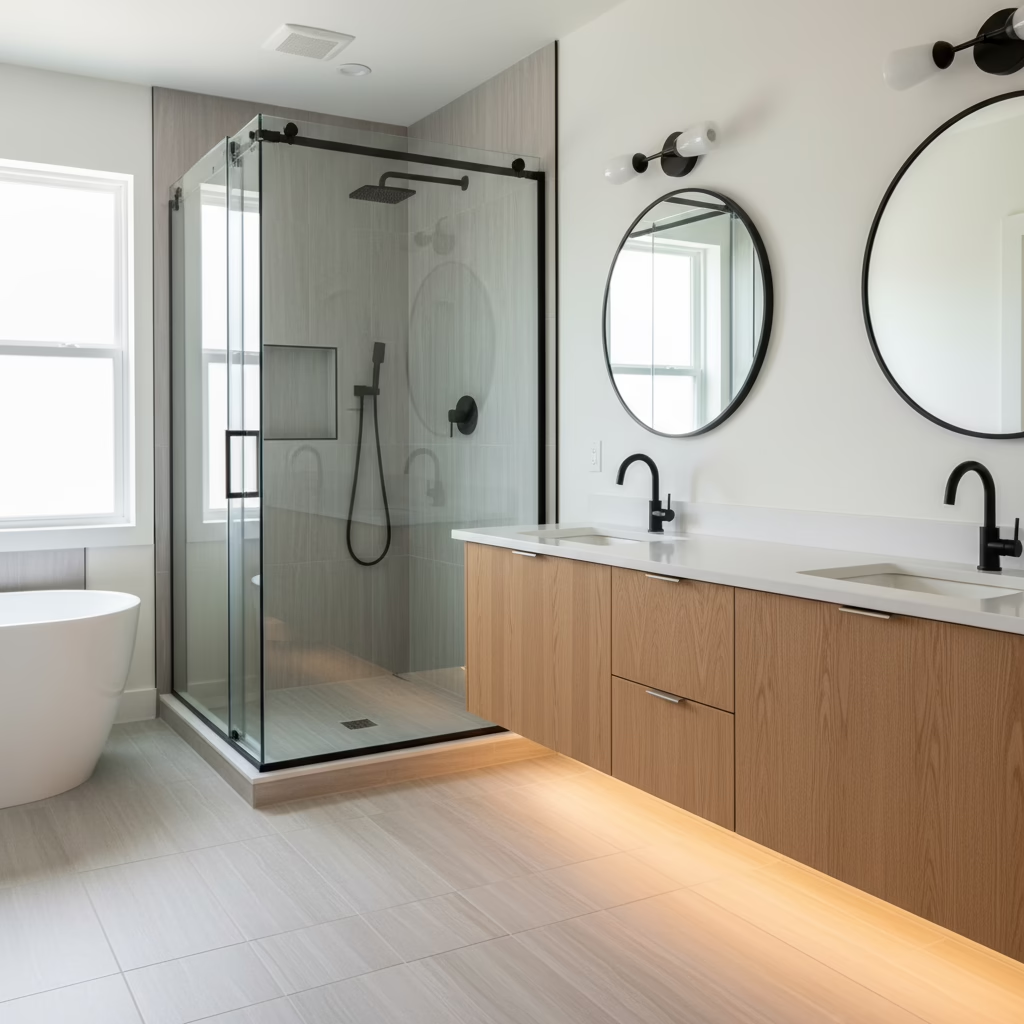
Bathroom home improvement is the strategic planning, design, and renovation of bathrooms to improve function, durability, efficiency, and style. From our Brampton factory and showroom at 11 Edvac Drive (Units 13–19), Altima Kitchens and Closets delivers end-to-end bathroom remodels with in-house design, 3D visualizations, and factory-direct cabinetry to make upgrades faster, cleaner, and more predictable.
By Ashok — Altima Kitchens and Closets • Visit our showroom • Last updated: 2026-06-13
Quick Summary
Bathroom home improvement boosts comfort, hygiene, and resale by upgrading layout, storage, waterproofing, ventilation, lighting, and fixtures. The fastest wins are water-saving toilets and showers, proper exhaust, and better lighting. For lasting results, pair solid waterproofing with factory-made cabinetry and a structured, one-team process from design to install.
In this complete, practical guide, you’ll learn the what, why, and how of upgrading a bathroom without sacrificing style—or control. We’ll show clear steps, safety musts, and material picks that stand up to daily use.
- Understand core components: layout, plumbing, ventilation, lighting, and storage
- Pick finishes that look good and clean easily
- Sequence work to avoid costly re-dos and delays
- See real GTA scenarios drawn from our projects
- Use pro checklists, specs, and a comparison table to decide your approach
What Is Bathroom Home Improvement?
Bathroom home improvement is the planned enhancement of a bathroom’s layout, fixtures, waterproofing, ventilation, storage, and finishes to improve safety, efficiency, and aesthetics. Done right, it replaces piecemeal fixes with a coordinated design-build process that delivers durable results you can see and measure every day.
At its core, bathroom upgrading brings three disciplines together: design, construction, and product selection. The design phase maps how you move, store, and clean. Construction turns drawings into a waterproof shell. Product selection matches the way you live: quick showers, long soaks, kid-friendly cleanup, or aging-in-place access.
- Design: Space planning, elevations, and material palettes supported by 2D/3D drawings.
- Build: Demolition, framing, plumbing, electrical, waterproofing, tile, paint.
- Products: Vanities, cabinets, countertops, tile, glass, plumbing fixtures, and lighting.
Because bathrooms mix water, electricity, and heat in tight quarters, small mistakes cascade into leaks, mold, or cracked tile. A coordinated plan limits risk and speeds up installation. For deeper planning frameworks, see our bathroom renovation company guide written for first-time remodelers.
Why Bathroom Home Improvement Matters
Upgrading your bathroom improves hygiene, reduces water and energy use, and can increase resale appeal. The biggest gains come from efficient fixtures, moisture control, and brighter, safer lighting—changes that lower utility demand and make daily routines faster and more comfortable for every user.
Water-efficient fixtures curb household use every single day. A typical high-performance toilet uses roughly 1.28 gallons per flush, and modern showerheads are commonly rated near 2.0 gallons per minute—with smart valves to stabilize temperature. Sealed shower assemblies stop hidden damage behind tile. Bright, color-accurate lighting makes grooming easier and safer.
- Health: Better ventilation reduces humidity spikes that encourage mold.
- Efficiency: Low-flow toilets and showerheads save water daily.
- Safety: Level thresholds, grab points, and slip-resistant surfaces reduce falls.
- Value: Fresh finishes and a smarter layout help homes show better.
These benefits compound. Once moisture and clutter are under control, hardware lasts longer and grout stays cleaner. For more context on lifestyle benefits, this overview of advantages of bathroom remodeling highlights everyday usability gains.
How Bathroom Renovations Work (Step-by-Step)
A reliable bathroom remodel follows a set sequence: assess and measure, design in 2D/3D, order materials, prepare the site, rough-in mechanicals, waterproof and tile, install cabinets and fixtures, then test, seal, and hand over. Clear steps keep trades in sync and protect your warranty.
- Discovery & Measure: Confirm goals, document sizes, and inspect for moisture issues. We capture current clearances, fixture heights, and venting paths.
- Design & Selections: 2D layouts and 3D views, plus tile, vanity, counter, and lighting picks. You preview sightlines, storage, and lighting angles before we build.
- Factory Production: We build cabinetry, doors, and panels with consistent finishes in our Brampton facility. Factory control keeps edges sealed and finishes uniform.
- Site Prep: Protect paths, set dust control, and schedule deliveries. Negative-air scrubbing helps contain dust in condos and occupied homes.
- Demolition: Remove finishes carefully; cap services; expose structure. We salvage what’s reusable and flag any framing or subfloor repairs.
- Rough-ins: Set drains, supply lines, venting, wiring, and blocking for accessories. Blocking now avoids drilling tile later.
- Waterproofing: Seal pans/walls; flood-test showers before tile. Slopes target ~1/4 inch per foot to the drain.
- Tiling & Surfaces: Tile, grout, seal as required; set counters. Large-format porcelain cuts grout lines and speeds cleaning.
- Cabinets & Fixtures: Install vanities, medicine units, glass, and plumbing trims. We align doors, level tops, and tune soft-close hardware.
- QA & Handover: Test exhaust CFM, inspect for leaks, and complete a punch list. We share care instructions and warranty information.
Following this path prevents sequencing errors—like tiling before adding grab-bar blocking. To see how this integrates with whole-house updates, explore our whole home remodel guide.
Types of Bathroom Upgrades
Most projects fall into five paths: cosmetic refresh, replace-in-place, partial remodel, full gut-and-redesign, and accessibility/smart retrofits. Choosing the right path balances timeline, disruption, and durability while targeting the issues that actually bother you day to day.
- Cosmetic Refresh: Paint, hardware, caulk, mirrors, accessories. Good for sound waterproofing and tired looks.
- Replace-in-Place: Swap vanity, top, faucet, toilet, and light in current locations. Minimal plumbing/electrical shifts.
- Partial Remodel: Rebuild the wet zone; keep other elements. New shower pan, tile, and glass make the biggest daily difference.
- Gut & Redesign: New layout, drains, and ventilation; everything changes. Ideal when clearances or vent paths are wrong.
- Accessibility & Smart: Curbless showers, grab bars, smart controls, bidet seats. Safer, cleaner, and future-ready.
If your shower pan is failing, a “refresh” won’t last. Match scope to the root cause, not just the surface symptom. For layout ideas in tight footprints, our small bathroom remodel with shower guide offers space-saving tricks.
Best Practices That Prevent Problems
Prioritize a waterproof shell, adequate ventilation, and sturdy blocking before you think about tile patterns. Then pick durable, easy-clean finishes, layer your lighting, and plan storage at point-of-use. This order prevents callbacks and keeps the room looking new for years.
Waterproof first
- Use continuous membranes with sealed seams on pans and walls.
- Flood-test pans for 24 hours before tiling.
- Pre-slope pans to roughly 1/4 in. per foot to the drain for positive flow.
Ventilate right
- Size exhaust around 1 CFM per square foot (standard guidance) and duct outside.
- Choose quiet fans so users actually run them; add humidity or timer controls.
- Test actual airflow (CFM) at handover; verify makeup air in tight homes.
Build for daily speed
- Favor large-format porcelain and stain-resistant grout to cut cleaning time.
- Pick quartz counters; they’re nonporous and wipe fast.
- Use frameless shower glass with protective coatings to reduce water spots.
Light in layers
- Target 2700–3000K LED for warmth with 90+ CRI at the vanity for true color.
- Place sconces at eye level to reduce shadows; add a dedicated shower light.
- Install night lighting on low-lumen strips for safe, sleepy trips.
Looking for ways to improve outcomes without scope creep? These budget-friendly bathroom upgrade ideas discuss prioritizing impact while keeping disruption contained.
Tools, Materials, and Resources
A well-run bathroom remodel leans on accurate measuring tools, dust control, proper PPE, and trade-specific equipment. On the material side, stick to rated membranes, corrosion-resistant fasteners, low-VOC paints, certified fixtures, and bright, efficient lighting to balance performance with daily comfort.
- Tools: Laser measure, oscillating tool, wet saw, HEPA vac, drill/driver set.
- Site protection: Plastic zip walls, floor protection, negative-air scrubbing.
- Materials: Shower membranes, backer board, anti-fracture mats, grout sealer.
- Fixtures: Water-efficient toilets and showerheads; quiet exhaust fans.
- Lighting: High-CRI LEDs with dimming for day-to-night comfort.
- Cabinetry: Factory-built boxes with sealed edges and soft-close hardware.
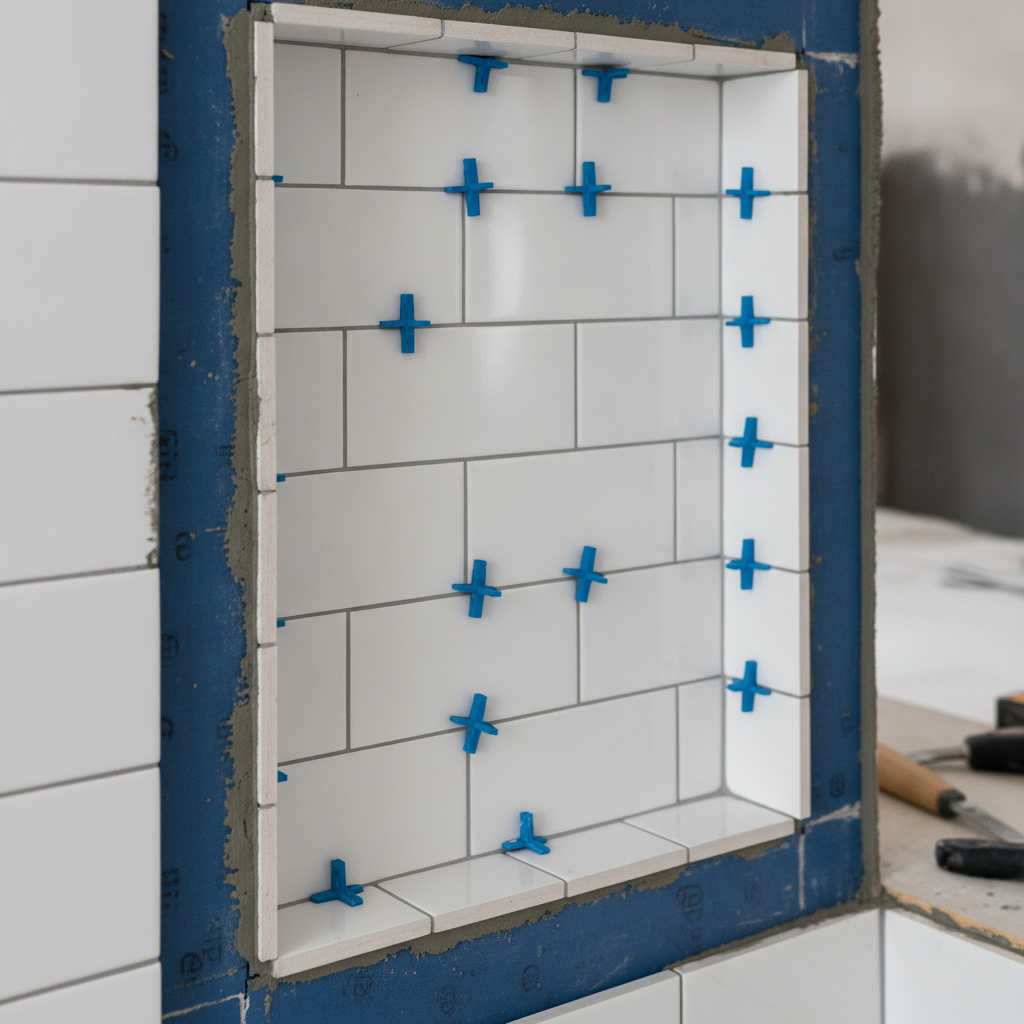
Choosing Fixtures, Cabinets, and Finishes
Combine a moisture-resistant vanity, durable countertop, sealed tile assembly, clear glass, and balanced light for a bathroom that looks polished and cleans in minutes. Favor quartz, porcelain, and factory-finished doors with tough coatings to handle humidity and daily wipe-downs.
- Vanities & Cabinets: Factory-built boxes with sealed edges, soft-close hardware. Our MDF Painted and Prelaminated doors carry lifetime warranty coverage.
- Countertops: Nonporous quartz resists staining and scrubbing.
- Tile & Grout: Porcelain with stain-resistant grout; larger formats reduce joints.
- Glass: Frameless panels with protective coatings repel water spots.
- Lighting: 2700–3000K LEDs with high CRI for flattering, accurate color.
See what’s trending now in our bathroom vanity design trends overview, including floating vanities, integrated lighting, and smart storage.
Waterproofing, Ventilation, and Safety
Your bathroom’s hidden heroes are the waterproof membrane and exhaust system. When paired with slip-resistant surfaces, secure grab points, and proper lighting, they prevent leaks, mold, and falls. Build this core correctly and every visible finish lasts longer with less maintenance.
- Membranes: Bonded sheets or liquid-applied systems with taped seams.
- Ventilation: Right-sized, quiet fans ducted outside; consider humidity sensors.
- Drainage: Proper slopes (about 1/4 in. per foot) to prevent pooling.
- Safety: Grab bars, wider clearances, and non-slip floor tile options.
We treat this as mission-critical. A diligent flood test and CFM verification take hours—not days—but can add years to the life of a bathroom. For common hidden issues in older baths, skim our old bathroom renovation guide.
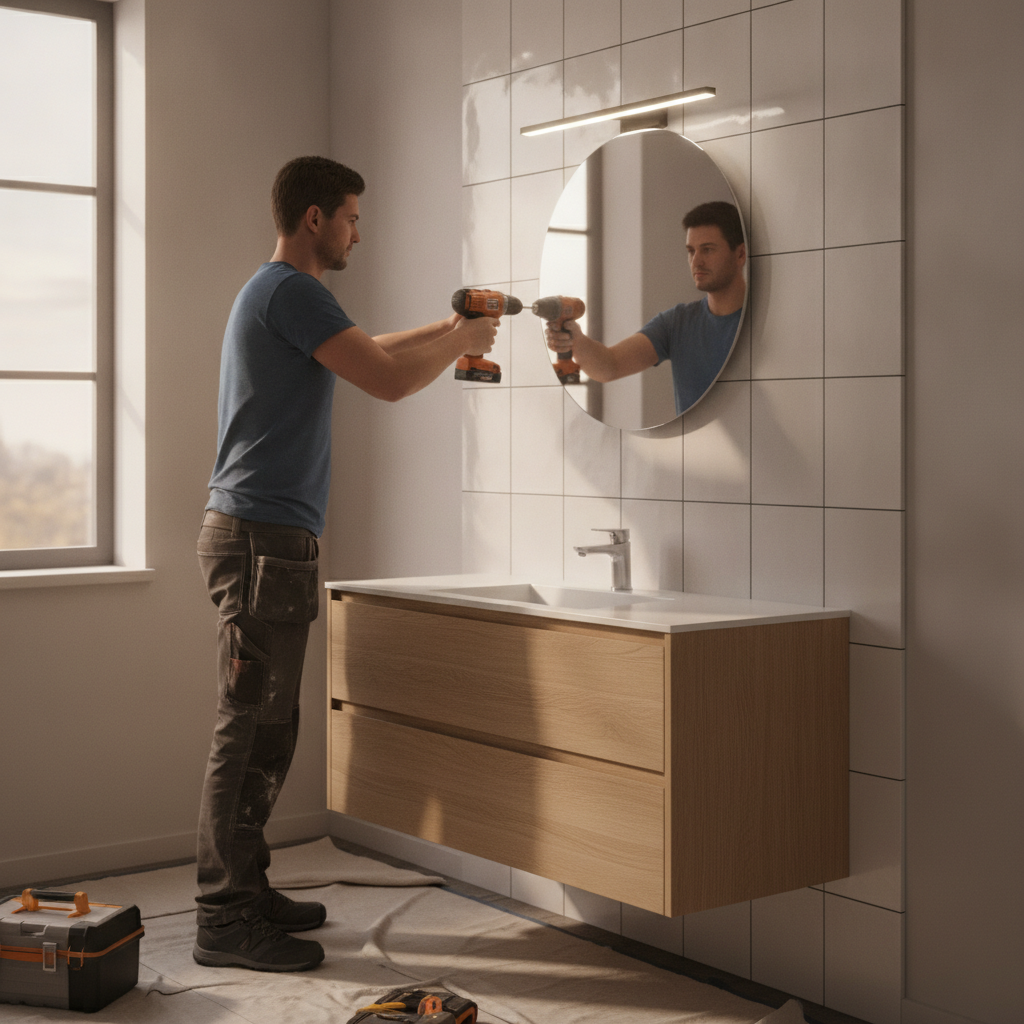
Project Management, Timeline, and Quality Control
From our 11 Edvac Drive hub in the Regional Municipality of Peel, a one-team, design-to-install workflow shortens timelines and reduces errors. With factory-direct cabinetry, pre-scheduled trades, and confirmed selections, bathrooms move from demo to handover smoothly, with milestones that protect your finish and warranty.
- Single point of contact: Design, factory, and install under one roof improves coordination.
- Material readiness: Prefabrication and staging prevent site downtime.
- Quality gates: Milestone checks (e.g., flood test, exhaust CFM test) before moving on.
- Documentation: Photos, drawings, and punch lists keep everyone aligned.
Predictable schedules and clear communication are as valuable as the final look. For more thoughts on time-saving coordination, this take on kitchen and bathroom renovations discusses sequencing to reduce disruption. When it’s time to get specific with your space, our custom bathroom renovation guide explains how we tailor scope and finishes.
Refresh vs. Replace vs. Remodel vs. Accessible: Which Path Fits?
Match your approach to the problem you’re solving. Surface wear favors a refresh, failing fixtures need replace-in-place, chronic moisture calls for a remodel, and mobility concerns point to accessible upgrades. Choosing scope by symptom protects your time and ensures lasting results.
| Approach | When It Fits | Typical Work | Disruption | Longevity |
|---|---|---|---|---|
| Cosmetic Refresh | Looks tired, but waterproofing is sound | Paint, hardware, mirror, caulk, accessories | Low | Short to Medium |
| Replace-in-Place | Fixtures are dated or worn | Swap vanity, top, faucet, toilet, lights | Low to Medium | Medium |
| Partial Remodel | Shower/tub area leaks or feels cramped | New shower pan, tile, glass; keep other zones | Medium | Medium to Long |
| Full Remodel | Layout, drains, or ventilation are wrong | New plan, rough-ins, membranes, finishes | High | Long |
| Accessible/Smart | Mobility or convenience needs | Curbless, grab bars, controls, lighting, bidet seats | Low to Medium | Long |
Mini Case Studies and GTA Examples
Real bathrooms improve fastest when scope targets the true issue: water, storage, light, or access. These quick snapshots show how coordinated design, factory-built cabinetry, and careful sequencing solved common problems for GTA homeowners across condo and detached homes.
- Condo Ensuite, Downtown: Curbless shower, large-format porcelain, and a floating vanity created a cleaner, bigger-feeling 5′ x 8′ space. A quiet, timed exhaust cut fogging and odors.
- Family Bath, Mississauga: Tall linen cabinets and drawer organizers ended counter clutter. A water-efficient toilet and LED task lighting improved morning routines.
- Brampton Bungalow: Framed a wider doorway and added grab-bar blocking during demo. A handheld shower and bench made it safer for aging parents.
- Vaughan Powder Room: An integrated sink and wall-mounted faucet simplified cleaning. A backlit mirror evened out face lighting without glare.
- Oakville Kids’ Bath: Pull-out step in the vanity toe-kick, anti-scald valve, and matte porcelain floors improved safety and independence.
Each project used 2D/3D design up front to visualize clearances, lighting, and tile transitions before we touched a wall. For a bigger-picture perspective that includes kitchens and storage, our home renovation guide breaks down whole-home planning with less chaos.
Local considerations for 11 Edvac Drive
- Traffic near Williams Pkwy can affect delivery windows; schedule early drop-offs for heavy tile and glass.
- Winter humidity swings in the Regional Municipality of Peel reward sealed membranes and quiet fans with timers.
- For showroom visits, combine a stop with a quick walk at Bottomwood Park to compare tile colors in natural light.
Bring measurements and a few photos. We’ll map options in 2D/3D, review finishes, and outline a clean timeline—no pressure.
Bathroom Home Improvement FAQ
The most-asked bathroom questions center on timeline, durability, ventilation, and accessibility. Clear answers help you choose scope and sequence that fit your space, so you can avoid surprise rework later and maintain the results with simple routines.
What should I renovate first in an older bathroom?
Address waterproofing and ventilation before finishes. A flood-tested shower pan, sealed walls, and a right-sized exhaust fan protect tile, paint, and fixtures. Once the shell is sound, vanities, lighting, and accessories deliver the style and daily convenience you see and feel.
How do I make a small bathroom feel larger?
Use a floating vanity, a clear glass shower, large-format porcelain, and consistent floor tile to reduce visual breaks. Add bright LED task lighting and a wall-to-wall mirror. Keep storage off the counter with tall linen cabinets and drawer organizers at point-of-use.
Is a curbless shower worth it?
Yes—when planned correctly. Curbless entries remove a trip point, simplify cleaning, and make spaces feel bigger. They require precise slopes, waterproofing, and sometimes a recessed subfloor. When built right, they’re durable, safer, and stylish for years.
Do I need permits for a bathroom remodel?
If you’re changing plumbing, wiring, or layout, expect permits and inspections. Cosmetic updates usually don’t require them. A design-build team coordinates drawings and ensures rough-ins, waterproofing, and electrical work align with local code and inspection timing.
Key Takeaways
Focus on the hidden systems first—waterproofing, ventilation, and blocking—then layer in easy-clean finishes and balanced lighting. Choose a scope that solves root problems, and keep one team accountable from design to install to protect your schedule and your warranty.
- Plan, then pick finishes—never the other way around.
- Water and humidity control drive longevity and cleaning speed.
- Factory-built cabinets and 3D design reduce surprises.
- Efficient lights and fixtures improve comfort every single day.
Conclusion: Your Next Step
A durable, stylish bathroom starts with a clear plan, a tested waterproof shell, efficient ventilation, and easy-clean finishes. If you’re in the GTA, bring your measurements to our Brampton showroom—we’ll map options in 2D/3D, build in our factory, and install cleanly on a predictable schedule.
- List your pain points: leaks, clutter, dim lighting, or access.
- Decide scope by symptom: refresh, replace, remodel, or accessible.
- Confirm ventilation and waterproofing strategy before tile.
- Lock selections, then schedule; keep one accountable team.
Want more planning ideas and pro checklists? See how a full-service approach streamlines work across spaces in our home renovation guide.
Related Posts
Why Choose Kitchen Renovation Company
Nowadays, Kitchen spaces are not only a place for cooking and serving food, but these areas act as a statement, as they speak a lot about a family, the philosophy and personality of individuals, and spaces. If you admire aesthetics and adorn the beauty of your home, you must pay attention to the interior design […]
How a Kitchen Renovation Contractor is Changing the Game
Lifestyle is all about bringing something coherent to the overall experience of living. The kitchen and closets stand as two of the most influential spaces in a home that add to the overall experience of living. A Kitchen Renovation Contractor in Whitby by the name of Altima Kitchen and Closets Inc. is changing the overall […]
How Media unit contractor in Whitby is Changing the Game
Lifestyle is all about bringing something coherent to the overall experience of living. The kitchen and closets stand as two of the most influential spaces in a home that add to the overall experience of living. A Media Unit Company in Whitby by the name of Altima Kitchen and Closets Inc. is changing the overall […]