Basement Finishing Cost Breakdown: Cut Surprises, Plan Right
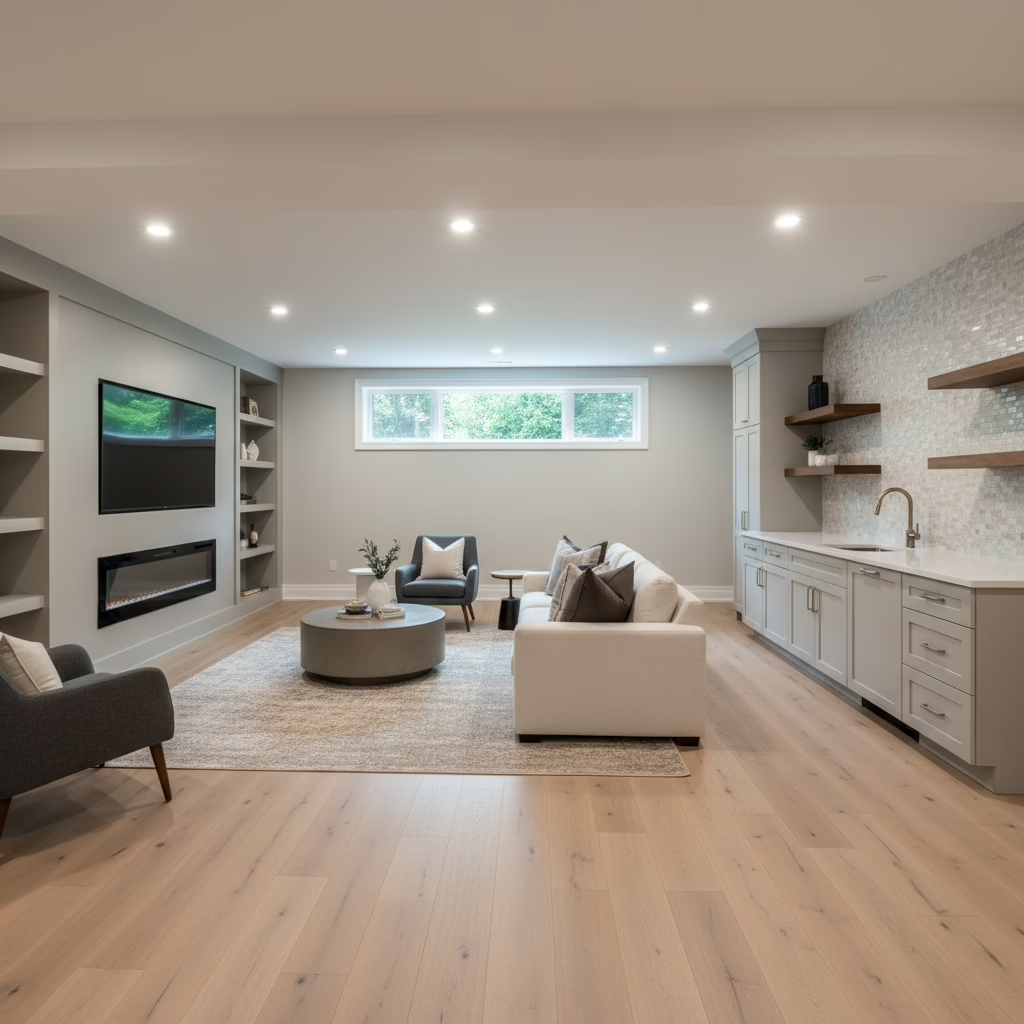
Basement finishing cost breakdown refers to the way your basement project is divided into clear scopes—framing, insulation, drywall, flooring, electrical, plumbing, cabinetry, and finishes—so you understand where time and materials go. A precise breakdown helps you compare quotes apples to apples, prevent scope creep, and set smart allowances without unexpected extras.
By Altima Kitchens • Last updated: April 12, 2026
Overview
A basement finishing cost breakdown organizes your renovation into line items—structure, systems, surfaces, and specialties—so nothing gets missed. When each category has defined specs and allowances, you can control quality, sequence trades properly, and reduce change orders. The result is a safer, cleaner finish delivered on schedule with fewer surprises.
- What you’ll get here:
- Clear definitions of every major cost category in a finished basement
- Actionable checklists to plan scope, allowances, and inspections
- Local, code-aware insights from our Brampton showroom and factory
- Ways Altima’s in-house design, factory-direct cabinetry, and financing reduce friction
- Who this helps:
- GTA homeowners and condo owners planning a new living area, home office, media room, or rental suite
- Anyone comparing multiple quotes and wanting to avoid scope gaps
- How to use this guide:
- Skim the featured-snippet answers under each section for quick clarity
- Use the tables and bullet lists as a scoping template
- Book a design consult to translate choices into a detailed, itemized plan
Quick Answer
A basement finishing cost breakdown is a line-by-line scope that clarifies structure, systems, and finishes to prevent extras and delays. At our 11 Edvac Drive facility in Brampton, Altima Kitchens and Closets plans, designs, manufactures cabinetry, and installs—so your allowances, selections, and sequencing align from day one.
Local Tips
- Tip 1: Start your selection meeting at 11 Edvac Drive in Brampton to choose flooring, cabinet finishes, and hardware in one visit—this locks allowances before trades mobilize.
- Tip 2: Plan inspections and deliveries around peak renovation seasons; book framing, drywall, and custom cabinetry early to keep your schedule on track.
- Tip 3: If you’re adding a wet bar or vanity, coordinate plumbing rough-ins with our factory-direct cabinetry specs to avoid rework when boxes and countertops arrive.
IMPORTANT: We align permits, inspections, and material lead times with your design so installation stays efficient and predictable.
What Is a Basement Finishing Cost Breakdown?
A basement finishing cost breakdown is a structured list of scopes—demolition, framing, insulation, mechanicals, drywall, millwork, flooring, paint, and specialties—each with defined specs and allowances. This clarity helps you compare contractors fairly, plan inspections, and manage selections without late-stage changes.
- Core purpose:
- Make every trade, material, and inspection visible upfront
- Prevent scope gaps that lead to delays or change orders
- Support predictable sequencing and quality control
- Standard categories included:
- Structure: minor layout changes, subfloor prep, framing, blocking
- Envelope: insulation, vapor barrier, sound control
- Mechanicals: electrical, lighting, HVAC adjustments, plumbing
- Surfaces: drywall, tape/mud, priming, paint
- Finishes: flooring installation, baseboards, doors, hardware
- Specialties: media units, wet bars, vanities, closets, storage
- Why it matters for GTA homes:
- Basements vary in ceiling height, moisture profile, and existing rough-ins
- Older homes often need electrical or HVAC updates to meet modern standards
- Suites, gyms, and theaters demand different acoustics and lighting
We’ve found that homeowners who review a clear breakdown sign off faster on designs, pass inspections sooner, and enjoy a smoother closeout. That’s why Altima provides itemized quotes plus 2D/3D drawings before fabrication.
Why the Breakdown Matters (Quality, Safety, and Schedule)
Breakdowns prevent blind spots. When scopes are explicit—like dedicated soundproofing around a media wall or moisture control behind a bathroom—you reduce callbacks, pass inspections cleaner, and keep your timeline realistic. It aligns selections with allowances and ensures trades aren’t waiting on missing details.
- Quality advantages:
- Defined substrates and prep standards reduce surface flaws
- Specified fasteners, adhesives, and trims lead to cleaner finishes
- Cabinetry built to measured openings eliminates on-site improvisation
- Safety and code:
- List of GFCI/AFCI locations and bathroom fan CFM helps meet inspection checklists
- Smoke/CO alarm interconnection plans reduce rework later
- Moisture mitigation details (vapor barrier, dehumidification) help prevent mold
- Schedule control:
- Milestone-based sequencing ties inspections to material deliveries
- Selection deadlines (e.g., flooring, paint, hardware) prevent last-minute scrambles
- Factory-direct cabinetry lead times are baked into the calendar
According to the U.S. Environmental Protection Agency (EPA), controlling moisture is critical to avoid mold growth after leaks, which can begin within 24–48 hours. Building those details into your breakdown protects indoor air quality and finishes.
How a Basement Finishing Cost Breakdown Works (Step-by-Step)
Breakdowns follow the build order: define goals, survey site conditions, lock the floor plan, specify materials, schedule inspections, then fabricate and install. Each step has checklists and approvals so fabrication and on-site work align—especially where custom cabinetry, bars, and media units are involved.
- Discovery and goals
- Use-cases: family room, office, gym, guest suite, rental, or theater
- Constraints: headroom, columns, plumbing stacks, window egress
- Budget guardrails: define priorities and optional upgrades
- Site assessment
- Moisture checks, slab condition, stairs, and exterior drainage observations
- Existing electrical panel capacity and HVAC accessibility
- Location of rough-ins and any previous work
- Concept and 2D/3D design
- Scaled plan with furniture and traffic flow
- Lighting layout and switching logic mapped to use-zones
- Cabinetry elevations for bars, vanities, media walls, and closets
- Itemized scope + allowances
- Framing, insulation, drywall, paint, flooring installation, trim
- Electrical points, plumbing fixtures, ventilation performance targets
- Finish selections with defined allowances to steer choices
- Permits and inspections
- Plan submissions as required by local authorities
- Inspection sequence baked into the calendar (framing, rough-ins, insulation, final)
- Documented changes tracked against the original scope
- Fabrication and procurement
- Factory-direct cabinetry built on Italian CNC machinery for precision
- Spray-finished doors (with lifetime warranty on MDF Painted and Prelaminated doors)
- Coordinated arrival of flooring, tile, lighting, and hardware
- Installation, punch, and handover
- Trades work to documented specs; deviations require sign-off
- Punchlist items resolved before final clean and walkthrough
- Warranty registration and care instructions handed over
We schedule cabinetry production only after field measurements are verified. That single step has eliminated most fit-related change orders in our experience across Toronto, Brampton, Mississauga, Oakville, and Vaughan.
Types of Scopes in a Basement Finishing Cost Breakdown
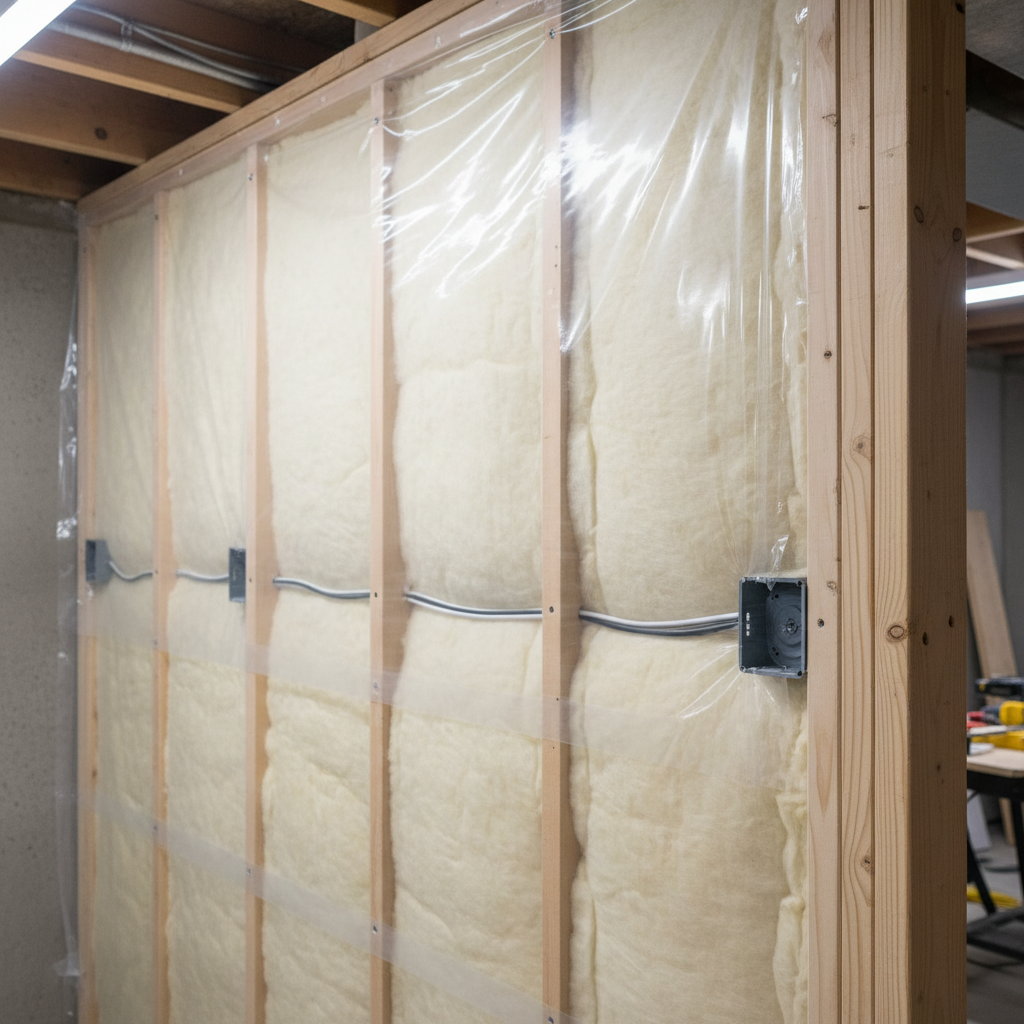
Typical scopes include structure and subfloor prep, insulation and vapor control, electrical and lighting, HVAC adjustments, plumbing rough-ins, drywall and paint, flooring installation, trim and doors, and specialties like media walls, wet bars, vanities, and closets. Each has material and labor drivers that shape your overall investment.
Structure and Envelope
- Framing and blocking: Walls, ceilings, soffits, and backing for cabinets, handrails, and TVs.
- Insulation and vapor control: Mineral wool or foam board, sealed poly or smart membranes.
- Sound control: Resilient channels, acoustic batts, and sealants around theaters and bedrooms.
Mechanicals and Systems
- Electrical: New circuits, outlets, AFCI/GFCI, low-voltage, and dimmable lighting scenes.
- HVAC: Duct adjustments, returns, or split systems for comfort balance.
- Plumbing: Rough-ins for bathrooms, wet bars, laundry, or utility sinks.
Surfaces and Finishes
- Drywall and ceilings: Standard, moisture-resistant, or sound-rated boards; smooth or textured finishes.
- Flooring: LVP, engineered hardwood, tile, or carpet with appropriate underlay.
- Trim and doors: Baseboards, casing, solid or hollow-core doors, and hardware.
Specialties (Altima Strengths)
- Custom media units: Built-ins with cable management, speaker niches, and LED accents.
- Wet bars and vanities: Factory-built boxes, quartz countertops, backsplash installation.
- Closets and storage: Modular wardrobes, pull-out pantries, lazy susan cabinet storage for flex spaces.
CDC guidance notes maintaining 30–50% indoor relative humidity helps limit mold growth—an important baseline when specifying HVAC, dehumidification, and bathroom ventilation in the basement.
Pricing Factors and Scope Drivers (No Numbers)
Basement finishing pricing depends on scope complexity, existing conditions, material selections, and inspection requirements. Clarify allowances for finishes, define performance targets for ventilation and lighting, and document site conditions upfront. This turns unknowns into planned line items instead of late-stage surprises.
- Existing conditions:
- Moisture mitigation needs, slab condition, and ceiling height
- Panel capacity for added loads and HVAC balancing requirements
- Presence of rough-ins for baths, bars, or laundry
- Complexity and access:
- Number of rooms, soffits, and specialized sound/lighting zones
- Stair access for materials and debris removal
- Need for egress upgrades or window enlargements
- Selections and allowances:
- Cabinet construction, door style, and finish system
- Countertops, backsplash tile, and plumbing fixture tiers
- Flooring category and underlayment performance
- Inspections and compliance:
- Framing, rough-in, insulation, and final inspections
- Energy, venting, and fire-stopping requirements
- Smoke/CO alarm wiring and interconnection
| Category | What’s Included | Selection/Spec That Moves the Needle |
|---|---|---|
| Structure & Envelope | Framing, subfloor prep, insulation, vapor barrier | Sound assemblies, smart membranes, engineered subfloors |
| Mechanicals | Electrical, lighting, HVAC, plumbing rough-ins | Dimmable lighting scenes, ventilation CFM, fixture categories |
| Surfaces | Drywall, tape/mud, paint | Level-5 finishing, low-VOC paints, moisture-rated boards |
| Finishes | Flooring, trim, doors, hardware | Floor type and underlay, solid-core doors, profile styles |
| Specialties | Media unit, wet bar, vanity, storage | Cabinet construction, quartz grade, lighting accents |
According to the EPA, proper exhaust ventilation in bathrooms helps control moisture—a key factor in long-term durability of basements. Include explicit fan specs and ducting paths in your scope to reinforce this.
Best Practices to Keep Your Breakdown Tight
Lock decisions early, document performance specs, and align allowances with actual showroom selections. Require as-built measurements before cabinetry production, hold weekly progress check-ins, and track change requests in writing. These habits limit scope creep and keep quality high.
- Design and selections:
- Confirm lighting temperature (Kelvin) and dimming behavior in the plan
- Choose cabinet hardware and finish sheens in the showroom
- Specify flooring underlay and transitions for mixed materials
- Trade coordination:
- Share cabinet shop drawings with electricians and plumbers
- Mark backing locations for floating shelves and TV mounts
- Sequence drywall after rough-ins are inspected and photographed
- Quality control:
- Use moisture meters before finishing walls and floors
- Check door reveals and scribe lines during trim install
- Document punchlist items with photos and close dates
We routinely integrate cabinet production schedules with on-site milestones. That synchronization—plus 2D/3D approvals—lets our team deliver cleaner fits and faster sign-offs across the GTA.
Tools, Materials, and Resources You’ll Rely On
Great results come from the right tools and materials: moisture control, quality framing and fasteners, proper insulation, balanced HVAC, code-compliant electrical, and factory-built cabinetry. Pair them with checklists, photo documentation, and 3D approvals to keep everything aligned from design to install.
Planning and Verification Tools
- Laser measurer, chalk lines, and story poles for consistent elevations
- Moisture meter and hygrometer to keep RH between roughly 30–50% indoors
- Camera documentation of rough-ins before drywall
Materials That Pay Off in Basements
- Moisture-tolerant flooring with proper underlay
- Acoustic batts and resilient channels near theaters and bedrooms
- Low-VOC paints and sealants for healthier air
Altima Factory and Showroom Advantages
- Italian CNC machining for precise cabinetry and media walls
- State-of-the-art spray booth finishes; lifetime warranties on select doors
- All selections under one roof at 11 Edvac Drive in Brampton
Named standards like ENERGY STAR and EPA ventilation guidance reinforce why humidity and exhaust performance belong in the written scope—not as an afterthought.
Case Studies: Real-World Basement Scope Planning
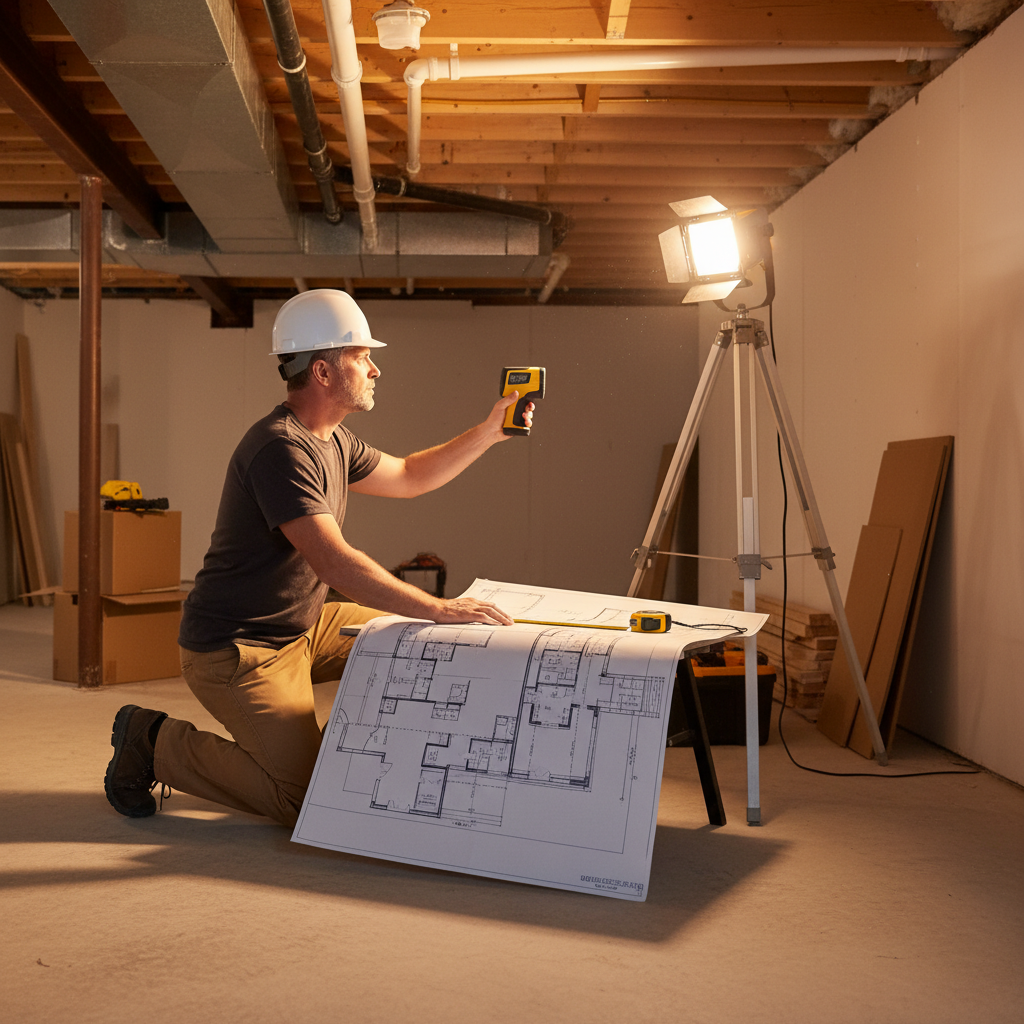
Successful basements start with accurate measurements, clear allowances, and coordinated trades. These brief, anonymized scenarios highlight how itemized scopes reduced rework, aligned inspections, and sped up delivery—especially when integrating custom media units, vanities, and wet bars.
- Media-first family room:
- Challenge: Wires and speakers visible in the old setup
- Breakdown fix: Cable chases and backing noted on drawings; acoustic batts behind media wall
- Outcome: Faster trim install, no exposed cabling, balanced sound
- Wet bar with tight headroom:
- Challenge: Bulkheads and low ducts near bar area
- Breakdown fix: Cabinet elevations aligned to duct dimensions; under-cabinet lighting and low-profile plumbing traps
- Outcome: Comfortable clearance, clean finishes, coordinated inspections
- Guest suite with bath:
- Challenge: Existing rough-ins offset from desired layout
- Breakdown fix: Floor plan adjusted; vanity and shower glass sized from site-verified measurements
- Outcome: Smooth tilework, correct slope, fixtures installed without rework
Documenting ventilation CFM near baths and laundry helped these projects maintain humidity control targets recommended by public health sources, supporting finish durability and comfort over time.
Free Planning Checklist (What to Confirm Before You Build)
- Moisture scan and RH baseline recorded
- Electrical panel capacity confirmed; circuits mapped
- HVAC balance and return locations decided
- Cabinet elevations approved; backing locations marked
- Lighting plan with dimming and color temperature set
- Floor transitions and thresholds detailed
- Inspection sequence and dates on calendar
Soft CTA: Get Your Itemized Scope
We’ll translate your ideas into a clean, line-by-line scope with 2D/3D visuals, cabinet elevations, and a sequencing calendar—designed and built from our Brampton showroom and factory.
Explore our approach to GTA basements in this practical overview of Mississauga basement renovation and see how we align selections with allowances.
FAQ: Basement Finishing Cost Breakdown and Planning
Answers focus on scope clarity, sequencing, and selections—not pricing. Use these to sanity-check plans, coordinate trades, and prepare for inspections so your basement project runs cleanly from demo to handover.
- How do I compare quotes fairly?
Ask for an itemized breakdown with matching assumptions: same square footage, identical electrical points, defined ventilation performance, and explicit finish allowances. Aligning specs removes guesswork and makes contractor comparisons meaningful. - What should be finalized before framing?
Lock the floor plan, door swings, lighting locations, and cabinetry elevations. Mark backing for floating shelves and TV mounts. Confirm bathroom layouts so plumbing rough-ins and venting land exactly where fixtures will live. - How do allowances work without surprises?
Allowances are placeholders for selections. Choose materials in the showroom, confirm SKUs and finishes, and document inclusions (e.g., underlay type, tile trim, hardware). The more specific your list, the fewer changes later. - When should I bring cabinetry into the plan?
Early. Media walls, wet bars, and vanities drive electrical, plumbing, and blocking. We produce 2D/3D drawings, capture as-built measurements, then fabricate in our factory for precise installation. - What’s the best way to keep momentum?
Hold weekly check-ins, track changes in writing, and tie inspection dates to material deliveries. Photograph rough-ins before drywall so future adjustments don’t require exploratory demo.
Conclusion: Turn Unknowns into a Confident Plan
A strong basement finishing cost breakdown turns unknowns into planned decisions. Define scopes, align allowances with showroom choices, and synchronize cabinetry production with on-site work. That’s how you protect schedule, quality, and comfort in your new space.
- Key Takeaways
- Write scopes the way you build: structure → systems → surfaces → specialties
- Document ventilation, humidity, and lighting performance—not just products
- Use factory-direct cabinetry and verified as-builts to reduce rework
- Keep selections, inspections, and deliveries synced to your calendar
- Next Steps
- Visit our Brampton showroom at 11 Edvac Drive to finalize selections
- Book a design meeting for 2D/3D drawings and an itemized scope
- Ask about 0% down financing with fast approvals to get moving sooner
For a deeper dive into timelines and planning, see our GTA-focused perspective on basement renovation in Toronto and how scoping decisions influence schedules. If you’re balancing whole-home priorities, our full home renovation overview explains how to phase work to reduce disruption.
Want a high-performance media wall or wet bar integrated into your plan? Explore cabinetry-led planning in this kitchen renovation planning guide—the same factory-direct advantages apply in your basement.
Ready to move from ideas to an itemized plan? Visit us at 11 Edvac Drive for a design consult, factory tour, and selections under one roof. We’ll turn your basement concept into a clean, buildable scope—start to finish.
Related Posts
Why Choose Kitchen Renovation Company
Nowadays, Kitchen spaces are not only a place for cooking and serving food, but these areas act as a statement, as they speak a lot about a family, the philosophy and personality of individuals, and spaces. If you admire aesthetics and adorn the beauty of your home, you must pay attention to the interior design […]
How a Kitchen Renovation Contractor is Changing the Game
Lifestyle is all about bringing something coherent to the overall experience of living. The kitchen and closets stand as two of the most influential spaces in a home that add to the overall experience of living. A Kitchen Renovation Contractor in Whitby by the name of Altima Kitchen and Closets Inc. is changing the overall […]
How Media unit contractor in Whitby is Changing the Game
Lifestyle is all about bringing something coherent to the overall experience of living. The kitchen and closets stand as two of the most influential spaces in a home that add to the overall experience of living. A Media Unit Company in Whitby by the name of Altima Kitchen and Closets Inc. is changing the overall […]