Kitchen Backsplash Materials Compared: Which Finish Fits Your Kitchen?
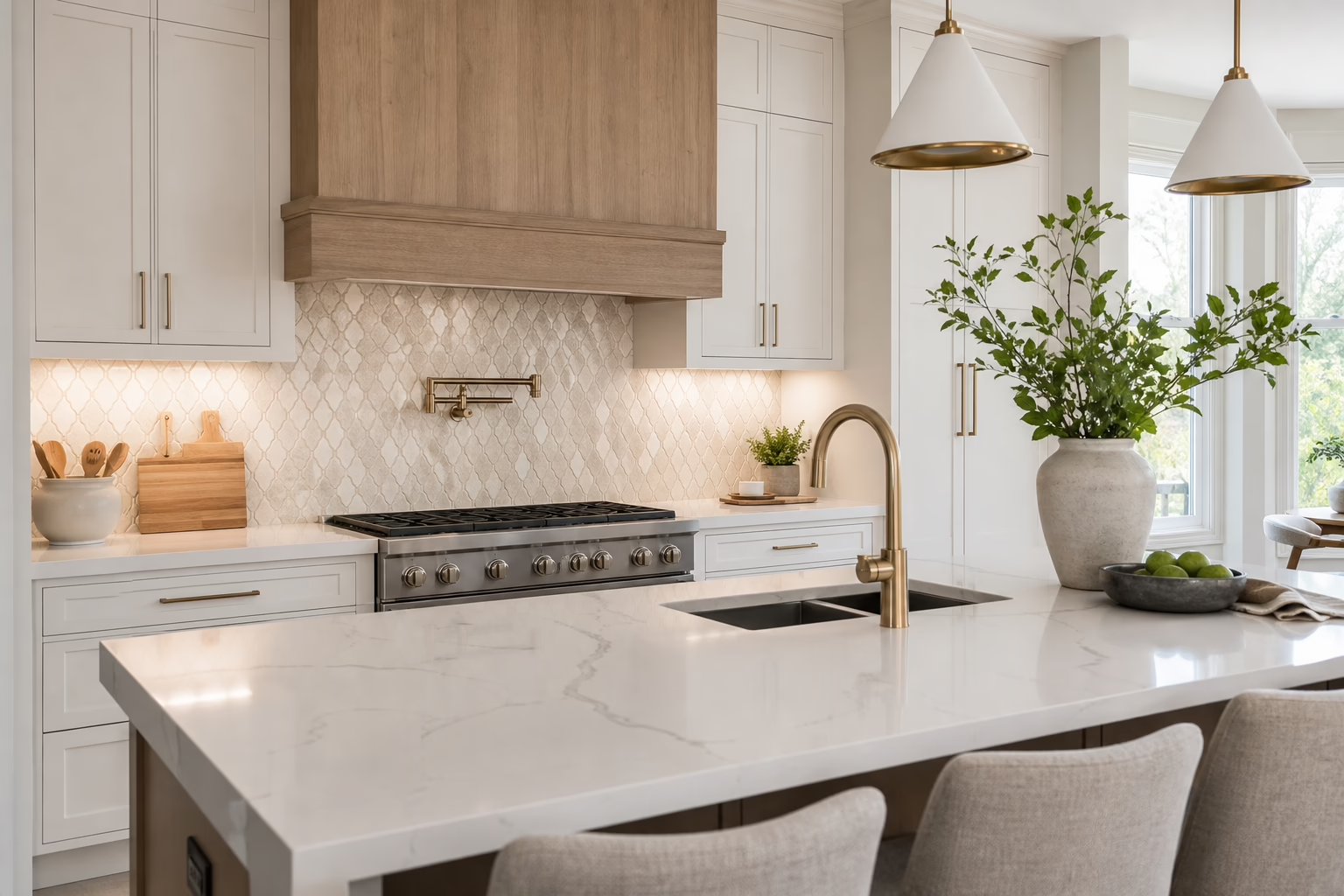
The best kitchen backsplash material depends on the balance you want between visual detail, cleaning, maintenance, installation complexity, and coordination with the rest of the room. Ceramic and porcelain tile generally offer the most flexibility for patterns and smaller details, while quartz and other slab-style surfaces create a more continuous look with fewer joints.
Glass and natural stone offer distinctive alternatives, but they require closer attention to lighting, grout, sealing, surface variation, and installation. The right choice must suit your cabinets, countertop, cooking habits, wall condition, and project logistics, not just look attractive in a showroom.
Kitchen backsplash materials at a glance
Compare every option using the same criteria: appearance, cleaning, maintenance, joint count, installation demands, coordination, and best-fit situation. The table is a starting point rather than a universal ranking.
| Material | Visual character | Practical considerations | Often suits |
|---|---|---|---|
| Ceramic or porcelain tile | Many colours, sizes, patterns, and layouts | More grout joints and detailed work around outlets, corners, and edges | Homeowners who want flexibility and pattern detail |
| Glass tile | Reflective, luminous, and visually light | Lighting, grout colour, cuts, and surface visibility need careful planning | Kitchens that benefit from brightness or a decorative accent |
| Natural stone | Distinctive texture and natural variation | Variation, sealing, edge treatment, and care should be confirmed | Designs where an organic finish is intentional |
| Quartz or slab surface | Continuous appearance with limited visual interruption | Requires accurate measurement, handling, fabrication, wall preparation, and seam planning | Homeowners who prefer fewer joints and a calm backdrop |
| Specialty finishes | Specific texture, colour, or focal-point effect | Cleaning and installation requirements vary by product | Projects with a defined design concept and suitable support |
Ceramic and porcelain tile

Tile is usually the most adaptable choice when the backsplash is an important design feature. It can be arranged in running bond, stacked, herringbone, vertical, or other layouts, with options ranging from small decorative formats to larger tiles with fewer joints.
The main tradeoff is grout. Joints contribute to the design, but they also make layout accuracy and grout selection important. Small inconsistencies can become noticeable under cabinet lighting, around outlets, or where the backsplash meets a countertop and side wall.
When tile is a strong fit
- You want a pattern, border, accent area, or several format options.
- Your kitchen has corners, windows, outlets, or changes in direction that benefit from smaller pieces.
- You want contrast or repetition between the backsplash, cabinets, hardware, and flooring.
- You are comfortable making grout colour and joint size part of the design.
Ceramic and porcelain should not be treated as identical products without checking the specific selection and installation requirements. Confirm the recommended adhesive, cutting method, grout, edge treatment, and whether sealing applies to the chosen tile or grout.
Glass tile and natural stone
Glass tile adds reflection and colour depth, which may help a compact or darker kitchen feel brighter. Its appearance changes with the lighting, grout colour, tile transparency, and pattern direction.
That visual quality makes careful planning important. Cuts around outlets and corners need to look intentional, and uneven spacing can be especially visible on a reflective surface. Review a representative sample beside the proposed cabinet finish, countertop, and lighting rather than choosing from an isolated tile.
Natural stone brings variation that manufactured materials may not reproduce. Veining, texture, shade changes, and edge details can become the focal point of the kitchen. This works well when variation is part of the design, but less well when you want every section to look uniform.
Before selecting stone, confirm cleaning instructions, sealing requirements, ongoing care, and how corners and exposed edges will be finished. Understand those requirements before including the material in the final scope.
Quartz and other slab-style backsplash surfaces
A slab-style backsplash creates a broad, continuous field behind the counter. Quartz or another suitable slab may appeal when you want fewer grout joints, visual continuity with the countertop, or a quieter background behind detailed cabinetry and hardware.
Fewer joints do not eliminate installation planning. Slabs require accurate measurements, suitable handling, a prepared wall, and a clear plan for seams, outlets, corners, windows, range hoods, and exposed ends. Large pieces can make access and staging more important, especially in a condo or a kitchen with narrow entrances.
Tile and slab also communicate different design priorities. Tile builds a pattern from many individual decisions. A slab places more attention on colour, veining, proportion, and the relationship between the backsplash and countertop. Neither approach is automatically better for every home.
Match the backsplash to the whole kitchen
Select the backsplash as part of a complete materials palette, not as a separate purchase. Compare the cabinet door style and colour, countertop pattern, flooring, hardware, range hood, windows, and under-cabinet lighting before finalizing the surface. Altima’s kitchen materials palette approach reflects this broader coordination process.
Use contrast carefully
If the countertop has strong veining or the cabinets have a pronounced colour, a quieter backsplash may prevent visual crowding. Simple cabinets and a restrained countertop may leave room for patterned tile or a textured feature.
Repeat one visual element
Repeating a tone from the countertop, cabinet hardware, floor, or lighting can connect different materials. The match does not need to be exact. Similar warmth, undertone, texture, or contrast level may be enough.
Check the effect of lighting
Under-cabinet lighting can emphasize grout lines, texture, lippage, veining, or uneven transitions. Review samples under the lighting planned for the kitchen, particularly when considering glass, polished surfaces, dark grout, or reflective slab.
Installation details that affect the final result
Material choice and installation scope should be decided together. Wall preparation, level lines, tile setting, grout, sealing, outlet details, and edge finishes all influence the completed result. A kitchen backsplash installation guide can help you review these requirements before approving a material.
Wall preparation and layout
Confirm that the wall is clean, sound, and suitable for the selected adhesive or setting method. Layout should account for cabinet lines, countertop height, windows, outlets, hood areas, and end cuts. A balanced layout is usually preferable to very narrow pieces in prominent locations.
Grout and sealing
Grout affects appearance and maintenance. Contrasting grout highlights a tile layout, while a closer colour creates a more continuous field. Ask whether the selected tile and grout require sealing, how they should be cleaned, and what care instructions will be provided.
Corners, outlets, and edges
Inside corners typically need a flexible joint rather than a rigid meeting that may crack as surfaces move. Outlets require accurate cuts and should be considered before fixing the layout. At exposed ends, windows, and hood transitions, confirm whether the design calls for trim, a finished edge, a return, or another termination.
These details matter for slab surfaces too. Confirm seam locations, corner joints, outlet cutouts, window returns, and how the slab will meet the countertop and cabinet sides before fabrication.
Planning a backsplash in a condo renovation
Condo projects can require more coordination because materials, workers, tools, and waste may move through shared spaces. Confirm building-specific requirements directly with the property manager or board. Requirements can differ between buildings, so do not assume access hours, elevator use, noise limits, protection, or approvals.
Define the backsplash scope before work begins. Include the material, layout, grout, sealing, outlet treatment, edge details, removal of an existing backsplash, wall repairs, protection, cleanup, and who supplies each component.
Measurement and sequencing matter in smaller kitchens. If cabinetry or countertops are also changing, coordinate the backsplash after relevant dimensions and surface relationships are confirmed. Ask how shared routes will be protected and how schedule changes will be communicated.
Kitchen backsplash material selection checklist
- Wall condition: Is the wall flat, clean, sound, and ready for the selected method?
- Cooking habits: Will the surface face frequent splashes, grease, steam, or heavy use?
- Cleaning preference: Do you prefer fewer joints, or are you comfortable maintaining a detailed pattern?
- Visual direction: Do you want a focal pattern, reflection, natural variation, or a continuous backdrop?
- Coordination: Have you reviewed samples beside the cabinets, countertop, flooring, hardware, and lighting?
- Grout and sealing: What grout colour is included, and what sealing or care is required?
- Installation: Are outlet cuts, corners, windows, hood areas, end caps, and transitions included?
- Access: Are there condo, doorway, elevator, parking, or staging constraints?
- Scope clarity: Does the quote identify materials, preparation, installation, removal, cleanup, and upgrades?
When comparing finishes on a visual board, review colours in the actual kitchen lighting. Large-format presentation can help when planning finish boards, as shown in this resource about wide-format printing, but physical samples should still be checked before approval.
When professional backsplash installation makes sense
Professional installation is especially worth considering for glass or natural stone, large-format pieces, slab-style surfaces, complex patterns, numerous outlets, uneven walls, tight condo schedules, or a backsplash that must align with new cabinetry and quartz countertops.
Altima Kitchens And Closets provides backsplash installation alongside kitchen renovation services, custom cabinetry, quartz countertops, 2D and 3D design, and in-house installation. Its stated process includes material selections under one roof and itemized quotations, which can help homeowners define the backsplash within the wider renovation scope.
Before hiring an installer, ask who measures the space, who supplies materials, how changes are documented, what preparation is included, and how grout, sealing, edges, outlets, and cleanup are handled.
Frequently asked questions
Is tile or quartz better for a kitchen backsplash?
Neither is universally better. Tile is generally more flexible for patterns, formats, and detailed layouts. Quartz or another slab-style surface may suit someone who prioritizes continuity and fewer grout joints. Compare wall condition, countertop coordination, handling, edges, outlets, and maintenance.
Do all kitchen backsplash materials require sealing?
No. Requirements depend on the material, product, and grout. Confirm manufacturer care instructions and ask what will be sealed, when, and how the surface should be maintained.
How should backsplash grout coordinate with cabinets and countertops?
View grout with the tile, cabinet finish, and countertop. Contrasting grout highlights the layout, while a similar colour reduces interruption. Consider lighting because dark or contrasting joints may become more prominent under cabinet lights.
Can a backsplash be installed over an existing kitchen wall?
It depends on the wall’s condition and the selected installation method. Cleaning, repair, removal of loose material, or additional preparation may be necessary. Have the wall assessed before assuming direct installation is possible.
What should condo owners confirm before scheduling installation?
Confirm building requirements for access, elevator booking, work hours, noise, protection, delivery, waste removal, and approvals. Also confirm the installer’s measurement process, scope, and schedule.
Conclusion: choose the finish that matches your priorities
Choose ceramic or porcelain tile when pattern, format, and detail flexibility matter most. Choose glass or natural stone when their visual character is central to the design and you are prepared to review their care requirements. Choose quartz or another slab-style surface when fewer joints and a continuous relationship with the countertop are the priority.
Before approving the work, confirm wall condition, grout and sealing, outlet and corner details, edge treatment, lighting, cabinet and countertop coordination, and the complete installation scope. For a GTA renovation combining backsplash installation with custom cabinetry, quartz countertops, design, and in-house installation, contact Altima Kitchens And Closets to discuss your project.
Related Posts
Why Choose Kitchen Renovation Company
Nowadays, Kitchen spaces are not only a place for cooking and serving food, but these areas act as a statement, as they speak a lot about a family, the philosophy and personality of individuals, and spaces. If you admire aesthetics and adorn the beauty of your home, you must pay attention to the interior design […]
How a Kitchen Renovation Contractor is Changing the Game
Lifestyle is all about bringing something coherent to the overall experience of living. The kitchen and closets stand as two of the most influential spaces in a home that add to the overall experience of living. A Kitchen Renovation Contractor in Whitby by the name of Altima Kitchen and Closets Inc. is changing the overall […]
How Media unit contractor in Whitby is Changing the Game
Lifestyle is all about bringing something coherent to the overall experience of living. The kitchen and closets stand as two of the most influential spaces in a home that add to the overall experience of living. A Media Unit Company in Whitby by the name of Altima Kitchen and Closets Inc. is changing the overall […]