How to Decide if Kitchen Refacing Is Right for Your Brampton Home
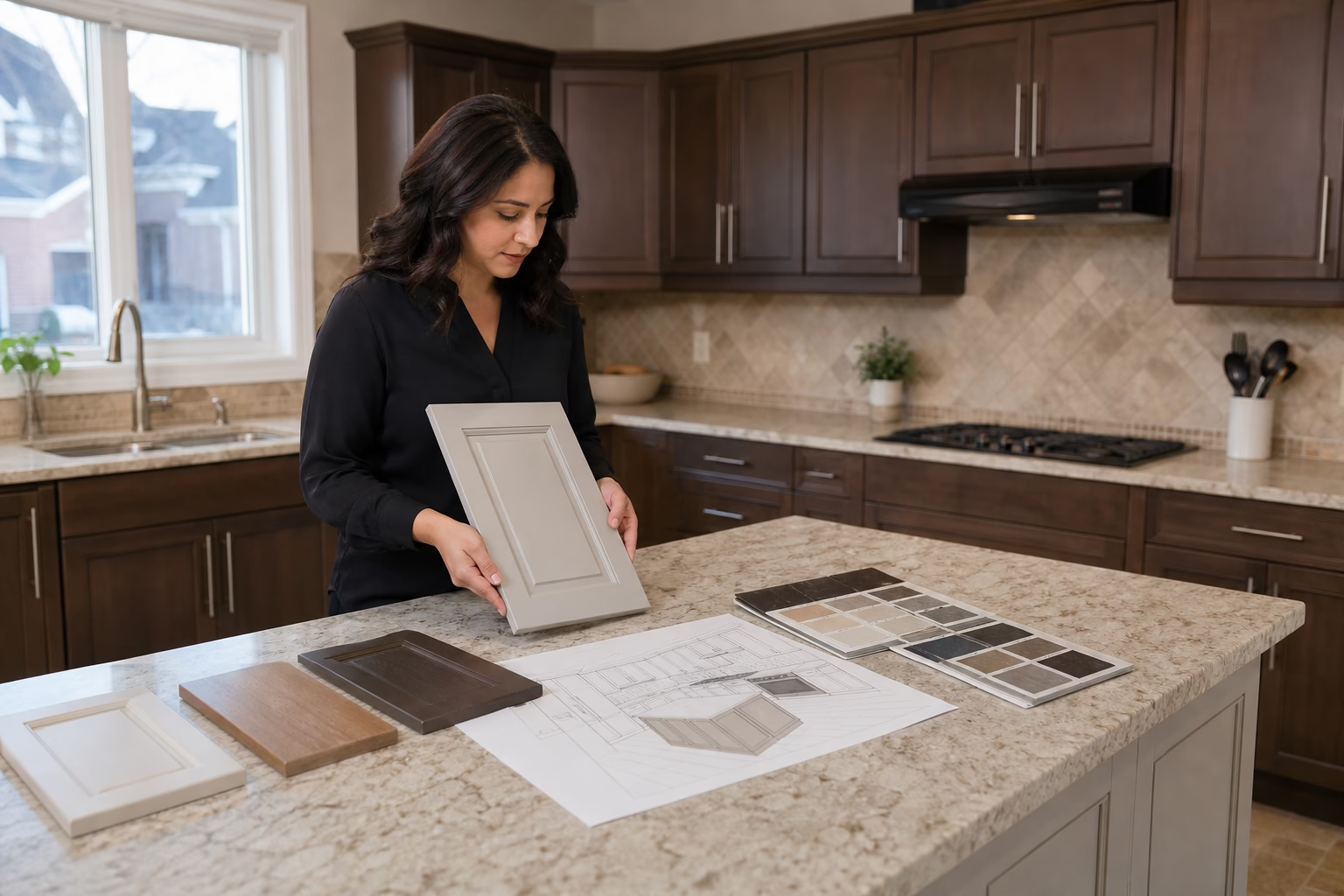
Kitchen refacing can refresh a dated kitchen without replacing every cabinet. It is usually suitable when existing cabinet boxes are dry, square, stable, and arranged in a layout that already works. If the boxes are damaged or you want major changes to storage, appliances, or the footprint, replacement or a broader renovation may be more appropriate.
The decision depends less on how old the doors look and more on the condition and performance of what sits behind them. Use the steps below to decide whether refacing is worth requesting a quote for your Brampton or GTA kitchen.
What kitchen refacing changes, and what it leaves in place
Kitchen refacing typically replaces visible doors, drawer fronts, and exterior cabinet surfaces. Suitable cabinet boxes and the overall footprint remain in place. New hardware, finishes, and selected accessories can create a substantial visual change without rebuilding every cabinet.
Refacing is not the same as refinishing. Refinishing changes the appearance of existing components, often through paint or a new finish. Refacing replaces more of the visible cabinetry, while full replacement removes existing cabinets and installs new boxes, doors, drawers, and interior storage. If you are comparing door replacement options, a replacement cabinet door measuring checklist can help you prepare, although professional site measurements should confirm the final scope.
Before choosing, compare the cabinet refacing pros and cons against your cabinet condition, storage requirements, timeline, and desired changes.
Step 1: Inspect the cabinet boxes before discussing finishes

Cabinet-box condition is the first go-or-stop checkpoint. Open doors and drawers, inspect the sink base, and look near dishwashers, refrigerators, plumbing, and exterior walls. The structure must be sound enough to support new fronts and hardware.
- Moisture: Swelling, bubbling, soft material, staining, or crumbling panels can indicate serious damage.
- Mould or pests: These problems should be addressed at their source, not covered with new doors.
- Stability: Check whether boxes move, separate, or pull away from the wall.
- Alignment: Crooked or warped boxes can create sticking doors, uneven gaps, and poor reveals.
- Support: Cabinets should be firmly attached and reasonably level before installation.
Stop point: If boxes are soft, swollen, mouldy, pest-damaged, badly warped, or structurally loose, do not choose refacing simply because the doors look outdated. Cabinet replacement or wider renovation work may be necessary.
Step 2: Test whether the existing layout still works
Sound boxes do not automatically make refacing the right choice. Notice what frustrates you during a normal day. Is preparation space too limited? Do appliance doors conflict? Is traffic crossing the main work area? Are frequently used items difficult to reach?
Refacing preserves the existing footprint. It cannot, by itself, relocate an appliance, add an island, extend a cabinet run, change plumbing, or create a substantially different work triangle. Selected organizers may be possible, but they should be evaluated as part of the design.
Stop point: If your main goal is a new layout, significantly more storage, different cabinet dimensions, or a relocated sink, range, or refrigerator, ask for a replacement or broader kitchen-renovation plan.
Step 3: Compare refinishing, refacing, and replacement
Each option solves a different problem. The right choice depends on the condition of the kitchen underneath and the changes you want to make.
| Option | What changes | Best fit | Main limitation |
|---|---|---|---|
| Refinishing | Existing visible components receive a new paint or finish. | The layout, storage, doors, and boxes work, but the finish looks tired. | It may not correct dated door styles, damaged components, or hardware problems. |
| Refacing | Doors, drawer fronts, and visible surfaces are updated while suitable boxes remain. | The boxes and layout are sound, but the kitchen needs a larger visual update. | The footprint and most structural storage constraints remain. |
| Full replacement | Existing cabinets are removed and new boxes, doors, drawers, and storage are installed. | The kitchen needs a new layout, more storage, different dimensions, or damaged-box correction. | It involves broader removal, coordination, and decisions. |
If you remain unsure, compare refinishing, refacing, or replacement using your layout, storage requirements, and cabinet condition rather than appearance alone.
Step 4: Separate refacing from upgrades that expand the scope
New knobs or pulls, selected organizers, countertops, backsplash, lighting, sinks, faucets, or flooring may be considered alongside refacing. Whether they fit smoothly depends on measurements, existing surfaces, and installation sequence.
Replacing a countertop may affect the sink, faucet, backsplash, and cabinet support. Electrical work or lighting may require additional trade coordination. A new pantry, island, or cabinet run is not simply a finish upgrade and may require new cabinetry, flooring repairs, or layout changes.
Ask for separate pricing for base refacing, optional upgrades, and broader renovation work. Every addition should appear in the written scope.
Step 5: Prepare for a consultation
Bring information that shows both the appearance problem and the functional problem:
- Room measurements, ceiling height, and the locations of doors, windows, and openings.
- Appliance makes, models, dimensions, and planned replacements.
- Photos of every cabinet run, cabinet interiors, corners, damage, hinges, and drawer slides.
- The number of doors and drawers, if known.
- Daily frustrations, such as poor access, insufficient prep space, awkward corners, or missing pantry storage.
- Preferred door styles, colours, hardware, countertops, backsplashes, and lighting.
- A separation between must-have changes and optional upgrades.
Ask to see how the proposed door style, hardware, countertop, and backsplash work together. Two-dimensional plans clarify measurements, while 3D visualizations can help you assess sightlines and overall appearance before manufacturing or installation.
Step 6: Review the quote and contract
Review the written proposal line by line. Confirm which doors, drawer fronts, end panels, fillers, toe kicks, trims, and exposed sides are included. Identify materials, finishes, hardware, repairs, removal, disposal, cleanup, protection, schedule, payment milestones, warranty coverage, and change-order procedures.
Ask whether countertops, backsplash, plumbing, electrical work, organizers, and lighting are included or excluded. If financing is offered, confirm the total amount, payment schedule, term, fees, and conditions. A monthly payment should not replace understanding the total project cost.
Ontario requires home-renovation contracts worth more than $50 to be in writing. The province also states that an estimate generally cannot be exceeded by more than 10% unless you agree to new work or a new price. Review Ontario’s home-renovation rights information and keep copies of all approvals and payment records.
Kitchen refacing decision checklist
Refacing is more likely to fit when:
- Boxes are dry, square, stable, and firmly attached.
- The doors and drawer fronts are the main source of the dated appearance.
- The existing layout and appliance placement work well.
- Storage is broadly adequate, with only selected organization improvements needed.
- You want a visual update without changing the cabinet footprint.
- The quote clearly defines materials, installation, exclusions, and warranty coverage.
Replacement or broader renovation deserves consideration when:
- Boxes are swollen, soft, mouldy, pest-damaged, warped, or loose.
- You need a new island, longer cabinet run, different dimensions, or relocated appliances.
- Storage limitations are caused by layout rather than organization.
- Plumbing, electrical, flooring, ventilation, or wall changes are central to the project.
- The proposed additions make the existing footprint unsuitable.
Planning the next step in Brampton
Bring your photos, measurements, priorities, and questions to a consultation instead of requesting a price based only on door photographs. A professional assessment can determine whether the boxes are suitable and whether your upgrades fit a refacing scope.
Altima Kitchens And Closets operates from a Brampton showroom and factory and provides in-house design and installation, factory-direct cabinetry, 2D and 3D visualizations, and itemized quotations. The company serves Brampton and the wider GTA. Confirm whether your kitchen is suitable for refacing or whether a replacement-based plan is more appropriate.
Frequently asked questions
Can cabinets be refaced if the doors are damaged but the boxes are sound?
Yes. That is one situation where refacing may fit, provided the boxes are dry, square, stable, and able to support new hardware. Confirm whether drawer boxes, slides, fillers, and end panels also need replacement.
Does refacing change the layout or add storage?
Usually, no. Refacing keeps the existing footprint. Selected organizers may be possible, but substantial storage changes generally require new cabinetry.
What should I photograph before requesting a quote?
Photograph every cabinet run, corner, sink base, drawer interior, hinge, damaged area, appliance, countertop, backsplash, and nearby floor. Include both wide room views and close-ups.
Can countertops and backsplashes be included?
They can sometimes be included, but they expand the scope and may affect plumbing, electrical work, sequencing, and cabinet support. Request separate line items and clear exclusions.
What should an Ontario homeowner confirm in the contract?
Confirm the written scope, materials, quantities, removal, installation, schedule, payment milestones, warranty, change-order process, and all countertop, backsplash, plumbing, and electrical exclusions.
Conclusion: choose the scope that matches the kitchen underneath
Kitchen refacing is a sensible candidate when cabinet boxes are sound, the layout works, and the main goal is updating visible surfaces. Refinishing may suit a smaller cosmetic change, while replacement is more appropriate when boxes are damaged or the kitchen needs major changes to storage, dimensions, or appliance placement.
Start with the cabinet inspection, test the layout, separate essential work from optional upgrades, and review an itemized written proposal before committing. Brampton homeowners can bring those findings to Altima Kitchens And Closets to discuss the appropriate cabinetry and renovation scope.
Related Posts
Why Choose Kitchen Renovation Company
Nowadays, Kitchen spaces are not only a place for cooking and serving food, but these areas act as a statement, as they speak a lot about a family, the philosophy and personality of individuals, and spaces. If you admire aesthetics and adorn the beauty of your home, you must pay attention to the interior design […]
How a Kitchen Renovation Contractor is Changing the Game
Lifestyle is all about bringing something coherent to the overall experience of living. The kitchen and closets stand as two of the most influential spaces in a home that add to the overall experience of living. A Kitchen Renovation Contractor in Whitby by the name of Altima Kitchen and Closets Inc. is changing the overall […]
How Media unit contractor in Whitby is Changing the Game
Lifestyle is all about bringing something coherent to the overall experience of living. The kitchen and closets stand as two of the most influential spaces in a home that add to the overall experience of living. A Media Unit Company in Whitby by the name of Altima Kitchen and Closets Inc. is changing the overall […]