Pull-Out Pantry Benefits Compared With Fixed Shelves
Pull-out pantries can make food easier to see and reach, especially inside deep or narrow cabinets. They are not automatically better than fixed shelves, however. The right choice depends on cabinet dimensions, clearance, hardware, storage habits, and renovation budget.
What is a pull-out pantry system?
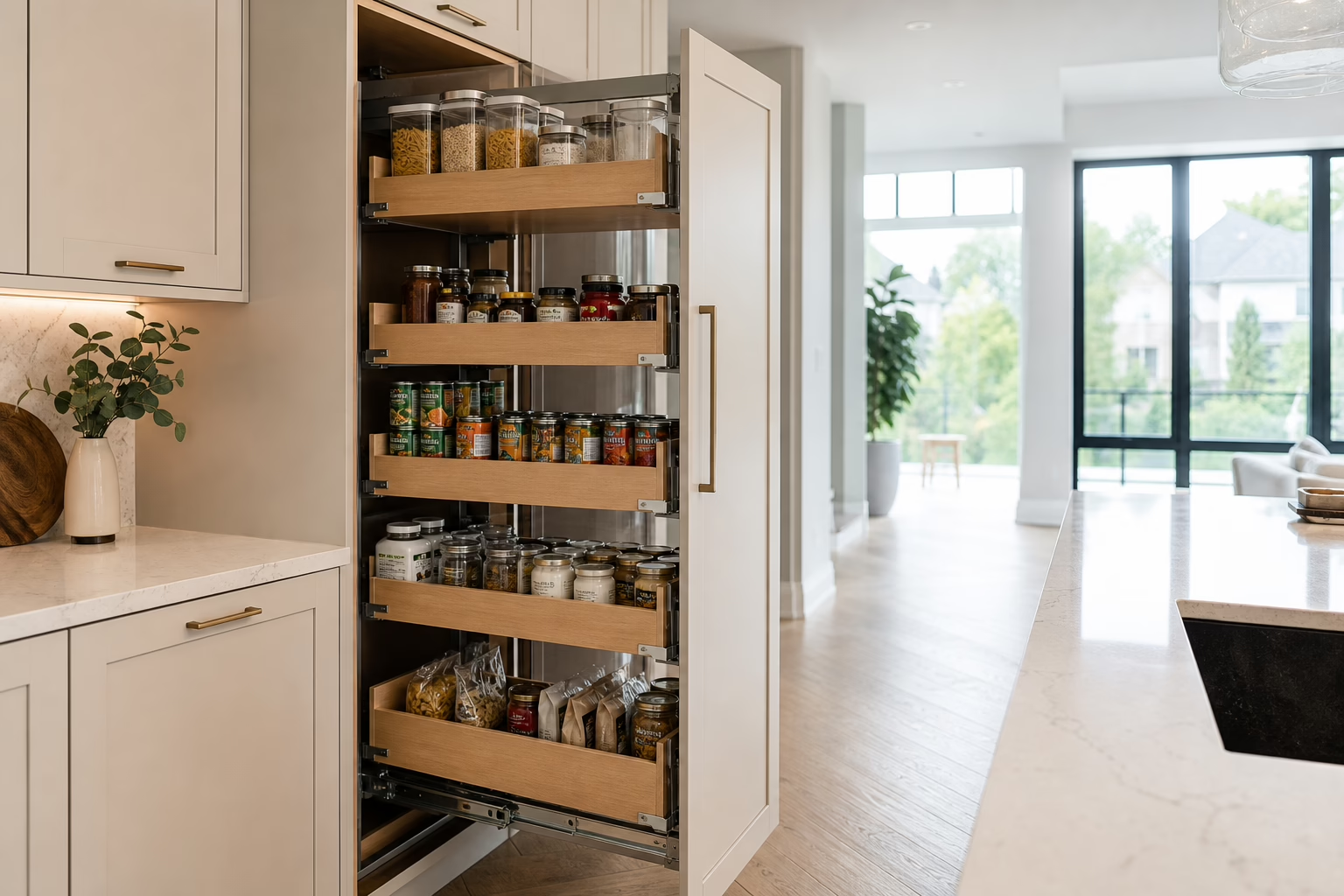
A pull-out pantry is a cabinet storage system mounted on sliding hardware. Instead of reaching into a fixed shelf, you pull the organizer toward you to access its contents. Depending on the design, it may include shelves, baskets, or other accessories arranged vertically.
Fixed pantry shelves remain stationary inside the cabinet. They can provide simple, open storage, but items at the back may be harder to see or retrieve when the cabinet is deep. A pull-out system changes access to the cabinet; it does not guarantee that the cabinet will hold more.
For planning examples, review these pull-out pantry organizer systems.
Pull-out pantry vs. fixed shelves at a glance

| Consideration | Pull-out pantry | Fixed shelves |
|---|---|---|
| Access | Can bring items toward the cabinet opening. | May require reaching around front items in a deep cabinet. |
| Visibility | Contents may be easier to review when extended. | Depends heavily on cabinet depth, shelf spacing, and lighting. |
| Organization | Can create dedicated vertical storage zones. | Provides straightforward open shelving. |
| Capacity | Depends on organizer dimensions, shelf spacing, and hardware. | Depends on usable cabinet volume and shelf arrangement. |
| Installation | Requires suitable hardware, accurate measurements, and movement clearance. | Usually involves a simpler stationary arrangement. |
| Best fit | Useful when access to deep or narrow storage is important. | Useful when simple construction or flexible shelf use is the priority. |
Where pull-out pantry storage can be a better choice
1. Easier access to items at the back
The clearest pull-out pantry benefit is improved access. Extending the organizer can bring cans, dry goods, small appliances, and other items closer to the cabinet opening. This may reduce the need to reach around front items or remove products to find one at the back.
The benefit depends on adequate clearance and sufficient extension. If an aisle, appliance, door, or handle interferes with movement, the organizer may not be practical.
2. Better visibility of stored food
Fixed shelves can make it difficult to review the full depth of a cabinet from the aisle. A pull-out organizer moves contents into a more visible position, making it easier to assess each shelf.
Visibility still depends on shelf layout, container sizes, cabinet height, and lighting. A well-planned fixed shelf can work effectively in a shallow cabinet, while a crowded pull-out can be difficult to use. The design should match the items you actually store.
3. More deliberate organization in narrow or vertical spaces
Tall cabinets often hold several categories of food and household supplies. A pull-out pantry can divide vertical space into zones for baking ingredients, canned goods, snacks, or frequently used staples. Shelves or baskets can be selected around the size and handling needs of each category.
This can be useful when a kitchen has limited drawer space or when you want a dedicated pantry cabinet. The organizer should support your routines rather than simply add more compartments.
4. A practical option for awkward cabinet locations
Deep, narrow, or difficult-to-reach cabinet locations can be frustrating with stationary shelves. A sliding organizer may make one of these spaces more usable by bringing contents forward.
Not every narrow cabinet can accept a pull-out pantry. The opening width, internal depth, door construction, adjacent cabinets, aisle clearance, and full-extension path must be checked. The design should also identify conflicts with appliances, handles, drawers, and walkways.
5. More configuration choices during a custom renovation
When pantry storage is planned as part of custom cabinetry, the organizer can be considered alongside cabinet height, door style, finish, counters, and other storage accessories. This creates more opportunity to coordinate the pantry with the way the household cooks and shops.
Configuration flexibility is not a guarantee that every option will fit. Ask to see the proposed shelf arrangement and confirm which components are included and which are upgrades.
Where fixed shelves may be the better option
Fixed shelves can be a strong choice when the cabinet is shallow, the contents are easy to reach, or the storage pattern changes frequently. They contain fewer moving components and may offer a simpler way to adjust or replace shelf arrangements, depending on the cabinet design.
They may also suit homeowners who store larger, heavier, or irregularly shaped items that do not need to be brought forward as a group. In those cases, sliding hardware may not provide enough practical value to justify its space and cost requirements.
Capacity is not the same as accessibility
A pull-out pantry does not automatically create more storage. Actual capacity depends on internal cabinet dimensions, space used by the mechanism, shelf spacing, and the size of stored items.
A fixed shelf may use cabinet volume efficiently in one layout, while a pull-out may make a similarly sized space much easier to access. Compare usable configurations rather than asking only which system has more shelves.
Hardware quality and load requirements matter
A pull-out pantry relies on its sliding mechanism as well as its cabinet construction. Ask which hardware is included, how much weight it is designed to support, how shelves are secured, and what warranty terms apply.
Consider the combined weight of jars, cans, bottles, and containers you expect to store. The quote should identify differences between standard and upgraded components.
Clearance can determine whether the system works
The organizer needs enough room to extend without striking an opposite counter, island, appliance, door, or person using the kitchen. Check the cabinet opening and the full movement path, not just the space inside the cabinet.
Also review the door and handle arrangement. A measured plan should show how the pantry relates to nearby drawers, doors, and appliances.
Installation and budget tradeoffs
Fixed shelves may involve a simpler installation scope than a custom pull-out system. A pull-out pantry can require specialized hardware, reinforced construction, careful alignment, and additional configuration decisions.
Rather than assuming one option is always cheaper, compare an itemized quote. Look for cabinet construction, organizer or shelf components, hardware, finish, installation, and upgrade pricing.
How to decide which pantry storage suits your kitchen
- Measure the cabinet. Record the opening, internal width, depth, and height.
- Consider what you store. Cans, jars, bottles, boxed food, and small appliances may require different spacing and load considerations.
- Assess access needs. Frequently used items may benefit most from being brought forward.
- Check the movement path. Review the aisle, nearby doors, appliances, handles, and full extension.
- Distinguish new from existing cabinetry. A new custom cabinet may offer more flexibility, while an existing cabinet may require modifications.
- Compare the complete cost. Identify what is standard, what is upgraded, and what installation includes.
What to confirm in a pantry-storage quote
- Measured cabinet opening and internal dimensions.
- Required clearance in front of and beside the cabinet.
- Organizer type, shelf or basket count, and spacing.
- Sliding hardware specifications and load requirements.
- Cabinet box material, door style, finish, and interior accessories.
- Installation scope, including removal or modification of existing cabinetry.
- Warranty terms for the cabinet, doors, and moving hardware.
- Exclusions, site conditions, and work assigned to other trades.
- Itemized pricing for the base configuration and every upgrade.
A detailed quote lets you compare a pull-out pantry with fixed shelves on equal terms and identify clearance or component issues before materials are ordered.
Use the design preview to test the decision
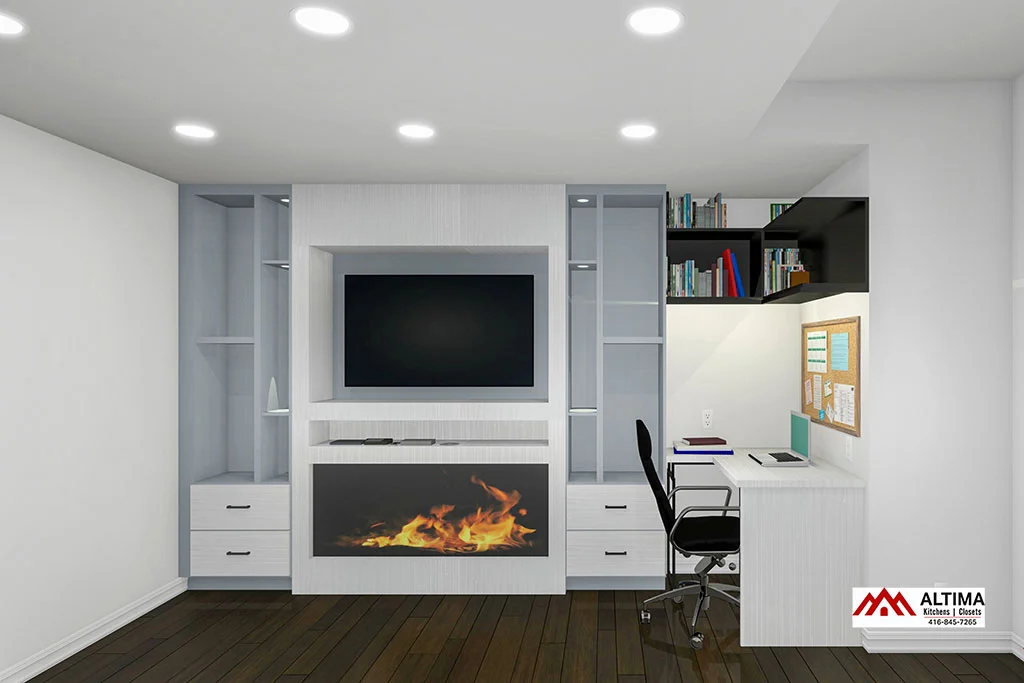
Drawings and samples can make the comparison more concrete. Review where the pantry sits, how it opens, what it stores, and how it relates to the rest of the kitchen. A visual plan can also help assess whether the configuration supports normal cooking and shopping routines.
Altima Kitchens And Closets provides custom cabinetry, in-house design and installation, 2D and 3D design visualizations, showroom selections, and itemized quotes with upgrade pricing. The company operates from a showroom and factory in Brampton and serves Toronto, Brampton, Mississauga, Oakville, Vaughan, and the wider GTA.
Choose the storage system that matches the space
Pull-out pantry benefits are strongest when a cabinet is deep, narrow, vertically arranged, or difficult to access with fixed shelves. The sliding mechanism can improve visibility and bring stored items forward, but hardware, load requirements, clearance, installation, and pricing must be evaluated carefully.
Fixed shelves may be better when the cabinet is easy to reach, storage needs change often, or a simpler configuration fits the space and budget. Measure the cabinet, consider what you store, and compare both options through a detailed quote.
For custom pantry organizers and kitchen cabinetry in the GTA, Altima Kitchens And Closets offers showroom consultations, in-house design and installation, and custom renovation services from its Brampton showroom and factory.