Basement Kitchen Design: Save Space and Add Value in 2026
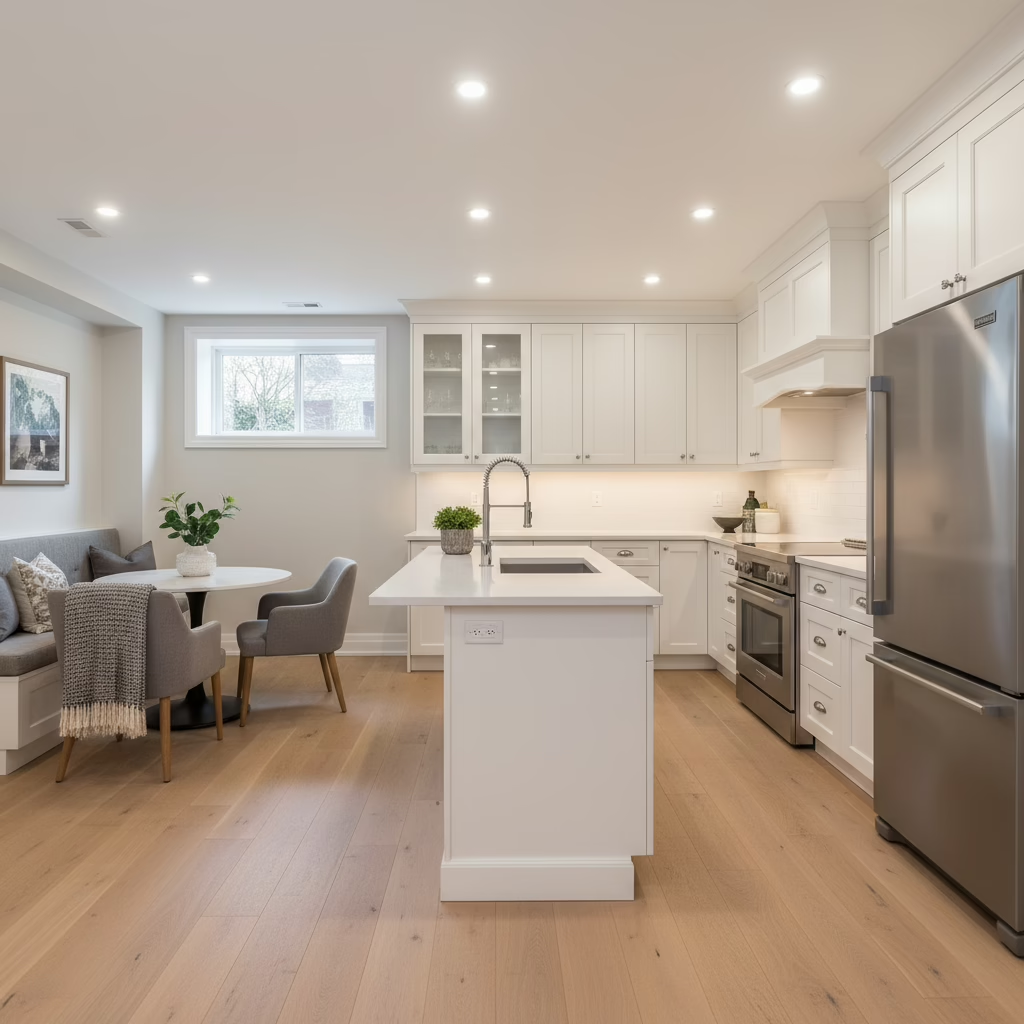
Basement kitchen design is the planning and construction of a full or compact cooking space on a home’s lower level. It adds livable square footage, supports multigenerational living, and can boost long-term home value. For Brampton and GTA homeowners, Altima Kitchens and Closets delivers in-house design, factory-built cabinetry, and end-to-end installation to make it seamless.
By Ashok, Altima Kitchens and Closets Last updated: 2026-05-27
At a glance: what youll learn
This complete guide explains how to plan a safe, practical basement kitchen that fits your space and lifestyle. Youll learn layouts, ventilation, storage, materials, code-aware planning, and a step-by-step workflowall aligned with Altimas in-house design, factory-direct cabinetry, and installation expertise.
Use this section to scan key points and jump to what matters most for your home. Weve organized the article so each section stands alone if youre searching for a quick answer.
- Definition: what a basement kitchen is and how it differs from a kitchenette
- Why it matters in the GTA: livability, resale, and family flexibility
- How it works: phased process from assessment to handover
- Types and layouts: one-wall, galley, L-shape, U-shape, plus island options
- Best practices: moisture, lighting, storage, and clearances
- Code and safety: ventilation, electrical protection, alarms
- Materials and appliances: durable, moisture-smart selections
- Tools and resources: 2D/3D design, factory production, installation
- Case studies: three real-world basement kitchen scenarios
- Budget and value: planning variables and financing options (no pricing)
What is basement kitchen design?
A basement kitchen is a purpose-built cooking zone on a homes lower level with cabinets, prep space, a sink, appliances, and ventilation. Good design adapts full-kitchen ergonomics to lower ceilings, limited light, and moisture control while meeting local code and safety expectations.
A well-planned basement kitchen includes work zones (prep, cook, clean), proper ventilation, task and ambient lighting, and durable finishes that perform below grade. The scope ranges from a compact kitchenette (sink, undercounter fridge, microwave/convection) to a full kitchen with range, dishwasher, and generous storage.
- Kitchen vs. kitchenette: A full kitchen supports daily cooking with a cooktop/range, oven, full-size fridge, dishwasher, and ventilation. A kitchenette focuses on light cooking and reheating with compact appliances and fewer circuits.
- Ergonomics still apply: Standard counter height (~36 in), toe-kicks (~4 in), and working aisle clearances (~362 in for one cook) keep movement easy in tighter basements.
- Moisture and light: Below-grade areas benefit from dehumidification, vapor-aware materials, and layered lighting to offset limited natural daylight.
In our experience designing across the GTA, the best outcomes come from clear early decisions: intended use, cooking frequency, and whether the space must flex for guests, rental, or long-term family needs. Those answers shape layout, electrical planning, and storage.
Why basement kitchens matter in the GTA
Basement kitchens increase livability, privacy, and flexibility for families. They support multigenerational living, create a comfortable entertainment hub, and can strengthen resale appeal when designed and installed professionally with durable, low-maintenance finishes.
Heres why theyre popular for Brampton and GTA homes:
- More usable square footage: Turning unfinished storage into a kitchen plus lounge can reclaim hundreds of square feet.
- Privacy for extended family: A self-contained cooking area reduces kitchen traffic upstairs and improves daily routines.
- Entertaining that works: Game nights and movie marathons run smoother with a fridge, sink, and microwave steps away.
- Appeal for future buyers: Functional lower levels help listings stand out when quality cabinetry and finishes signal longevity.
- Energy and noise control: A downstairs kitchen can keep cooking heat and odors contained and reduce late-night noise upstairs.
To see how a basement kitchen fits into a broader remodel, explore our Basement Renovation service page and our guide on maximizing your basement space. These resources map the path from idea to finished space with Altimas design-build approach.
How basement kitchen design works (step-by-step)
The best process moves from discovery and measurement to 2D/3D layout, utilities planning, selections, factory production, and professional installation. Clear approvals and site-ready checklists prevent delays and deliver a smooth, on-time basement kitchen build.
Altimas structured workflow keeps decisions organized and momentum steady:
- Discovery and goals: Define who will use the space, cooking frequency, and storage needs. Note ceiling height, bulkheads, windows, and existing plumbing/electrical.
- Site measures: Verify square footage, obstructions, and mechanical runs so the layout accounts for real-world conditions.
- 2D/3D design: We produce plans, elevations, and 3D renderings so you can visualize layouts, clearances, and lighting before build.
- Utilities plan: Align plumbing (sink, dishwasher), ventilation path, make-up air strategy, dedicated circuits, and protection (e.g., GFCI/AFCI as required locally).
- Selections: Choose cabinets, finishes, counters, backsplash, lighting, and accessories in one showroom to reduce decision fatigue.
- Factory production: Your cabinetry is built on Italian CNC machinery and finished in a professional spray booth for consistency.
- Installation and walkthrough: Our in-house team installs, aligns doors/drawers, sets accessories, and completes a quality checklist.
| Phase | Primary focus | Owner decisions |
|---|---|---|
| Discovery | Intent, scope, constraints | Define cooking needs, storage, users |
| Design | Layout, 3D visuals, clearances | Approve plan, appliance specs |
| Pre-build | Utilities & ventilation plan | Confirm locations, protections |
| Production | Factory-built cabinetry | Finish colors, hardware |
| Installation | Fit, align, commission | Final walkthrough, punch list |
Local considerations for Brampton and the GTA
- Plan for winter humidity swings: combine ventilation with a dehumidifier to protect cabinets and flooring.
- Schedule noisy work thoughtfully: condo rules or quiet hours may limit cutting and drilling; coordinate approvals early.
- Account for delivery access: confirm stair widths, turns, and door clearances for full-height pantry and panel delivery.
For a deeper dive into planning, review our primer on how to plan a kitchen renovation, which applies to basement kitchens with extra attention to ventilation and moisture control.
Types and layouts: kitchenette vs. full basement kitchen
Choose a kitchenette for light prep and reheating in limited space; choose a full basement kitchen for daily cooking, entertaining, or long stays. Layouts include one-wall, galley, L-shape, U-shape, and island variations based on circulation, ceiling height, and utilities.
Picking the right scope sets expectations for power needs, ventilation, and storage volume. Here are common approaches we implement in GTA basements:
- One-wall: Ideal for narrow rooms; use tall pantry storage and undercabinet lighting to maximize function.
- Galley: Two parallel runs increase prep length; keep 362 in between for a safe working aisle.
- L-shape: Tucks neatly into a corner and opens to seating; add a movable cart or compact island for extra surface area.
- U-shape: Maximum storage and counter space; ensure corners have easy-access accessories (e.g., lazy susan).
- Peninsula or compact island: Adds seating, defines zones, and improves sight lines in open basements.
| Feature | Kitchenette | Full basement kitchen |
|---|---|---|
| Appliances | Undercounter fridge, microwave/convection, single-bowl sink | Full-size fridge, range/cooktop + oven, dishwasher |
| Electrical | Fewer dedicated circuits | Multiple dedicated small-appliance circuits and protections |
| Ventilation | Recirculating or compact vent path | Exterior-vented hood and make-up air strategy |
| Storage | Essential cabinets and a small pantry | Full-height pantry, pots-and-pans drawers, recycling center |
| Best for | Snacks, guests, light meals | Daily cooking, entertaining, multigenerational living |
For space-planning inspiration, browse our article on transforming your basement and our ideas piece on maximizing your space.
Basement kitchen design best practices
Design for dry, bright, and quiet. Control moisture, layer lighting, and plan storage that reaches corners and low ceilings. Keep clearances safe, vent odors to the exterior when possible, and choose durable finishes that resist scratches and swelling.
These practices keep lower-level kitchens comfortable and low-maintenance:
- Moisture management: Add a dedicated dehumidifier drain, use cementitious backers at wet walls, and consider vapor-aware flooring underlayment.
- Lighting layers: Combine recessed ambient, undercabinet task, and toe-kick night lighting to avoid shadows.
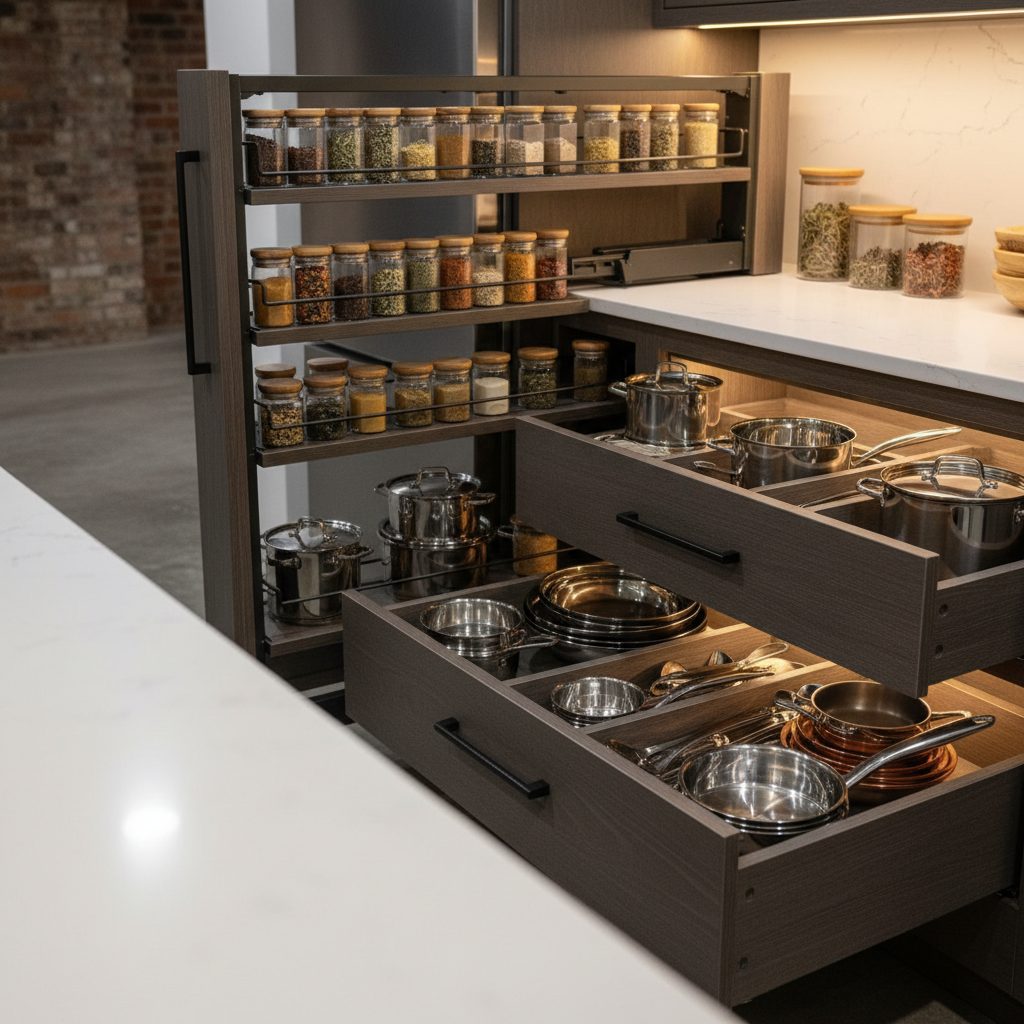
- Right-size storage: Deep drawers for pots, a pull-out spice rack near the cook zone, and a recycling center near the sink.
- Corner access: Specify a lazy susan or blind-corner pull-out so no cubic inch is wasted.
- Clearances that work: Target ~362 in aisles; allow 158 in landing space beside the fridge and near the microwave.
- Sound control: Use soft-close hardware, rubber isolators for appliances, and acoustic insulation at ceilings if bedrooms sit above.
- Ventilation path: Short, smooth-duct runs with exterior termination reduce noise and odor linger.
Smart storage is the difference between “nice” and “lives like upstairs.” We often pair tall pantries with deep drawers so heavy cookware sits waist-high instead of on the floor.
Code, safety, and ventilation essentials
Plan for safe electrical protection, reliable smoke/CO detection, and a clean vent path to the exterior. Keep clearances around cooking surfaces, manage make-up air for stronger hoods, and document selections in your design set for permit review when required.
Reliable basements feel safe, smell fresh, and operate quietly. Here are fundamentals we account for in design documents:
- Electrical safety: Use dedicated small-appliance circuits and appropriate protection at wet locations. Keep countertop outlets reachable and avoid extension cords for fixed appliances.
- Detection and alarms: Interconnected smoke and carbon monoxide alarms increase response time and should be placed per local guidance.
- Cooking clearances: Maintain safe distances from combustibles and plan hood capture area proportionate to the cooktop.
- Vent path: Favor short, smooth-duct runs with exterior termination; long or restrictive paths reduce performance and increase noise.
- Moisture and make-up air: Strong exhaust can create negative pressure; balance with controlled make-up air strategies.
For framing and code basics in typical basement projects, see this practical overview of basement framing rules. When you work with Altima, we integrate code-aware decisions into the 2D/3D plan so details are clear before build.
Materials and appliances that work below grade
Choose durable, moisture-resilient materials like factory-finished cabinetry, quartz counters, and porcelain tile or engineered flooring. Pair them with right-size appliancesoften counter-depth or 24-inch unitsto maximize circulation, storage, and comfort in tighter spaces.
Selections that age well below grade share three traits: moisture tolerance, easy cleaning, and visual brightness.
- Cabinetry: Factory-built boxes with durable finishes resist swelling better than site-finished units. Lifetime-warranty door programs provide peace of mind on select door types.
- Countertops: Quartz resists staining and moisturea strong match for lower-level humidity cycles.
- Backsplash: Porcelain or glass tile with quality grout sealer stands up to steam and splashes.
- Flooring: Consider porcelain tile, LVP with rigid core, or engineered wood rated for below grade.
- Appliances: Counter-depth fridges, 24-inch dishwashers, and combination wall ovens/microwaves keep aisles comfortable.
If youre comparing door constructions and options during a refresh, this primer on standard vs. custom cabinet doors provides a quick orientation to styles and build differences.
Tools and resources youll use with Altima
Youll collaborate through showroom consultations, precise measurements, 2D drawings, and 3D renderings. Then our factory produces cabinetry on Italian CNC machinery with a professional spray finish, and our in-house installers deliver the final fit and walkthrough.
Heres how we keep decisions clear and momentum steady:
- 2D/3D design: See layouts and finishes before build so you can approve with confidence.
- One-roof selections: Choose cabinets, counters, backsplash, lighting, and hardware in a single location.
- Factory-direct cabinetry: CNC-machined parts and a spray booth finish ensure consistent fit and color.
- In-house installation: One accountable team for cabinets, accessories, and finishing details.
- Proactive communication: Expect structured updates and a clear handover checklist.
To visualize how kitchen planning principles translate downstairs, start with our walkthrough on planning a kitchen renovation and browse real outcomes in kitchen before-and-after transformations.
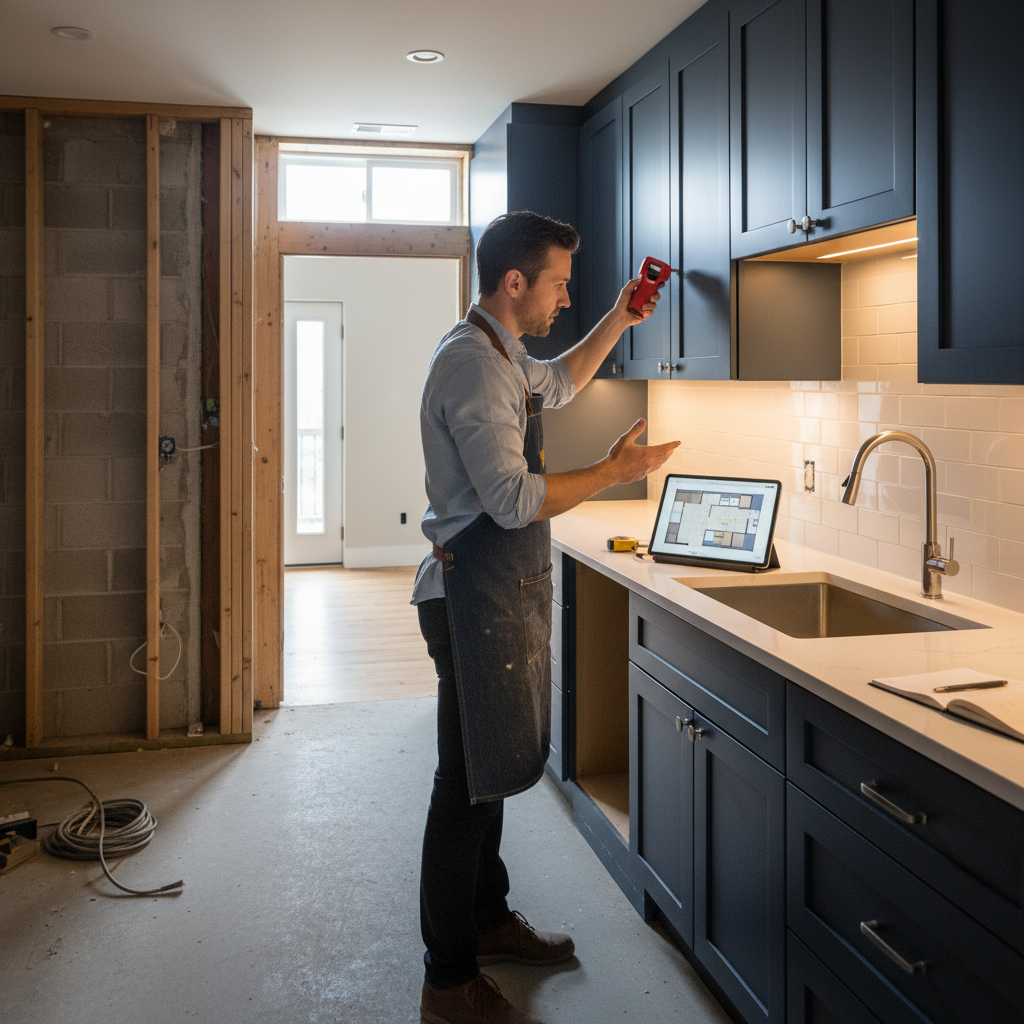
Thinking about a basement kitchen? Book a design consultation with Altimawell map your layout in 3D, finalize selections in one visit, and coordinate in-house installation. Flexible financing with 0% down and fast approvals is available.
Case studies and real-world examples
Great basement kitchens are tailored. Weve delivered compact snack stations, full chef-worthy layouts, and flexible spaces for multigenerational livingall designed in 3D, built in our factory, and installed by one accountable team.
Here are three scenarios that mirror common GTA needs:
- Compact entertainer: A one-wall kitchenette with a 24-inch fridge, convection microwave, and deep drawer storage turned a rec room into a weekend-ready hub. Toe-kick lights guide midnight snackers safely.
- Full family kitchen: An L-shaped layout with a peninsula, exterior-vented hood, and tall pantry supports daily cooking for a multigenerational household. Acoustic insulation keeps bedrooms above quiet.
- Suite-ready layout: A galley configuration with clear work aisles, dishwasher, and quartz counters offers long-stay comfort for guests and visiting relatives.
To connect kitchen planning with the rest of your project, read our overview on basement permits and value and our basement transformation tips.
Budget and value considerations (no pricing)
Value comes from clear goals, right-size scope, and durable choices. Plan utilities early, select finishes that resist moisture, and use factory-built cabinetry to reduce surprises. Financing options can smooth cash flow without sacrificing long-term quality.
While we dont publish prices (every basement is different), we can help you control variables that shape the investment:
- Scope: Kitchenette vs. full kitchen changes appliance counts, circuits, and ventilation needs.
- Layout complexity: Moving plumbing or adding a vent chase can increase coordination.
- Material choices: Durable, low-maintenance finishes protect value over time.
- Accessories: Corner solutions, pull-outs, and organizers improve daily use.
- Timing: Coordinated decisions keep production and installation on schedule.
- Financing: Our flexible, 0%-down options let you phase payments while keeping momentum.
For cabinetry refresh thinking as you weigh options, this overview of a kitchen cabinets makeover highlights ways to refresh doors and finishes during planning.
Maintenance and long-term care
Keep your basement kitchen dry, bright, and clean. Run the hood while cooking, use a dehumidifier seasonally, wipe spills promptly, and check caulk and grout annually. Soft-close hardware and quality finishes reduce wear and keep doors and drawers aligned.
Simple routines extend the life of your lower-level space:
- Run the hood during and 105 minutes after cooking to clear steam and odors.
- Wipe counters dry, especially around the sink and dishwasher edges.
- Empty and clean the dehumidifier as recommended during shoulder seasons.
- Inspect caulk/grout yearly; re-seal backsplashes and counters per manufacturer guidance.
- Touch-adjust hinges if doors drift; soft-close hardware is built to be tuned.
Frequently asked questions
These short answers cover the questions we hear most about basement kitchensfrom ventilation to layout sizing. Each is designed to help you make faster, more confident decisions.
Whats the difference between a basement kitchenette and a full kitchen?
A kitchenette supports light cooking with compact appliances and limited storage. A full basement kitchen adds a range or cooktop, full-size fridge, dishwasher, robust ventilation, and more circuits. Choose based on cooking frequency, users, and storage volume.
How do I ventilate a basement kitchen without excess noise?
Use the shortest, smoothest duct run to an exterior wall, size the hood appropriately, and include make-up air strategies for stronger systems. Isolate the fan or consider remote/inline options to reduce motor noise in the room.
What storage accessories make the biggest difference downstairs?
Deep drawers for pots and pans, a corner lazy susan or blind-corner pull-out, a pull-out spice rack near the cook zone, and a recycling center near the sink dramatically improve function in compact lower-level kitchens.
Do I need special materials for a basement kitchen?
Choose moisture-aware selections: factory-finished cabinetry, quartz counters, porcelain or engineered flooring, and sealed backsplash grout. Pair them with layered lighting and a dehumidifier plan for year-round comfort.
Conclusion: your next best step
A successful basement kitchen blends smart layout, moisture control, clearances, and durable materials with professional design and installation. Start with a 3D plan, align utilities early, and let one accountable team deliver the finish you expect.
- Key takeaways: Define scope (kitchenette vs. full), prioritize ventilation and moisture control, and right-size storage and lighting.
- Action steps: Book a showroom consultation, bring appliance preferences, and review a 3D concept before production.
- Why Altima: In-house design, factory-direct cabinetry, lifetime door warranties on select programs, and coordinated installation.
Ready to explore options? Schedule a discovery session in Brampton and see your basement kitchen come to life in 3Dwith selections, timelines, and next steps organized in one place.
Related Posts
Why Choose Kitchen Renovation Company
Nowadays, Kitchen spaces are not only a place for cooking and serving food, but these areas act as a statement, as they speak a lot about a family, the philosophy and personality of individuals, and spaces. If you admire aesthetics and adorn the beauty of your home, you must pay attention to the interior design […]
How a Kitchen Renovation Contractor is Changing the Game
Lifestyle is all about bringing something coherent to the overall experience of living. The kitchen and closets stand as two of the most influential spaces in a home that add to the overall experience of living. A Kitchen Renovation Contractor in Whitby by the name of Altima Kitchen and Closets Inc. is changing the overall […]
How Media unit contractor in Whitby is Changing the Game
Lifestyle is all about bringing something coherent to the overall experience of living. The kitchen and closets stand as two of the most influential spaces in a home that add to the overall experience of living. A Media Unit Company in Whitby by the name of Altima Kitchen and Closets Inc. is changing the overall […]