Kitchen Remodels: Cut Stress & Get a Space You Love 2026
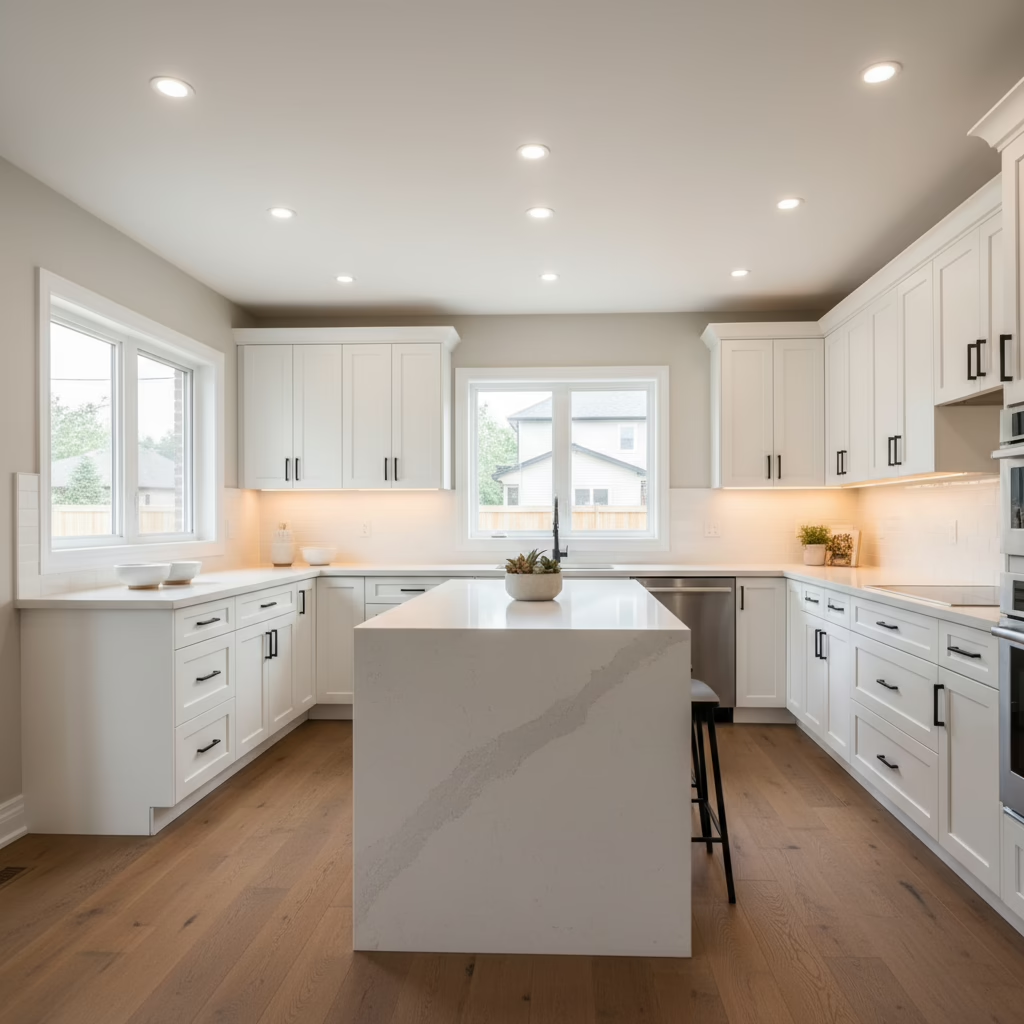
Kitchen renovation before and after refers to the complete transformation of a kitchen from its current state to a redesigned, rebuilt space that solves layout, storage, and style issues. For homeowners near 11 Edvac Drive, our design-build team at Altima Kitchens and Closets plans, manufactures, and installs everything in-house to deliver predictable, beautiful results.
By Ashok • Last updated: May 25, 2026
Summary
A successful before-and-after kitchen remodel pairs clear goals with a proven, end-to-end process. Define how you cook, store, and entertain; then align layout, cabinetry, lighting, and finishes through 2D/3D design, factory-direct manufacturing, and professional installation. The outcome: a space that looks stunning and works better every day.
Here’s what you’ll learn in this complete guide for GTA homeowners and condo owners:
- What “before and after” really covers—from diagnosis to delivery
- Why planning, permits, and sequencing matter more than trends
- How Altima’s in-house design, factory, and installers de-risk your project
- Twelve real-world transformation patterns that spark ideas
- Best practices, a step-by-step process, and a quick comparison table
What is a kitchen renovation “before and after”?
A “before and after” kitchen renovation documents the entire journey from a problem-filled layout to a fully reimagined space. It includes discovery, design, material selection, manufacturing, installation, and finishing. The goal is measurable improvements in function, storage, lighting, safety, and style—not just new cabinets.
Think of the “before” as a needs analysis: traffic jams at the stove, corner cabinets you can’t reach, or dark counters where prep feels unsafe. The “after” solves those issues with a redesigned work triangle, full-extension drawers, and layered lighting you can control.
- Scope clarity: Before-and-after should capture layout, cabinetry, counters, backsplash, plumbing, electrical, flooring, paint, and trim.
- Functional metrics: In our GTA projects, we routinely add 20–30% more accessible storage with pull-outs, dividers, and drawer banks.
- Experience-first: We model the new kitchen in 2D and 3D so you preview traffic flow, appliance clearances, and lighting before production.
At Altima Kitchens and Closets, the “after” is built in our Brampton factory on Italian CNC machinery and finished in a professional spray booth, then installed by our in-house team for a consistent fit and finish.
Why planning the “before” matters as much as the “after”
Planning prevents surprises. When we document goals, constraints, and codes up front, timelines tighten and rework drops. Clear drawings, itemized specifications, and a single accountable team reduce risk and keep your renovation moving without costly detours or missed details.
Most kitchen disappointments start early—unclear goals, missing measurements, or assuming “we’ll figure it out during install.” We don’t. We front-load detail so the build stage runs smoothly.
- Single accountability: Our design-build model keeps design, production, and installation under one roof—fewer hand-offs, fewer delays.
- Evidence-based choices: Clients who review 3D renders make faster, more confident decisions on layouts, finishes, and lighting zones.
- Performance targets: We track door/drawer counts, lighting layers, and ergonomic heights so your kitchen works as good as it looks.
- Local realities: Condo rules, delivery windows, and seasonality across the GTA can impact scheduling; planning avoids bottlenecks.
In our experience across Toronto, Brampton, Mississauga, Oakville, and Vaughan, seven in ten homeowners choose quartz for durability and low maintenance while we specify soft-close hardware in nearly all builds to reduce wear and noise.
How a kitchen remodel works (step-by-step)
A reliable kitchen remodel follows eight steps: discovery, site measure, 2D layouts, 3D design, selections, factory production, site prep, and professional installation. This sequence keeps decisions timely, controls quality, and maintains momentum from first consult to final walk-through.
Our structured workflow is designed to keep you informed and the job on schedule.
- Discovery & goals: We identify pain points—storage limits, cramped prep, dim lighting—and set must-haves and nice-to-haves.
- Site measure: Laser measurements, appliance specs, window/door swings, and HVAC locations captured for precision planning.
- 2D layouts: We test options (L-shape, U-shape, island/peninsula, galley) and validate appliance clearances and work zones.
- 3D renders: You preview proportions, sightlines, and finishes before a single board is cut.
- Selections: Cabinets, door style, color, hardware, counters, backsplash, flooring, lighting, sink, faucet, and storage accessories.
- Factory production: Italian CNC for precise parts, then a spray-booth finish for durable painted MDF and prelaminated doors.
- Site prep: Protection, selective demolition, electrical/plumbing rough-ins, substrate prep, and floor leveling as needed.
- Installation & finish: Cabinets set and leveled, counters templated/installed, backsplash tiled, lighting aimed, and final adjustments.
We document each milestone and share updates (clients love our proactive WhatsApp check-ins). This clarity trims downtime between trades and speeds up the finishing stage.
Want the full picture of planning cadence? See our kitchen renovation planning guide for timelines, checklists, and role clarity.
Types of kitchen transformations (refresh, reface, rebuild)
Kitchen makeovers fall into three broad types: refresh (surfaces and lighting), reface (new doors/drawers on sound boxes), and rebuild (custom layout and cabinetry). Choosing the right path depends on cabinet condition, layout pain points, and long‑term goals for storage, durability, and resale.
Refresh: fast visual impact
- Typical moves: New backsplash, faucet/sink, hardware, lighting layers, and paint; retain cabinetry and layout.
- When it fits: Boxes are good, layout works, but the space feels dated or dim.
- Altima example: In a Mississauga townhome, we layered under-cabinet LEDs, added a quartz backsplash, and swapped pulls—boosting task visibility dramatically.
Reface: new skin, better function
- Typical moves: Keep solid cabinet boxes; add new MDF painted or prelaminated doors/drawers, soft-close hardware, and select storage inserts.
- When it fits: Structure is sound, but doors are worn and style has drifted from your taste.
- Learn more: For an overview of refacing concepts, see this cabinet refacing guide.
Rebuild: custom layout and cabinetry
- Typical moves: Rework layout, upgrade electrical/lighting, install factory-direct cabinetry, new counters, and tile.
- When it fits: Layout is inefficient, storage is inadequate, or lifestyle changes demand a different flow.
- Altima example: In a Brampton detached, we converted a peninsula to an island, widened prep space, and added a full-height pantry with pull-outs.
Not sure which route matches your kitchen’s “before”? Our design consultation guide explains how we evaluate cabinet integrity, layout friction, and lighting gaps.
Quick comparison: refresh vs. reface vs. rebuild
Use this table to align your kitchen’s condition with the right approach. If boxes are solid and layout flows, reface. If the layout wastes steps or storage, rebuild. If style and lighting are dated but structure is fine, refresh smartly and layer light.
| Dimension | Refresh | Reface | Rebuild |
|---|---|---|---|
| Cabinet boxes | Keep | Keep | New custom |
| Layout changes | None | Minimal | Yes (optimized) |
| Storage gain | Low–Moderate | Moderate | High |
| Lighting upgrade | Yes (layers) | Yes | Yes (zoned) |
| Best for | Cosmetic update | Style + function | Flow + capacity |
Door style and build quality affect durability. For context on door construction options, this piece on standard vs. custom cabinet doors outlines common differences.
Best practices for a standout “after”
The best kitchen “afters” prioritize workflow, lighting, and storage you can reach. Aim for clear work zones, three lighting layers, and drawers over doors for everyday items. Validate decisions in 3D, then manufacture with consistent standards and pro installation.
Design that serves how you live
- Zone thinking: Prep, cook, clean, and serve zones reduce steps and collisions.
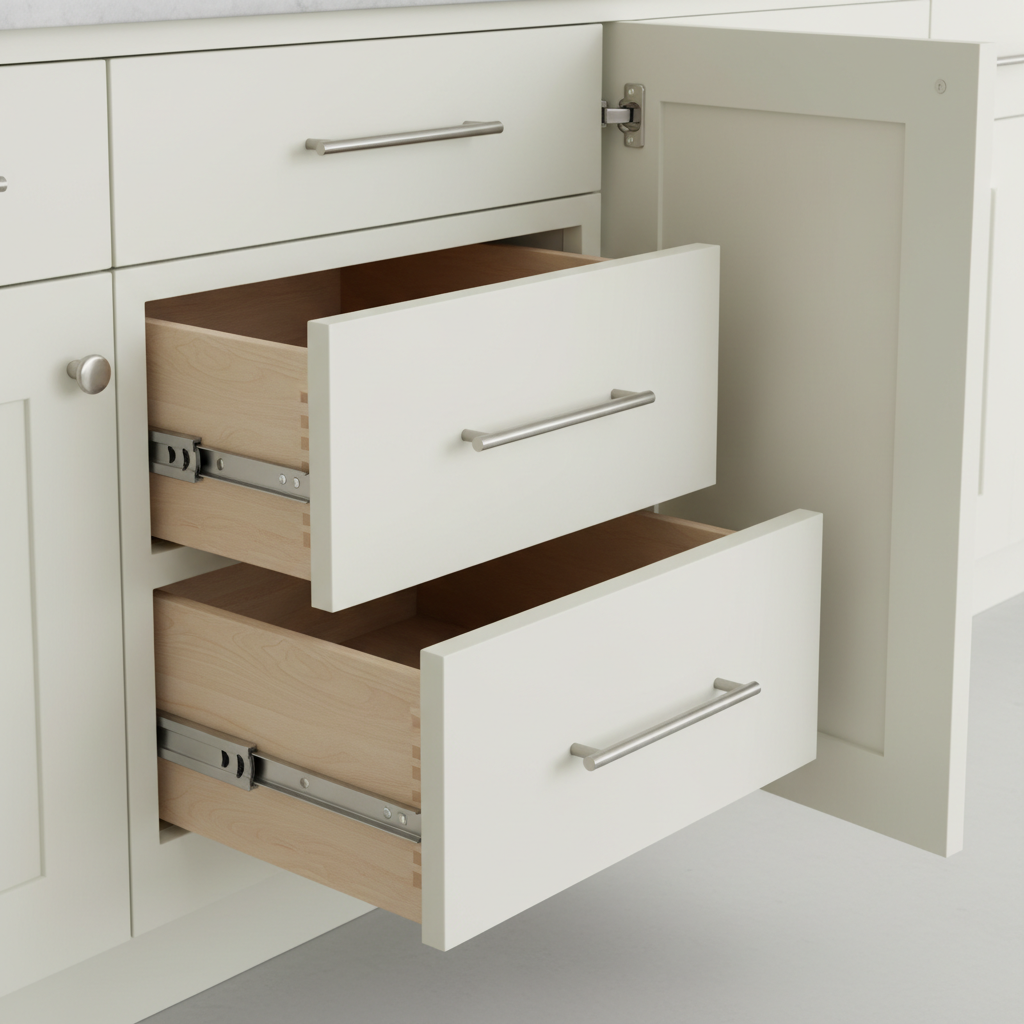
- Drawer-first storage: Full-extension drawers put pots, pans, and plates within easy reach.
- Appliance clearances: Verify door swings and walkway widths in 2D/3D before ordering.
Layered lighting you can control
- Ambient: Ceiling cans or architectural fixtures for even light.
- Task: Under-cabinet LEDs for safe, shadow-free prep.
- Accent: Island pendants or cabinet lighting for depth and mood.
Construction quality that lasts
- Factory precision: CNC-cut parts and spray-booth finishes improve consistency and edge durability.
- Hardware standards: Soft-close hinges and slides reduce wear; we specify them on nearly every project.
- Moisture-smart details: Sink base protection and sealed edges extend life in high-use zones.
We’ve found that homes with layered lighting, drawer-first lower cabinets, and pull-out pantries report smoother daily routines—proof that great “afters” come from smart “befores.” For inspiration, browse our custom kitchen design ideas.
Tools and resources that de-risk your project
Great outcomes come from the right tools: detailed measures, appliance specs, 2D/3D design software, factory-direct cabinetry, and checklists for site prep and install. Pair these with a single accountable team to keep quality high and momentum strong.
- 2D/3D design: Visualize layouts, verify clearances, and test finishes before production.
- Factory-direct cabinetry: Shorten lead times and align quality control from cut to coat.
- Storage systems: Pull-out spice racks, tray dividers, waste centers, and corner solutions reclaim space.
- Lighting planning: Circuits and dimmers by zone prevent shadows and glare.
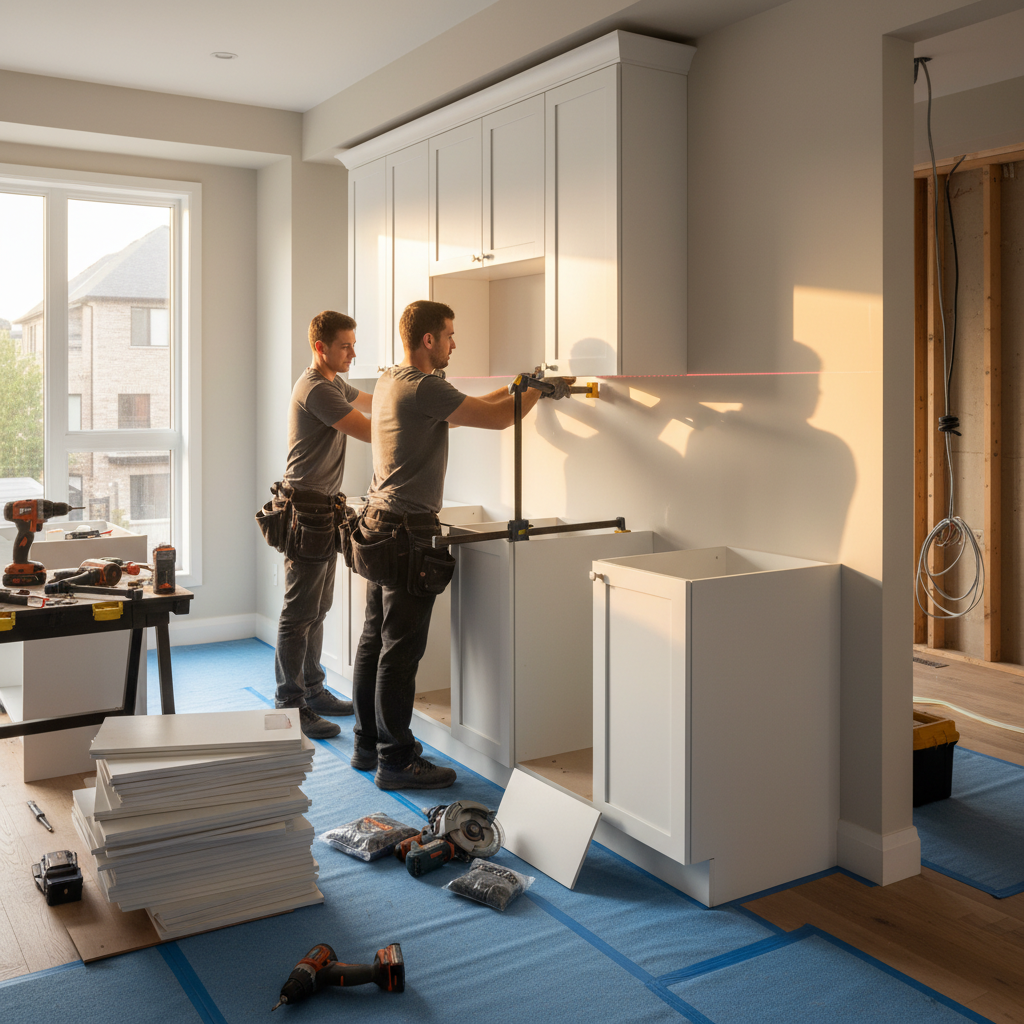
- Pro installation: Laser leveling, scribe fits, and precise templating ensure a clean finish.
Curious how a combined design + build model keeps everything aligned? Our design-build overview breaks down roles, communication, and approvals.
Before-and-after case patterns (12 real scenarios)
Most kitchens fit repeatable transformation patterns. These twelve examples show how small surgical changes—or full custom rebuilds—solve daily pain points. Use them to match your “before” to a proven “after” that fits your home and lifestyle.
- Brampton galley, storage-starved: Converted lowers to drawer banks and added a pull-out pantry; result—faster prep with everything at hand.
- Mississauga peninsula pinch-point: Replaced a cramped peninsula with a narrow island; improved traffic and seating for four.
- Toronto condo with low ceilings: Switched to sleek slab doors and continuous valance LEDs; space now feels taller and brighter.
- Oakville family hub: Built a charging drawer and mail station; clutter off the counters, zones run smoother.
- Vaughan entertainer’s island: Oversized quartz island with hidden trash/recycling; clean surfaces during parties.
- Etobicoke rental refresh: Kept boxes, added new doors and pulls; durable finishes for long-term wear.
- North York chef’s workflow: 36″ range, spice pull-outs, and tray dividers near ovens; cooking is now intuitive.
- Downtown micro-kitchen: Full-height pantry with roll-outs; doubled usable dry-goods storage.
- Multi-cook household: Upgraded ventilation and widened aisles; fewer collisions at peak times.
- Heritage home blend: Shaker profiles with modern hardware; style honors the architecture with modern function.
- Basement suite kitchenette: Compact U-shape with durable prelaminated doors; perfect for extended family use.
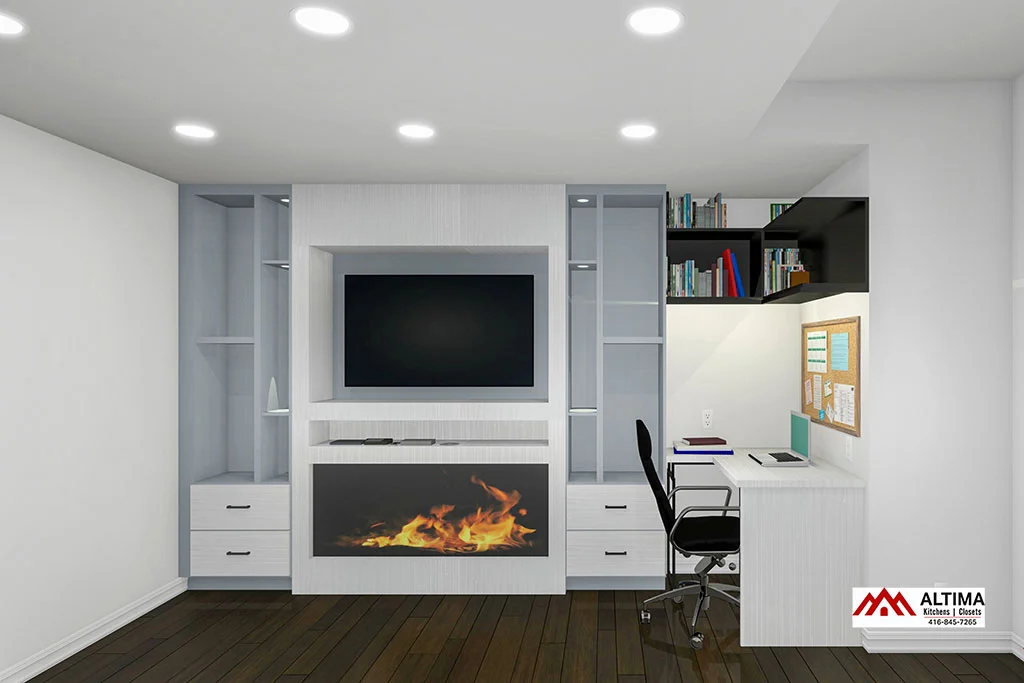
- Media wall tie-in: Matched kitchen finish to a new living room media unit for a cohesive, open-concept feel.
Want to explore whole-home planning instead of a single-room focus? Our full home renovation guide explains phasing, sequencing, and how to keep a consistent design language.
Local considerations for 11 Edvac Drive
- Plan deliveries and installer schedules around typical GTA traffic windows to keep installation days efficient and predictable.
- Seasonal timing matters: winter brings more indoor humidity swings—great finishes and acclimation practices protect your cabinetry.
- For condo projects, align with building rules on quiet hours and elevator bookings so site work and material movement stay on track.
Thinking about your own “before and after”?
The simplest way to start is a design consultation with accurate measurements and a clear wish list. We’ll translate that into 2D/3D options, material selections, and a structured plan—manufactured and installed by one accountable team.
We offer showroom or in-home consultations, itemized specifications, and factory-direct cabinetry with lifetime warranties on select doors. When you’re ready, explore our step-by-step renovation overview and book a consult.
Checklists, tips, and small upgrades with big impact
Small, targeted upgrades often deliver outsize daily benefits. Prioritize drawers over doors, add under-cabinet LEDs, and spec organizers where clutter slows you down. Validate each move in 3D, then lock materials so production stays on schedule.
- Daily-use drawers: Keep plates, bowls, and pots at waist height; it speeds cooking and reduces bending.
- Lighting where you need it: Under-cabinet LEDs cut shadows where you chop—safety and comfort go up immediately.
- Power at the island: Discreet outlets support mixers and devices; charging drawers hide cables.
- Trash where it happens: A pull-out waste center next to prep zones keeps surfaces clear.
- Backsplash decisions: Slab quartz backsplashes look seamless and wipe clean fast.
Considering whether to reface or rebuild? This practical overview of a kitchen cabinets makeover outlines cosmetic options when boxes remain.
Frequently Asked Questions
Homeowners ask about timelines, disruption, permits, and how to choose between refacing and rebuilding. The best path depends on cabinet condition, layout friction, and goals for storage, lighting, and durability. A design consultation with measurements and 3D options brings clarity quickly.
How do I decide between refacing and a full rebuild?
If your boxes are sturdy and the layout works, refacing with new doors, drawers, and hardware is efficient. If storage is lacking, aisles feel tight, or appliances collide, a rebuild with custom cabinetry and layout changes will serve you better long term.
What does a realistic remodel timeline look like?
With a clear design, selections locked, and factory-direct production, most projects progress through design, manufacturing, and installation in a streamlined sequence. We confirm the schedule after site measure and keep you updated at each milestone.
Will a new layout really change daily life in the kitchen?
Yes. Optimized zones, wider aisles, and drawers for everyday items reduce steps and clutter. Most clients report faster prep and easier cleanup within the first week because the space supports their habits instead of fighting them.
Do I need permits for my kitchen renovation?
Permit requirements depend on scope. Layout changes with plumbing or electrical modifications typically require approvals. During our consultation, we review the plan and advise on the path so your project stays compliant and on schedule.
How do 3D designs help me make better decisions?
3D visuals let you preview proportions, clearances, and finish combinations before anything is built. You’ll see how lighting, cabinet heights, and appliance doors interact—reducing guesswork and speeding up confident approvals.
Conclusion: Your best “after” starts with a smarter “before”
Define goals, validate them in 2D/3D, and partner with one accountable team for design, manufacturing, and installation. That’s how you get a kitchen that looks amazing and works flawlessly—every day.
- Key takeaways:
- Match refresh, reface, or rebuild to cabinet health and layout friction.
- Design for zones, drawer-first storage, and layered lighting.
- Use factory-direct cabinetry and pro installation for consistent quality.
- Lock selections early; 3D decisions prevent rework later.
- Next steps:
- Book a design consultation and site measure.
- Review 2D/3D options and finalize selections.
- Schedule manufacturing and installation at your preferred window.
Ready to see your own kitchen renovation before and after? Start with a conversation—our Brampton showroom and factory team is here to help.
Related Posts
Why Choose Kitchen Renovation Company
Nowadays, Kitchen spaces are not only a place for cooking and serving food, but these areas act as a statement, as they speak a lot about a family, the philosophy and personality of individuals, and spaces. If you admire aesthetics and adorn the beauty of your home, you must pay attention to the interior design […]
How a Kitchen Renovation Contractor is Changing the Game
Lifestyle is all about bringing something coherent to the overall experience of living. The kitchen and closets stand as two of the most influential spaces in a home that add to the overall experience of living. A Kitchen Renovation Contractor in Whitby by the name of Altima Kitchen and Closets Inc. is changing the overall […]
How Media unit contractor in Whitby is Changing the Game
Lifestyle is all about bringing something coherent to the overall experience of living. The kitchen and closets stand as two of the most influential spaces in a home that add to the overall experience of living. A Media Unit Company in Whitby by the name of Altima Kitchen and Closets Inc. is changing the overall […]