Which 7 Questions Should GTA Homeowners Ask Before a Full Renovation?
Before choosing a provider for a full home renovation in the GTA, look beyond an attractive rendering or headline price. Confirm the written scope, approved designs, itemized quote, payment triggers, realistic schedule, warranty terms, and communication process.
A coordinated design-build company can simplify a renovation involving several rooms, but coordination does not replace documentation. These seven questions can help you compare providers and resolve risks before signing an agreement or paying a deposit.
Quick summary

- Confirm every room, trade, material, exclusion, and optional upgrade in writing.
- Review drawings and verified measurements alongside appliance clearances, finishes, and storage details.
- Compare itemized quotes, not totals alone, and ask what could change the price.
- Document deposits, milestone payments, financing conditions, and change-order approvals.
- Establish one accountable project lead, a realistic schedule, warranty coverage, and a final inspection process.
The seven questions at a glance
| Question | What to request | Why it matters |
|---|---|---|
| Scope | Room-by-room inclusions and exclusions | Prevents gaps between expectations and the quote |
| Design | Approved drawings and verified measurements | Reduces avoidable construction misunderstandings |
| Pricing | Itemized costs and upgrade pricing | Makes proposals easier to compare |
| Payments | Milestones and written change-order terms | Clarifies when extra money may be required |
| Schedule | Dependencies, milestones, and project ownership | Creates accountability across rooms and trades |
| Materials | Specifications and precise warranty coverage | Defines what you are buying and what is protected |
| Quality control | Communication standards and handover checklist | Helps identify incomplete work before handover |
1. Is the full scope clear enough to price?
A full-home renovation may combine a kitchen, bathrooms, basement, flooring, tile, closets, media units, cabinetry, demolition, disposal, painting, electrical work, plumbing, and installation. A broad phrase such as “complete renovation” does not explain which responsibilities are included.
Request a room-by-room scope that separates included work, optional upgrades, owner-supplied items, demolition and disposal, preparation, finishing, and conditions that could alter the work. This is particularly important when a kitchen renovation GTA homeowners are planning is combined with bathrooms, closets, or a basement.
Altima Kitchens and Closets describes services spanning kitchens, closets, bathrooms, basements, media units, and full-home renovations. Its home renovation service information can help you identify topics to discuss, but your agreement should state exactly what applies to your property.
2. Do the designs and measurements show what will be built?

Drawings should clarify more than the overall appearance. For cabinetry, review dimensions, appliance clearances, door swings, countertop edges, storage accessories, lighting, backsplash, and finishes. For other spaces, confirm fixture locations, flooring transitions, tile patterns, and built-ins.
- Which drawing is the current approved version?
- What measurements were verified on site?
- Who approves revisions before manufacturing?
- How are appliance specifications and utility locations confirmed?
- Who is responsible if an approved measurement is incorrect?
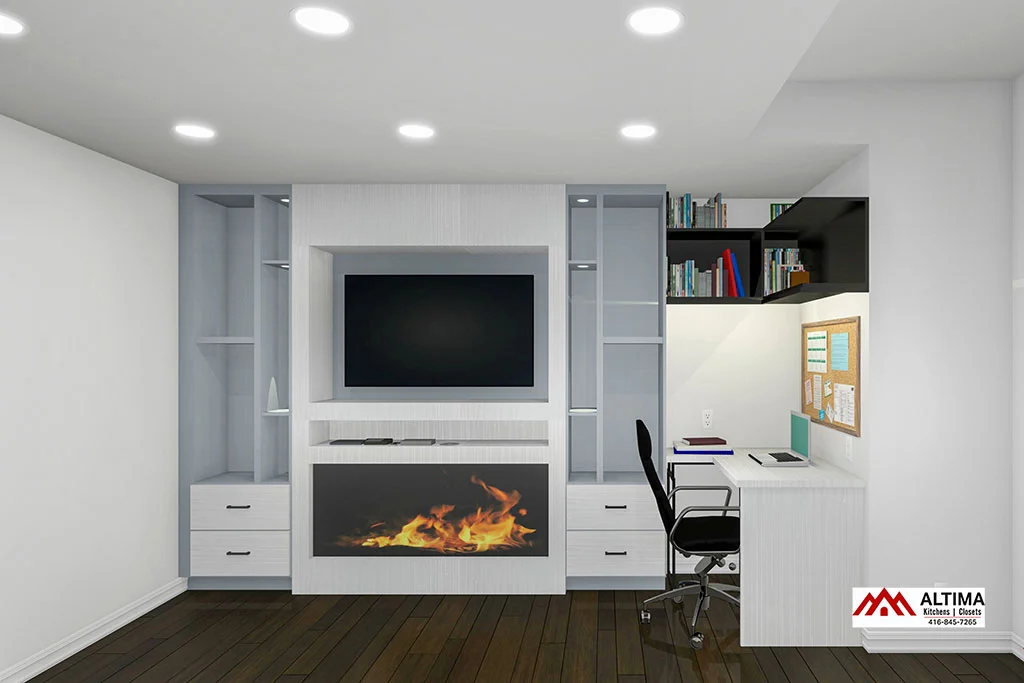
Altima states that it provides 2D and 3D visualizations. A 3D kitchen design can make proportions and finishes easier to evaluate, but it should complement technical review rather than replace it. See the resources on planning custom kitchens in Toronto and 2D and 3D kitchen design for related decision points.
3. Is the quote itemized, including upgrades and exclusions?
Compare cabinetry, cabinet-box materials, hardware, countertops, fixtures, flooring, tile, installation, disposal, preparation, and applicable taxes. Ask which products are included at the base price, which are upgrades, and what assumptions could increase the total.
Altima says it provides transparent, itemized quotes with upgrade pricing and offers material selections through its showroom. During a showroom consultation, compare samples and confirm that selected products appear in the written proposal. A lower total is not necessarily better if important work or specifications are missing.
4. Are payment triggers and change orders documented?
Before paying a deposit, confirm the deposit amount, milestone payments, balance timing, payment method, and event that triggers each payment. The schedule should refer to identifiable progress rather than vague wording such as “when needed.”
- What does the initial deposit cover?
- When are payments due for design approval, manufacturing, delivery, and installation?
- Must changes be written and approved before work proceeds?
- How are credits, substitutions, delays, and disputed items handled?
Altima advertises financing that can include 0% down, subject to approval and stated terms. Review its financing information and request the terms applicable to your project.
Altima’s supplied review analysis includes positive comments about value as well as mixed feedback about payment expectations. That does not predict your experience, but it reinforces the value of putting every payment promise and change procedure in writing.
5. Is the schedule realistic, coordinated, and owned by someone?
Full renovations depend on sequencing. Measurements may precede cabinetry manufacturing, while demolition and preparation may precede flooring, tile, countertops, or installation. A delay in one area can affect several others.
Ask for expected start conditions, design and manufacturing milestones, delivery and installation dates, trade dependencies, delay-notification procedures, and the name of the person coordinating the project. Altima describes in-house design and installation, factory-direct cabinetry, and structured project management. Verify what is actually handled in-house, what is subcontracted, and who remains accountable if plans change.
For a condo renovation, also ask how building rules, elevator bookings, access hours, deposits, and approvals affect the schedule. Requirements vary by building.
6. Are materials, manufacturing standards, and warranty terms specific?
“High quality” is not a sufficient specification. Record cabinet-box construction, door material and finish, hardware, countertops, tile, flooring, fixtures, edge details, care requirements, and permitted substitutions.
Ask which components are covered, how long coverage lasts, what exclusions and maintenance requirements apply, who handles claims, and whether the warranty covers labor, replacement parts, or only the product.
Altima states that it uses Italian CNC machinery and a state-of-the-art spray booth, and offers lifetime warranties on MDF Painted and Prelaminated doors. Confirm the precise coverage and exclusions in your project documents rather than treating this as a blanket warranty for every renovation component. Its catalogs and showroom can support product discussions.
7. How will communication and final quality control work?
Confirm your primary contact, backup contact, progress-update method, approval system, site-protection and cleanup expectations, homeowner responsibilities, and escalation process for urgent issues.
At handover, inspect cabinet alignment and doors, countertops, plumbing and fixtures, backsplash, tile, flooring transitions, paint, hardware, lighting, touch-ups, cleanup, and agreed exclusions. Record incomplete or defective items in a deficiency list with an agreed follow-up process.
The supplied analysis of 45 reviews found frequent positive comments about design, customization, workmanship, and value, alongside mixed feedback about communication, scheduling, payment expectations, and occasional cleanup or installation concerns. These comments are not universal predictions, but they explain why a named project lead, documented updates, site-care expectations, and formal inspection are useful questions for any provider. Altima’s project methodology is another resource to review.
How should you compare renovation providers?
Request the same core information from every company. Compare scope and exclusions first, then drawings, specifications, itemized prices, payment triggers, schedule, warranty, and communication plan. Do not compare headline totals until you know that equivalent rooms, materials, preparation, installation, and finishing are included.
Verify important promises in writing, including start conditions, milestones, financing eligibility, warranty coverage, upgrades, and responsibility for measurement errors or changes. A one-stop design-build model may suit homeowners who prefer one coordinated point of responsibility for several connected spaces; the right choice depends on your project and tolerance for managing multiple vendors.
What should you do before you commit?
The strongest decision is based on a complete written scope, approved visual and technical details, itemized pricing, documented payment and change-order terms, realistic coordination, specific material and warranty information, and a defined communication and inspection process.
Altima Kitchens and Closets offers consultations from its showroom and factory at 11 Edvac Drive, Units 13–19, Brampton, Ontario L6S 5W5. You can contact Altima Kitchens and Closets to discuss your renovation.